












7 Crucial Mistakes to Avoid When Buying Industrial O-Ring Kits (and Why They Fail) - 2026 Guide
Industrial machinery relies on the smallest components to function. A single failed O-ring costing pennies can halt a million-dollar production line, causing catastrophic hydraulic failure and safety hazards. Despite this, O-Ring Material Compatibility and kit selection are often overlooked during procurement.
To ensure operational uptime and safety, maintenance managers must move beyond generic "universal" assortments and understand the specific engineering requirements of their sealing applications. This guide covers the seven most critical purchasing mistakes and how to navigate the new compliance landscape of 2026.
What is an Industrial O-Ring Kit?
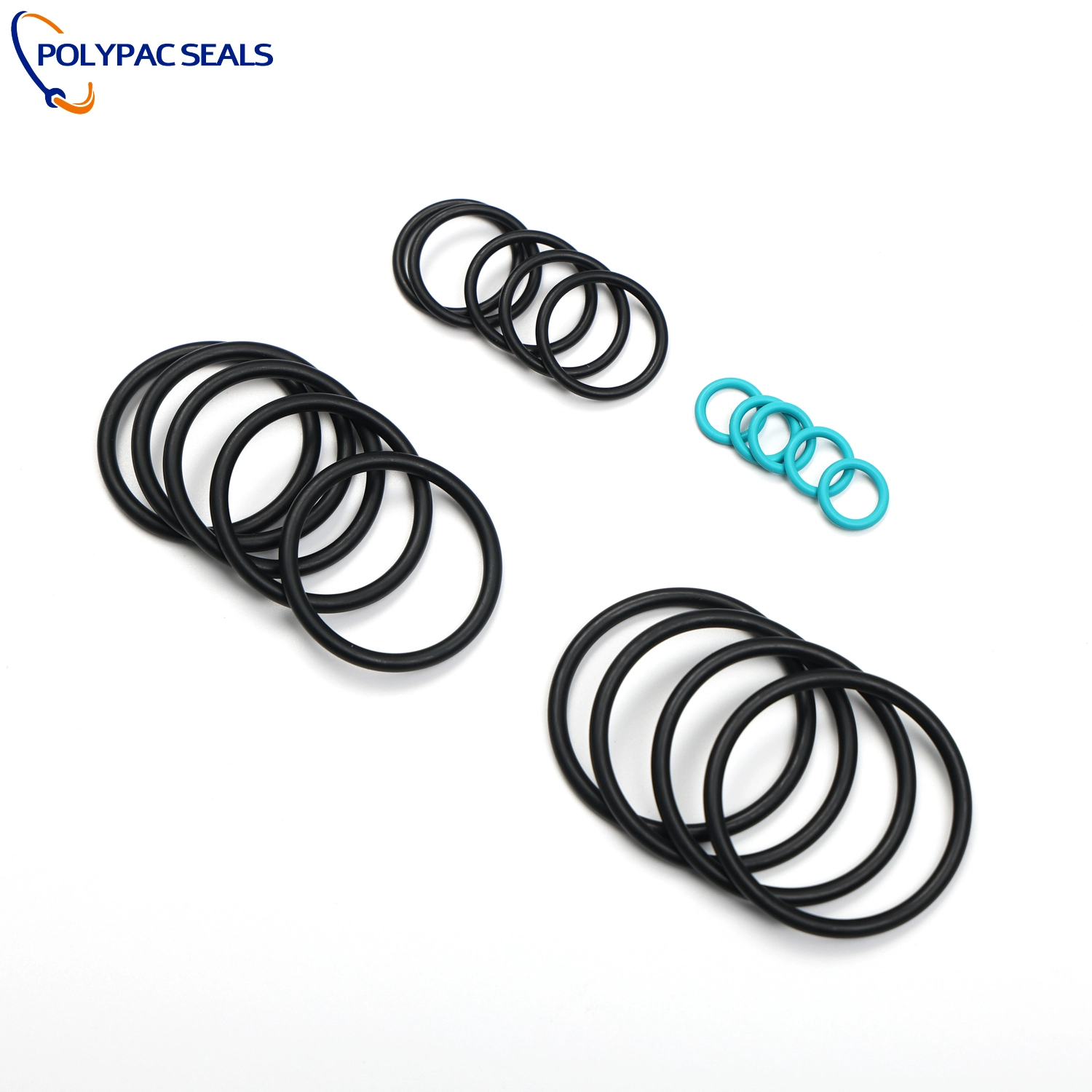
An industrial O-ring kit is a pre-configured assortment of circular elastomer seals organized by size (AS568 or Metric) and material (NBR, FKM, etc.) used for rapid maintenance and repair (MRO). These kits provide immediate access to critical sealing components for hydraulic systems, pumps, and valves, minimizing downtime during emergency repairs.
Unlike bulk inventory, a kit is designed for speed and portability. It typically includes a range of diameters and cross-sections housed in a durable, compartmentalized storage box with a sizing chart. However, relying on a kit without verifying its specifications against your equipment's needs is a recipe for leakage and system failure.
Key Takeaways: Quick Summary for Busy Buyers
- Material matters most: Never substitute NBR for FKM in high-temp applications (>250°F).
- Hardness is critical: 70 Shore A is standard, but 90 Shore A is required for high-pressure systems to prevent extrusion.
- Size precision: "Close enough" leads to leaks; clearly distinguish between Imperial (AS568) and Metric sizes.
- Expiry dates: Rubber expires. Check the cure date on your kits to comply with Elastomer Shelf Life Standards.
Mistake #1: Prioritizing "Universal" Kits Over Material Compatibility
The most frequent purchasing error is assuming a standard NBR (Buna-N) kit can handle every chemical and temperature environment in a facility. While NBR is excellent for standard petroleum-based oils, it fails catastrophically when exposed to ozone, sunlight, or temperatures above 250°F (121°C).
O-Ring Material Compatibility is the first line of defense against leaks. In applications involving aggressive chemicals, fuels, or extreme heat (up to 400°F/200°C), investing in FKM (Viton™) kits is mandatory. Using an NBR seal in a fuel system designed for FKM results in swelling, where the seal absorbs the fluid, expands beyond the groove capacity, and disintegrates.
Common Material Failure Modes:
- Swelling: Caused by chemical incompatibility (e.g., NBR in brake fluid).
- Thermal Degradation: Hardening and cracking due to excessive heat.
- Compression Set: The seal permanently flattens and loses its elastic memory.
Mistake #2: Ignoring Durometer (Hardness) Ratings
Selecting an O-ring based solely on dimension without checking its hardness (durometer) will lead to extrusion failure in high-pressure hydraulic systems.
Shore A Durometer is the scale used to measure the hardness of rubber materials. The industry standard is 70 Shore A, which feels like a car tire. However, high-pressure applications (above 1,500 PSI) require a harder compound, typically 90 Shore A, which feels more like a shopping cart wheel.
If you install a soft 70A O-ring in a high-pressure gap, the system pressure will force the rubber into the clearance gap between mating parts. This phenomenon, known as extrusion, nibbles away at the seal until it fails.
How to Identify Hardness:
- Check the Kit Label: Reputable kits clearly state "NBR 70" or "FKM 90".
- The Indentation Test: Press a thumbnail into the ring. A 70A ring will show a temporary indentation; a 90A ring is extremely difficult to indent.
Mistake #3: Mixing AS568 Imperial and Metric Standards
Forcing a Metric O-ring into an Imperial groove (or vice versa) creates a poor seal that inevitably leaks under pressure.
AS568 vs Metric O-Rings represent two distinct sizing systems that are rarely interchangeable. The AS568 standard, maintained by SAE International, uses fixed inch-based dimensions (e.g., a -214 O-ring). Metric O-rings follow ISO 3601 standards and are defined by inner diameter x cross-section in millimeters.
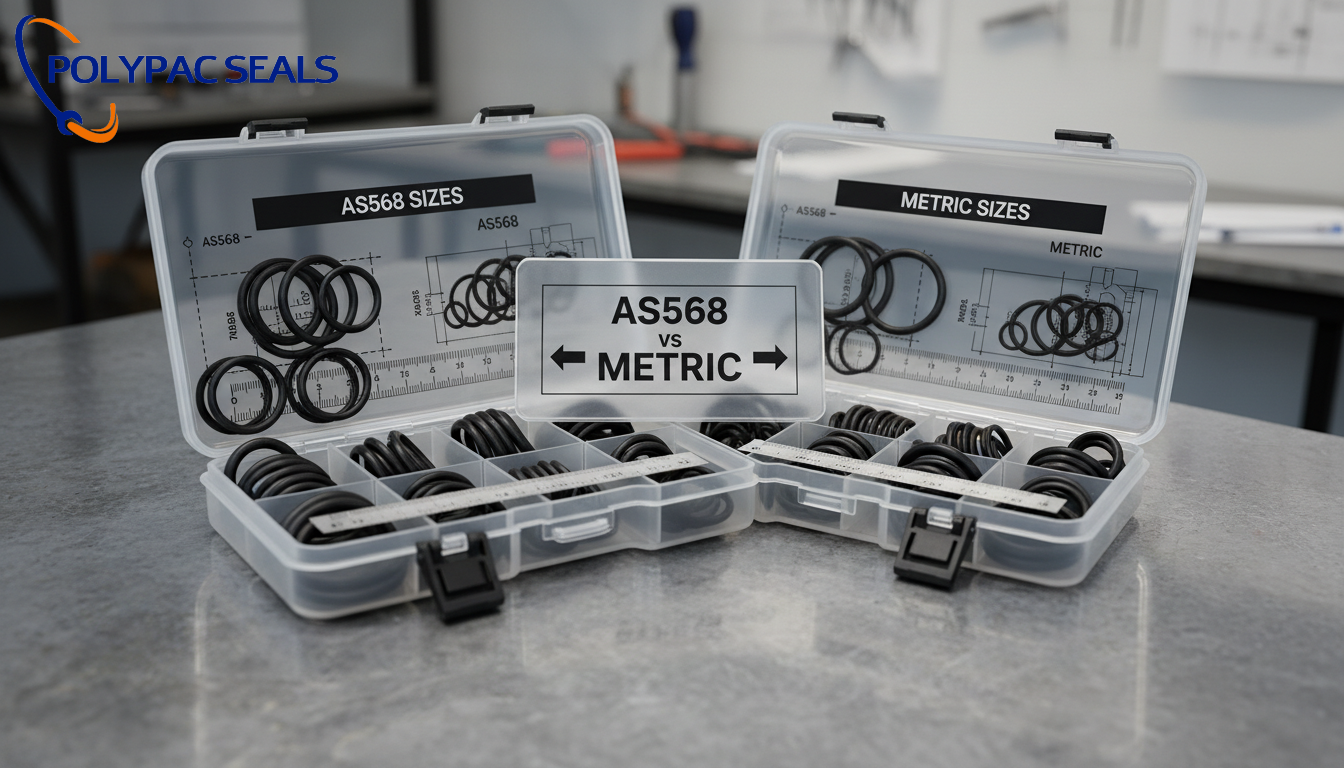
A "close match" is not a seal. For example, a standard AS568 cross-section is 0.070 inches (1.78mm). A similar Metric cross-section is 2.0mm. That 0.22mm difference prevents proper compression, leading to Hydraulic Seal Failure Modes like low-pressure leakage.
Prevention Strategy:
- Color Code Kits: Use red boxes for Metric and blue boxes for Imperial/AS568.
- Verify Equipment Origin: European and Asian machinery typically requires Metric seals; US-built equipment usually uses AS568.
Mistake #4: Disregarding Shelf Life and Cure Dates (The Hidden Killer)
Elastomers are perishable goods that degrade over time, even when sitting in a box on a shelf.
Elastomer Shelf Life Standards (specifically SAE ARP 5316) dictate how long a seal can be stored before it is considered expired. Installing an expired O-ring is dangerous because the material may have already hardened or cracked before it even sees service.
According to industry reporting on SAE ARP 5316 by Apple Rubber, different polymers have vastly different life spans:
- 5-15 Years: NBR (Nitrile), SBR, and Polyurethane. These are susceptible to ozone and UV damage.
- Unlimited: FKM (Viton™), Silicone, and Fluorosilicone. These are chemically stable and do not degrade significantly if stored properly.
Storage Best Practices:
- Keep kits away from direct sunlight (UV rays break down NBR).
- Store away from electric motors or welders (Ozone generators).
- Inspect "New Old Stock" (NOS) kits for chalking or stiffness before purchase.
Mistake #5: Overlooking Quality Control (Burrs and Flash)
Budget O-ring kits often suffer from poor manufacturing quality, characterized by excess material (flash) or parting line irregularities.
A high-quality O-ring must have a smooth, seamless surface. In cheap molded kits, the "flash" (excess rubber where the mold halves meet) can prevent the O-ring from seating perfectly in the groove. In dynamic applications, this rough edge acts as a blade, cutting the seal and the mating surface, causing immediate failure.
Inspection Tips:
- Roll the ring: Roll the O-ring between your fingers to feel for bumps or ridges.
- Stretch test: Gently stretch the ring to reveal hidden cracks or weak points at the parting line.
Mistake #6: Choosing the Wrong Box Configuration
The physical design of the kit box directly impacts the efficiency of the maintenance team.
Field service technicians require rugged, impact-resistant cases that can survive being thrown into a truck. Conversely, shop floor inventory benefits from stackable, drawer-style cabinets. A common failure in kit selection is buying flimsy plastic boxes with weak latches. If a latch fails and the box flips, hundreds of sizes mix together, rendering the kit useless.
Essential Box Features:
- Lay-Flat Design: Prevents rings from rolling out when opened.
- Integrated Sizing Chart: A card adhered to the lid that matches the compartment layout is non-negotiable for rapid identification.
- Secure Latches: Heavy-duty snap latches are preferred over living hinges that break after repeated use.
Mistake #7: Failing to Future-Proof (2026 Compliance & PFAS)
Procurement managers must now account for emerging environmental regulations that restrict the use of certain chemicals in seal manufacturing.
As reported by Manufacturing Dive, strict reporting requirements for Per- and Polyfluoroalkyl Substances (PFAS) are taking effect in 2026 across multiple US states (such as Minnesota and Maine) and the EU. While FKM and PTFE are essential for high-performance sealing, companies must ensure their supply chains are transparent and compliant with these new reporting standards.
Failing to audit your suppliers now could lead to sudden obsolescence or legal inability to use specific high-performance kits in 2026. Ensure your vendors are providing data on REACH, RoHS, and TSCA compliance.
Gap Analysis: What Competitors Miss (Advanced Inventory Strategies)
Most guides stop at the sale, but effective O-ring management extends to the shop floor.
Advanced Strategies:
- Vendor Managed Inventory (VMI): Partner with suppliers who monitor your kit levels and restock automatically, ensuring you never run out of critical AS568 sizes.
- QR Code Integration: Modern kits feature QR codes on the lid. Scanning them provides instant access to material datasheets (SDS) and reorder forms.
- Custom Kitting: Instead of buying generic 382-piece kits, build custom kits containing only the seals used in your specific machinery to reduce waste.
Conclusion
Avoiding these seven mistakes ensures operational safety, reduces costly downtime, and optimizes your maintenance budget. An O-ring is often the cheapest part of a machine, but its failure is invariably the most expensive. By prioritizing material compatibility, respecting shelf life standards, and preparing for 2026 regulations, you protect your equipment and your team.
Contact us today to optimize your O-Ring Material Compatibility strategy.
What is the difference between NBR 70 and NBR 90 O-ring kits?
NBR 70 is softer (70 Shore A) and better for low-pressure, general sealing where the seal needs to conform to surface irregularities. NBR 90 is harder (90 Shore A) and is specifically designed to resist extrusion in high-pressure hydraulic applications.
How long is the shelf life of an industrial O-ring kit?
It depends on the material, generally following ARP 5316 standards. NBR (Nitrile) typically lasts 15 years if stored properly, while FKM (Viton) and Silicone have an unlimited shelf life provided they are kept away from UV light and ozone.
Can I use a Metric O-ring in a standard Imperial groove?
No, this is a major cause of failure. Even slight size deviations (fractions of a millimeter) can prevent proper compression, leading to leaks. Always match the O-ring standard (AS568 vs. ISO/Metric) to the equipment specifications.
What is the best O-ring material for high-temperature applications?
FKM (Viton) is the standard for high heat (up to 400°F/200°C) and chemical resistance. Silicone is also excellent for heat resistance but has poor tear resistance. You should avoid NBR for temperatures continuously above 250°F.
What does a standard 382-piece O-ring kit contain?
A standard 382-piece kit usually contains the most common 30 sizes defined by the AS568 standard. It covers a range of Inner Diameters (ID) and Cross Sections (CS), with higher quantities provided for the smaller, more frequently used sizes.
Why do O-rings fail after installation?
O-rings fail primarily due to extrusion (pressure too high for the hardness), chemical incompatibility (wrong material for the fluid), improper installation (nicking the seal on sharp edges), or compression set (seal loses elasticity over time due to heat or age).
Are splicing kits as good as molded O-ring kits?
Splicing kits (cord stock) are excellent for creating custom, large-diameter static seals on the fly. However, they are NOT recommended for dynamic applications or high-pressure systems where a molded bond is required for structural integrity.
How should I store my O-ring kits?
Store your kits in a cool, dry place away from direct sunlight (UV rays) and ozone sources like electric motors. Keep the box closed and latched to prevent contamination from dust and physical damage.

Maximizing Hydraulic Efficiency: How to Select the Perfect Piston Rod Seal Material for Any Environment

Back-Up Ring Seal vs. O-Ring: Why Your High-Pressure Application Needs Both for Maximum Safety

Scraper Ring Seals vs. Wiper Seals: The Definitive Comparison for Contamination Control

Metal vs. Composite: Which Hydraulic Guide Ring Increases Cylinder Life by 40%?

Piston Lip Seals vs. U-Cups: Choosing the Right Hydraulic Solution for High-Pressure Systems
Products
Why did my O-ring fail prematurely?
What is the purpose of the metal spring in a rotary shaft seal?
How important is surface finish on the metal parts that contact the seal?
What does "AS568" mean?
How can I prevent seal damage during installation?
Stay Updated with Industry Insights
Subscribe to our articles and receive the latest news, expert guidance, and technical updates directly in your E-mail.
Rest assured that your privacy is important to us, and all information provided will be handled with the utmost confidentiality.

Polypac is a trusted global supplier of high-performance sealing solutions, providing OEM & ODM services for industries worldwide.
E-mail:
sales2@dmsseals.com
Phone/WhatsApp:
© 2025 Polypac Seals. All Rights Reserved.
dms
DMS
DMS