












Back-Up O-Rings for Extreme Temperatures and Aggressive Media
In this article I describe, from field and lab experience, how a properly specified back up o ring prevents extrusion, reduces seal failures in extreme temperatures and aggressive media, and how to choose materials and groove geometry to match the application. I reference industry standards and manufacturer data so you can validate choices for hydraulic cylinders, rotating shafts, and high-temperature chemical environments.
Understanding O-Ring Extrusion and Back-Up Rings
What is extrusion and why back up O-rings matter
O-ring extrusion occurs when an elastomeric O-ring is squeezed into a clearance gap between the gland and mating surface under pressure, causing rapid wear or catastrophic failure. Back-up rings are non-elastomeric or semi-rigid components installed adjacent to O-rings to block that gap and support the O-ring, especially in low-aspect-ratio glands or high-pressure applications. From my experience across hydraulic and chemical sealing projects, a correctly selected back up o ring can multiply service life and avoid unplanned downtime.
When to specify a back-up O-ring
I typically recommend back-up rings when one or more of the following apply: system pressure above 20–30 bar (depending on material and gland design), dynamic sealing (reciprocating or rotary motion), thin glands or large clearances, or when using softer elastomers at elevated temperatures. For guidance on O-ring fundamentals and application ranges, the O-ring handbook from Parker is a useful reference (Parker O-Ring Handbook), and Wikipedia provides a general overview of O-ring use and failure modes (O-ring — Wikipedia).
Types of back-up rings and common materials
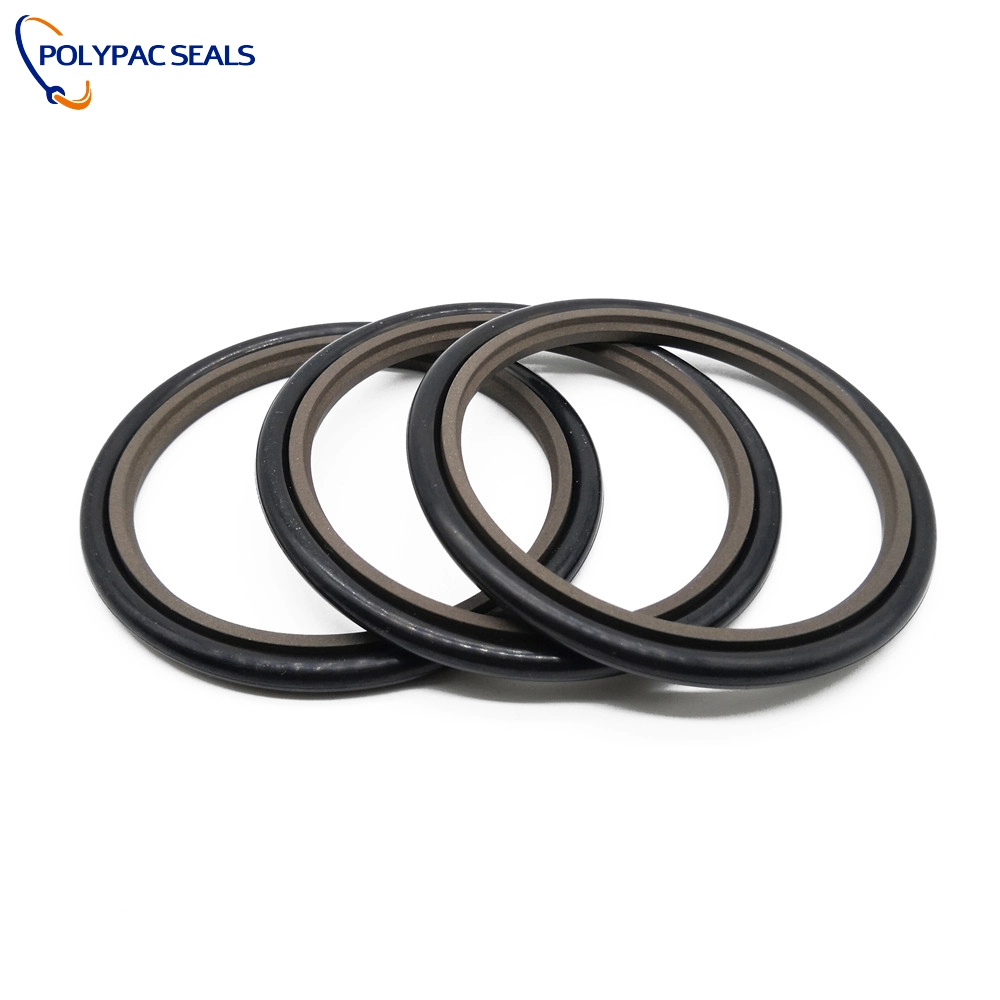
Back-up rings come in several geometries (flat, dovetail, spiral, split) and materials. The most common are PTFE (virgin or filled), nylon (polyamide), and thermoplastics like PEEK or UHMWPE for specific applications. PTFE is widely used because of its broad chemical resistance and temperature capability, while polymers like nylon are chosen where cost and stiffness are required. My selection process balances extrusion resistance, thermal stability, friction, and chemical compatibility.
Choosing Back-Up O-Rings for Extreme Temperatures
Material temperature ranges and limits
Temperature capability is a primary driver for back up o ring selection. Elastomers degrade or harden outside their service window; back-up ring materials must therefore match or exceed the expected temperature extremes. Below is a comparison of common elastomers and back-up materials with typical continuous service temperatures. These ranges are industry-typical; always confirm with material supplier data sheets for specific compounds.
| Material | Typical Continuous Temp Range (°C) | Good for Aggressive Media? | Typical Back-Up Role | Notes / Source |
|---|---|---|---|---|
| NBR (Nitrile) | -40 to +120 | Limited (hydrocarbon oils OK) | O-ring; not for high temp—use with PTFE back-up | NBR — Wikipedia |
| FKM (Viton) | -20 to +200 | Good (many chemicals, oils) | O-ring; often paired with PTFE/nitrile back-up | MatWeb (FKM data) |
| Silicone | -60 to +200 | Poor for many hydrocarbons | O-ring for temperature extremes; needs PTFE back-up for extrusion | Manufacturer datasheets |
| EPDM | -50 to +150 | Good for steam, polar media; poor with oils | O-ring; use thermoplastic back-up depending on media | Industry data |
| FFKM (Perfluoroelastomer) | -20 to +327 | Excellent (broad chemical resistance) | High Quality O-ring; may be used without back-up but still benefits from PTFE rings in extrusion-prone glands | Manufacturer (e.g., DuPont) |
| PTFE (back-up) | -200 to +260+ | Excellent | Primary choice for back-up rings in high temp/aggressive media | PTFE — Wikipedia |
| Nylon / Polyamide (back-up) | -40 to +120 | Good for some oils; limited high-temp use | Cost-effective back-up where temperatures moderate | Material data sources |
Data sources: Parker O-Ring Handbook and manufacturer datasheets; specific temperature and chemical limits should be checked against supplier specifications (Parker).
Design considerations for thermal cycling
Thermal cycling causes differential expansion between the O-ring and back-up ring. In high-temperature systems I favor PTFE or filled-PTFE back-up rings that tolerate thermal excursions and prevent cold-flow extrusion. When combining a soft elastomeric O-ring with a rigid back-up, ensure groove clearances and surface finishes account for differential thermal expansion to avoid cutting or pinching the O-ring during temperature change.
Installation, groove design, and groove finish
Proper groove design is essential. Back-up rings require correct radial and axial clearance; a split or spiral back-up ring is often used for dynamic shafts to allow installation without end-loading the O-ring. Surface finish (Ra) and edge radii on mating parts reduce damage risk. The ISO family of standards for O-rings (e.g., ISO 3601) provides dimensional and testing guidance; I consult these when drafting OEM drawings.
Selecting Back-Up O-Rings for Aggressive Media
Chemical compatibility: matching material to media
When the working fluid is chemically aggressive (acids, solvents, oils with additives) choose O-ring and back-up materials proven for compatibility. FFKM (perfluoroelastomer) offers the broadest compatibility but at a High Quality cost. PTFE back-up rings are inert to most chemicals and can protect softer O-rings from extrusion while providing chemical resistance. For a systematic selection approach I use chemical compatibility charts from manufacturers combined with field testing in representative conditions.
Testing, standards, and verification
Do not rely solely on theoretical compatibility. Accelerated aging tests, swell testing, and real-service pilot tests are essential. Standards such as those from ASTM (for chemical testing) and ISO for dimensional testing and hardness are useful. For specific dynamic sealing scenarios, arresting extrusions might be verified with pressure-cycle endurance tests per OEM or industry standards; Parker and other seal manufacturers publish recommended test protocols (Parker).
Case studies: failures and solutions
I’ve seen field cases where high-temperature hydraulic oil caused rapid O-ring extrusion because a standard NBR O-ring was used without a back-up ring. The corrective action was to install a PTFE back-up ring and upgrade to FKM O-rings for improved temperature tolerance. In another case, a chemical injection pump failed due to solvent attack on silicone O-rings; switching to FFKM O-rings and PTFE back-up rings eliminated swelling and extrusion and extended service life by over 10x in field data tracked over 18 months.
Implementing and Specifying Back-Up O-Rings in Hydraulic Systems
Design checklist I use for project specifications
- Define maximum pressure, temperature extremes, and fluid chemistry.
- Select primary O-ring material for compatibility and temperature.
- Select back-up ring material (PTFE primary choice for aggressive media/high temp).
- Specify groove geometry including tolerances per ISO or manufacturer guidelines.
- Specify surface finish and edge radii on mating parts.
- Plan for testing: accelerated aging, pressure cycling, and field pilot runs.
Comparative performance table (extrusion resistance vs friction)
| Back-Up Material | Extrusion Resistance | Friction (relative) | Best Use |
|---|---|---|---|
| PTFE (virgin/filled) | High | Low | High-temp, aggressive media, static and dynamic |
| Nylon | Medium | Medium | Moderate temps, cost-sensitive |
| PEEK | High | Medium | Very high temp/pressure, chemical exposure |
| Spiral/Split PTFE | High | Low (good for dynamic) | Rotary shafts, difficult installation |
Installation tips from practice
When installing back-up rings I ensure the seal is not overstretched, split/spiral rings are correctly oriented, and lubrication avoids chemical incompatibility. For dynamic seals I pay special attention to alignment and surface finish. Proper training of assembly teams reduces pinch and cut defects that shorten service life.
Polypac: Custom Back-Up O-Ring Solutions and Capabilities
Who we are and why we stand out
Polypac is a scientific and technical hydraulic seal manufacturer and oil seal supplier specializing in seal production, sealing material development, and customized sealing solutions for special working conditions. Founded in 2008, we began with filled PTFE seals (bronze-filled PTFE, carbon-filled PTFE, graphite PTFE, MoS₂-filled PTFE, glass-filled PTFE) and expanded to O-rings in NBR, FKM, silicone, EPDM, and FFKM. Our long-term partnerships with universities and research institutions — domestically and internationally — support continuous improvements in material formulations and testing methods.
Factory scale, equipment, and technical partnerships
Polypac's custom rubber ring and O-ring factory covers more than 10,000 square meters, with 8,000 square meters of factory space. Our production and testing equipment are among the most advanced in the industry. As one of China’s largest companies devoted to seal production and development, we maintain ongoing R&D and testing protocols that align with international standards. This scale and technical depth mean we can supply standard back up o ring solutions, specialty PTFE back-up rings, and fully customized seals for extreme temperature or aggressive chemical environments.
Competitive differentiation and product range
What differentiates Polypac is our integrated capability: material development (including filled PTFE), precision manufacturing, and customization. We offer a broad product range including O-Rings, Rod Seals, Piston Seals, End Face Spring Seals, Scraper Seals, Rotary Seals, Back-up Rings, and Dust Rings. For customers facing extrusion issues in high-temperature or chemically aggressive environments, we provide engineered combinations (e.g., FFKM O-rings with filled PTFE back-up rings) validated by lab and field testing. Our emphasis on traceability and documentation supports OEM and end-user qualification processes.
If you need bespoke back up o ring designs—material selection, groove drawings, or test plans—Polypac can support from prototype to production and provide data for compliance and procurement teams.
Frequently Asked Questions (FAQ)
1. What is the difference between a back-up ring and an O-ring?
An O-ring is an elastic sealing element that creates the primary fluid barrier by deformation. A back-up ring is a non-elastomeric or semi-rigid component positioned adjacent to the O-ring to prevent extrusion into gaps, especially under high pressure or temperature. Back-up rings do not provide sealing themselves but protect the O-ring and extend its life.
2. Can you use back-up rings in rotary applications?
Yes—spiral or split PTFE back-up rings are commonly used for rotary shafts where installation and dynamic behavior require axial flexibility. Proper design reduces friction and wear; I recommend prototype testing for high-speed or low-lubrication conditions.
3. Is PTFE always the best back-up ring material?
PTFE is often the best choice for high temperature and chemically aggressive environments because of its inertness and thermal stability. However, PTFE has lower stiffness in some geometries and can cold-flow; filled PTFE or PEEK may be preferred in specific high-pressure applications. Material choice should be validated against expected pressure, temperature cycles, and media.
4. How do I size a back-up ring for an existing O-ring groove?
Back-up ring sizing depends on groove dimensions, O-ring cross-section, and intended pressure. Follow supplier dimensional tables and ISO recommendations where applicable. For retrofit situations, measure groove clearances precisely and consult the back-up ring manufacturer's installation instructions to avoid interference and ensure proper extrusion protection.
5. What tests should I require to verify back-up ring performance?
Require accelerated aging in the target fluid, pressure cycling to simulate service loads, and dimensional checks post-test for deformation or cold-flow. For dynamic seals, perform endurance tests that replicate speed, load, and temperature cycles. Request full test reports and material certifications from suppliers.
6. How does Polypac support customers with special sealing problems?
Polypac provides custom material development, prototype manufacturing, lab testing, and long-term technical support. We collaborate with clients to define requirements, perform compatibility and endurance tests, and iterate designs until field performance meets expectations. Our factory and R&D partnerships enable rapid problem-solving for extreme-temperature and aggressive-media applications.
If you would like consultancy, drawings, material certificates, or quotes for back up o ring solutions tailored to your application, contact Polypac for technical support and product options. View our product range or request a quote to start a project with Polypac’s engineering team.
Contact us to discuss your sealing challenge or to request samples and test reports — we are ready to help specify the right back-up ring and O-ring system for your application.

Piston Lip Seals vs. U-Cups: Choosing the Right Hydraulic Solution for High-Pressure Systems

How to Choose the Best Hydraulic Piston Seal Kit for High-Pressure Applications

Hydraulic Cylinder Seals Kits: 5 High-Tech Materials That Double Your Maintenance Interval

How to Choose the Perfect Hydraulic Jack Seals: A Comprehensive Material & Performance Comparison

High-Performance Pneumatic Piston Seals: How to Achieve Zero-Leakage Efficiency
Products
What is the difference between a static seal and a dynamic seal?
What is the difference between NBR and FKM materials?
How can I prevent seal damage during installation?
What does "AS568" mean?
What is the purpose of the metal spring in a rotary shaft seal?
Stay Updated with Industry Insights
Subscribe to our articles and receive the latest news, expert guidance, and technical updates directly in your E-mail.
Rest assured that your privacy is important to us, and all information provided will be handled with the utmost confidentiality.

Polypac is a trusted global supplier of high-performance sealing solutions, providing OEM & ODM services for industries worldwide.
E-mail:
Phone/WhatsApp:
© 2025 Polypac Seals. All Rights Reserved.
dms
DMS
DMS