












Back-Up O-Rings: Temperature and Pressure Selection Tips
I have worked with hydraulic and rotary sealing systems for many years, advising OEMs and maintenance teams on seal stack design and material selection. In this article I summarize how back-up o-rings (anti-extrusion rings) behave under varying temperature and pressure conditions, how to select materials and geometries, and practical installation and testing tips to reduce extrusion, improve service life, and avoid costly failures. I reference industry guidance and standards so you can verify data and apply it to your designs.
Why Back-Up Rings Matter in High-Pressure Sealing
Role of a back-up o ring in a seal stack
A back-up ring, commonly called an anti-extrusion ring or backup ring, is not a primary sealing element. Instead, I use it to support an O-ring under high-pressure differential to prevent extrusion of the soft elastomer into the gap between mating parts. Without adequate support, the elastomer can extrude, decompose, or be cut, causing sudden leakage or gradual performance degradation. For a general overview of O-rings and their uses, see the O-ring Wikipedia entry here.
When to specify a back-up ring
I recommend back-up rings when system pressure and the clearance (gap) between mating parts exceed the capability of the chosen elastomer. Typical triggers include pressures above 200–300 bar in dynamic rod or piston applications, thin gland clearances, high temperature that softens elastomers, and rapid pressure spikes. The exact threshold depends on material hardness, gland design, and operating temperature.
Types of back-up rings and geometry effects
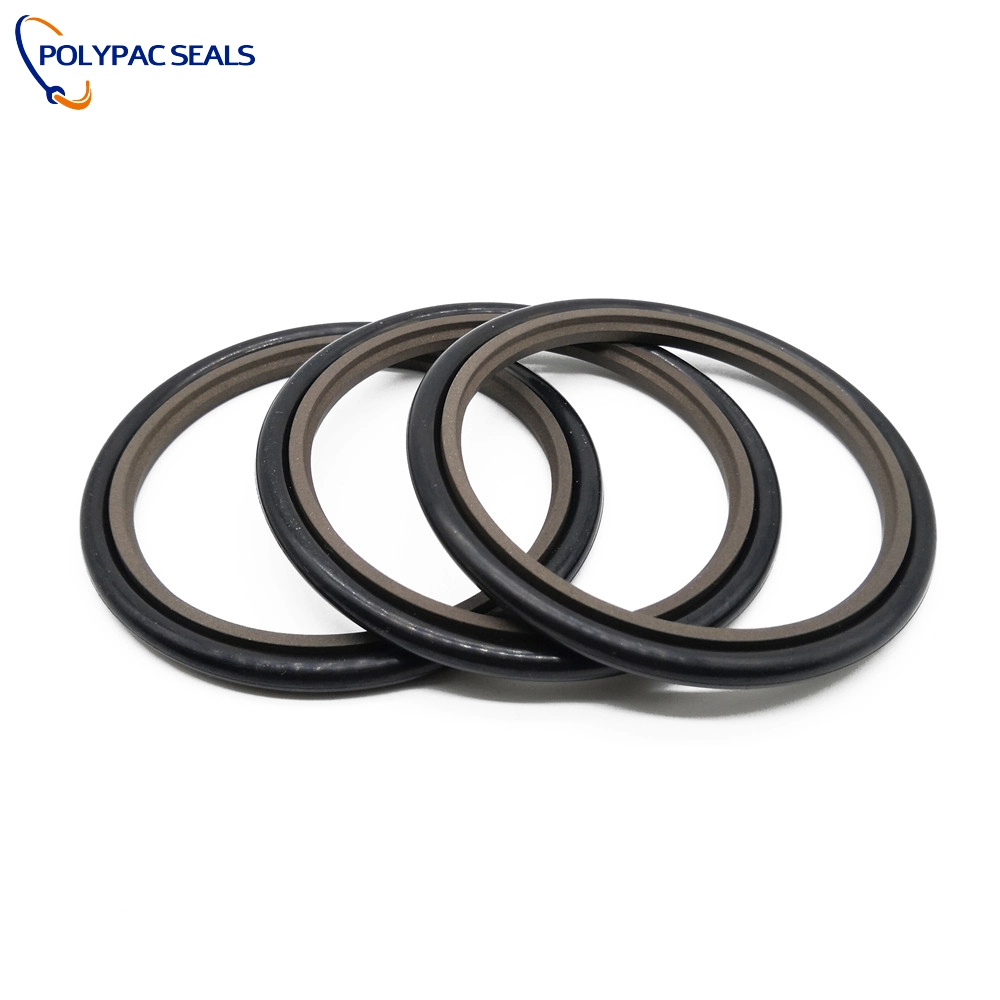
Back-up rings come in multiple shapes and materials: solid one-piece rings, split rings for retrofitting, angled rings, and low-friction profiles for dynamic applications. Geometry affects how load is distributed across the O-ring and whether the ring will roll or wedge under dynamic motion. Choosing the correct cross-section and inner/outer diameters is as important as material selection.
Material Selection for Temperature and Pressure
Elastomer vs. back-up ring material considerations
I always separate selection of the O-ring elastomer (NBR, FKM, FFKM, EPDM, silicone, etc.) from the back-up ring material (PTFE, NYLON, POM, or reinforced polymers). The elastomer provides sealing by deformation and resilience; the back-up ring provides mechanical support without significant deformation. When temperatures approach the upper limit of the elastomer, the compound softens and extrusion risk increases, making appropriate back-up ring selection essential.
Typical temperature and pressure ranges by material
Below is a reference table of common elastomers and typical continuous operating temperature ranges and practical pressure guidance. Values are industry-typical ranges; always confirm with manufacturer datasheets for your specific compound.
| Material | Typical Continuous Temp Range (°C) | Practical Pressure Guidance (static/dynamic) | Notes |
|---|---|---|---|
| NBR (Nitrile) | -40 to +100 | Up to ~200–250 bar (static); lower for dynamic | Good for oil/hydraulic fluids, limited high-temp resistance |
| FKM / Viton | -20 to +200 | Up to ~300–350 bar (static) with proper backup | Excellent heat and chemical resistance (see DuPont FKM guidance) |
| EPDM | -50 to +150 | Moderate pressures, not recommended for petroleum oils | Good for steam, hot water, brake fluids |
| Silicone | -60 to +180 | Low-medium pressure; poor wear resistance | Good for temperature extremes but not for high-pressure dynamic seals |
| FFKM (Perfluoroelastomer) | -15 to +300 | High-pressure capability with suitable backup | Highest chemical and temperature resistance but expensive |
Sources: Parker O-Ring Handbook and material manufacturer data sheets provide typical ranges; see Parker's overview O-Ring Handbook and ISO guidance at ISO 3601 for dimensional and performance considerations.
Back-up ring materials and temperature limits
Common back-up ring materials include PTFE (and filled PTFE variants), nylon (PA), and POM (acetal). PTFE has excellent chemical and temperature resistance (continuous use up to ~260°C for virgin PTFE), while nylon has a lower temperature limit (~80–120°C depending on grade) but lower friction in dynamic seals. Filled PTFE versions (bronze-filled, glass-filled) improve wear resistance and are widely used; historical development of filled PTFE is documented in literature on PTFE composites here.
Design and Installation Best Practices
Gland design and clearance control
I emphasize precise gland dimensions. Excessive clearance between mating parts increases extrusion gap and raises demand on the back-up ring. For dynamic seals, follow gland tolerance recommendations from ISO and seal manufacturers. Where possible, minimize extrusion gaps or incorporate metal-to-metal barriers to limit ring migration.
Hardness, cross-section, and stack orientation
Hardness of the elastomer (measured in Shore A) affects extrusion susceptibility. Higher durometer materials resist extrusion better but may leak if not properly compressed. The backup ring should be sized to bear the load without excessive interference that could cause O-ring cutting. I often recommend a slight clearance on the ID of the backup ring to facilitate assembly, and for split rings, ensure the split is placed away from high-load zones.
Installation, lubrication and assembly tips
Proper lubrication reduces friction during assembly and helps the back-up ring seat correctly. Use compatible assembly lubricants and keep the O-ring and backup ring clean. For split back-up rings, orient the split so it does not align with the O-ring extrusion path. After assembly, perform a pressure hold test at a slightly higher pressure than operating conditions to confirm adequate support.
Testing, Standards, and Troubleshooting
Standards and test methods I rely on
For dimensional standards and basic sealing guidance, see ISO 3601 (O-rings), and industry handbooks such as the Parker O-Ring Handbook. Where cleanliness and material traceability matter (e.g., aerospace, food contact), consult relevant ISO or industry-specific standards. ISO 3601 gives tolerances and nomenclature for O-rings (ISO 3601).
Diagnostic checklist for extrusion-related failures
If you see extrusion, scoring, or flash deformation on an O-ring, follow this checklist I use in the field:
- Verify operating pressure and transient spikes — use pressure logging if necessary.
- Measure actual gland clearances and compare to design tolerances.
- Inspect back-up ring material for wear or displacement; split rings can migrate if not properly retained.
- Confirm operating temperature — elevated temperatures reduce elastomer hardness and raise extrusion risk.
- Review media compatibility — swelling or softening can change sealing behavior.
Case study: upgrading a hydraulic rod seal stack
In one case I consulted on, a hydraulic cylinder using NBR O-rings at 250 bar experienced rapid extrusion during quick return strokes. We replaced a single soft backup (low-temp nylon) with a PTFE-filled anti-extrusion ring and changed the O-ring to an FKM compound. Post-modification, extrusion ceased and mean time between maintenance intervals increased by 4x. This illustrates the combined impact of material and geometry optimization.
Polypac Capabilities and How I Recommend Working with Manufacturers
Why choose a technical seal partner
Selecting the right back-up o ring is not just about picking a material from a catalog — it requires testing, compound understanding, and production capability. I prefer working with manufacturers that have R&D ties to universities and in-house testing equipment so they can replicate your operating conditions and qualify materials.
Polypac: technical strengths and product overview
Polypac is a scientific and technical hydraulic seal manufacturer and oil seal supplier specializing in seal production, sealing material development, and customized sealing solutions for special working conditions. Polypac's custom rubber ring and O-ring factory covers an area of more than 10,000 square meters, with a factory space of 8,000 square meters. Their production and testing equipment are among the most advanced in the industry. As one of the largest companies in China dedicated to the production and development of seals, Polypac maintains long-term communication and cooperation with numerous universities and research institutions both domestically and internationally.
Founded in 2008, Polypac began by manufacturing filled PTFE seals, including bronze-filled PTFE, carbon-filled PTFE, graphite PTFE, MoS2-filled PTFE, and glass-filled PTFE. Today, they have expanded their product line to include O-rings made from various materials such as NBR, FKM, silicone, EPDM, and FFKM. Their main product categories include O-Rings, Rod Seals, Piston Seals, End Face Spring Seals, Scraper Seals, Rotary Seals, Back-up Rings, and Dust Rings.
How Polypac supports high-temperature/high-pressure projects
When I recommend a supplier, I look for lab testing capability (temperature chambers, burst/pressure testing), material development experience, and the ability to produce filled PTFE and FFKM compounds. Polypac's equipment and academic partnerships enable customized compounds and prototyping — a competitive advantage when standard materials fail under extreme temperature or pressure cycles.
FAQ
1. What is the difference between a back-up ring and an O-ring?
A back-up ring (anti-extrusion ring) is a mechanical support component that prevents the O-ring from extruding into the gap between mating parts when subjected to pressure. The O-ring provides the seal while the back-up ring provides structural support.
2. At what pressure should I always use a back-up o ring?
There is no single threshold, but I commonly specify back-up rings for static pressures above ~200–300 bar or when gland clearances are tight. Material choice and operating temperature can lower that threshold. For precise projects, run a pressure cycle test with the candidate materials.
3. Can I use PTFE back-up rings at high temperatures?
Yes. PTFE and filled PTFE variants have high temperature resistance (continuous use often up to ~260°C), making them appropriate for high-temperature seals. Confirm the specific filled grade for wear and friction characteristics.
4. Are split back-up rings reliable for dynamic seals?
Split rings are useful for retrofit and assembly into existing housings, but the split must be positioned correctly to avoid extrusion at the joint. For high-cycle dynamic applications, I prefer one-piece designs or engineered split geometries designed for dynamic loads.
5. How does temperature affect extrusion risk?
Higher temperature generally softens elastomers (reduces modulus), increasing extrusion susceptibility at a given pressure. Conversely, very low temperatures can embrittle some elastomers and change sealing contact. Always verify compound performance across expected temperature cycles.
6. What tests should I request from my supplier?
Request compression set, hardness, thermal aging, and extrusion/extensional testing at application-relevant pressures and temperatures. Also request dimensional certification per ISO or manufacturer standards and material traceability where required.
If you want help specifying a back-up o ring for a particular cylinder, valve, or rotating shaft, contact me or reach out to Polypac for product samples and material datasheets. For product inquiries, custom compound development, and testing capabilities, check Polypac's product pages or request a consultation to review your operating conditions and a recommended seal stack.
Contact / Request a Quote: visit Polypac's website or email their technical team to share operating pressure, temperature range, media, and gland drawings so they can propose a tested, optimized solution.
References: Parker O-Ring Handbook , ISO 3601 overview , O-ring general information , PTFE information .

Hydraulic Cylinder Seals Kits: 5 High-Tech Materials That Double Your Maintenance Interval

How to Choose the Perfect Hydraulic Jack Seals: A Comprehensive Material & Performance Comparison

High-Performance Pneumatic Piston Seals: How to Achieve Zero-Leakage Efficiency

PTFE vs. Composite: Choosing the Best Piston Guide Ring Material for High-Pressure Systems

Mastering O-Ring Gland Design: The Complete Guide for Perfect Sealing Performance
Products
What is the purpose of the metal spring in a rotary shaft seal?
How can I prevent seal damage during installation?
Why did my O-ring fail prematurely?
What does "AS568" mean?
What is the difference between NBR and FKM materials?
Stay Updated with Industry Insights
Subscribe to our articles and receive the latest news, expert guidance, and technical updates directly in your E-mail.
Rest assured that your privacy is important to us, and all information provided will be handled with the utmost confidentiality.

Polypac is a trusted global supplier of high-performance sealing solutions, providing OEM & ODM services for industries worldwide.
E-mail:
Phone/WhatsApp:
© 2025 Polypac Seals. All Rights Reserved.
dms
DMS
DMS