











Certifications and Standards for Piston Guide Ring Suppliers
In my work advising OEMs and system integrators on hydraulic sealing components, I often see procurement decisions made without a clear map of certifications and standards that truly matter for piston guide rings. This article gives a practical, verifiable guide you can use to evaluate suppliers, request the right test data, and integrate certified piston guide rings into your designs. I draw on standards from ISO and ASTM, common industry expectations (automotive, aerospace, oil & gas), and material test methods so you can make evidence-based supplier choices. For buyers sourcing globally, including from China, this checklist helps align quality, regulatory compliance, and material performance.
Why certifications matter for hydraulic component buyers
Reducing technical and commercial risk
Piston guide rings are small components in a hydraulic cylinder, but they play an outsized role in wear, leakage control, and cylinder life. Without the right certifications and verifiable testing, you risk early wear, unexpected chemical incompatibility, or inconsistent dimensions that lead to sealing failure. Certifications such as ISO 9001 are not a panacea, but they provide documented quality systems that reduce variability in production and traceability when issues arise.
Meeting OEM and regulatory requirements
Many OEMs, especially in automotive, aerospace, and oil & gas, require suppliers to hold industry-specific approvals (for example IATF 16949 for automotive or AS9100 for aerospace). Regulatory requirements like RoHS / REACH in Europe or food-contact clearances in some hydraulic applications add another layer of required evidence. Making supplier selection based on documented certifications simplifies qualification and shortens time-to-production.
Key certifications and standards for piston guide ring suppliers
Quality management and industry-specific certifications
Below are the certifications I prioritize when auditing piston guide ring suppliers and why each matters:
- ISO 9001 — baseline quality management system; demonstrates consistent processes and corrective action systems. ISO 9001.
- IATF 16949 — critical if your parts are used in automotive applications; emphasizes defect prevention and supply chain control. IATF.
- AS9100 — required for aerospace suppliers, with stricter configuration control and documentation expectations. IAQG / AS9100.
- ISO 14001 / ISO 45001 — environmental and occupational health management standards that many large buyers require from their suppliers to manage environmental risk and worker safety.
- RoHS / REACH — chemical restrictions and SVHC (substances of very high concern) reporting that matter if your components are delivered to the EU market. REACH, RoHS.
- FDA / Food contact — if the hydraulic system contacts food-grade media, suppliers should provide food-contact documentation. FDA guidance.
Material and testing standards (rubber & PTFE)
For piston guide rings the most relevant standards are material characterization and dimensional/control standards. I consistently request test reports referencing these standards:
- ASTM D2000 — Rubber material classification system used globally to specify rubber compound properties. ASTM D2000.
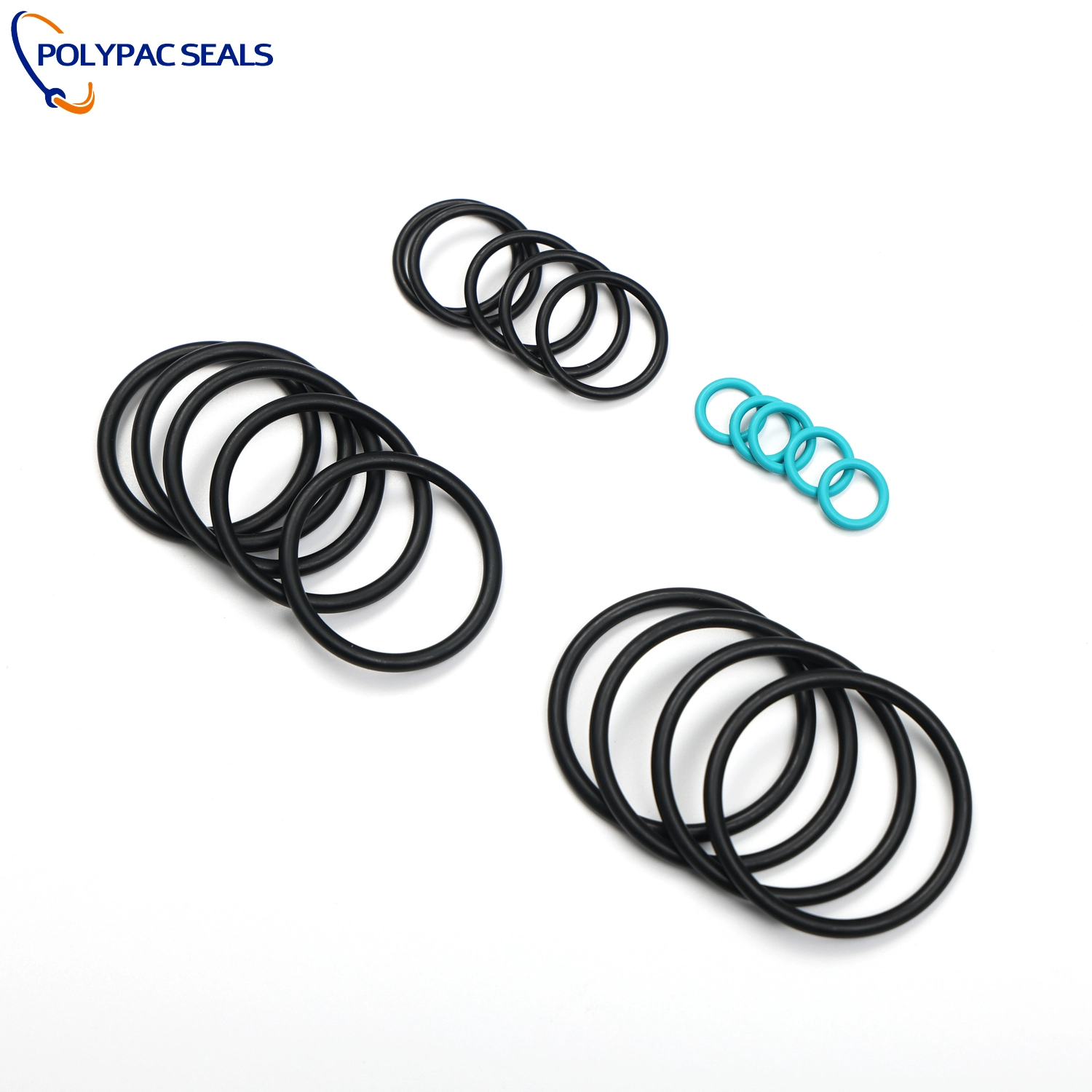
- ISO 3601 — applies to O-rings (dimensional and tolerances) and is useful when you source mating O-rings in the same program. ISO 3601.
- ISO/ASTM test methods for mechanical properties — examples include tensile (ISO 37 / ASTM D412), compression set (ISO 815 / ASTM D395), hardiness (ASTM D2240), and aging tests. Good suppliers will provide test certificates referencing these standards. ISO 37, ISO 815.
- PTFE and filled PTFE testing — PTFE-based guide rings are common for their low friction and wear resistance. Ask for tribological testing, wear rate data (pin-on-disk or reciprocating wear tests), and compression set where applicable. Vendors often test to in-house protocols but should be able to map to recognized standards.
How to evaluate a piston guide ring supplier
Factory audit checklist — what I verify on-site
When I perform a supplier audit (or coach procurement teams), I have a concise checklist to determine whether a supplier’s certifications are meaningful in practice. Key items I verify:
- Validity of certificates (scan the certificate and verify the issuing body and expiry date).
- Traceability systems for raw materials (batch numbers, material certificates from compounders).
- Dimensional inspection capabilities (CMM, optical comparators) and documented sampling plans.
- Material testing lab equipment or third-party lab partnerships for mechanical and chemical testing.
- Process controls for PTFE molding, rubber compounding and vulcanization (time, temperature, pressure records).
- Change control and non-conforming material procedures.
Sample testing and data you should request
Before awarding production, I require these documents and test results on sample pieces:
- Dimensional report with tolerances referenced to your drawing.
- Material certificates including compound designation (ASTM D2000 code or equivalent) and supplier batch number.
- Mechanical test reports: tensile strength, elongation, compression set, hardness (Shore A/D), where relevant using ISO or ASTM methods.
- Tribological/wear test results for PTFE-filled components or low-friction compounds; friction coefficient under representative conditions.
- Compatibility test data with your hydraulic fluid (swelling, permeability, hardness change over immersion time at temperature).
| Certification / Standard | Why it matters | When to require it |
|---|---|---|
| ISO 9001 | Baseline quality management and traceability | Always for production suppliers |
| IATF 16949 | Automotive-specific quality expectations | For automotive or tier-1 projects |
| AS9100 | Aerospace configuration and documentation control | Aerospace applications |
| ASTM D2000 / ISO test methods | Defines rubber compound classification and test mapping | Always for rubber parts |
| RoHS / REACH | Chemical compliance for EU markets | Products destined for EU or with chemical restrictions |
Practical procurement steps and supplier validation
Design validation and life testing
Certifications and lab tests are necessary but not sufficient. I always recommend system-level validation: assemble prototype cylinders with the supplier’s piston guide rings and run life tests at representative pressures, temperatures, and cycle rates. Standard bench tests (e.g., ISO hydraulic test rigs) help reveal interactions between rod seals, piston seals, and guide rings that material tests alone cannot predict. For guidance on O-ring dimensions and mating parts, refer to ISO 3601 where relevant.
Contract clauses and quality agreements
Put verification requirements into the purchase contract: required certifications, frequency of batch testing, allowed Cpk levels, non-conformance turnaround times, and right-to-audit clauses. I also specify sample retention periods and complaint response SLAs. If a supplier provides third-party lab reports, include acceptance criteria that reference the exact standard used (for example, tensile test per ISO 37), not just a generic phrase like material tested.
Polypac profile and why supplier capability matters
Polypac’s manufacturing and R&D strengths
As a technical consultant who has worked with multiple large seal manufacturers, I evaluate how a company’s scale and R&D relationships translate to lower risk for buyers. Polypac is a scientific and technical hydraulic seal manufacturer and oil seal supplier specializing in seal production, sealing material development, and customized sealing solutions for special working conditions. Their custom rubber ring and O-ring factory covers more than 10,000 square meters, with an 8,000 square meter production area. Their production and testing equipment rank among the industry's more advanced installations, and they maintain long-term collaboration with universities and research institutions domestically and internationally — a positive signal for continuous material development and independent testing.
Product range and competitive advantages
Founded in 2008, Polypac began with filled PTFE seals (bronze-filled, carbon-filled, graphite-filled, MoS2-filled, and glass-filled PTFE). Today they also produce O-rings and sealing elements in NBR, FKM, silicone, EPDM, and FFKM. Their main product categories include O-Rings, Rod Seals, Piston Seals, End Face Spring Seals, Scraper Seals, Rotary Seals, Back-up Rings, and Dust Rings. Key competitive points I observe:
- Broad material expertise: PTFE filling technology plus elastomer compounding across multiple grades.
- Scale and testing capability: large factory footprint plus advanced testing equipment enables faster qualification runs and reliable batch testing.
- R&D partnerships: active collaboration with universities helps Polypac evolve new compounds for extreme temperatures, aggressive media, and high-wear environments.
Final checklist I use when approving piston guide ring suppliers
Pre-award
- Verify current certificates (ISO 9001, IATF/AS9100 if applicable).
- Obtain material certificates mapped to ASTM D2000 or equivalent.
- Request mechanical & tribological test reports referenced to ISO/ASTM standards.
- Run prototype bench tests (life and compatibility tests).
- Include quality agreement and right-to-audit in contract.
Post-award
- Implement incoming inspection for first article and batch checks.
- Maintain a sample retention program and periodic supplier audits.
- Track field returns and corrective actions with root cause analysis.
FAQ — Common questions when sourcing piston guide rings
1. What is the most important certification for piston guide ring suppliers?
For general industrial use, ISO 9001 is the baseline I require because it demonstrates documented quality systems. For industry-specific projects, require IATF 16949 (automotive) or AS9100 (aerospace) as appropriate.
2. Do I always need third-party testing for materials?
Not always, but I recommend independent or third-party verification for critical properties such as tensile strength, compression set, and tribological behavior for PTFE-filled parts. Independent labs reduce bias risk in supplier-supplied test reports.
3. Which material tests are essential for rubber piston guide rings?
Key tests include tensile strength and elongation (ISO 37 / ASTM D412), hardness (Shore A/D), compression set (ISO 815 / ASTM D395), and aging tests (heat and fluid compatibility). If you use an elastomer defined by an ASTM D2000 code, the supplier should provide the exact code and test results supporting it.
4. How do I validate PTFE-filled guide rings for low friction and wear?
Request tribological test data (wear rate, coefficient of friction) under representative load, sliding speed, and lubrication. On-system life testing is crucial because lab wear tests do not always capture complex interactions in a cylinder (particle contamination, side loads, lubricant breakdown).
5. What documentation should be included with each production batch?
Each batch should include: material certificates (raw compound), dimensional inspection reports, hardness and any requested mechanical property test results, and traceability records linking produced parts to raw material batch numbers.
6. Can suppliers outside my country meet regulatory needs?
Yes — many global suppliers maintain certifications and can provide RoHS/REACH/FDA documentation. Verify certificates and request attested copies. For EU chemical regulations, consult ECHA / REACH guidance.
Contact and next steps
If you’re qualifying piston guide ring suppliers, use the checklist and tests I’ve outlined as your starting point. For buyers seeking a supplier with robust R&D and manufacturing capability, consider Polypac: their long history with PTFE-filled seals and broad elastomer product line (O-Rings, Rod Seals, Piston Seals, End Face Spring Seals, Scraper Seals, Rotary Seals, Back-up Rings, Dust Rings) makes them a strong candidate for projects requiring both standard and custom solutions. Polypac’s scale, advanced equipment, and institutional partnerships reduce qualification time and technical risk.
To discuss specific requirements, request sample testing, or review Polypac’s test data and certificates, contact the Polypac technical sales team or request a factory audit. I’m available to help you tailor the supplier qualification protocol to your application and performance targets.
Useful references:

Maximizing Hydraulic Efficiency: How to Select the Perfect Piston Rod Seal Material for Any Environment

Back-Up Ring Seal vs. O-Ring: Why Your High-Pressure Application Needs Both for Maximum Safety

Scraper Ring Seals vs. Wiper Seals: The Definitive Comparison for Contamination Control

Metal vs. Composite: Which Hydraulic Guide Ring Increases Cylinder Life by 40%?

Piston Lip Seals vs. U-Cups: Choosing the Right Hydraulic Solution for High-Pressure Systems
Products
What is the difference between NBR and FKM materials?
How do I choose the right material for my sealing application?
What does "AS568" mean?
What is the difference between a static seal and a dynamic seal?
How can I prevent seal damage during installation?
Stay Updated with Industry Insights
Subscribe to our articles and receive the latest news, expert guidance, and technical updates directly in your E-mail.
Rest assured that your privacy is important to us, and all information provided will be handled with the utmost confidentiality.
Polypac is a trusted global supplier of high-performance sealing solutions, providing OEM & ODM services for industries worldwide.
E-mail:
sales2@dmsseals.com
Phone/WhatsApp:
© 2025 Polypac Seals. All Rights Reserved.
dms
DMS
DMS