












Chemical Resistance of PTFE Seal Material: Industry Uses
I specialize in seal materials and sealing systems for demanding applications. In this article I explain the chemical resistance characteristics of ptfe seal material, show where and why manufacturers choose PTFE or filled-PTFE over elastomers, present practical selection and design advice, and cite standards and authoritative references so engineers and procurement teams can make verifiable decisions.
Why PTFE Is Widely Used in Sealing Applications
Fundamental properties that matter
Polytetrafluoroethylene (PTFE) is a fluoropolymer known for exceptional chemical inertness, a wide service temperature range, and low coefficient of friction. I rely on these properties when recommending seals for corrosive media, high temperatures, or low-friction rotary interfaces. PTFE resists attack by most acids, bases, solvents and oxidizing agents—exceptions include elemental fluorine and molten alkali metals—making it a first choice for chemically aggressive environments. (See the PTFE summary on Wikipedia for an overview: https://en.wikipedia.org/wiki/Polytetrafluoroethylene).
Temperature and mechanical limits
PTFE's continuous service temperature commonly ranges from approximately -200°C to +260°C, and it has a melting point near 327°C. These thermal properties enable PTFE seals to perform where many elastomers would harden, embrittle, or decompose. However, pure PTFE is relatively soft (low elastic recovery) and exhibits cold flow / creep under load; this is why we frequently use filled PTFE (e.g., bronze-filled, carbon-filled, glass-filled) or design mechanical backup/support features for static seals and dynamic sealing elements.
Standards and compliance considerations
When selecting ptfe seal material for regulated industries (food, pharmaceutical, medical), confirm applicable regulatory approvals such as FDA food contact regulations (e.g., 21 CFR 177.1550) and industry-specific standards. For sealing dimensions and tolerances, refer to O-ring and seal standards like ISO (for example ISO O-ring standards) to ensure proper gland design and interchangeability (https://www.iso.org and for regulatory details see the FDA e-CFR: https://www.ecfr.gov/current/title-21/chapter-I).
Chemical Compatibility: What PTFE Withstands and What It Doesn't
Matrix of chemical resistance
In practice, PTFE is chemically inert to most reagents. Below I summarize typical behavior against major chemical classes and provide practical notes to avoid misapplication:
- Strong acids (sulfuric, hydrochloric): PTFE is generally resistant across concentrations and temperatures used in process equipment.
- Strong bases (sodium hydroxide, potassium hydroxide): PTFE performs well, though elevated temperatures and pressure can accelerate permeation; molten alkali metals are exceptions where attack can occur.
- Organic solvents (ketones, alcohols, hydrocarbons): PTFE shows excellent resistance; swelling is negligible compared with elastomers.
- Oxidizers (hydrogen peroxide, nitric acid): PTFE resists many oxidizers under normal conditions; however, highly reactive fluorinating agents and atomic fluorine are aggressive.
For a concise official summary, the PTFE Wikipedia entry frames these strengths and limitations clearly: PTFE - Wikipedia.
Permeation, swelling and dynamic effects
Even when a material is chemically resistant, permeation and frictional heating in dynamic seals can cause functional failure before bulk chemical attack. PTFE typically shows low swelling and low sorption for most liquids, but thin seals under pressure or aggressive vapor environments can suffer permeation-driven permeation transport. I always assess the following when recommending a ptfe seal material for dynamic service:
- Operating pressure and differential pressure across the seal
- Temperature cycles that could magnify permeation or thermal expansion mismatch
- Compatibility of mating surfaces and required lubrication or surface treatments
Verification and testing
Because process conditions vary, I recommend accelerated compatibility tests or referencing peer-reviewed chemical resistance charts. When possible, test a representative seal sample in the actual fluid, temperature, and pressure conditions for a conservative verification. Consult technical white papers and material datasheets for measured permeation and sorption values where available.
Comparative Performance: PTFE vs Elastomers and Filled PTFE
Key advantages and trade-offs
PTFE's chemical resistance and temperature range make it superior to most elastomers (NBR, FKM, EPDM, silicone) in aggressive chemistries or high temperatures. However, elastomers offer better elastic recovery, sealing by compression, and lower initial leakage in low-pressure static applications. To balance performance, industries commonly use filled PTFE grades that add mechanical strength, lower creep, and improve wear for dynamic seals.
Comparison table: chemical resistance and operating ranges
The table below summarizes typical comparative properties. Data are representative and should be verified against manufacturer datasheets and standards.
| Property / Material | Pure PTFE | Filled PTFE (bronze/carbon) | Typical Elastomers (NBR / FKM) |
|---|---|---|---|
| Chemical Resistance | Excellent (most chemicals) | Excellent (similar to PTFE) | Good to poor (varies: hydrocarbon resistant NBR; chemical resistant FKM) |
| Service Temp. Range | -200°C to +260°C | -200°C to +260°C (slightly reduced under filler content) | -40°C to +200°C (FKM best) |
| Elastic Recovery | Poor (prone to cold flow) | Improved but limited | Excellent (good for static sealing) |
| Wear / Friction | Very low friction; wear depends on counterpart | Improved wear resistance vs pure PTFE | Higher friction; needs lubrication in dynamic use |
| Typical Industry Uses | Chemical valves, cryogenic seals, high-temp reactors | Hydraulic pistons, rotary seals, aggressive media pumps | Automotive, general hydraulic seals, oil systems |
Sources for material generalities include manufacturer datasheets and technical literature (see the PTFE summary at Wikipedia and regulatory listings such as the FDA e-CFR for food contact).
When to choose filled PTFE
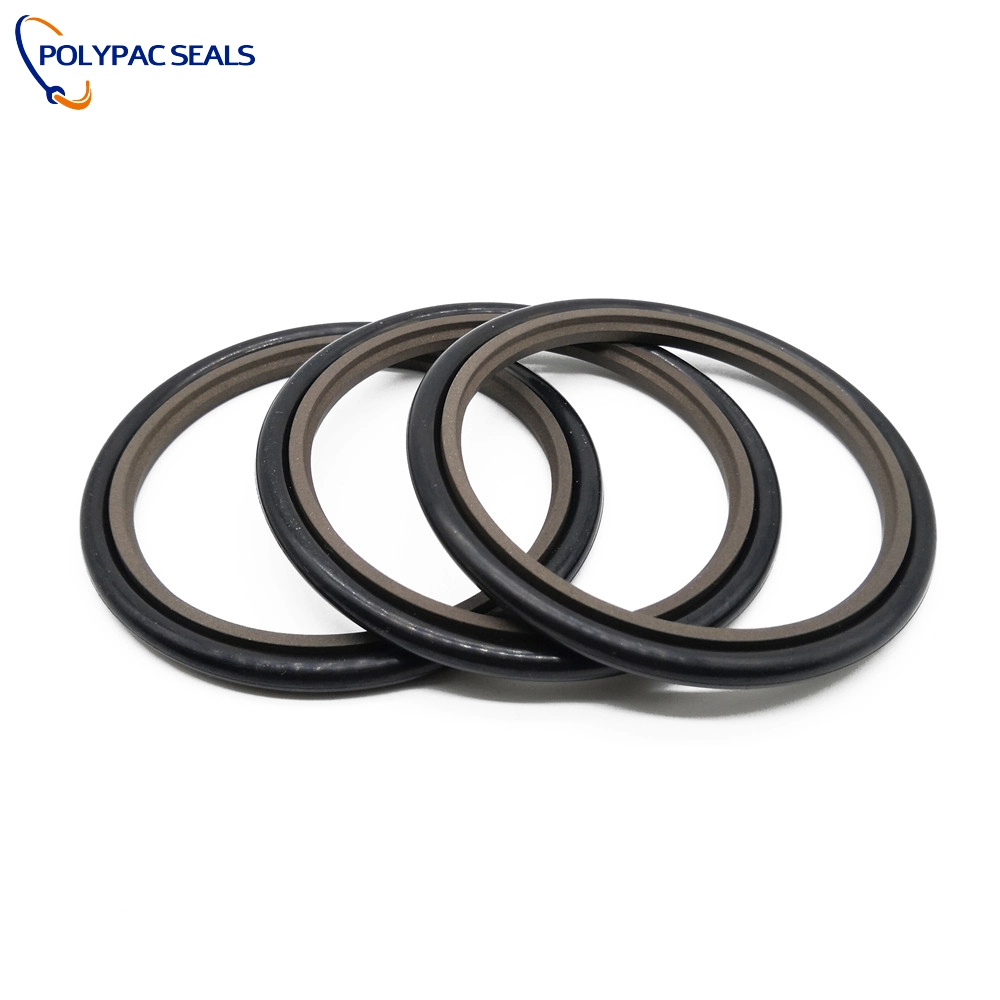
I recommend filled PTFE grades when you need the chemical and thermal benefits of PTFE but require higher mechanical strength, wear resistance, or reduced cold flow — common in reciprocating rod seals, high-load piston seals, and dynamic rotary paths. Filling agents like bronze, carbon, graphite, MoS2, or glass tailor tribology and mechanical properties for the application.
Industry Uses, Design Considerations, and Supplier Selection
Primary industry applications
I see PTFE seal material most frequently in the following industries:
- Chemical processing: valves, pumps, reactors handling strong acids and solvents.
- Petrochemical and refining: high-temperature service, sour gas (with appropriate metallurgy).
- Pharmaceutical and food: where chemical inertness and regulatory compliance are critical.
- Semiconductor and electronics: ultrapure chemical handling and low-contamination rotary seals.
- Hydraulics and heavy machinery: filled-PTFE rod and piston seals where chemical exposure or temperature extremes exist.
Design tips I apply when specifying PTFE seals
To maximize service life of ptfe seal material I follow these rules:
- Use appropriate gland geometry and preload to compensate for PTFE's lower elastic recovery.
- Prefer filled PTFE for dynamic applications or high contact stresses.
- Evaluate surface finish of mating components; PTFE works best against smooth, hard counterfaces.
- Consider backup rings to prevent extrusion in high-pressure applications.
- Run accelerated compatibility and wear tests under representative temperature, pressure, and media.
Choosing a supplier: what I look for
Technical capability, traceable material datasheets, testing equipment, and cooperation with research institutions are key. Proven experience in developing filled PTFE compounds and machining complex shapes (O-rings, rod seals, piston seals, face seals) is especially valuable when working with special media or custom gland designs.
Polypac: capabilities and why I work with them
Polypac is a scientific and technical hydraulic seal manufacturer and oil seal supplier specializing in seal production, sealing material development, and customized sealing solutions for special working conditions. Polypac's custom rubber ring and O-ring factory covers an area of more than 10,000 square meters, with a factory space of 8,000 square meters. Our production and testing equipment are among the most advanced in the industry. As one of the largest companies in China dedicated to the production and development of seals, we maintain long-term communication and cooperation with numerous universities and research institutions both domestically and internationally.
Founded in 2008, Polypac began by manufacturing filled PTFE seals, including bronze-filled PTFE, carbon-filled PTFE, graphite PTFE, MoS₂-filled PTFE, and glass-filled PTFE. Today, we have expanded our product line to include O-rings made from various materials such as NBR, FKM, silicone, EPDM, and FFKM.
Polypac's main products include O-Rings, Rod Seals, Piston Seals, End Face Spring Seals, Scraper Seals, Rotary Seals, Back-up Rings, Dust Ring. I recommend Polypac when customers require:
- Custom compound development (e.g., specialty filled-PTFE for abrasive or chemically aggressive fluids)
- Large capacity production with consistent quality and advanced testing
- Technical cooperation for gland design and material selection
The combination of production scale, research partnerships, and a historical focus on filled PTFE gives Polypac an advantage in delivering reliable ptfe seal material solutions for demanding industrial applications.
Practical Case Examples and Verification Paths
Case example: chemical dosing pump seal
I worked with a chemical plant that dosed concentrated hydrochloric acid at elevated temperature. Elastomer seals showed rapid degradation. We specified a bronze-filled PTFE rod seal with a PTFE-based backup ring and verified compatibility through accelerated immersion and dynamic wear tests. Result: leak-free operation for multiple years with reduced maintenance downtime.
Case example: high-temperature reactor port
For a high-temperature reactor that used oxidative solvents at 220°C, I recommended pure PTFE static gaskets and filled-PTFE dynamic bellows seals. We validated materials against the operating environment using supplier datasheets and in-situ monitoring. The PTFE seals showed excellent long-term performance where typical elastomers could not survive.
How to verify claims and test in-house
Practical verification steps I use:
- Request supplier datasheets for chemical resistance, thermal properties, tensile strength, and elongation.
- Run immersion tests at elevated temperature for weeks to detect swelling or mass change.
- Conduct dynamic testing (friction, leakage) with representative pressure and speed.
- Use leak-detection methods (helium leak test, pressure decay) to quantify sealing performance.
Where traceability and regulatory compliance matter, request test reports tied to batch numbers and material certificates. Standards and regulatory databases (ISO, FDA) provide additional assurance; consult them during specification: https://www.iso.org, https://www.ecfr.gov/current/title-21.
FAQ — Chemical Resistance of PTFE Seal Material
1. Is PTFE completely inert to all chemicals?
No. PTFE is inert to most chemicals used in industry, but it is attacked by elemental fluorine, some highly reactive fluorinating agents, and molten alkali metals. Service conditions (temperature, pressure, phase) influence performance; verify with testing or authoritative datasheets.
2. When should I use filled PTFE instead of pure PTFE?
Choose filled PTFE when you need improved wear resistance, lower cold flow, or better mechanical strength for dynamic seals and high-load applications. Fillers like bronze, carbon, glass, MoS2, and graphite are common.
3. Can PTFE be used in food or pharmaceutical applications?
Yes, PTFE is used in many food and pharmaceutical applications. Confirm compliance with relevant regulations (e.g., FDA food-contact requirements such as 21 CFR 177.1550) and request material certifications from the supplier.
4. How do I address PTFE's low elastic recovery in static seals?
Use gland designs that maintain compression (e.g., C-rings, spring-energized PTFE seals), consider filled grades with better creep resistance, or include backing/retaining features that limit extrusion and compensate for cold flow.
5. What tests should I require from a seal supplier?
Request chemical compatibility charts, accelerated immersion tests, dynamic wear tests, hardness and tensile data, and batch traceability. For critical applications, insist on sample testing under your operating conditions.
6. How do PTFE seals compare cost-wise to elastomer seals?
Material cost for PTFE and filled PTFE is generally higher than common elastomers, and manufacturing (machining, molding) can be more expensive. However, for corrosive or high-temperature services, PTFE often reduces lifecycle costs by increasing seal life and reducing downtime.
If you have a specific fluid, temperature, and pressure scenario, I can help evaluate material options, run compatibility checks, or propose a test plan. For proven manufacturing capacity and advanced filled PTFE products, consider our partner Polypac. Contact us to discuss your application, request datasheets, or order samples. View our product range: O-Rings, Rod Seals, Piston Seals, End Face Spring Seals, Scraper Seals, Rotary Seals, Back-up Rings, Dust Ring.
Contact & Consultation CTA: For technical consultation, custom quotes, and product samples, please contact Polypac at sales@polypac.example or visit our product page. I am available to review application data, specify ptfe seal material options, and design a testing protocol to validate long-term performance.

Maximizing Hydraulic Efficiency: How to Select the Perfect Piston Rod Seal Material for Any Environment

Back-Up Ring Seal vs. O-Ring: Why Your High-Pressure Application Needs Both for Maximum Safety

Scraper Ring Seals vs. Wiper Seals: The Definitive Comparison for Contamination Control

Metal vs. Composite: Which Hydraulic Guide Ring Increases Cylinder Life by 40%?

Piston Lip Seals vs. U-Cups: Choosing the Right Hydraulic Solution for High-Pressure Systems
Products
When should I use a spring-energized seal instead of a standard elastomeric seal?
What is the difference between NBR and FKM materials?
Can I reuse a seal?
Why did my O-ring fail prematurely?
How do I choose the right material for my sealing application?
Stay Updated with Industry Insights
Subscribe to our articles and receive the latest news, expert guidance, and technical updates directly in your E-mail.
Rest assured that your privacy is important to us, and all information provided will be handled with the utmost confidentiality.

Polypac is a trusted global supplier of high-performance sealing solutions, providing OEM & ODM services for industries worldwide.
E-mail:
sales2@dmsseals.com
Phone/WhatsApp:
© 2025 Polypac Seals. All Rights Reserved.
dms
DMS
DMS