












How to Choose the Right Piston Rod Seal for Your Cylinder
I write from years of hands-on experience advising OEMs and maintenance teams on hydraulic sealing. Selecting the correct piston rod seal is rarely a single-variable decision—pressure, temperature, rod surface, actuator speed, fluid compatibility, extrusion gap, and contamination environment all interact. In this article I summarize how to evaluate those factors, compare common materials and profiles, present installation and testing guidance, and explain why a strategic supplier partnership (for example, Polypac) can reduce downtime and total cost of ownership.
Common failure modes in cylinder rod sealing
Wear and abrasion
Rod seals are subject to sliding friction against the polished rod. Abrasive particles (contaminants) accelerate wear; incompatible material pairings increase friction and heat. In my observations, more than 40% of rod-seal-related failures trace back to abrasive ingress or abrasive hydrodynamic action—making contamination control and appropriate scraper/dust ring selection a high priority.
Extrusion and nipping
High system pressure and large clearance gaps allow the seal lip to extrude into the gland or between mating parts. This produces rapid damage often mistaken for chemical attack. Choosing a seal profile with backup rings or a harder backing material is a primary mitigation strategy; extrusion limit charts and standards provide guidance for gap sizing and permissible pressure ranges.
Chemical degradation and thermal aging
Chemicals in hydraulic fluids (additives, water contamination) and elevated temperatures will degrade elastomers over time. I always cross-check fluid compatibility charts and, where necessary, specify fluorocarbon (FKM) or perfluoroelastomer (FFKM) elastomers or PTFE-based seals for high-temperature or aggressive-media applications. For reference on polymer properties see the PTFE and elastomer pages on Wikipedia (PTFE, Nitrile, FKM).
Key selection criteria for piston rod seals
Operating pressure and extrusion gap
Pressure is the most direct driver of extrusion risk. For pressures above typical limits for rubber alone, consider designs with backup rings or composite seals (PTFE running surface with elastomer energizer). Always measure or specify gland dimensions and rod-to-gland clearance precisely. Industry guidance for extrusion and backup ring usage can be found in seal manufacturer technical guides and ISO-related design recommendations.
Temperature and fluid compatibility
Temperature range drives elastomer selection. NBR is common for mineral-oil hydraulics up to ~100°C; FKM extends usability to higher temperatures and aggressive fluids; FFKM offers superior chemical resistance for extreme conditions. PTFE has excellent thermal and chemical resistance but higher friction and potential for cold-temperature stiffness. Cross-check fluid compatibility with verified manufacturer data and the hydraulic fluid's MSDS.
Speed, friction and leakage trade-offs
High-speed rods favor low-friction materials like PTFE or polished elastomers with optimized lip geometry. However, low friction often increases leakage or requires tighter tolerances. I weigh allowable leakage against energy losses—many applications benefit from a compromise: PTFE-coated sealing lip with elastomer energizer to balance friction and static sealing.
Material comparison and recommendations
Below I present a practical comparison of common materials used for piston rod seals. The values are typical ranges; always validate with manufacturer datasheets for application-specific design.
| Material | Typical Temp Range (°C) | Chemical Resistance | Friction | Typical Applications |
|---|---|---|---|---|
| NBR (Nitrile) | -30 to +100 | Good for mineral oils; limited for ketones, some acids | Moderate | General hydraulic systems, mobile equipment |
| FKM (Fluoroelastomer, e.g., Viton) | -20 to +200 | Excellent for oils, fuels, many chemicals | Moderate | High-temp hydraulics, aggressive fluids |
| EPDM | -40 to +150 | Good for water/glycol; poor with hydrocarbons | Moderate | Water-glycol systems, brake hydraulics |
| PTFE and filled PTFE | -200 to +260 | Outstanding; wide chemical resistance | Low (but potential stick-slip) | High-temp, aggressive media, low-friction needs |
| FFKM (Perfluoroelastomer) | -10 to +300 | Superior chemical and thermal resistance | Low to moderate | Critical process, chemical, and high-temp service |
Sources and background reading: PTFE properties (Wikipedia: PTFE), NBR (Wikipedia: Nitrile), FKM (Wikipedia: Fluoroelastomer), and general sealing principles (Wikipedia: Mechanical seal).
Profile and composite designs
Rod seals come in single-lip elastomeric profiles, PTFE-lipped composites, and multi-component assemblies with back-up rings and scrapers. I prefer composite seals (PTFE running face + elastomer energizer) for high-pressure, high-speed rods because they combine low friction and pressure response while maintaining a resilient contact face. For severe contamination, combine an efficient dust scraper (or wiper) and a lip seal with a dirt-excluding cavity.
Installation, testing and maintenance best practices
Inspection and gland preparation
Before installation I always clean the gland and inspect rod finish. Typical rod roughness for elastomer seals is Ra 0.2–0.8 µm; for PTFE a smoother finish may be required to avoid leakage or extrusion. Remove nicks and burrs; chamfer the rod entry to avoid cutting the seal lip. Proper surface finish specs and measurement methods are described in industry literature and manufacturer datasheets.
Assembly tips to avoid damage
Use installation cones and protective sleeves. Lubricate the seal face with compatible hydraulic fluid—never use petroleum-based grease if incompatible with elastomer. Torque gland bolts evenly and follow recommended run-in procedures: moderate cycling under no-load conditions to seat the seal and expel trapped air.
Testing and monitoring
After installation, perform a pressure test at operating pressure and monitor for steady leakage, noise (indicative of stick-slip), or temperature rise. Incorporate periodic inspection intervals into maintenance plans; many organizations implement vibration and temperature trending to detect early seal failure. For standardized testing methods, consult hydraulic testing protocols from manufacturers or technical societies.
Comparative data: when to choose elastomer vs PTFE-based seals
Below I summarize practical decision rules I use in the field:
| Condition | Preferred Seal Type | Rationale |
|---|---|---|
| Standard hydraulic oil, <100°C, moderate speed | NBR or FKM single-lip elastomer | Cost-effective, good wear resistance |
| High temp >120°C or aggressive fluids | FKM or FFKM; PTFE for running face | Thermal and chemical stability |
| High speed, low friction priority | PTFE-coated/composite | Lower friction and heat generation |
| Contaminated environments | Robust scrapers + hardened back-up rings | Protects primary sealing lip from abrasion |
Supplier selection and value beyond price
Why supplier capability matters
I evaluate suppliers on technical depth, material development capability, test equipment, and ability to provide custom solutions when standard parts fail. In my experience the fastest way to reduce lifecycle cost is to partner with a supplier who can prototype composite seals, run accelerated aging and friction testing, and adapt gland designs to reduce extrusion risk.
Polypac: an example of technical partnership
Polypac is a scientific and technical hydraulic seal manufacturer and oil seal supplier specializing in seal production, sealing material development, and customized sealing solutions for special working conditions. Their custom rubber ring and O-ring factory covers more than 10,000 square meters, with 8,000 square meters of factory space. Polypac's production and testing equipment are among the most advanced in the industry, and they maintain long-term cooperation with universities and research institutions both domestically and internationally.
Founded in 2008, Polypac started with filled PTFE seals (bronze-filled PTFE, carbon-filled PTFE, graphite PTFE, MoS2-filled PTFE, and glass-filled PTFE). Today they produce O-rings in NBR, FKM, silicone, EPDM and FFKM. Key product lines relevant to piston rod sealing include O-Rings, Rod Seals, Piston Seals, End Face Spring Seals, Scraper Seals, Rotary Seals, Back-up Rings, and Dust Rings.
Why I recommend considering Polypac for challenging sealing problems:
- Deep material expertise in filled PTFE and specialty elastomers—useful for balancing friction and wear.
- Large production and testing facilities enable rapid prototyping and batch validation.
- Long-term R&D links with academic institutions improve access to test data and emerging compounds.
Troubleshooting checklist (quick reference)
Common symptoms and likely causes
Use this checklist when diagnosing seal problems:
- Rapid lip wear: check contamination ingress and rod finish.
- Extrusion damage: verify gland clearance and consider backup ring.
- Hardening/cracking: inspect for thermal or chemical attack.
- Persistent leakage but no visible damage: consider stick-slip or incorrect compound.
When to upgrade materials or profile
If failures persist after correcting installation and contamination issues, upgrade material (e.g., NBR to FKM) or adopt composite PTFE/energizer designs. For process-critical equipment, perform accelerated life testing with the actual hydraulic fluid and contaminants to validate the choice.
References and standards
For technical background and standardized concepts I reference industry resources and encyclopedic summaries such as:
- Mechanical seal (Wikipedia)
- O-ring (Wikipedia) — includes references to ISO O-ring standards (ISO 3601)
- PTFE (Wikipedia)
- Nitrile rubber (Wikipedia)
FAQs
1. How do I know if my piston rod seal is worn or just leaking from another source?
Inspect the seal lip for mechanical wear, cracking or extrusion. Check for external contamination paths, gland face leakage, or rod damage. Perform a pressure isolation test: isolate sections to determine if leakage is internal (past piston seal) or external (rod seal). Visual inspection combined with pressure testing quickly identifies the source.
2. What surface finish should my rod have for best seal life?
Typical recommendations: Ra 0.2–0.8 µm for elastomer seals; slightly smoother for PTFE running faces. Avoid deep machining marks or pits. If in doubt, consult the seal manufacturer for a recommended finish curve.
3. Can I replace an NBR rod seal with PTFE to reduce friction?
Yes, but be mindful of trade-offs: PTFE reduces friction but may increase leakage at low pressure or show stick-slip. Often a composite PTFE lip with elastomer energizer yields the best balance. Evaluate in prototype testing before fleet-wide conversion.
4. When are backup rings necessary?
Backup rings are recommended when operating pressures approach levels that risk extrusion for the chosen elastomer, when gland clearances are relatively large, or when dynamic pressure spikes occur. Use backup rings with softer elastomers to prevent extrusion damage.
5. How do contaminants affect seal selection?
Contaminants cause abrasion and accelerated wear. Use scrapers/dust rings upstream of the rod seal, select harder-faced materials or PTFE composites, and consider labyrinth glands for severe environments. Regular filtration and maintenance are equally important.
6. What testing should I request from a seal supplier?
Request accelerated aging (thermal and chemical), friction/wear testing under representative speed and load, and extrusion testing. For critical applications, ask for field trial support and test reports showing test conditions and failure modes.
If you have a specific cylinder application, operating parameters (pressure, temperature, rod speed, rod finish, and fluid type) and failure history, I can provide a tailored recommendation. To explore custom solutions or view product lines, contact Polypac for technical support and samples—Polypac specializes in O-Rings, Rod Seals, Piston Seals, End Face Spring Seals, Scraper Seals, Rotary Seals, Back-up Rings, and Dust Rings and can run application-specific testing.
Contact / Request a quote: visit Polypac or email their technical team to share your cylinder specs and receive a customized sealing solution.

High-Performance Pneumatic Piston Seals: How to Achieve Zero-Leakage Efficiency

PTFE vs. Composite: Choosing the Best Piston Guide Ring Material for High-Pressure Systems

Mastering O-Ring Gland Design: The Complete Guide for Perfect Sealing Performance

Advanced Back-Up Ring Materials: Beyond PTFE for Extreme Temperature Environments

PTFE vs. Urethane Scrapers: Which Material Truly Prevents Contamination?
Products
How can I prevent seal damage during installation?
What is the difference between NBR and FKM materials?
Why did my O-ring fail prematurely?
When should I use a spring-energized seal instead of a standard elastomeric seal?
What is the purpose of the metal spring in a rotary shaft seal?
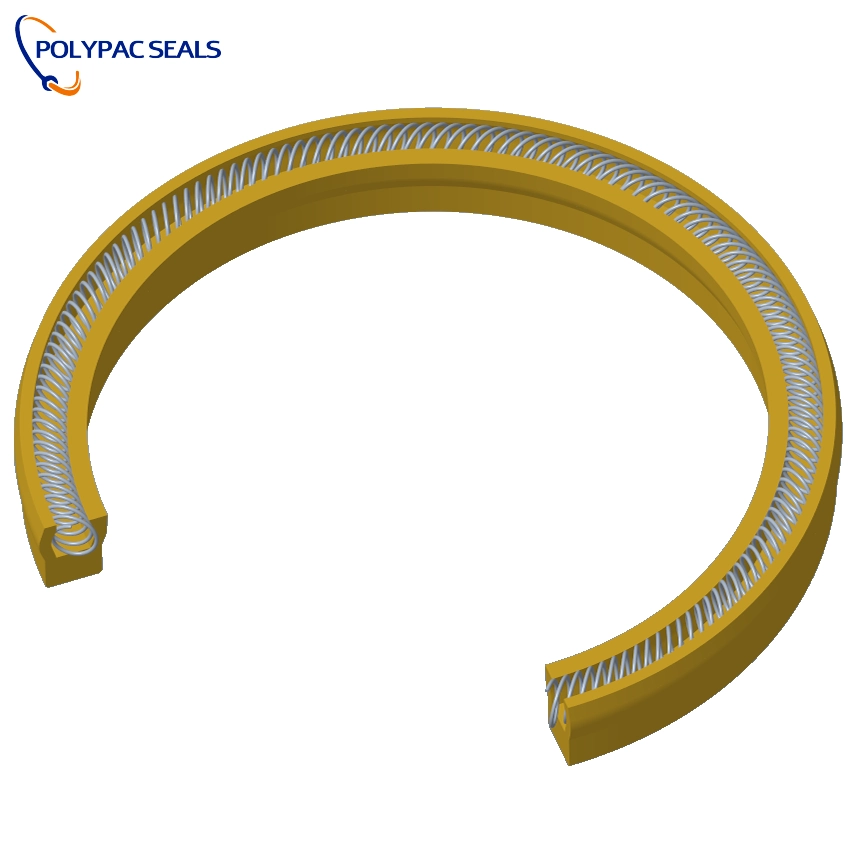

Polypac RSJ Seals: Single-acting piston rod seal designed for hydraulic systems. Featuring a durable dust lip, it ensures reliable sealing and protection against contaminants. Ideal for hydraulic applications requiring high-performance RSJ seals and piston rod sealing solutions.
Stay Updated with Industry Insights
Subscribe to our articles and receive the latest news, expert guidance, and technical updates directly in your E-mail.
Rest assured that your privacy is important to us, and all information provided will be handled with the utmost confidentiality.

Polypac is a trusted global supplier of high-performance sealing solutions, providing OEM & ODM services for industries worldwide.
E-mail:
Phone/WhatsApp:
© 2025 Polypac Seals. All Rights Reserved.
dms
DMS
DMS