











How to Choose the Right Piston Rubber Seal for Your Hydraulic System
Selecting the correct piston rubber seal for a hydraulic system is a decision that directly affects reliability, efficiency, and lifetime maintenance costs. This guide synthesizes material science, seal design, and field-proven selection practices to help engineers, maintenance technicians, and procurement specialists choose piston seals that resist extrusion, manage friction, and maintain sealing integrity under pressure, temperature, and fluid chemistry constraints. The recommendations below are grounded in industry standards and technical references to support verifiable decisions.
Understanding Hydraulic System Requirements
System operating parameters: pressure, temperature, speed
Before selecting a piston rubber seal, document the hydraulic system's maximum working pressure, expected pressure spikes, operating temperature range, and piston/rod surface speed (relative motion). Piston seals must resist extrusion at high pressure and maintain elasticity across temperature swings. For example, typical industrial hydraulics operate between 10–350 bar; mobile hydraulics may see similar peak pressures with wider ambient temperature variation. Refer to general hydraulic system information for context: Hydraulic cylinder (Wikipedia).
Fluid compatibility and contamination
Hydraulic fluid type (mineral oil, biodegradable ester, water-glycol, phosphate ester) governs elastomer selection—swelling, hardening, and degradation are fluid-dependent. Also evaluate contamination risks (particulate, water, acids) because abrasive particles and water can accelerate seal wear. Industry guidance on hydraulic fluids and compatibility can be found in equipment manufacturer literature and standards; see general references such as Hydraulic fluid (Wikipedia).
Performance targets: leakage, friction, and life expectancy
Define acceptable leakage (static and dynamic), permissible friction (stick-slip concerns), and design life (hours or cycles). Low-friction PTFE composites reduce power loss but can reduce damping and increase susceptibility to extrusion without suitable backup rings. Rubber piston seals provide elasticity and sealing but show higher dynamic friction. Balancing leakage tolerance and efficiency determines whether to choose a rubber piston seal, a composite seal, or a hybrid solution (rubber energizer + PTFE ring).
Materials and Compatibility for Piston Rubber Seal
Common elastomers and their service ranges
Typical piston seal elastomers include NBR (nitrile), FKM (fluoroelastomer), EPDM, silicone, and perfluoroelastomers (FFKM). Below are commonly referenced temperature ranges and general chemical compatibility. Source references: individual elastomer descriptions on NBR, FKM, EPDM, Silicone, and general perfluoroelastomer data.
| Elastomer | Typical service temp | Strengths | Limitations |
|---|---|---|---|
| NBR (Nitrile) | -40 to 120 °C | Good oil and mineral hydraulic fluid resistance, low cost | Poor high-temp and ozone resistance |
| FKM (Viton) | -20 to 200 °C | Excellent oil, fuel, and high-temp resistance | Higher cost, less flexible at very low temps |
| EPDM | -50 to 150 °C | Outstanding steam and water-glycol resistance | Poor mineral oil compatibility |
| Silicone | -60 to 200+ °C | Excellent temperature extremes, inert | Poor tear strength and wear resistance |
| FFKM (Perfluoroelastomer) | Up to 250–300 °C (varies) | Best chemical and thermal stability | Very high cost, limited mechanical resilience for dynamic sealing without special designs |
Swelling, hardness, and compound selection
Choose a compound hardness (Shore A) based on pressure and sealing needs—softer compounds improve conformability and leakage control at low pressure but may extrude under high pressure. Higher durometer (harder) compounds resist extrusion but require tighter tolerances. Manufacturers commonly offer NBR and FKM in 70±5 Shore A blends for dynamic piston seals; specialty compounds (filled PTFE elastomer blends) combine low friction with improved wear resistance.
Sealing additives and filled materials
Filled PTFE (e.g., bronze-, carbon-, or MoS2-filled PTFE) and elastomer-PTFE hybrids reduce friction and wear. These materials pair well with rubber energizers to maintain contact under fluctuating pressures. For background on PTFE-filled composites, see industry summaries and material datasheets and historical development: PTFE (Wikipedia).
Design, Sizing and Performance Considerations
Piston seal profiles and cross-sections
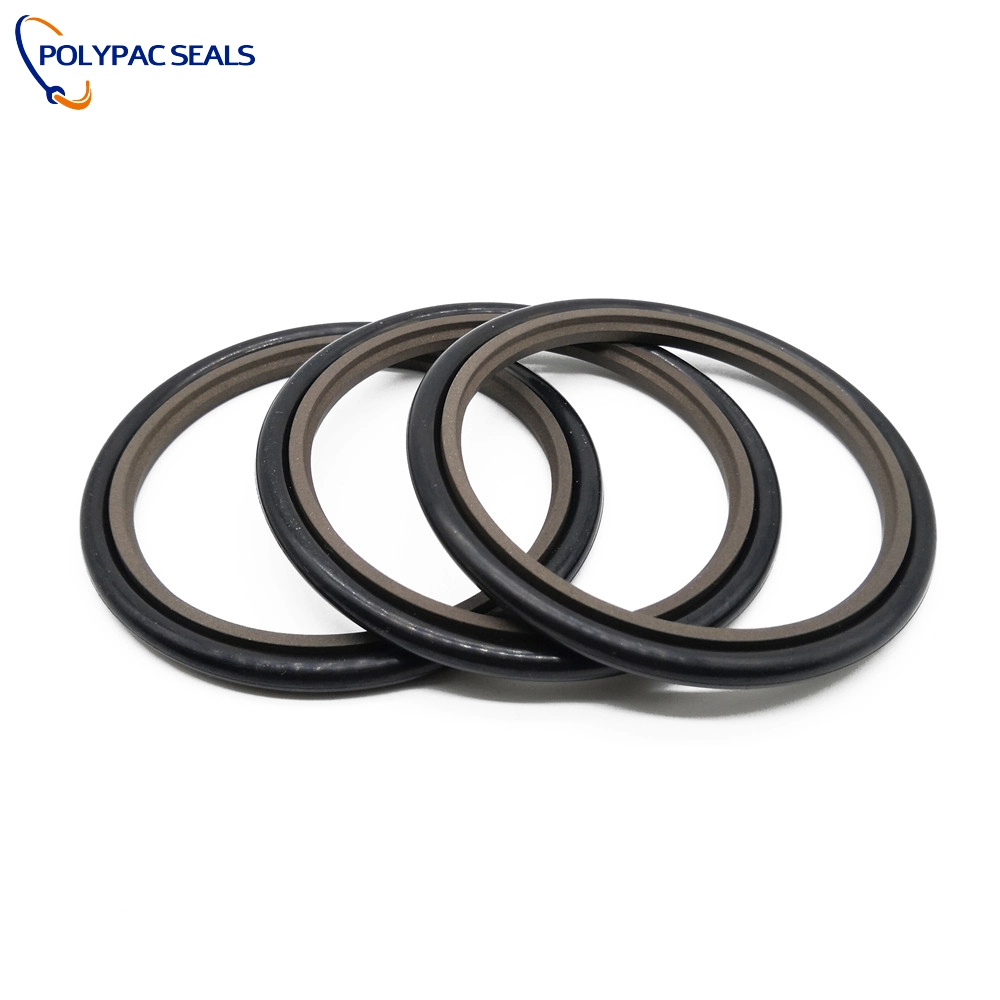
Piston seals come in numerous profiles: U-cup, V-ring, chevron, lip seals, and composite piston rings (rubber + PTFE). U-cups with an energized lip are common for single-acting pistons; double-acting cylinders often use symmetrical profiles or paired seals. Consider whether you need a low-friction profile (PTFE face) or an energizing rubber lip for tight sealing at low pressure.
Sizing: tolerances, groove design, and extrusion gaps
Accurate groove dimensions are critical. Follow manufacturer groove charts for squeeze (radial compression), stretch, and allowable extrusion gap. Improper groove depth or width can cause roll-up, cutting, or extrusion. When using softer elastomers in high-pressure systems, backup rings (hard polymer rings) are necessary to prevent extrusion into the gap between piston and cylinder bore.
Wear modes and expected lifetime
Common wear modes: abrasive wear from contaminants, thermal aging (hardening/embrittlement), chemical attack (swelling/softening), and mechanical extrusion/cutting. Predictive lifetime depends on operating cycles, contamination control (filtration), surface finish of mating components (recommended Ra values), and seal material pairing. For dynamic seals, surface finish of the cylinder bore is typically specified between 0.2–0.8 µm Ra depending on seal type; consult manufacturer guidance.
Selection, Installation, Testing, and Supplier Guidance
Practical selection workflow
- Document system parameters: pressures (max and steady), temperatures, fluid, speeds, cycles, acceptable leakage, and environmental exposures.
- Preselect materials compatible with fluid and temperature (use authoritative compatibility charts and material datasheets).
- Choose seal profile based on actuation type (single/double-acting), friction target, and whether backup rings are needed.
- Specify groove dimensions per manufacturer's engineering handbook and include surface finish tolerances.
- Prototype and test under expected pressure, temperature, and cycling—including start-stop and pressure spike conditions.
Installation, handling and maintenance tips
Use proper installation tools to avoid nicks and cuts; lubricate seals with compatible fluid before installation to reduce friction and avoid dry running. Keep sealing surfaces clean and inspect for nicks or corrosion. Implement filtration and breathers to control contamination; pressure spikes can be mitigated with accumulators or pressure reliefs.
Supplier and standards considerations
Choose suppliers who reference standards (e.g., ISO 3601 for O-rings) and provide material certificates, test reports, and engineering support for groove design. Peer-reviewed technical references and manufacturer data sheets (for elastomer properties and test methods) are necessary for verification. For O-ring and seal standards overview, see O-ring (Wikipedia) which references ISO specifications for dimensions and tolerances.
Comparative decision table: common piston seal choices
| Seal Type | Best for | Pros | Cons |
|---|---|---|---|
| Rubber U-cup | General-purpose, low-medium pressure | Good sealing at low pressure, low cost | Higher friction, may need backup at high pressure |
| PTFE-faced composite | Low friction, higher temperature | Low wear, excellent fluid compatibility | Requires energizer or backup, costlier |
| Polyurethane | Abrasive environments, high wear | Excellent abrasion resistance, long life | Limited temp range, not ideal for high temp fluids |
| Chevron/Packings | High-pressure industrial systems | Very good extrusion control with multiple elements | Higher friction, complex groove and assembly |
Polypac: Manufacturer Capabilities and Why Supplier Choice Matters
Polypac profile and technical strengths
Polypac is a scientific and technical hydraulic seal manufacturer and oil seal supplier specializing in seal production, sealing material development, and customized sealing solutions for special working conditions. Founded in 2008, Polypac began by manufacturing filled PTFE seals—bronze-filled PTFE, carbon-filled PTFE, graphite PTFE, MoS2-filled PTFE, and glass-filled PTFE—and has since expanded to produce O-rings and elastomer seals.
Production scale, equipment and R&D partnership
Polypac's custom rubber ring and O-ring factory covers more than 10,000 square meters, with a production floor of about 8,000 square meters. The company's production and testing equipment rank among the most advanced in the industry. Polypac maintains long-term collaboration with universities and research institutions domestically and internationally, supporting compound development and rigorous testing protocols.
Core products and competitive differentiators
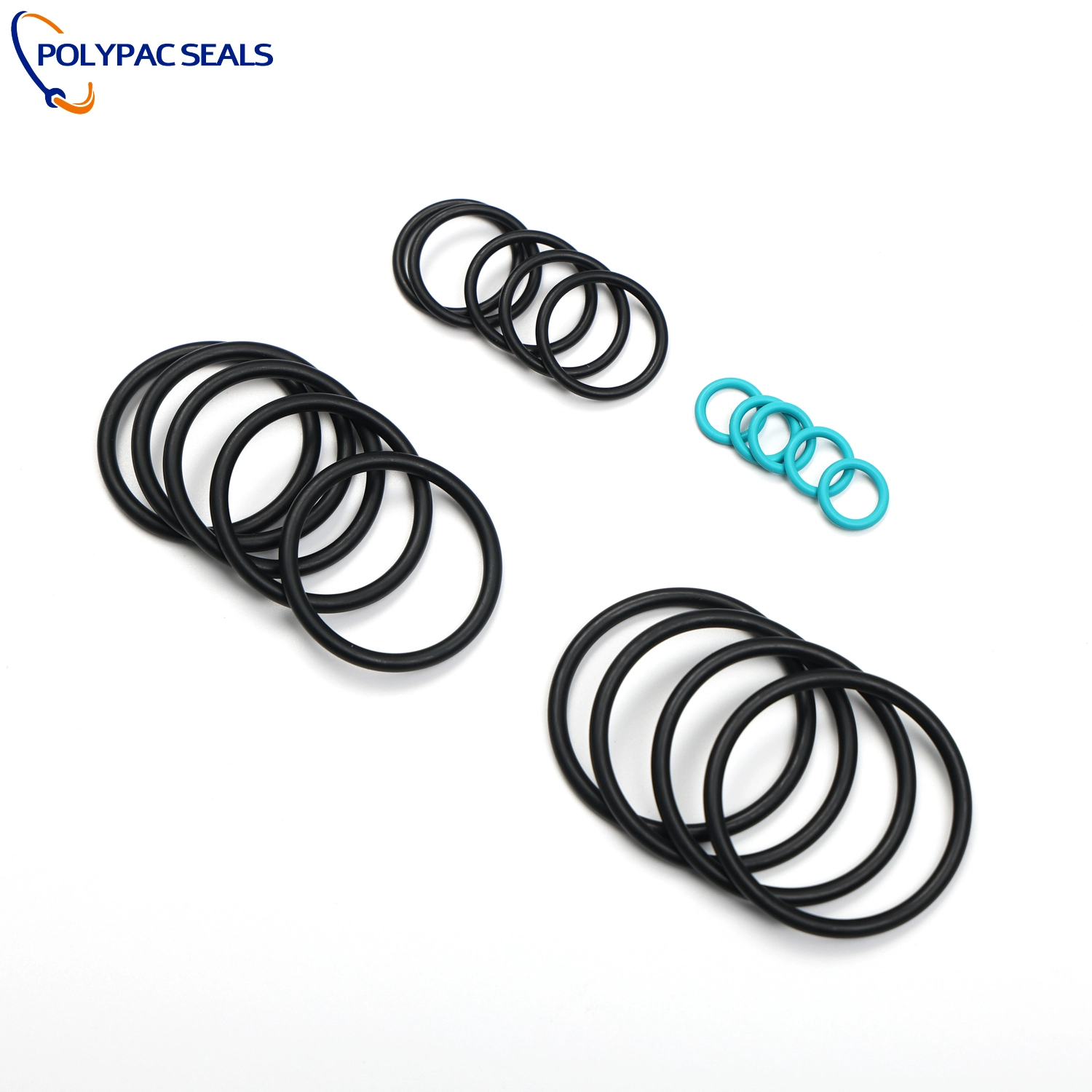
Polypac's main product lines include O-Rings, Rod Seals, Piston Seals, End Face Spring Seals, Scraper Seals, Rotary Seals, Back-up Rings, and Dust Rings. Competitive strengths: a broad material portfolio (NBR, FKM, silicone, EPDM, FFKM, and filled PTFE variants), custom compound development, advanced production/testing infrastructure, and strong technical support for groove and sealing solutions. These capabilities make Polypac suitable for customers seeking both standard and customized piston rubber seal solutions for demanding hydraulic applications.
When to consider a technical supplier like Polypac
Consider suppliers such as Polypac when projects require: tailored compounds for special fluids or temperature extremes, custom geometries or tight tolerances, higher-volume production with consistent quality, or joint R&D for new sealing solutions. Verify supplier documentation (material certificates, test reports) and request field references for similar hydraulic projects.
FAQ
1. What is the difference between a piston rubber seal and an O-ring?
Piston rubber seals are profile seals specifically engineered for dynamic piston applications and often include lips or U-shaped cross-sections that provide directional sealing and energizing behavior. O-rings are toroidal seals generally used in simpler static or moderate-dynamic applications and can be used for pistons when paired with proper groove design and backup rings. See O-ring (Wikipedia) for standards and dimensional info.
2. When are backup rings required for piston seals?
Backup rings are required when gap extrusion risk exists—typically at high pressures or when using softer elastomers in larger clearance conditions. Use of rigid backup rings (PTFE or hard nylon) prevents extrusion and extends seal life. Manufacturer groove recommendations indicate when backups are needed.
3. How do I choose the right hardness (Shore A) for a piston seal?
Hardness selection balances conformability and extrusion resistance. Softer compounds (lower Shore A) improve sealing at low pressure but risk extrusion at high pressure. Typical dynamic piston seals use 70±5 Shore A for NBR and FKM in many hydraulic applications; consult the seal supplier for tradeoffs and recommended groove tolerances.
4. Can I replace a piston rubber seal with a PTFE seal for better life?
PTFE or PTFE-faced seals often offer lower friction and better chemical resistance, but they require compatible groove designs, proper energizers (rubber O-ring or spring), and sometimes backup rings to avoid extrusion. Evaluate friction, damping, and leakage requirements before switching.
5. How important is surface finish for piston bores?
Surface finish directly affects seal wear and leakage. Typical recommendations for dynamic piston seals fall in the 0.2–0.8 µm Ra range depending on seal type. Too smooth a surface may not retain lubricant film; too rough causes abrasion and rapid wear.
6. What tests should I request from a seal supplier?
Request material certificates (composition and hardness), tensile and elongation data, compression set, dynamic ageing tests, chemical compatibility data, and any custom high-pressure cycle testing. Traceable test reports improve selection confidence.
For technical assistance, custom material development, or to view Polypac's product range (O-Rings, Rod Seals, Piston Seals, End Face Spring Seals, Scraper Seals, Rotary Seals, Back-up Rings, Dust Rings), contact Polypac's sales and engineering team. Request samples, material datasheets, and groove design support to ensure the selected piston rubber seal meets your hydraulic system requirements.
Contact Polypac: request product information or consultation to evaluate piston rubber seal options and customized sealing solutions for your hydraulic system.

High-Performance Pneumatic Piston Seals: How to Achieve Zero-Leakage Efficiency

PTFE vs. Composite: Choosing the Best Piston Guide Ring Material for High-Pressure Systems

Mastering O-Ring Gland Design: The Complete Guide for Perfect Sealing Performance

Advanced Back-Up Ring Materials: Beyond PTFE for Extreme Temperature Environments

PTFE vs. Urethane Scrapers: Which Material Truly Prevents Contamination?
Products
How do I choose the right material for my sealing application?
When should I use a spring-energized seal instead of a standard elastomeric seal?
How can I prevent seal damage during installation?
How important is surface finish on the metal parts that contact the seal?
What is the purpose of the metal spring in a rotary shaft seal?
Stay Updated with Industry Insights
Subscribe to our articles and receive the latest news, expert guidance, and technical updates directly in your E-mail.
Rest assured that your privacy is important to us, and all information provided will be handled with the utmost confidentiality.
Polypac is a trusted global supplier of high-performance sealing solutions, providing OEM & ODM services for industries worldwide.
E-mail:
Phone/WhatsApp:
© 2025 Polypac Seals. All Rights Reserved.
dms
DMS
DMS