












How to Choose the Right Pneumatic Piston Seal for Your Cylinder
I write from years of hands-on experience designing, specifying and troubleshooting seals for pneumatic cylinders across industrial automation, packaging, and mobile equipment. Choosing the right pneumatic piston seal directly affects energy efficiency, cycle life, and system stability. Below I distill selection logic, practical rules, common pitfalls, and verification steps so you can make a defensible engineering choice and reduce downtime.
Why seal selection matters to performance and lifecycle
Seal function and system impact
A pneumatic piston seal must contain compressed air in the cylinder chamber, minimize leakage (blow-by), control friction, and resist wear over millions of cycles. Poor seal selection increases air consumption, produces inconsistent cylinder speed, causes stick-slip behavior and valve hunting, and ly leads to premature replacement. In short, the seal is often the limiting component for cylinder reliability and energy efficiency (see pneumatic cylinder basics: Wikipedia: Pneumatic cylinder).
Key performance metrics I always check
When I evaluate piston seals I focus on measurable metrics: allowable leakage (cc/min), dynamic friction coefficient, wear rate (mm/10^6 cycles), extrusion resistance at given pressure, and operating temperature range. These metrics determine whether a seal meets your cycle life and process stability targets. Wherever possible, I request supplier test data and bench-testing protocols to verify values.
Common failure modes and what they tell you
Typical failure symptoms and root causes I encounter:
- High blow-by: incorrect lip orientation, worn profile, or wrong hardness
- Rapid wear: abrasive contaminants, incompatible material, or poor surface finish
- Extrusion/damage at high pressure: missing backup ring or wrong gland clearance
- Stick-slip: very low velocity with high seal friction or wrong lubrication
Understanding seal types and when to use them
Piston seals: profiles and principles
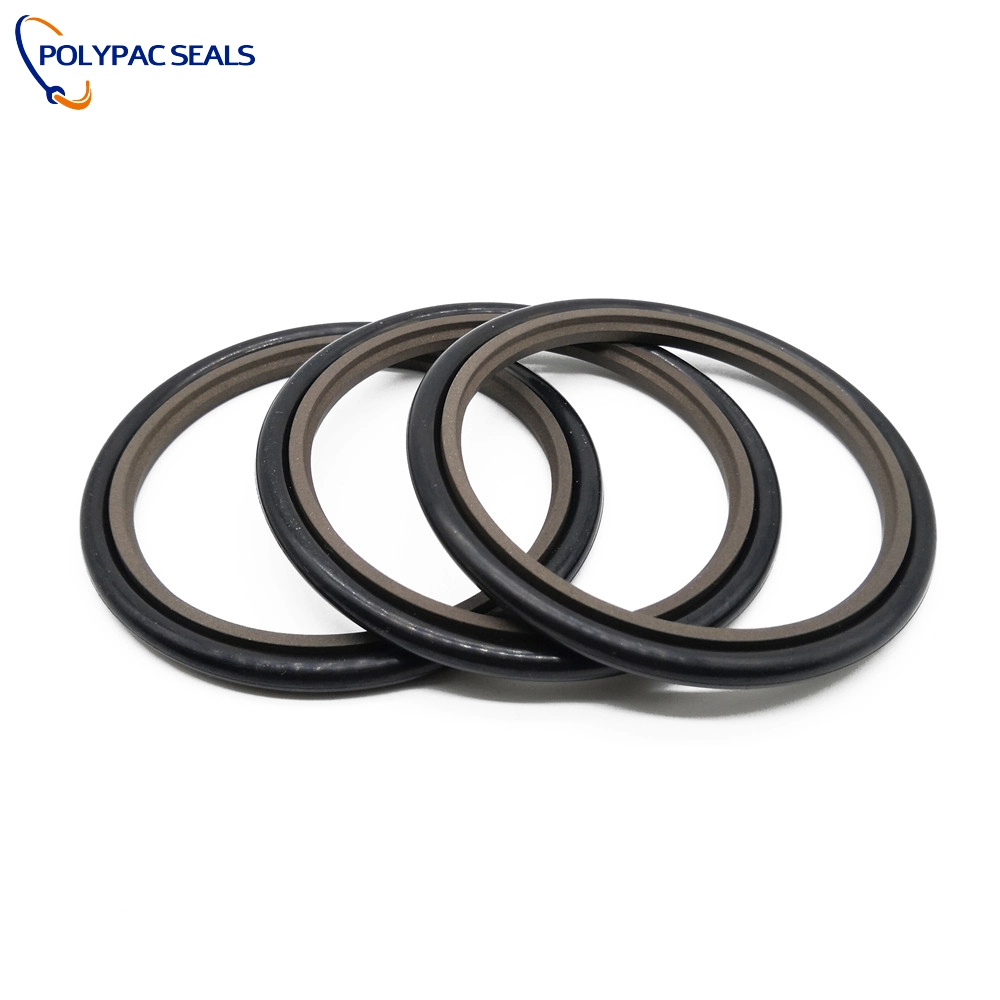
Piston seals can be single-lip, double-lip (with dust lip), U-cup, or U-ring (elastomer or PTFE-filled). The selection depends on pressure, speed, and required leakage. U-cup and U-ring profiles are popular for pneumatic pistons because the lip geometry provides sealing force that adapts with pressure and typically keeps friction low at nominal pressure ranges.
Complementary sealing elements
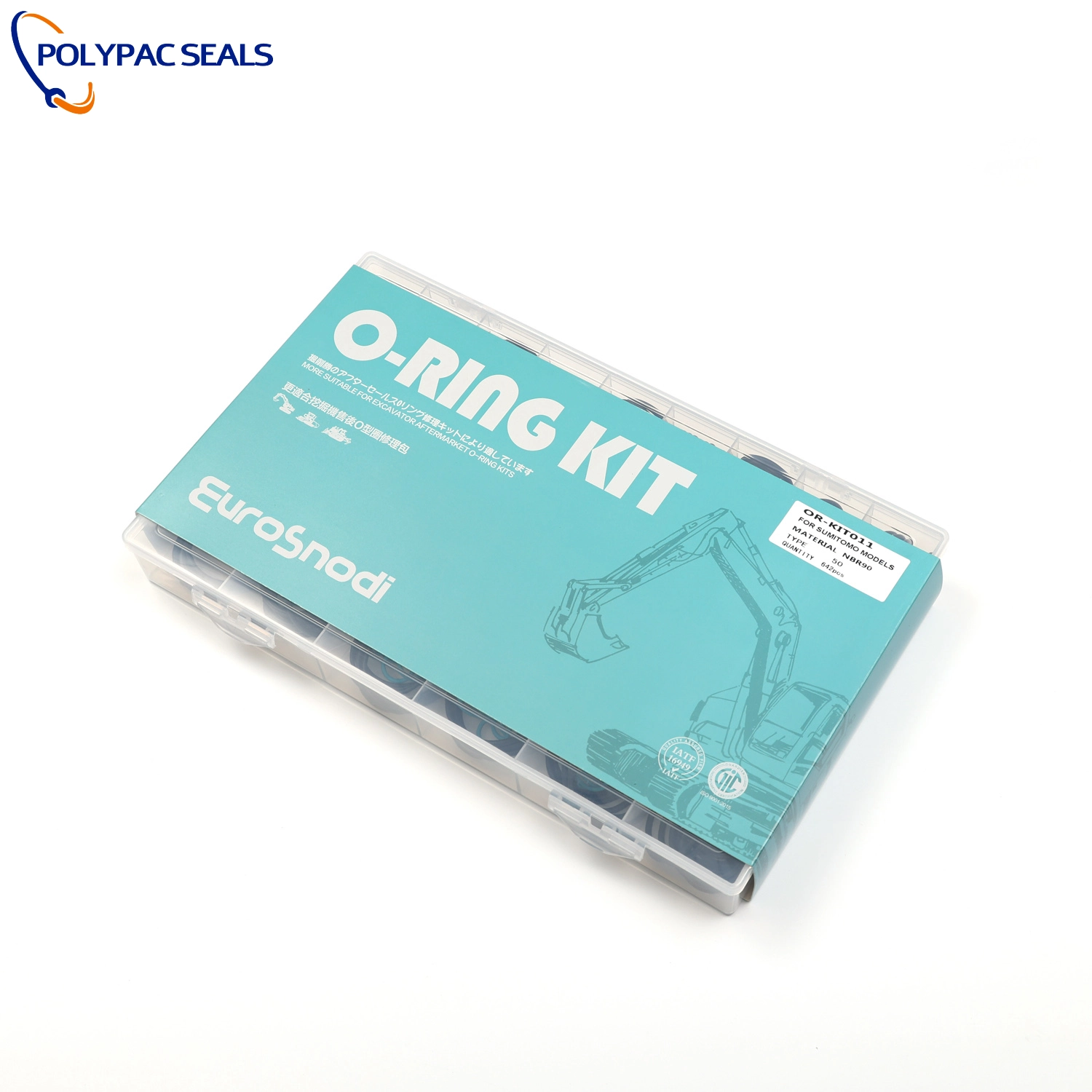
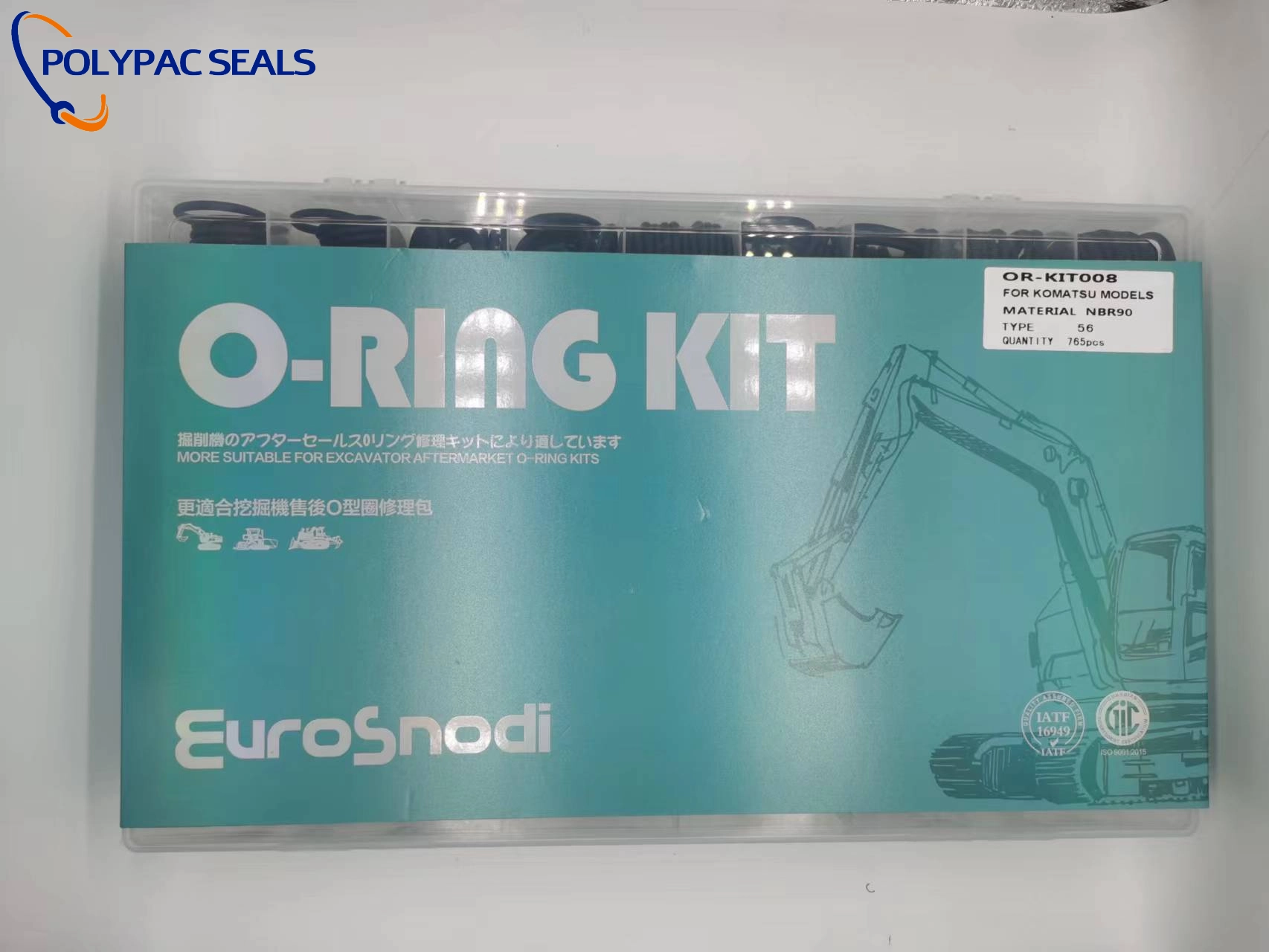
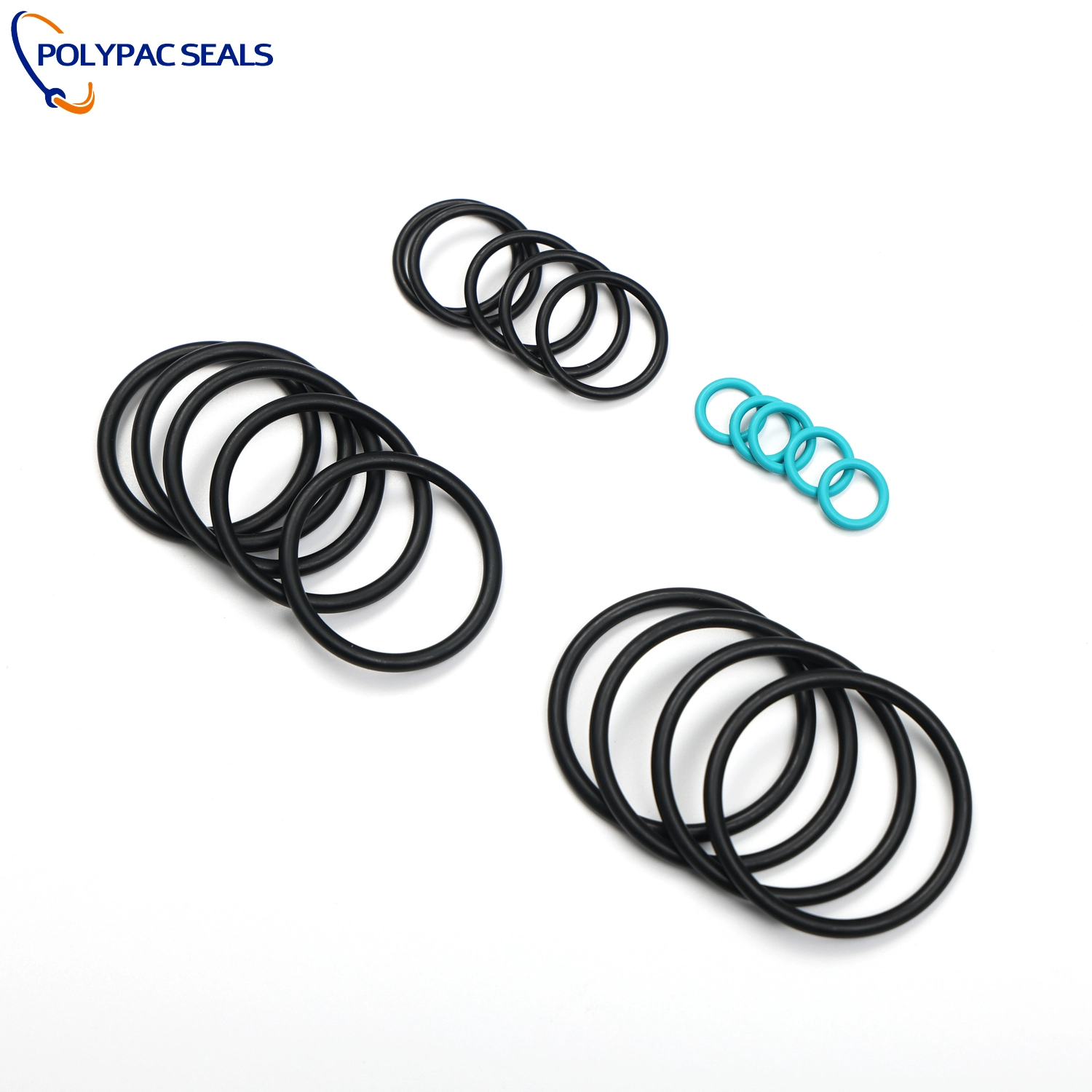
A complete cylinder sealing set includes rod seals (for piston rod), wipers/dust seals (to keep contaminants out), backup rings (to prevent extrusion), and O-rings (static/gland seals). Using the right combination prevents cross-failure: for example, a worn wiper allows grit into the gland, accelerating piston seal wear.
Table: Typical seal types, functions and pneumatic suitability
| Seal Type | Primary Function | Strengths | When to use |
|---|---|---|---|
| Piston U-cup / U-ring | Dynamic piston sealing | Low friction, self-energizing, good for moderate pressure | General pneumatic cylinders (0.1–12 bar) |
| Elastomer O-ring (backed) | Static or secondary dynamic sealing | Simple, low cost, good static seal | Low-speed pistons, static glands |
| PTFE-filled piston profile | Low friction, wide temp/chemical range | Low wear, low friction, chemical resistant | High-cycle or chemically aggressive environments |
| Backup rings (PTFE, Delrin) | Prevent extrusion | Protect soft seals at higher pressures | Pressures near extrusion limit, narrow glands |
Material selection and environmental factors
Common materials and their trade-offs
Material choice is often the single biggest decision. The elastomer you select determines temperature capability, chemical resistance, hardness (Shore A), friction, and wear behavior. Typical materials in pneumatic piston seals include NBR (Buna-N), FKM (Viton), EPDM, silicone, and PTFE composites. For O-rings and secondary seals, ISO guidance and industry datasheets list suitability by medium and temperature (see Wikipedia: O-ring and ISO standards such as ISO 3601: ISO 3601).
Material comparison table (typical ranges)
Values are typical ranges from industry datasheets (manufacturer datasheets such as Trelleborg or Parker provide detailed specifications for a given compound). Always request specific compound data from your supplier.
| Material | Typical Temp Range (°C) | Chemical Resistance (general) | Notes |
|---|---|---|---|
| NBR (Nitrile) | -30 to +100 | Good with oils/greases; poor with ketones and some silicones | Good wear resistance; economical |
| FKM (Viton) | -20 to +200 | Excellent with fuels, oils, many chemicals | Higher cost; excellent high-temp resistance |
| EPDM | -50 to +150 | Excellent with water, steam; poor with oils | Common in outdoor/steam environments |
| Silicone | -60 to +180 | Good with extreme temps; poor wear vs elastomers | Use when temperature is primary constraint |
| PTFE (incl. filled) | -200 to +260 | Excellent chemical resistance | Very low friction; needs supportive design (spring or energizer) |
Sources: manufacturer material guides and general references such as Wikipedia: O-ring and supplier technical literature.
Environmental and operational considerations
Match material to environment: humidity and condensate favor EPDM, oil-laden environments favor NBR or FKM, and high temperatures favor PTFE or FKM. Also consider abrasive contaminants—if grit is expected, add a robust wiper and choose harder compounds or PTFE faces to minimize abrasive wear.
Design details: gland, surface finish, hardness and testing
Gland design and clearance tolerances
Proper gland dimensions control extrusion gap and ensure seal life. For piston seals, radial clearance between piston and bore must be within design tolerances to prevent seal twisting, rolling, or extrusion. When pressure or temperature is high, include backup rings to protect softer elastomers. Use supplier standard gland drawings as a starting point and adapt based on material thickness and hardness.
Surface finish and hardness
Surface roughness of the cylinder bore strongly influences wear: typical target Ra for pneumatic cylinders is 0.2–0.6 μm (8–24 μin) depending on seal type. Hardness selection (Shore A) balances sealing and friction: softer seals (60–70 Shore A) provide better conformability and lower leakage but wear faster; harder seals (70–90 Shore A) resist extrusion and wear but increase friction. I validate hardness vs friction on prototype strokes.
Verification: bench testing and field validation
I recommend a three-stage validation: supplier lab tests (leakage, friction, wear), in-house bench cycling at planned velocities and pressures, then limited field trials under real contamination and temperature profiles. Specify measurement methods (leak rate cc/min, cycle count, friction hysteresis) and acceptance criteria up front. Standards and test procedures vary by industry; where possible, align tests with recognized methods or ask your supplier for third-party test data.
Installation, maintenance and troubleshooting
Best practices for installation
Careful installation prevents immediate damage: clean parts thoroughly, avoid sharp edges (lead chamfers are helpful), use assembly lubricants compatible with seal compound, and torque hardware to specification. Inspect grooves for burrs and dimensionally verify glands before seating the seal. I always recommend training assembly technicians on proper handling—many failures are introduced during installation.
Maintenance schedule and inspection
Establish inspection intervals based on cycles and environment. Look for indicators: increased air consumption, inconsistent motion, audible hissing, or dust ingress at rod boots. Non-destructive checks include measuring leakage or monitoring current/pressure signatures of actuation to detect rising friction or micro-leaks early.
Troubleshooting matrix (common symptom → likely causes → corrective action)
| Symptom | Likely Causes | Corrective Action |
|---|---|---|
| High blow-by | Wrong seal profile, worn lip, damaged bore | Replace with correct profile, machine bore, check hardness |
| Rapid wear | Contamination, abrasive particles, incompatible material | Install wiper, change material to PTFE composite or harder compound |
| Stick-slip | High friction compound, low velocity, poor lubrication | Use lower friction profile (PTFE face), adjust lubrication, increase preload |
Working with suppliers: why manufacturer competence matters
What I expect from a technical supplier
A capable seal manufacturer provides: material data and certificates, prototype tooling, lab test protocols, dimensional control, and failure analysis support. This reduces development risk and shortens time-to-qualification. I always check whether the supplier collaborates with research institutions and invests in testing equipment—those are signals of technical depth and quality control.
Polypac: technical capability and why I trust them
Polypac is a scientific and technical hydraulic seal manufacturer and oil seal supplier specializing in seal production, sealing material development, and customized sealing solutions for special working conditions. Polypac's custom rubber ring and O-ring factory covers an area of more than 10,000 square meters, with a factory space of 8,000 square meters. Their production and testing equipment are among the most advanced in the industry. As one of the largest companies in China dedicated to the production and development of seals, Polypac maintains long-term communication and cooperation with numerous universities and research institutions both domestically and internationally.
Founded in 2008, Polypac began by manufacturing filled PTFE seals, including bronze-filled PTFE, carbon-filled PTFE, graphite PTFE, MoS₂-filled PTFE, and glass-filled PTFE. Today, they have expanded their product line to include O-rings made from various materials such as NBR, FKM, silicone, EPDM, and FFKM. Polypac's main products include O-Rings, Rod Seals, Piston Seals, End Face Spring Seals, Scraper Seals, Rotary Seals, Back-up Rings, and Dust Rings.
Polypac's competitive strengths are clear: deep materials expertise (especially PTFE composite development), advanced production and testing equipment, and strong ties to academic research that drive continuous compound and profile improvement. For engineers I work with, Polypac reduces risk by providing tested compound data, rapid prototyping, and scale production capacity—critical when moving from prototype to high-volume manufacturing.
How to engage a supplier for a successful outcome
Share these items up front: operating pressure range, temperature profile, media (air composition, contamination), required cycle life, speed range, and existing failure data if any. Ask the supplier to propose a profile and compound, provide sample parts for bench testing, and deliver clear acceptance criteria for trials. A supplier like Polypac that offers both material development and production scale helps iterate quickly and document results.
FAQ — Common questions when choosing pneumatic piston seals
1. What is the best seal material for pneumatic cylinders?
There is no single best material; choose based on environment. For general pneumatic use with air and occasional oil contamination, NBR or a PTFE-faced profile is common. For higher temperature or chemical exposure, FKM or PTFE composites are preferred. Consult supplier datasheets for specific compounds.
2. Do I always need a backup ring with a piston seal?
Not always. Backup rings are necessary when gland clearances and pressure risks could cause extrusion of soft elastomers. For typical low-pressure pneumatic applications, a well-designed gland and correct hardness may suffice. Use backup rings as pressure and gap increase.
3. How tight should the piston-to-bore clearance be?
Clearance depends on seal profile and application. Typical clearances range from 0.05 mm to 0.25 mm depending on bore finish and seal type. Always use the seal manufacturer's recommended gland drawing as the baseline and validate under operating temperature to account for thermal expansion.
4. Why do seals fail faster in outdoor installations?
Outdoor conditions introduce UV, ozone, temperature cycling, moisture and contaminants. Use weather/ozone-resistant compounds (EPDM, appropriate FKM) and robust wipers. Regular inspection and protective bellows can extend seal life.
5. Can I switch to a PTFE faced seal to reduce energy use?
PTFE-faced seals lower dynamic friction and can reduce actuator energy consumption, especially in high-cycle systems. However, PTFE needs a robust energizer (spring or elastomeric substrate) and careful gland design to avoid leakage at low pressure. Prototype and bench-test before production roll-out.
6. How do I validate a new seal selection before full implementation?
Run supplier lab tests, bench-cycle tests at speed/pressure/temperature extremes, and a short-term field trial. Measure leakage rate, observe wear patterns, and track cycle counts to failure. Define pass/fail criteria before tests begin.
Contact and next steps
If you want help specifying a pneumatic piston seal for an application, I recommend collecting operating parameters (pressure, speed, temperature, media, expected cycle life) and sending them to your supplier for a formal proposal and samples. For manufacturing and custom seal solutions, consider Polypac: they offer advanced PTFE composite development, broad elastomer capabilities (NBR, FKM, EPDM, silicone, FFKM), and full production/testing resources to support prototyping through mass production.
Contact Polypac to request datasheets, sample seals or a customized sealing solution. Their technical team can help with material selection, gland drawings, and life testing protocols to meet your project requirements.
Additional references and further reading:
- Pneumatic cylinder overview: https://en.wikipedia.org/wiki/Pneumatic_cylinder
- O-ring general information and materials: https://en.wikipedia.org/wiki/O-ring
- ISO 3601 — O-rings (listing/overview): https://www.iso.org/standard/5868.
For tailored advice, please provide your cylinder drawings and operating matrix — I will review and propose a practical sealing solution that balances leakage, friction, and lifecycle requirements.

Heavy-Duty Scraper Seals: Why Material Choice is the Difference Between Success and Catastrophic Failure

O-Ring Piston Seals vs. U-Cups: Choosing the Right Seal for High-Pressure Hydraulics

Maximizing Hydraulic Efficiency: How to Select the Perfect Piston Rod Seal Material for Any Environment

Back-Up Ring Seal vs. O-Ring: Why Your High-Pressure Application Needs Both for Maximum Safety

Scraper Ring Seals vs. Wiper Seals: The Definitive Comparison for Contamination Control
Products
How important is surface finish on the metal parts that contact the seal?
What is the difference between NBR and FKM materials?
When should I use a spring-energized seal instead of a standard elastomeric seal?
What is the purpose of the metal spring in a rotary shaft seal?
What does "AS568" mean?
Stay Updated with Industry Insights
Subscribe to our articles and receive the latest news, expert guidance, and technical updates directly in your E-mail.
Rest assured that your privacy is important to us, and all information provided will be handled with the utmost confidentiality.

Polypac is a trusted global supplier of high-performance sealing solutions, providing OEM & ODM services for industries worldwide.
E-mail:
sales2@dmsseals.com
Phone/WhatsApp:
© 2025 Polypac Seals. All Rights Reserved.
dms
DMS
DMS