












How to Choose the Right Rotary Seal for Industrial Pumps
Understanding Performance Requirements for Rotary Seals
Common pump applications and duty profiles
Before selecting a rotary seal, define the pump application precisely. Industrial pumps operate in diverse environments: centrifugal and rotary vane pumps for water and light oils, gear and screw pumps for heavy oils and hydraulic fluids, and specialized pumps for chemical, slurry, or high-temperature services. Each application imposes different demands on seals: pressure (static and dynamic), shaft speed (surface velocity), temperature, fluid chemistry, particulate loading, and start/stop frequency. Documenting duty cycles and worst-case conditions is the single most important step toward a reliable seal selection.
Key failure modes and what they reveal
Understanding common failure modes helps prioritize selection criteria:
- Abrasion and wear — usually from particulates or poor lubrication; indicates need for harder materials, lip geometry optimizing hydrodynamic film, or dust exclusion solutions.
- Chemical attack and swelling — caused by incompatible elastomers or long-term exposure; points to PTFE/FFKM or carefully chosen elastomer compounds.
- Thermal degradation — high temperature leads to hardening or cracking; select high-temperature elastomers (FKM/FFKM) or PTFE solutions.
- Extrusion and blowout — high pressure and clearance issues; mitigate with backup rings and optimized gland design.
Materials and Design Options for Rotary Seals
Elastomers vs. PTFE and composite materials
Material choice drives compatibility, life, and cost. Common materials include NBR, FKM (Viton®), EPDM, silicone, PTFE (virgin and filled), and FFKM (perfluoroelastomer). Elastomers provide elastic sealing with good dynamic characteristics at lower cost; PTFE and filled PTFE excel in chemical resistance and temperature but have different friction and spring-energizing requirements. FFKM offers the broadest chemical/temperature resistance at High Quality cost.
Seal design types: lip seals, spring-energized seals, and mechanical seals
Rotary seals for industrial pumps typically fall into three families:
- Lip (radial) seals: simple, cost-effective for moderate speeds and pressures. Often spring-energized to maintain contact as wear occurs.
- Spring-energized/PTFE composite seals: low friction, wide chemical compatibility, suitable for higher temperatures and aggressive media.
- Mechanical face seals (mechanical seals): used where leakage must be minimal or where pressures and speeds exceed lip-seal capability. They include faces, secondary seals, and often require a seal plan (flush, quench) for reliability.
Selection Process: How to Choose the Right Rotary Seal
Step-by-step selection checklist
Follow a structured process to minimize trial-and-error:
- Document operating parameters: shaft diameter & tolerance, surface finish, speed (m/s), system pressure (max/steady), fluid chemistry, temperature range, and particulate presence.
- Identify primary failure drivers: abrasion, chemical attack, extrusion risk, or thermal stress.
- Shortlist materials based on temperature and chemical compatibility.
- Choose seal type based on pressure and leakage tolerance (lip seal for general service; mechanical seal for near-zero leakage or high pressure).
- Check gland and shaft geometry; implement backup rings or face-loading modifications if extrusion is a concern.
- Plan installation controls: correct shaft finish (typically Ra 0.2–0.8 µm depending on seal), chamfers, lubrication/flush plans, and alignment procedures.
- Prototype and run life tests representative of actual duty; adjust compound or geometry as required.
Sizing, shaft finish, and installation tips
Key practical rules:
- Shaft finish: too smooth (<0.05 µm Ra) can reduce lubrication film retention; too rough (>1.6 µm Ra) causes accelerated wear. Typical target: Ra 0.2–0.8 µm for elastomer lip seals.
- Hardness and interference: typical radial interference for elastomer rotary lip seals ranges from 0.2% to 2% of shaft diameter depending on shaft tolerance and material hardness.
- Installation: use soft installation sleeves, avoid rolling the lip over chamfers, and ensure housings are square and within tolerance to prevent twisting or edge loading.
Material Comparison and Use Cases
Material selection table
| Material | Typical Temp Range | Chemical Compatibility | Typical Use Cases | Relative Cost |
|---|---|---|---|---|
| NBR (Nitrile) | -30°C to 100°C | Good with petroleum oils, poor with ketones and strong acids | Hydraulic oils, general-purpose pump seals | Low |
| FKM (Viton®) | -20°C to 200°C | Excellent for oils, fuels, many chemicals; poor with ketones and some amines | Hot oil, high-temp hydraulic systems | Medium |
| FFKM (Perfluoroelastomer) | -10°C to 300°C | Outstanding broad chemical resistance | Chemical process, extreme temperature and aggressive fluids | High |
| PTFE (virgin/filled) | -200°C to 260°C | Excellent chemical resistance, low friction | Aggressive chemicals, high temp pumps, low friction needs | Medium–High |
| EPDM | -50°C to 150°C | Excellent with steam, water, many alkalis; poor with oils/petroleum | Water pumps, steam applications | Low–Medium |
| Silicone | -60°C to 200°C | Good for temperature extremes; limited chemical resistance to oils | Low-load, high/low temperature situations | Medium |
Sources for typical temperature and compatibility ranges include manufacturers' material datasheets and sealing handbooks (see references).
When to use backup rings and dust exclusion devices
Backup rings are recommended when fluid pressure and clearances risk extrusion of softer materials—particularly in dynamic high-pressure applications. Dust rings and scrapers are essential when solids or abrasives are present at the shaft interface. The use of a multi-component sealing stack (scraper + primary seal + backup ring) dramatically increases service life in contaminated environments.
Testing, Validation, and Lifecycle Considerations
Recommended tests before full deployment
Run bench tests that mimic field conditions whenever possible. Key tests include accelerated wear tests (abrasive slurry), fluid compatibility soak tests, thermal aging cycles, and pressure/extrusion tests. For critical services, field trials under monitored conditions for a defined duty cycle often reveal installation or environment-specific issues that bench tests miss.
Maintenance intervals and predictive indicators
Predictive maintenance strategies should monitor leakage rate changes, vibration, shaft runout, and seal lip condition during planned inspections. Typical service intervals vary widely: a properly selected rotary seal in a clean hydraulic environment may last several years; in abrasive, high-temperature, or chemically aggressive services, intervals shorten markedly.
Polypac: Custom Sealing Solutions and Technical Capabilities
Who Polypac is and what they offer
Polypac is a scientific and technical hydraulic seal manufacturer and oil seal supplier specializing in seal production, sealing material development, and customized sealing solutions for special working conditions. Founded in 2008, Polypac started with filled PTFE seals (bronze-filled, carbon-filled, graphite PTFE, MoS₂-filled, and glass-filled PTFE) and has expanded into a wide range of elastomer and PTFE products.
Production scale, R&D, and product range
Polypac's custom rubber ring and O-ring factory covers more than 10,000 m² with 8,000 m² of production space. Production and testing equipment are among the most advanced in the industry. Polypac maintains long-term cooperation with universities and research institutions domestically and internationally. Primary products and capabilities include:
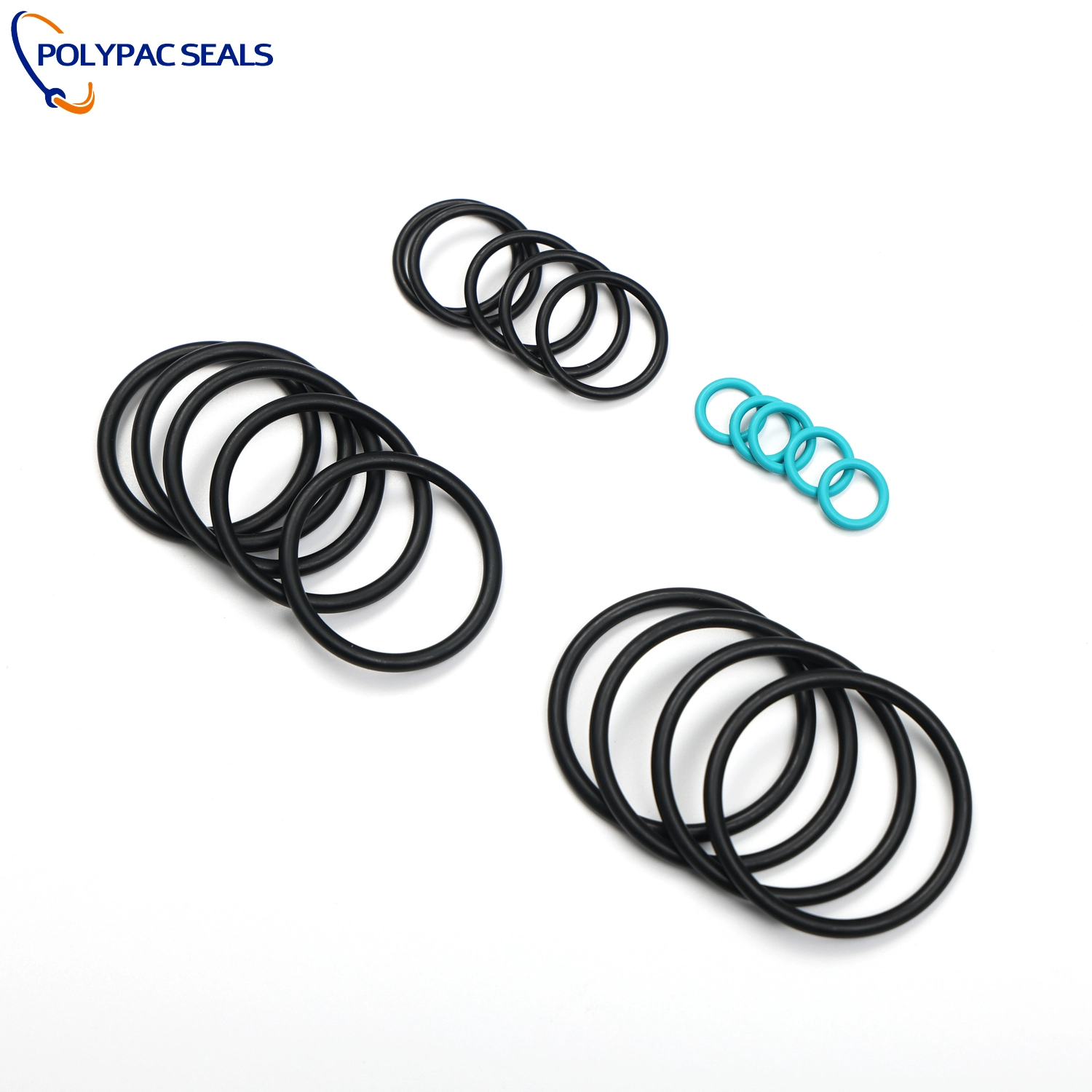
- O-Rings and custom rubber rings (NBR, FKM, silicone, EPDM, FFKM)
- Rod seals and piston seals
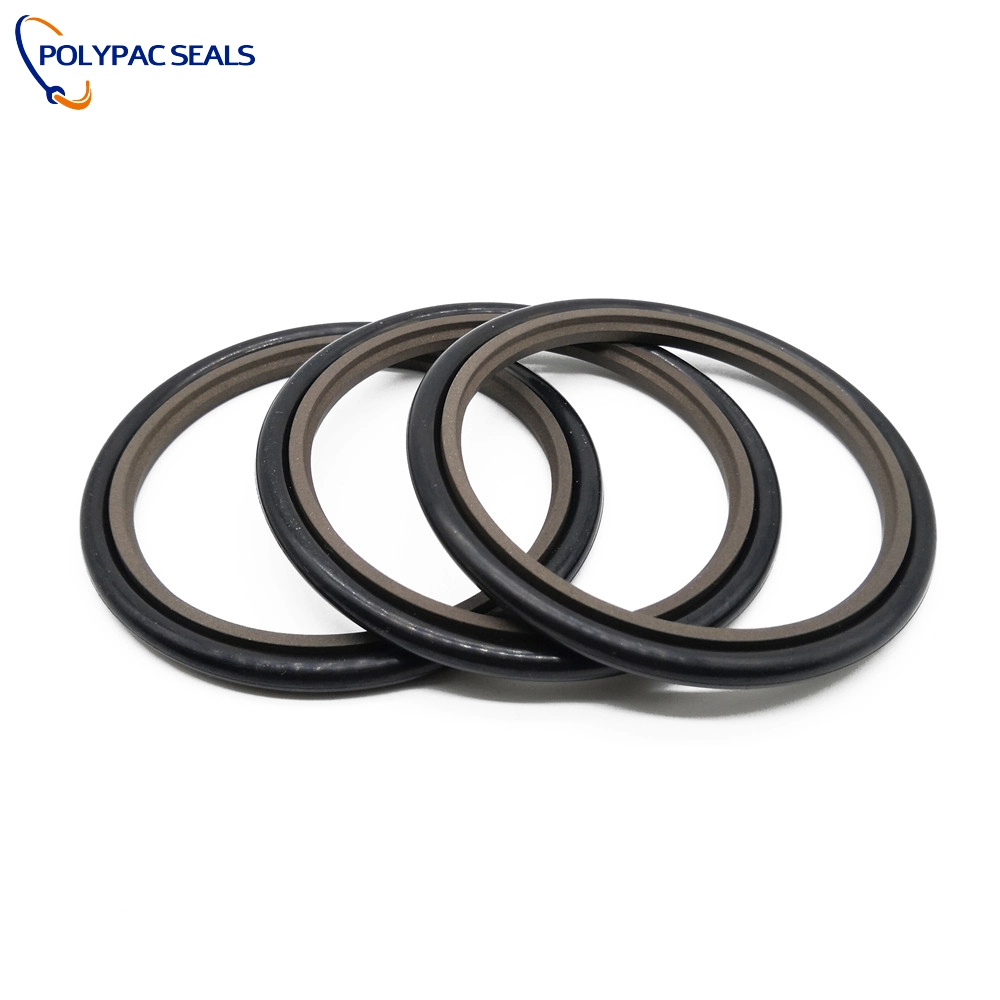
- End face spring seals and rotary seals
- Scraper seals, dust rings, and back-up rings
- Filled PTFE and specialty composite seals for extreme or abrasive services
Polypac's competitive strengths: deep material know-how (filled PTFE formulations), large-scale production with advanced testing, customized engineering for special working conditions, and established academic partnerships enabling continual product development and validation.
Practical Case Studies (Short Examples)
Case A — High-temperature pump in oil refinery
Problem: Repeated extrusion and chemical attack on NBR lip seals at 180°C in a gear pump carrying hot aromatic hydrocarbons. Solution: Switch to a spring-energized PTFE composite seal with an FKM secondary element; implement backup ring and a controlled flush plan. Result: Mean time between failures (MTBF) increased sixfold in field trials.
Case B — Slurry transfer pump with abrasive media
Problem: Rapid lip wear in slurry service. Solution: Use a filled PTFE rotary seal with a heavy-duty scraper ahead of the primary seal, plus a hard-wearing shaft sleeve. Result: Significant reduction in unplanned downtime; predictable maintenance intervals.
Frequently Asked Questions (FAQ)
1. What is the main difference between a rotary lip seal and a mechanical face seal?
Rotary lip seals rely on radial contact between an elastomer lip (often spring-energized) and the shaft; they are compact and economical for moderate pressures and speeds. Mechanical face seals use two flat faces (stationary and rotary) with secondary seals; they are used where leakage must be minimized or operating conditions exceed the capability of lip seals (high pressure, high speed, or corrosive fluids).
2. How do I know whether to choose PTFE or an elastomer for my rotary seal?
Choose based on chemical compatibility, temperature, friction requirements, and cost. Use PTFE/filled PTFE when aggressive chemicals, high temperature, or very low friction is required. Elastomers (NBR, FKM) are cost-effective for standard hydraulic and oil services at moderate temperatures. If in doubt, perform a fluid compatibility test and consult material datasheets or a sealing expert.
3. Can I retrofit backup rings into an existing pump seal gland?
Sometimes yes, but check available radial clearance, gland depth, and housing geometry. Retrofit is feasible if the housing can accept the additional axial space or if a re-machined gland is possible. Consult with the seal supplier or a mechanical engineer before modifying a pressure-containing component.
4. What shaft surface finish and hardness are recommended for rotary seals?
Common guidance is shaft Ra between 0.2 and 0.8 µm for elastomer lip seals; hardness typically above HRC 40 or with a suitable hardened sleeve. Softer or plated surfaces increase wear. Always follow the specific seal manufacturer's recommendations for optimum life.
5. How can I reduce leakage in an existing pump without replacing the pump?
Assess and replace worn seals with upgraded materials/designs, add or replace backup rings and scrapers, implement better flush or lubrication plans, ensure shaft alignment and smoothness, and consider shaft sleeves. In many cases these measures significantly reduce leakage and extend seal life with modest investment.
6. When is custom seal development justified?
Custom seals are justified when off-the-shelf products fail to meet required service life, when the fluid or temperature is outside standard material limits, or when unique geometries (e.g., non-standard shafts or housings) are present. Custom development is also warranted for critical applications where downtime costs are high.
If you need specific advice, product data, or a quote for custom rotary seals, contact Polypac's technical team to discuss your application and request a sample or test plan.
Contact & Product Consultation: For application support, custom sealing solutions, and product availability (O-Rings, Rod Seals, Piston Seals, End Face Spring Seals, Scraper Seals, Rotary Seals, Back-up Rings, Dust Rings), reach out to Polypac at https://www.polypac.com or email sales@polypac.com to request drawings, material test reports, and prototype pricing.
References and Further Reading
- Mechanical seal — Wikipedia. Available: https://en.wikipedia.org/wiki/Mechanical_seal (Accessed: 2026-01-04).
- SKF — Seals. Product and technical information on seals and sealing solutions. https://www.skf.com/group/products/seals (Accessed: 2026-01-04).
- Parker O-Ring Handbook — Materials and temperature/chemical guidance. https://www.parker.com/Literature/Sealing%20and%20Shielding%20Group/English/O-Ring%20Handbook.pdf (Accessed: 2026-01-04).
- ISO 3601 — Fluid power systems — O-rings (standard overview). https://www.iso.org/standard/29262. (Accessed: 2026-01-04).
- Polypac company information and product capabilities (company-provided). https://www.polypac.com (Accessed: 2026-01-04).

High-Performance Pneumatic Piston Seals: How to Achieve Zero-Leakage Efficiency

PTFE vs. Composite: Choosing the Best Piston Guide Ring Material for High-Pressure Systems

Mastering O-Ring Gland Design: The Complete Guide for Perfect Sealing Performance

Advanced Back-Up Ring Materials: Beyond PTFE for Extreme Temperature Environments

PTFE vs. Urethane Scrapers: Which Material Truly Prevents Contamination?
Products
How important is surface finish on the metal parts that contact the seal?
How can I prevent seal damage during installation?
How do I choose the right material for my sealing application?
Can I reuse a seal?
What is the difference between NBR and FKM materials?
Stay Updated with Industry Insights
Subscribe to our articles and receive the latest news, expert guidance, and technical updates directly in your E-mail.
Rest assured that your privacy is important to us, and all information provided will be handled with the utmost confidentiality.

Polypac is a trusted global supplier of high-performance sealing solutions, providing OEM & ODM services for industries worldwide.
E-mail:
Phone/WhatsApp:
© 2025 Polypac Seals. All Rights Reserved.
dms
DMS
DMS