












Choosing PTFE Oil Seals for High-Temperature Applications
Why PTFE Oil Seals Are Preferred for High-Temperature Environments
When systems operate at elevated temperatures—steam lines, high-speed pumps, compressors, extrusion equipment, or automotive turbochargers—seal failure becomes a common root cause of downtime and leakage. Selecting the right sealing material and design is critical. PTFE oil seals, particularly filled PTFE variants, combine high-temperature capability, chemical resistance and low friction, making them a top choice for many demanding applications. This article explains the technical rationale, selection steps, and practical considerations for choosing ptfe oil seal solutions that deliver reliability and long service life.
PTFE Material Properties Relevant to ptfe oil seal Selection
Polytetrafluoroethylene (PTFE) is a fluoropolymer noted for its exceptional thermal stability, chemical inertness and low friction coefficient. For designers and procurement specialists evaluating ptfe oil seal options, focus on these measurable properties:
- Temperature range: PTFE has a continuous service temperature up to ~260°C and a melting point around 327°C, enabling use where many elastomers degrade (source cited).
- Chemical resistance: PTFE resists most acids, bases and solvents — critical for seals exposed to aggressive fluids or process chemistries.
- Low friction: The coefficient of friction for PTFE is low compared with common elastomers, reducing heat generation and wear in dynamic seals.
- Mechanical limitations: Virgin PTFE is softer and can creep or cold-flow under sustained pressure; filled PTFE compounds (bronze, carbon, glass, MoS₂) are used to improve wear resistance, dimensional stability and extrusion resistance.
When assessing ptfe oil seal candidates, verify the specific PTFE compound and fill type—these materially change performance for high-temp, high-speed, or abrasive conditions.
Design Considerations: ptfe oil seal Geometry and Dynamic Conditions
Choosing a ptfe oil seal is not just about material—geometry, mating surface quality, shaft speed and loading determine whether a seal will succeed. Key design variables include:
- Contact design: Lip geometry (single lip, double lip, spring-loaded) affects sealing pressure and wear distribution.
- Shaft surface finish: PTFE works best on finely finished shafts; recommended Ra typically 0.2–0.8 µm for dynamic seals to balance lubrication retention and leakage control.
- Rotational speed (surface velocity): PTFE can handle high sliding speeds, but heat buildup and wear rates rise—verify allowable surface speed with the seal supplier for the chosen filled grade.
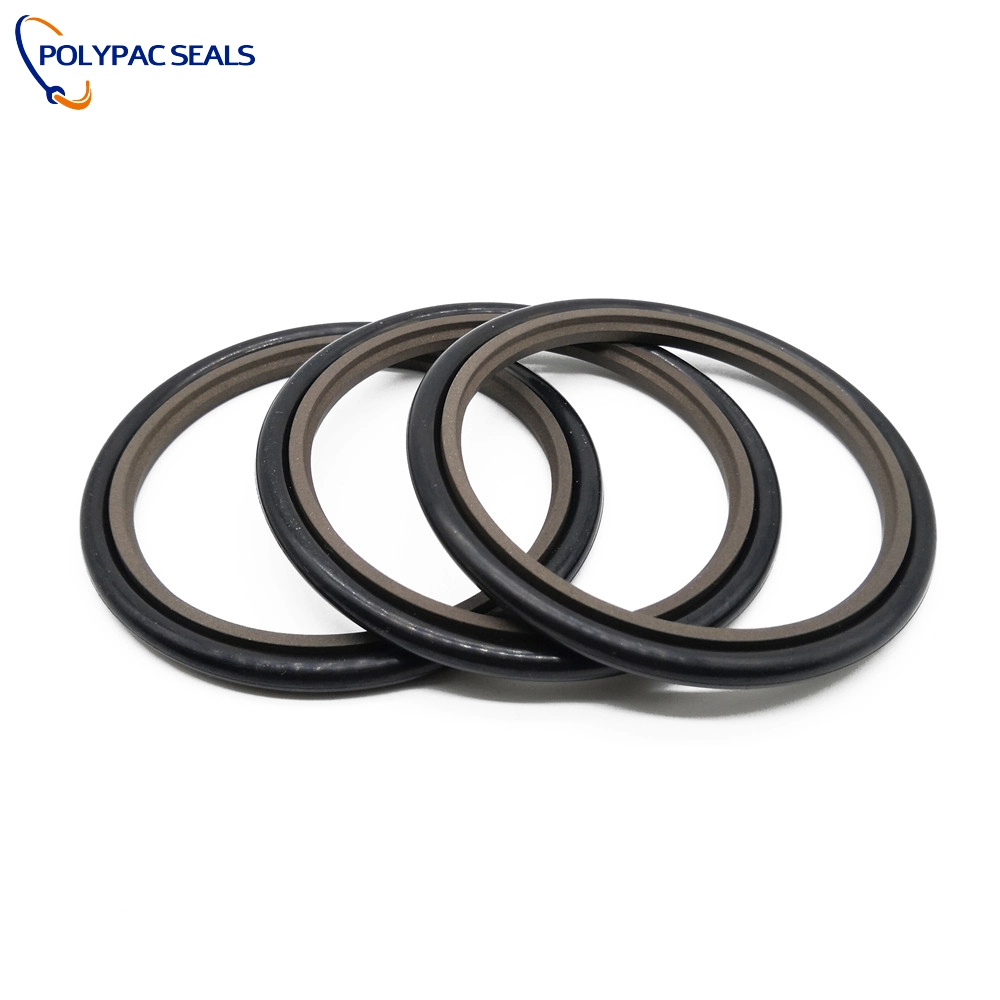
- Pressure and extrusion risk: For high-pressure applications, use backup rings or filled PTFE with higher creep resistance to prevent extrusion and leakage.
Discuss these parameters with manufacturers—material grade, spring preload and recommended shaft specifications are interdependent.
ptfe oil seal vs Elastomer Oil Seal: Comparative Table for High-Temperature Use
| Property | ptfe oil seal (PTFE / filled PTFE) | Elastomer oil seal (NBR, FKM, Silicone) |
|---|---|---|
| Typical continuous temp limit | Up to ~260°C (PTFE); filled grades similar | NBR: ~120°C; FKM: ~200°C; Silicone: ~200°C |
| Chemical resistance | Excellent across most chemistries | Good to variable; some elastomers swell or degrade with solvents |
| Friction coefficient | Low (typical μ 0.05–0.2 depending on lubrication) | Higher (typical μ 0.3–1.0) |
| Wear resistance | Good for filled PTFE; virgin PTFE worse | Good for some elastomers when within temp/chemical limits |
| Pressure/extrusion resistance | Requires design measures (backup rings, filled PTFE) | Generally better for dynamic sealing at moderate temps and pressures |
| Cost & manufacturability | Higher material and machining cost; often requires CNC or molding | Lower cost; mass production via molding |
Sources for ranges: material datasheets and industry references listed in the References section below.
How to Select the Right ptfe oil seal Grade and Configuration
Follow a step-by-step selection process to match PTFE properties with application needs:
- Define operating envelope: temperature range, static/ dynamic pressure, shaft speed (m/s), media and contamination types.
- Choose PTFE compound: bronze-filled for thermal conductivity and wear; carbon-filled for improved friction and wear; glass- or ceramic-filled for dimensional stability; MoS₂-filled for extreme wear resistance and dry running.
- Select seal geometry: spring-energized lip for consistent contact, double-lip for contamination exclusion, or rotary face seals if axial movement predominates.
- Plan for backup and support: use PTFE back-up rings or metallic housings to prevent extrusion at high pressure or temperature cycles.
- Verify shaft finish and concentricity requirements, and set installation tolerances to minimize misalignment and eccentricity.
Document these requirements and consult with your seal supplier for grade-specific limitations; small changes (e.g., switching from bronze-filled to carbon-filled PTFE) can change friction, wear and temperature behavior significantly.
Installation, Run-in and Maintenance Tips for ptfe oil seal Reliability
Even the best ptfe oil seal will fail prematurely if installation and maintenance are overlooked. Practical tips from field experience:
- Inspect mating surfaces for burrs or corrosion; polish if necessary to the recommended Ra.
- Use anti-seize or temporary lubricants compatible with the process fluid during installation to avoid dry starts; ensure the lubricant will not attack the PTFE compound.
- Implement controlled run-in procedures at reduced speeds to seat the seal lip and distribute wear evenly.
- Schedule periodic inspections focusing on leakage patterns, wear grooves and thermal degradation signs; filled PTFE will show characteristic wear patterns that inform corrective action.
- Replace seals based on condition rather than strictly on calendar life in severe service; maintain spare parts of the same compound and geometry.
Cost-Benefit and Lifecycle Considerations for ptfe oil seal Adoption
PTFE oil seals typically cost more upfront than elastomer seals due to material cost and more complex manufacturing or machining. However, when accounting for lifecycle costs—reduced downtime, lower friction losses, longer intervals between replacements in high-temperature or chemically aggressive environments—PTFE solutions often deliver lower total cost of ownership. Perform a simple ROI analysis comparing replacement frequency, downtime cost, and energy/fuel savings from lower friction to justify material selection in capital equipment.
Polypac: Custom PTFE Oil Seal Supplier and Technical Partner
For industrial buyers seeking a reliable supplier of ptfe oil seal solutions, Polypac provides specialized expertise and manufacturing capacity. Highlights of Polypac's capabilities relevant to high-temperature PTFE sealing needs:
- Company profile: Polypac is a scientific and technical hydraulic seal manufacturer and oil seal supplier specializing in seal production, sealing material development, and customized sealing solutions for special working conditions.
- Manufacturing scale: Polypac's custom rubber ring and O-ring factory covers an area of more than 10,000 square meters, with a factory space of 8,000 square meters. Production and testing equipment are among the most advanced in the industry.
- R&D partnerships: Long-term cooperation with universities and research institutions both domestically and internationally enhances material development and application testing.
- PTFE heritage: Founded in 2008, Polypac began by manufacturing filled PTFE seals, including bronze-filled PTFE, carbon-filled PTFE, graphite PTFE, MoS₂-filled PTFE, and glass-filled PTFE—critical options when selecting ptfe oil seal grades for thermal or abrasive conditions.
- Expanded product lines: Polypac now produces O-rings and sealing elements from NBR, FKM, silicone, EPDM, and FFKM—allowing hybrid sealing solutions combining PTFE dynamic lips with elastomer energizers where beneficial.
- Core products and advantages: O-Rings, Rod Seals, Piston Seals, End Face Spring Seals, Scraper Seals, Rotary Seals, Back-up Rings, Dust Rings. Polypac emphasizes customized solutions, strict quality control, and rapid prototyping/testing to suit extreme service.
Polypac differentiates itself by depth of PTFE experience, broad filled PTFE options, advanced test equipment, and cooperative R&D—features that reduce selection risk when moving from elastomer to ptfe oil seal designs.
Case Example: Replacing Elastomer Seals in a High-Temperature Pump
A chemical plant experiencing repeated seal failure on a high-temperature pump (operating at 220°C with aggressive solvent traces) replaced molded FKM seals with a bronze-filled PTFE rotary lip seal with a stainless-steel energizing spring and a PTFE back-up ring. Result: leakage fell to near-zero in six months of operation, and maintenance intervals extended by >5x. This reflects common field outcomes when PTFE's chemical and thermal strengths match the service environment, provided mechanical design and shaft finish were optimized.
Practical Selection Checklist for ptfe oil seal Buyers
- Document maximum continuous and transient temperatures, fluid chemistry, and pressure.
- Identify desired filled PTFE grade (bronze/carbon/MoS₂/glass) based on wear and friction needs.
- Decide seal geometry and any backup ring requirements for pressure/extrusion protection.
- Confirm shaft finish, tolerance and concentricity achievable in the field.
- Request material datasheets, test reports and field references from the supplier (Polypac and similar manufacturers should provide these).
- Plan installation and run-in procedures and stock critical spares of the same compound and geometry.
Frequently Asked Questions (FAQ) about ptfe oil seal
1. What maximum temperature can ptfe oil seal typically tolerate?
Unfilled PTFE has continuous service temperatures up to around 260°C. Filled PTFE grades maintain similar high-temperature capability while improving wear resistance. Always verify with the supplier for continuous vs intermittent limits.
2. Are ptfe oil seals suitable for dynamic rotary applications?
Yes—especially filled PTFE compounds designed for rotary service. Low friction makes PTFE attractive for high-speed shafts, but attention to shaft finish, preload and run-in procedures is essential to avoid excessive wear.
3. How do filled PTFE grades differ for oil seal use?
Common fills include bronze (improves thermal conductivity and wear), carbon (reduces friction and improves wear), glass (dimensional stability), graphite and MoS₂ (dry-wear performance). Selection depends on load, speed and fluid chemistry.
4. Can PTFE seals replace elastomer seals in all high-temperature cases?
Not always. While PTFE handles higher temperatures and harsher chemistries, elastomers often provide better conformability and lower cost for moderate temperature services. Evaluate on a case-by-case basis considering pressure, extrusion risk and cost.
5. What common failure modes should I watch for with ptfe oil seals?
Typical failure modes include lip wear from abrasive particles, extrusion under pressure, thermal degradation if temperatures exceed grade limits, and improper installation damage. Proper material selection, backup rings and maintenance reduce failures.
6. How can I evaluate manufacturers for customized ptfe oil seal needs?
Request detailed material datasheets, test reports, factory capabilities, and references for similar projects. Suppliers like Polypac provide filled PTFE experience, R&D collaborations and advanced test equipment—important signs of technical capability.
Contact & Product Inquiry (CTA)
If your equipment operates in high-temperature or chemically aggressive environments and you are evaluating ptfe oil seal options, contact Polypac for technical consultation, prototyping and full production. Polypac offers custom solutions across O-Rings, Rod Seals, Piston Seals, End Face Spring Seals, Scraper Seals, Rotary Seals, Back-up Rings and Dust Rings. For inquiries, request technical datasheets and application case studies to confirm the best filled PTFE grade for your needs.
References
- Polytetrafluoroethylene — Wikipedia. https://en.wikipedia.org/wiki/Polytetrafluoroethylene (accessed 2025-12-22). — General PTFE properties, melting point and thermal stability.
- Parker Hannifin — Elastomer temperature guide. https://www.parker.com (search: elastomer temperature guide) (accessed 2025-12-22). — Typical temperature ranges for NBR, FKM, Silicone, EPDM.
- Material datasheets and technical notes for filled PTFE compounds (industry suppliers such as Saint-Gobain, McMaster-Carr) — examples: https://www.mcmaster.com/ptfe/ (accessed 2025-12-22). — Practical guidance on filled PTFE grades and applications.
- SKF/Industry technical articles on rotary seals and shaft surface finishes. https://www.skf.com (accessed 2025-12-22). — Recommendations for shaft finish and sealing surface specifications.
- Field case studies and manufacturer whitepapers on PTFE-filled seals (various suppliers). Example reference: technical bulletins from seal manufacturers (accessed 2025-12-22).
Note: For precise, project-specific design data (allowable surface speeds, pressure limits for a chosen filled PTFE grade), consult manufacturer datasheets and run acceptance tests under representative conditions.

High-Performance Pneumatic Piston Seals: How to Achieve Zero-Leakage Efficiency

PTFE vs. Composite: Choosing the Best Piston Guide Ring Material for High-Pressure Systems

Mastering O-Ring Gland Design: The Complete Guide for Perfect Sealing Performance

Advanced Back-Up Ring Materials: Beyond PTFE for Extreme Temperature Environments

PTFE vs. Urethane Scrapers: Which Material Truly Prevents Contamination?
Products
How important is surface finish on the metal parts that contact the seal?
Why did my O-ring fail prematurely?
How can I prevent seal damage during installation?
When should I use a spring-energized seal instead of a standard elastomeric seal?
How do I choose the right material for my sealing application?
Stay Updated with Industry Insights
Subscribe to our articles and receive the latest news, expert guidance, and technical updates directly in your E-mail.
Rest assured that your privacy is important to us, and all information provided will be handled with the utmost confidentiality.

Polypac is a trusted global supplier of high-performance sealing solutions, providing OEM & ODM services for industries worldwide.
E-mail:
Phone/WhatsApp:
© 2025 Polypac Seals. All Rights Reserved.
dms
DMS
DMS