












Comparing PTFE, Silicone, and Elastomers for Back-Up O-Rings
In my work designing and troubleshooting hydraulic and pneumatic sealing systems, choosing the right material for a back-up O-ring (commonly called a back-up ring when rigid) is one of the most frequent decisions that determines long-term reliability. Back-up rings prevent extrusion of softer O-rings under pressure, improve service life in dynamic applications, and can alter chemical and thermal performance of the seal assembly. This article compares PTFE (including filled PTFE), silicone elastomers, and the most common elastomers (NBR, FKM, EPDM) as materials for back-up O-rings and back-up rings, and provides actionable guidance based on standards, test data, and field experience.
Why back-up rings matter and when to use them
Function and failure modes
A back-up ring's primary function is to prevent extrusion of the primary O-ring into the clearance gap between mating components under pressure. Extrusion leads to nicks, tears, and eventual leakage. I rely on guidance in the Parker O-Ring Handbook when evaluating extrusion risk: as pressure rises and clearances increase, softer elastomers are likely to flow into gaps unless restricted by a harder component such as a PTFE back-up ring or a molded rigid ring (Parker O-Ring Handbook).
Static vs dynamic applications
In static high-pressure joints (e.g., hydraulic end caps) I often specify a rigid back-up ring (PTFE or filled PTFE). In dynamic reciprocating or rotating shafts, the choice depends on friction, wear, and temperature. Soft elastomeric back-up rings can absorb misalignment but often increase friction and heat in dynamic seals; PTFE-based rings offer low friction but limited elasticity.
Standards and dimensional considerations
Dimensional tolerances and groove design for O-rings and back-up rings should follow ISO guidance such as ISO 3601 and industry handbooks to minimize extrusion risk. Proper groove depth, land radii, and clearance specification are as important as material choice.
Material comparison: PTFE, Silicone, and Elastomers
Key material properties and why they matter
When selecting a back-up ring material I evaluate several properties: temperature range, chemical compatibility, hardness and rigidity (affecting extrusion resistance), compression set (for elasticity), friction coefficient (important in dynamic seals), and manufacturability/cost. Authoritative property references include material datasheets and compilations such as Wikipedia overviews for base polymers and the Parker handbook for O-ring guidance (PTFE), (Silicone), and (O-ring overview).
Comparative table: practical properties
Below I summarize typical, practical ranges for back-up use. These are conservative values from manufacturer datasheets, Parker guidance, and material references. Always validate with vendor-specific data for critical applications.
| Property | PTFE / Filled PTFE | Silicone | Elastomers (NBR / FKM / EPDM) |
|---|---|---|---|
| Typical Temp Range | -200 to +260 °C (PTFE) (source) | -60 to +200 °C (source) | NBR: -35 to +120 °C; FKM: -20 to +200 °C; EPDM: -50 to +150 °C |
| Chemical Resistance | Excellent to most media; filled grades tailored for abrasion and wear | Good to many polar media, poor to some oils/hydrocarbons | Varies: NBR good to oils; FKM excellent to fuels and high-temp oils; EPDM excellent to steam and polar fluids |
| Extrusion Resistance | High (rigid), excellent for back-up use | Poor — silicone is too soft as primary back-up | Moderate — elastomers alone may extrude under high pressure unless reinforced |
| Compression Set (elastic recovery) | Very low elastic recovery (not elastic) | High compression set (poorer recovery) | Good to moderate, depends on compound (FFKM best, NBR/FKM variable) |
| Friction | Very low (advantage in dynamic seals) | Moderate to low | Higher; affects dynamic wear |
| Typical Use as Back-up | Primary choice for rigid back-up rings and filled PTFE rings | Generally not recommended as back-up; used as O-ring primary material where temperature/biocompatibility required | Used as primary O-ring; sometimes molded composite back-up/elastomer rings used for specific sealing needs |
Sources include the Parker O-Ring Handbook and polymer overviews; for mechanical design the ISO 3601 series sets dimensional practices (Parker) and (ISO 3601).
Interpretation: when each material shines
From my experience:
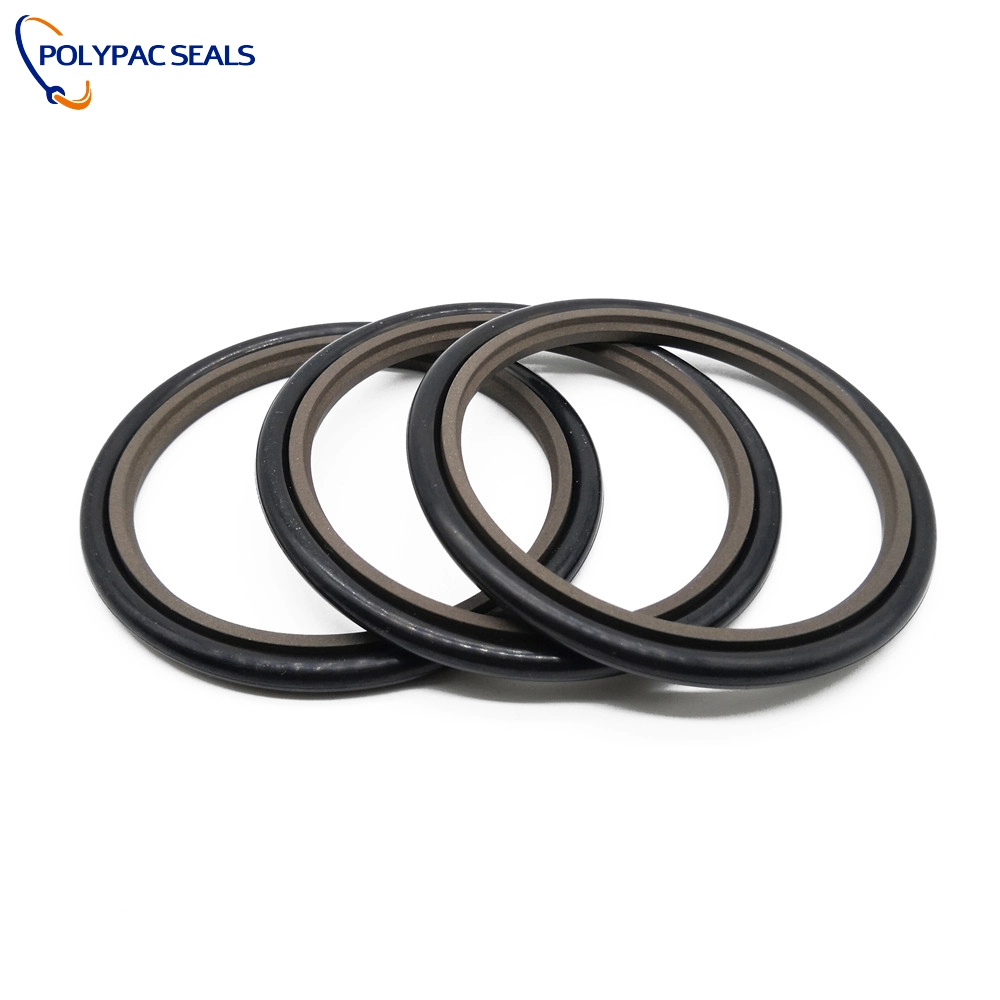
- PTFE (and filled PTFE) is the best engineered choice for back-up rings when extrusion resistance, chemical inertness, and low friction are priorities—common in high-pressure hydraulics and aggressive chemical environments.
- Silicone is valuable as a primary O-ring where high/low temperature flexibility, biocompatibility, or food-grade properties are needed, but it is rarely adequate as a stand-alone back-up ring due to poor extrusion resistance and compression set characteristics.
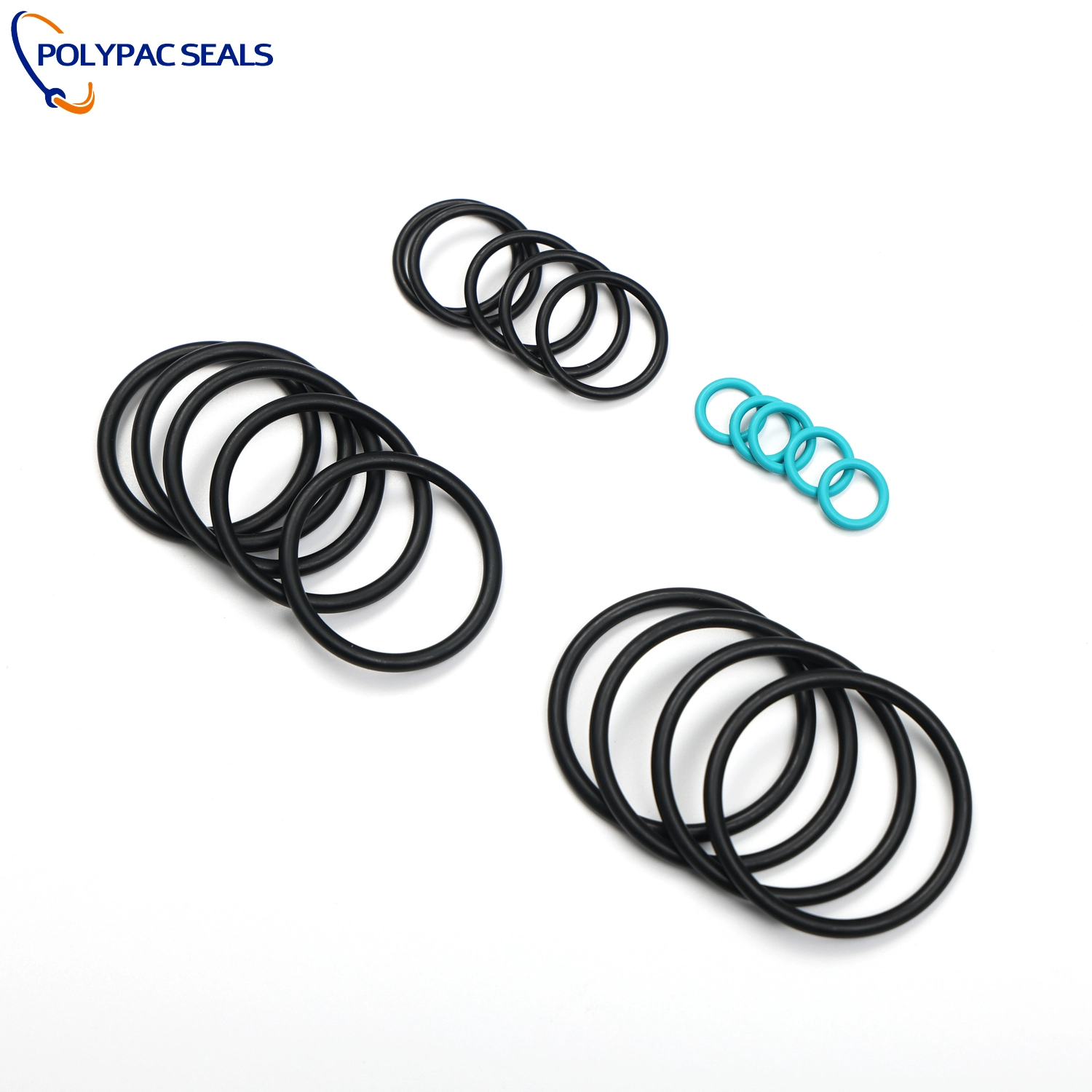
- Elastomers such as NBR, FKM, and EPDM remain the go-to primary O-ring materials. For back-up functionality, they usually require design measures (smaller clearances, backup rings made from PTFE or hard polymers) unless the application is low pressure.
Selection guidelines, testing, and installation best practices
How I choose material: a decision workflow
My practical workflow for selecting a back-up ring material is:
- Define operating conditions: pressure profile, temperature extremes, fluid chemistry, dynamic vs static.
- Assess extrusion risk using clearance and pressure; consult groove design tables in ISO 3601 and Parker handbook.
- Select primary O-ring material for compatibility (NBR/FKM/EPDM/Silicone). If extrusion risk is high, specify a rigid PTFE (or filled PTFE) back-up ring.
- Specify tolerances, groove geometry, and manufacturing method (molded vs machined) and plan verification testing (pressure cycling, leakage, wear).
Recommended tests and verification
I require at minimum: static pressure hold tests, pressure-cycle fatigue tests, and for dynamic seals, friction and wear testing in representative conditions. Where chemical compatibility is uncertain, I run immersion tests per ASTM standards and monitor swelling, hardness change, and compression set. Reliable reference material properties should come from supplier technical data sheets and accredited test reports.
Installation and common pitfalls
Common failure modes I encounter include incorrect groove depth, sharp land radii that nick O-rings during assembly, and mismatched thermal expansion between back-up ring and O-ring. PTFE back-up rings are hard and can cut softer O-rings if tolerances are not correct. I always recommend lubrication during assembly and a controlled interference fit consistent with manufacturer guidance.
Specific use-cases and comparative examples
High-pressure hydraulic cylinder (static seal)
For a hydraulic cylinder rod gland at 250 bar, I specify a primary FKM O-ring for oil compatibility and a PTFE filled back-up ring to prevent extrusion. Filled PTFE (e.g., carbon or bronze filled) improves wear resistance and stabilizes the ring under pressure.
Low-temperature cryogenic application
At very low temperatures (<-150 °C) PTFE remains ductile and chemically stable while many elastomers become glassy. For static seals in cryogenics, PTFE back-up rings are often the only viable option; design must consider reduced elasticity of the primary O-ring.
Food and medical applications
Silicone O-rings are common for biocompatibility and temperature cycling. However, because silicone is a poor extrusion-resisting material, I usually combine silicone O-rings with PTFE back-up rings or use specially designed positive-stop gland geometry to prevent extrusion without adding aggressive friction or wear.
Polypac: manufacturing capability and how we help
Polypac is a scientific and technical hydraulic seal manufacturer and oil seal supplier specializing in seal production, sealing material development, and customized sealing solutions for special working conditions. I have worked with and observed Polypac's manufacturing and technical approach closely. Their custom rubber ring and O-ring factory covers an area of more than 10,000 square meters, with a factory space of 8,000 square meters. Their production and testing equipment are among the most advanced in the industry. As one of the largest companies in China dedicated to the production and development of seals, Polypac maintains long-term communication and cooperation with numerous universities and research institutions both domestically and internationally.
Founded in 2008, Polypac began by manufacturing filled PTFE seals, including bronze-filled PTFE, carbon-filled PTFE, graphite PTFE, MoS2-filled PTFE, and glass-filled PTFE. Today, they have expanded their product line to include O-rings made from various materials such as NBR, FKM, silicone, EPDM, and FFKM. Polypac's core products include O-Rings, Rod Seals, Piston Seals, End Face Spring Seals, Scraper Seals, Rotary Seals, Back-up Rings, and Dust Rings.
What differentiates Polypac in my assessment is the combination of materials engineering experience (especially with filled PTFE grades), large-scale manufacturing capacity, and close R&D partnerships with academic institutions. For projects requiring custom-filled PTFE back-up rings, tight tolerances, or special compound development for aggressive fluids, Polypac can perform material selection, prototype molding, and verification testing in-house.
How to engage Polypac for back-up ring solutions
If you have a high-pressure or chemically aggressive sealing challenge, Polypac can evaluate your operating envelope, recommend a primary O-ring and back-up combination, produce prototype samples, and provide testing data. Their expertise with filled PTFE makes them especially well-suited when extrusion resistance and low friction are both required.
FAQs
1. Can PTFE be used as the primary O-ring material?
PTFE is rarely used as a primary O-ring because it has very low elastic recovery and poor sealing load compared to elastomers. PTFE is excellent as a back-up ring or as a gasket material in some static seal designs. For background refer to the polymer overview (PTFE).
2. When should I choose silicone over elastomers like NBR or FKM?
Choose silicone when you need extreme temperature flexibility (very low temp), biocompatibility, or food-grade approvals. For oil handling and high-pressure hydraulics, NBR or FKM are typically better choices due to oil resistance and mechanical strength.
3. Do back-up rings always need to be rigid?
Not always. Rigid PTFE back-up rings are common for high-pressure applications. In some dynamic or low-pressure systems, flexible reinforcement or molded composite rings are used. The choice depends on pressure, clearance, and dynamic friction constraints.
4. How do I prevent cutting of O-rings by PTFE back-up rings?
Design grooves and tolerances per ISO 3601 and manufacturer guidance; use chamfers and radii on gland edges; consider filled PTFE grades with smoother finish; and ensure proper alignment during assembly. Manufacturer-supplied installation guidelines are critical.
5. Are filled PTFE back-up rings better than pure PTFE?
Filled PTFE (bronze, carbon, MoS2, glass) improves wear resistance, dimensional stability, and sometimes thermal conductivity, making them preferred for dynamic and abrasive conditions. Selection should match the fluid and mechanical environment.
6. How should I test a new back-up ring design?
Perform static pressure hold, cyclic pressure fatigue, and dynamic friction/wear tests in representative fluids and temperatures. ASTM immersion tests for chemical compatibility and compression set testing are also recommended.
If you'd like assistance specifying a back-up ring and O-ring combination for a particular application, contact Polypac for consultation, sample production, and performance testing. Visit our product pages or get a quote to discuss custom materials, filled PTFE options, and precision molding for your sealing challenges.
Contact Polypac to request datasheets, drawings, or test reports for back-up rings and O-rings. Our engineering team can help you match material and geometry to operational needs and provide prototypes for qualification.

Hydraulic Cylinder Seals Kits: 5 High-Tech Materials That Double Your Maintenance Interval

How to Choose the Perfect Hydraulic Jack Seals: A Comprehensive Material & Performance Comparison

High-Performance Pneumatic Piston Seals: How to Achieve Zero-Leakage Efficiency

PTFE vs. Composite: Choosing the Best Piston Guide Ring Material for High-Pressure Systems

Mastering O-Ring Gland Design: The Complete Guide for Perfect Sealing Performance
Products
How can I prevent seal damage during installation?
What is the difference between a static seal and a dynamic seal?
Why did my O-ring fail prematurely?
How important is surface finish on the metal parts that contact the seal?
How do I choose the right material for my sealing application?
Stay Updated with Industry Insights
Subscribe to our articles and receive the latest news, expert guidance, and technical updates directly in your E-mail.
Rest assured that your privacy is important to us, and all information provided will be handled with the utmost confidentiality.

Polypac is a trusted global supplier of high-performance sealing solutions, providing OEM & ODM services for industries worldwide.
E-mail:
Phone/WhatsApp:
© 2025 Polypac Seals. All Rights Reserved.
dms
DMS
DMS