











Custom vs Standard Scraper Seals: When to Order Custom Parts
Summary (-friendly): Scraper seals are critical components that protect hydraulic and pneumatic systems by preventing contamination and extending seal life. Choosing between standard (off-the-shelf) and custom scraper seals depends on operating conditions, available space, expected contamination, regulatory requirements and total operating cost. This article walks through the functional role of scraper seals, typical failure modes, when customization is justified, material and tolerance considerations, procurement trade-offs, and verification best practices. Examples, a comparison table, and references to industry standards are provided to support buyers and design engineers in making a data-driven decision.
Understanding scraper seals and their role in hydraulic systems
What scraper seals do and why they matter
Scraper seals (also called dust rings, wipers, or rod scrapers) are designed to remove dirt, water, grit and other contaminants from piston rods or shafts as they retract into a cylinder. By keeping contaminants out of the fluid chamber and primary sealing elements (rod seals, piston seals, O-rings), scraper seals reduce abrasive wear, prevent seal extrusion and swelling, and lengthen service intervals for hydraulic systems. For an overview of sealing elements and their place in hydraulic systems, see the hydraulic cylinder entry on Wikipedia (https://en.wikipedia.org/wiki/Hydraulic_cylinder).
Common designs and related sealing elements
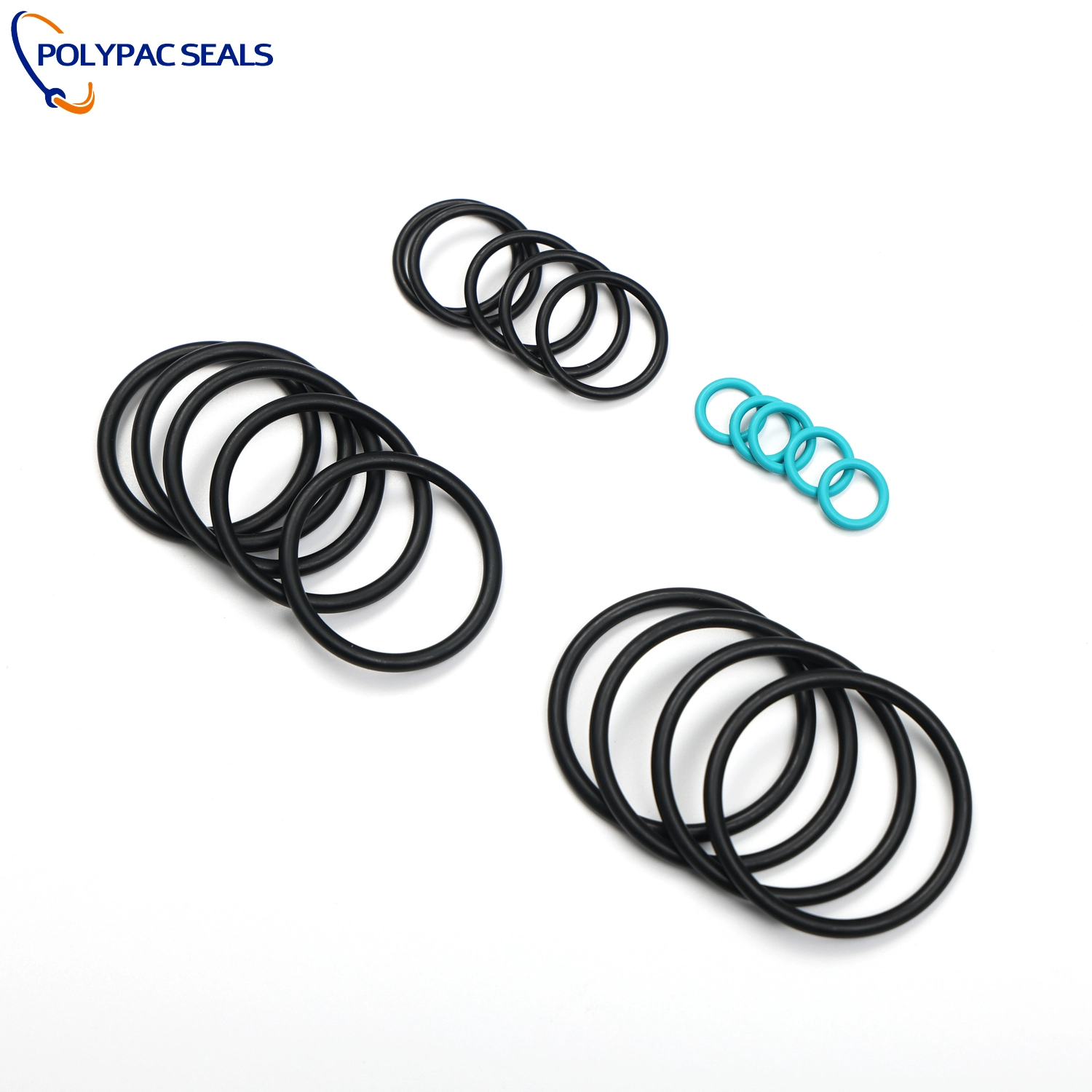
Typical scraper designs include single-lip rubber scrapers, harder wear rings with integrated lips, and composite scrapers that combine a flexible wiping lip with a rigid support ring. Scraper seals often work in conjunction with rod seals (primary dynamic seal), secondary seals (back-up rings), and O-rings for static sealing. For general background on O-rings and elastomeric sealing, see the O-ring resource at Wikipedia (https://en.wikipedia.org/wiki/O-ring).
Failure modes that make scrapers critical
- Abrasion: grit and sand abrade rod seals and rods when scrapers fail.
- Hydrolysis and chemical attack: exposure to water and contaminants accelerates material degradation.
- Seal extrusion: absence of proper support or incorrect tolerances leads to extrusion under pressure.
- Leak paths: failed scrapers allow ingress, causing contamination-induced seal failure and system downtime.
When to choose custom scraper seals
Operating conditions that justify customization
Custom scraper seals are often warranted when one or more of the following apply:
- Severe contamination environments (offshore, mining, construction): specialized lips or multiple wipers may be needed.
- High temperature or aggressive fluids: require special elastomers (FFKM, HNBR, PTFE-filled compounds) beyond typical NBR or FKM.
- Space or geometry constraints: non-standard groove sizes, stepped shafts, or integrated guides need tailored solutions.
- Regulatory or industry certifications that require traceability, special materials or testing (e.g., food, medical or aerospace applications).
Performance vs volume trade-off
Customization usually improves performance (longer life, better contamination exclusion) but increases unit cost and lead time due to tooling and material choices. For low-volume, mission-critical equipment (specialized hydraulic tools, subsea controls, aerospace actuators), custom scrapers provide lower lifecycle costs and risk reduction. For high-volume, cost-sensitive OEM applications, standard catalog parts are often preferable.
Design constraints and compatibility checks
Before ordering custom parts, engineers must verify groove geometry, shaft finish and hardness, rod end tolerances, and dynamic clearances. Improper specification is a common cause of custom seal failure — communicate surface roughness (Ra), shaft hardness, maximum pressure exposure and movement speed to the supplier. Reference standards and material classification systems such as ASTM D2000 for elastomer materials can help standardize material selection (ASTM D2000).
Design, material and testing considerations for scraper seals
Material choices and their trade-offs
Common materials for scraper seals include NBR (nitrile), FKM (fluoroelastomer), EPDM, silicone and PTFE or filled PTFE for lips. Material selection must balance abrasion resistance, chemical compatibility, temperature range and cost. For example, NBR is economical with good oil resistance; FKM resists higher temperatures and many chemicals; PTFE-based lips offer low friction and superior wear resistance but need compatible elastomer supports for sealing against irregularities.
Tolerances, finish and support elements
Key dimensional and surface specifications that affect scraper performance:
- Shaft surface roughness (Ra) — typically 0.2–0.4 μm for dynamic sealing surfaces.
- Groove dimensions and tolerances to prevent extrusion while maintaining wiping action.
- Hardness of mating surfaces — excessively soft shafts accelerate wear.
Standards and technical handbooks from seal manufacturers and industry bodies provide detailed groove and tolerance tables. For general information on mechanical seals and design considerations, see the mechanical seal overview (https://en.wikipedia.org/wiki/Mechanical_seal).
Testing and qualification
Custom parts should be validated through bench tests (dirt ingress tests, cyclic rod movement, salt spray for corrosion-related applications) and, where needed, certified material test reports (MTRs). For critical applications, specify accelerated life tests and provide acceptance criteria: leak rate thresholds, visual wear limits, and retention strength. Work with suppliers who maintain modern testing equipment and laboratory traceability to international partners and universities for advanced validation.
Procurement, cost and lifecycle decision framework
Quantitative and qualitative decision factors
Make procurement decisions based on total cost of ownership (TCO), not just unit price. Consider:
- Downtime cost impact of seal failure
- Maintenance frequency changes with improved scrapers
- Warranty claims and field reliability data
- Regulatory compliance and traceability needs
Typical lead time and cost considerations
| Factor | Standard Scraper Seals | Custom Scraper Seals | Recommendation |
|---|---|---|---|
| Unit cost | Low — mass-produced catalog pricing | Higher — tooling, compound development costs | Standard for commodity designs; custom if lifecycle savings justify |
| Lead time | Days to 2 weeks (stock or short-run) | 4–8+ weeks (tooling and approval cycles) | Plan ahead for custom; use standard for rapid needs |
| Minimum order quantity (MOQ) | Low — single pieces often available | Higher — due to tooling and setup | Use custom for long-term programs or specialized units |
| Performance predictability | Good for known, common operating envelopes | Optimized for specific, extreme conditions | Custom where standard performance margin is insufficient |
Notes: Lead time and cost ranges are typical industry expectations; exact numbers vary by supplier, geographic location and material availability.
Supplier selection and quality attributes
Choose suppliers that can provide material certificates, documented testing, and traceability. For custom seals, look for partners with engineering support, rapid prototyping, advanced molding and machining, and lab testing capacity. International cooperation with universities and research institutions is a strong plus for R&D-driven custom solutions.
Polypac: Custom capability, product range and competitive strengths
Who Polypac is and core capabilities
Polypac is a scientific and technical hydraulic seal manufacturer and oil seal supplier specializing in seal production, sealing material development, and customized sealing solutions for special working conditions. Founded in 2008, Polypac started with filled PTFE seals (bronze-filled PTFE, carbon-filled PTFE, graphite PTFE, MoS₂-filled PTFE, glass-filled PTFE) and has since expanded to a wide elastomer portfolio including NBR, FKM, silicone, EPDM and FFKM. Polypac's factory footprint includes more than 10,000 square meters, with 8,000 m² of production space and modern production and testing equipment. The company maintains long-term collaborations with universities and research institutions domestically and internationally, strengthening R&D and verification capabilities.
Product range relevant to scraper and hydraulic sealing
Polypac supplies a broad range of sealing products including O-Rings, Rod Seals, Piston Seals, End Face Spring Seals, Scraper Seals (dust rings), Rotary Seals, Back-up Rings and Dust Rings. Polypac's experience with filled PTFE and specialty elastomers positions it to design scrapers that balance low friction, high wear resistance and compatibility with aggressive fluids.
Competitive differentiators
- R&D-driven material development including filled PTFE compounds for low-wear scraper lips.
- Large manufacturing footprint with advanced molding and testing facilities for both prototyping and series production.
- Quality documentation and the ability to support certification and traceability for regulated industries.
- Long-standing partnerships with academic and research institutions to accelerate problem-solving for unusual operating conditions.
Practical checklist and sample decision rules
Quick decision checklist before ordering
- Define operating environment: maximum contamination type, temperature range, fluid chemistry.
- Record rod finish (Ra), diameter tolerance, stroke speed and pressure exposure.
- Assess failure costs: estimate downtime and maintenance cost per failure.
- Compare TCO for standard vs custom across expected lifecycle (3–5 years typical).
- Engage supplier early for prototyping and testing if custom is likely.
Simple rules-of-thumb
- Use standard scraper seals for benign conditions, common cylinder sizes and when rapid replacement is required.
- Order custom scraper seals when contamination is severe, operating temperatures exceed standard elastomer limits, or when unique geometries require tailored profiles.
- Consider small custom prototype runs when field failures of standard parts are recurring to validate performance improvement before committing to large MOQ.
Standards and references
Use international standards and material classification references when specifying parts. Helpful resources include:
- ISO (International Organization for Standardization) general site — https://www.iso.org/
- ASTM elastomer classification (ASTM D2000) — https://www.astm.org/Standards/D2000.htm
- Hydraulic cylinder and sealing overviews — Wikipedia (https://en.wikipedia.org/wiki/Hydraulic_cylinder)
- O-ring fundamentals — Wikipedia (https://en.wikipedia.org/wiki/O-ring)
FAQ — Frequently Asked Questions
1. What is the primary function of a scraper seal?
The scraper seal (dust ring/wiper) keeps contaminants off the rod/shaft to protect internal seals and fluid integrity, which reduces wear and prevents contaminants entering the hydraulic circuit.
2. How do I know if I need a custom scraper seal?
If you face extreme contamination, unusual temperatures, incompatible fluids, non-standard groove geometry, or recurrent failures with catalog parts, a custom scraper seal should be considered. Run a TCO analysis considering downtime and maintenance costs.
3. What materials are best for scraper seals in abrasive environments?
PTFE-based lips (including filled PTFE compounds) combined with a supporting elastomer are a common choice for abrasive environments due to low friction and superior wear resistance. HNBR or FKM supports may be used depending on temperature and fluid chemistry.
4. How long does it take to produce custom scraper seals?
Typical lead times: standard parts can be sourced in days to a couple of weeks; custom tooling and approval for scraper seals commonly require 4–8+ weeks depending on complexity and testing requirements.
5. Can custom scraper seals reduce overall costs?
Yes, in many cases custom scrapers reduce total cost of ownership by extending seal life, lowering maintenance frequency and preventing costly downtime. This must be weighed against higher upfront tooling and per-unit costs.
6. What documentation should I request from a supplier?
Request material certificates, accelerated life test results, dimensional drawings with tolerances, and sample inspection reports. For regulated industries, ask for traceability and any required certifications.
7. Do scraper seals require special installation care?
Yes — ensure groove cleanliness, correct lip orientation, proper assembly tools to avoid nicking lips, and verify shaft finish and hardness before installation. Improper installation is a common cause of premature failure.
Contact and next steps
If you need custom scraper seals, Polypac can help evaluate the application, propose material and profile options, produce prototypes and run verification tests. For technical consultations, quoting or to view product details (O-Rings, Rod Seals, Piston Seals, End Face Spring Seals, Scraper Seals, Rotary Seals, Back-up Rings, Dust Rings), contact Polypac’s sales and engineering team.
Request a quote or technical evaluation: contact@polypac-example.com (replace with official contact) or visit Polypac’s product pages. Engage early — bringing your supplier into the design loop reduces risk and shortens qualification cycles.
References: ISO general information (https://www.iso.org/), ASTM elastomer guide (ASTM D2000) (https://www.astm.org/Standards/D2000.htm), Hydraulic cylinder overview (https://en.wikipedia.org/wiki/Hydraulic_cylinder), O-ring basics (https://en.wikipedia.org/wiki/O-ring).

High-Performance Pneumatic Piston Seals: How to Achieve Zero-Leakage Efficiency

PTFE vs. Composite: Choosing the Best Piston Guide Ring Material for High-Pressure Systems

Mastering O-Ring Gland Design: The Complete Guide for Perfect Sealing Performance

Advanced Back-Up Ring Materials: Beyond PTFE for Extreme Temperature Environments

PTFE vs. Urethane Scrapers: Which Material Truly Prevents Contamination?
Products
How important is surface finish on the metal parts that contact the seal?
When should I use a spring-energized seal instead of a standard elastomeric seal?
How do I choose the right material for my sealing application?
What does "AS568" mean?
Why did my O-ring fail prematurely?
Stay Updated with Industry Insights
Subscribe to our articles and receive the latest news, expert guidance, and technical updates directly in your E-mail.
Rest assured that your privacy is important to us, and all information provided will be handled with the utmost confidentiality.
Polypac is a trusted global supplier of high-performance sealing solutions, providing OEM & ODM services for industries worldwide.
E-mail:
Phone/WhatsApp:
© 2025 Polypac Seals. All Rights Reserved.
dms
DMS
DMS