












Using Filled PTFE Seals: Graphite, Glass, Bronze Benefits

Using Filled PTFE Seals: Graphite, Glass, Bronze Benefits
Why choose a PTFE Seal for hydraulic applications?
A PTFE Seal is often the first choice for hydraulic systems because of PTFE’s excellent chemical resistance, very low coefficient of friction, and wide operating temperature range. For designers and maintenance teams who need durable, low-wear sealing elements, PTFE reduces drag and stick–slip and stands up to aggressive fluids. However, unfilled (virgin) PTFE has mechanical limits—particularly in wear resistance and creep under high load. That’s where filled PTFE compounds become critical: by adding fillers such as graphite, glass, or bronze, manufacturers tailor PTFE Seal properties to meet specific application demands—higher wear resistance, improved dimensional stability, better thermal conductivity, or optimized friction behavior.
What are filled PTFE seals and when should you consider them?
Filled PTFE seals are composite materials where PTFE is compounded with solid fillers. The filler particles interrupt PTFE’s polymer chains and provide reinforcing characteristics that improve tribological performance (wear and friction), thermal and dimensional stability, and sometimes conductivity. If you are selecting a piston or rod seal for high-pressure hydraulic cylinders, severe duty reciprocating applications, or environments with particulate contamination, a filled PTFE Seal is often the right choice. Commercially minded customers buying PTFE seals should match filler type to the performance need: wear resistance, temperature stability, load capacity, or cost-effectiveness.
Graphite-filled PTFE: benefits and typical use cases
Graphite-filled PTFE is one of the most common filled PTFE compounds for seals. Graphite acts as a solid lubricant dispersed through the PTFE matrix, which lowers friction and improves running-in behavior. Typical benefits include:
- Low friction and reduced breakaway torque, which lessens stick–slip in reciprocating systems.
- Good wear resistance under dynamic conditions and when moderate loads cause surface abrasion.
- Improved thermal stability and slightly better heat dissipation compared to unfilled PTFE.
Common use cases: high-cycle hydraulic pistons, reciprocating rod seals in medium-to-high pressure systems, and applications where reducing friction and extending seal life are priorities. Commercially, these are often recommended where efficiency and reduced energy losses are important (for example, in mobile hydraulics or high-frequency industrial actuators).
Glass-filled PTFE: benefits and typical use cases
Glass-filled PTFE uses finely divided glass fibers to reinforce the PTFE. The main benefits are increased dimensional stability and improved compressive strength. Glass fibers help reduce cold-flow and creep that can occur under prolonged static loads, making glass-filled PTFE a good choice where tight tolerances and long-term dimensional stability are crucial.
- Improved stiffness and compressive strength over virgin PTFE.
- Better resistance to extrusion and deformation under static or constant loading.
- Maintains acceptable wear characteristics in moderate mechanical environments.
Common use cases: seals for systems with sustained high-pressure hold, components where dimensional stability over time matters (e.g., long-stroke hydraulic cylinders under static load), and situations requiring predictable clearances. Glass-filled PTFE is valuable for designers seeking to minimize seal set and preserve sealing geometry over long service intervals.
Bronze-filled PTFE: benefits and typical use cases
Bronze-filled PTFE includes metallic particles (bronze) dispersed in the PTFE matrix. The metallic filler significantly improves load-bearing capacity, heat conduction, and abrasive wear resistance. Bronze-filled PTFE typically has higher friction than graphite-filled variants but offers superior mechanical robustness and thermal conductivity.
- Enhanced wear resistance under heavy loads and abrasive conditions.
- Better thermal dissipation which reduces local overheating at the sealing interface.
- Higher compressive strength and improved creep resistance compared with virgin PTFE.
Common use cases: heavy-duty hydraulic cylinders, high-pressure piston seals, and environments with particulate contamination or metal-to-metal contact risk. Bronze-filled PTFE seals are often chosen where durability under harsh mechanical stress outweighs the lowest possible friction.
Comparative table: Graphite vs Glass vs Bronze filled PTFE
The table below summarizes relative performance characteristics for the three filler types. Values are qualitative to guide material selection—actual performance depends on compound formulation and operating conditions.
| Property | Graphite-filled PTFE | Glass-filled PTFE | Bronze-filled PTFE |
|---|---|---|---|
| Friction | Low (excellent running-in) | Moderate | Moderate–High |
| Wear resistance (dynamic) | Good | Good–Moderate | Very Good–Excellent |
| Creep/Cold-flow resistance | Moderate | High | High |
| Thermal conductivity/heat dissipation | Moderate | Low–Moderate | High |
| Best for | Low friction, dynamic reciprocation | Dimensional stability, static high-pressure hold | Heavy-duty/high-load hydraulic pistons |
Source for material behavior and industry guidance: MatWeb material property data and technical papers from hydraulic-seal manufacturers (see references).
Design considerations when using filled PTFE seals in hydraulic cylinders
When specifying a filled PTFE Seal for hydraulic cylinders, consider the following:
- Operating pressure and direction: For bidirectional pistons, confirm the compound’s extrusion resistance and compatibility with the cylinder’s groove profile. Polypac’s GNS Piston Seal | Bidirectional PTFE Seal for Hydraulic Cylinders is engineered for high-pressure bidirectional service and is a compact option when space is limited.
- Surface finish: PTFE-based seals perform best on precision-ground surfaces. For graphite-filled compounds, ensure surface roughness is within the manufacturer’s recommended Ra range to avoid accelerated wear.
- Temperature range and fluid compatibility: PTFE is chemically inert and handles a broad temperature range, but fillers can alter thermal behavior and compatibility slightly—verify compound data sheets against expected fluid types and temperatures.
- Installation and groove fit: Filled PTFE seals sometimes require support elements (backup rings or energizers) to prevent extrusion and ensure immediate sealing after assembly. Ensure groove tolerances and backup devices match the chosen compound.
Installation, maintenance, and common failure modes
Correct installation and maintenance extend seal life significantly:
- Installation: Use appropriate tools and protective sleeves to prevent nicking. For filled PTFE, control compression to avoid over-compression and to allow for intended sealing contact width.
- Break-in/run-in: Graphite-filled compounds typically require minimal run-in; bronze-filled variants may show slightly higher initial friction but then stabilize as the contact surfaces conform.
- Maintenance: Monitor for leakage, scoring, or extrusion. If you see grooving or particulate generation, inspect mating surfaces and confirm compatibility with contaminants present.
- Common failures: extrusion under insufficient backup support, wear due to abrasive contamination, and seal set (permanent deformation) in poorly supported installations.
Commercial tips: buying PTFE seals and selecting a supplier
When purchasing a PTFE Seal, a few practical considerations reduce risk and lifecycle cost:
- Ask for compound data sheets and test results for wear, friction, and compression set. Make sure the supplier can demonstrate performance in conditions similar to yours.
- Request dimensional tolerances and confirm groove compatibility. A compact bidirectional solution like the GNS Piston Seal can reduce machining and assembly complexity.
- Evaluate supplier support for custom formulations and small-batch prototypes—this matters when you’re developing or retrofitting hydraulic cylinders.
- Consider total cost of ownership: a bronze-filled seal may cost more initially but reduce downtime and replacement frequency in heavy-duty service.
Why Polypac’s GNS Piston Seal | Bidirectional PTFE Seal for Hydraulic Cylinders
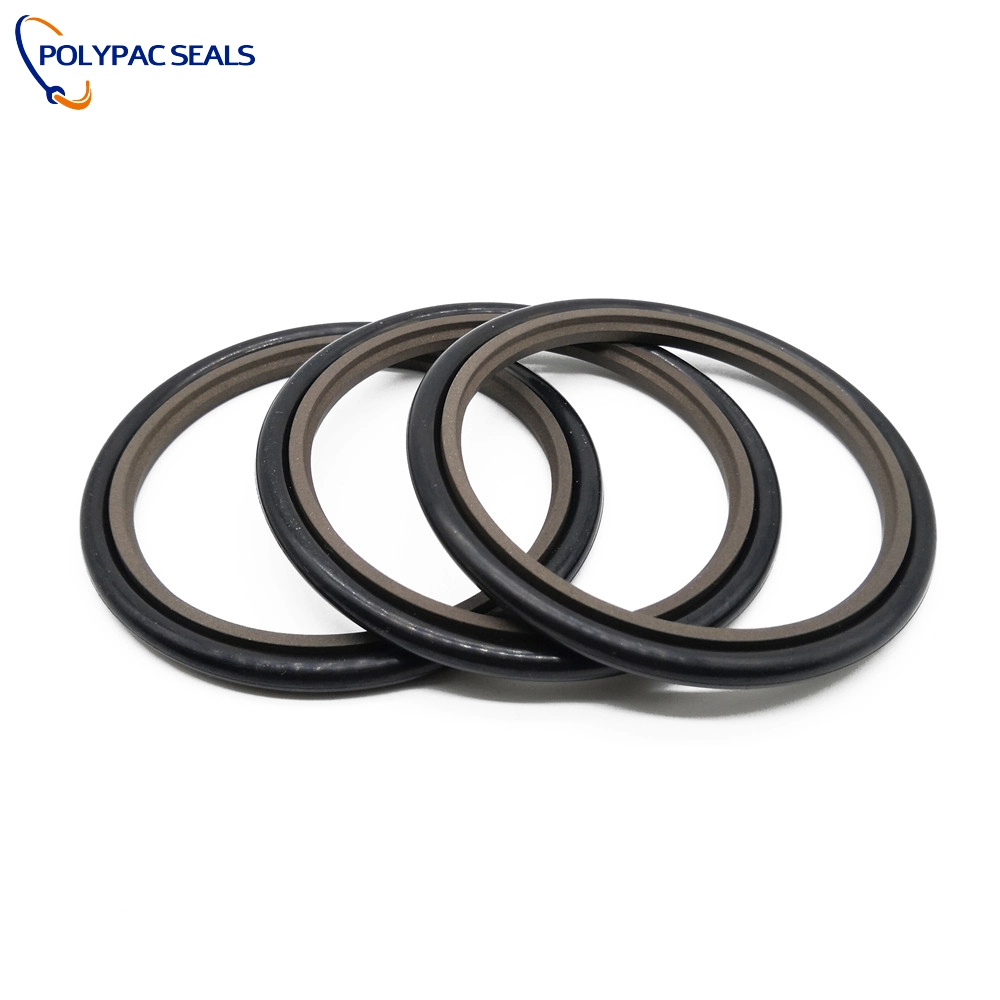
Polypac’s GNS Piston Seal is a compact, bidirectional PTFE seal designed specifically for hydraulic cylinders where high pressure and reliable, long-lasting performance are required. Key advantages:
- Bidirectional sealing: provides symmetrical performance in cylinders where pressure reverses, reducing inventory complexity for maintenance teams.
- Compact profile: fits into reduced groove space, helpful when retrofitting or designing compact actuators.
- Engineered for high pressure: suitable for demanding industrial applications where extrusion resistance and consistent sealing are essential.
- Durability: PTFE base and optimized filler choices enable long service life and efficient piston operation—minimizing downtime and service costs.
For engineers specifying seals, the GNS Piston Seal offers a balance of low friction, robust sealing under pressure, and compatibility with typical hydraulic fluids—making it a practical option for performance-driven hydraulic systems.
FAQ — Filled PTFE Seals and GNS Piston Seal
Q: What is the main benefit of using a filled PTFE Seal instead of virgin PTFE?
A: Filled PTFE improves wear resistance, dimensional stability and sometimes thermal conductivity, depending on the filler. This results in longer life and better performance in demanding hydraulic applications.
Q: Which filler is best for high-pressure piston seals?
A: For high-pressure, heavy-duty piston seals, bronze-filled PTFE often offers the best combination of load-carrying capacity and wear resistance. However, specific operating conditions may favor graphite or glass fillers—consult compound data sheets.
Q: Can I use a graphite-filled PTFE Seal for static pressure-hold applications?
A: Graphite-filled PTFE is excellent in dynamic applications; for long-term static pressure-hold where creep/cold-flow is a concern, glass- or bronze-filled compounds may be preferable.
Q: Is the GNS Piston Seal suitable for both mobile and industrial hydraulic systems?
A: Yes. Polypac’s GNS Piston Seal is designed for high-pressure, bidirectional use and works well in both mobile and industrial hydraulic cylinders where durable sealing and compact profiles are required.
Q: How should I choose the right filled PTFE compound?
A: Match the compound to your primary failure modes: choose graphite for the lowest friction and dynamic wear, glass for dimensional stability and static loads, and bronze for heavy loads and abrasive conditions. Validate the choice with lab tests or supplier test data under representative conditions.
Contact us / View product
To discuss the right filled PTFE Seal for your hydraulic cylinder or to request technical data and samples of Polypac’s GNS Piston Seal | Bidirectional PTFE Seal for Hydraulic Cylinders, please contact our technical sales team or view the product page. Our engineers can recommend the optimal filler and compound for your application to maximize life and efficiency.
References
- MatWeb. Polytetrafluoroethylene (PTFE) material property data and compound guidance. https://www.matweb.com
- Parker Hannifin technical resources on PTFE compounds and filled PTFE performance. https://www.parker.com
- SKF technical articles and white papers on sealing solutions and PTFE-based seals. https://www.skf.com
- Industry product literature and datasheets from hydraulic-seal manufacturers (compound-specific properties and recommended applications).

High-Performance Pneumatic Piston Seals: How to Achieve Zero-Leakage Efficiency

PTFE vs. Composite: Choosing the Best Piston Guide Ring Material for High-Pressure Systems

Mastering O-Ring Gland Design: The Complete Guide for Perfect Sealing Performance

Advanced Back-Up Ring Materials: Beyond PTFE for Extreme Temperature Environments

PTFE vs. Urethane Scrapers: Which Material Truly Prevents Contamination?
Products
What does "AS568" mean?
What is the purpose of the metal spring in a rotary shaft seal?
What is the difference between a static seal and a dynamic seal?
When should I use a spring-energized seal instead of a standard elastomeric seal?
How do I choose the right material for my sealing application?
Stay Updated with Industry Insights
Subscribe to our articles and receive the latest news, expert guidance, and technical updates directly in your E-mail.
Rest assured that your privacy is important to us, and all information provided will be handled with the utmost confidentiality.

Polypac is a trusted global supplier of high-performance sealing solutions, providing OEM & ODM services for industries worldwide.
E-mail:
Phone/WhatsApp:
© 2025 Polypac Seals. All Rights Reserved.
dms
DMS
DMS