











Buyer's Guide: Choosing High-Pressure O-Ring Kits
I often get asked by engineers and maintenance managers: how do you select a high pressure o ring kit that will last in demanding hydraulic or subsea applications? In this guide I share practical rules I use in the field—covering material selection, extrusion control, gland design, backup rings, inspection, and installation—so you can choose a kit that minimizes downtime, avoids extrusion failures, and meets performance requirements in high-pressure environments.
Understanding sealing challenges in high-pressure systems
Why high pressure changes the rules
At high pressures, an O-ring faces far more than chemical attack or temperature extremes: extrusion into the clearance gap, accelerated compression set, and rapid mechanical wear become dominant failure modes. Unlike low-pressure static seals, high-pressure sealing requires careful attention to cross-section geometry, groove tolerances, and the use of back-up rings to prevent extrusion.
Key failure mechanisms and how I evaluate them
I always evaluate three failure mechanisms when selecting a high pressure o ring kit:
- Extrusion: O-ring material squeezed into the gland clearance, often leading to fragmenting.
- Compression set: Permanent hardening or loss of sealing force over time, especially at elevated temperature.
- Abrasion and wear from dynamic movement under load.
To reduce risk I focus on appropriate material hardness, correct gland design (including extrusion gap control), and inclusion of anti-extrusion back-up rings when system pressure exceeds the practical capability of the elastomer alone.
Standards and references I use
When designing or specifying high pressure kits I refer to authoritative sources such as the general O-ring reference on Wikipedia (O-ring) for basic concepts and to standards like ISO 3601 for dimensional and tolerance guidance. For engineering data and material behavior I consult manufacturer technical handbooks (for example, the Parker O-Ring Handbook) and material supplier datasheets to validate temperature ranges and chemical compatibility.
Material and component selection for high-pressure O-ring kits
Choosing the right elastomer
Material selection is the most influential decision. Here are materials I commonly specify for high-pressure kits and why:
- NBR (nitrile): Good for mineral oils, good mechanical properties and low cost. Suitable for many hydraulic fluids up to ~120°C.
- FKM (Viton®): Excellent chemical and temperature resistance (typically -20°C to +200°C). Preferred for higher-temperature hydraulic fluids and aggressive chemicals.
- FFKM (perfluoroelastomer): Highest chemical resistance and thermal stability. Used where contamination and extreme chemicals are a concern.
- EPDM: Good for water and brake fluids, not for petroleum oils.
- PTFE and filled PTFE rings: Extremely low friction and excellent chemical resistance; often used where extrusion resistance is critical (with suitable spring energizers).
I always cross-check material choice against the fluid, temperature profile, and any exposure to steam, solvents, or aggressive additives.
When to use backup rings and what type
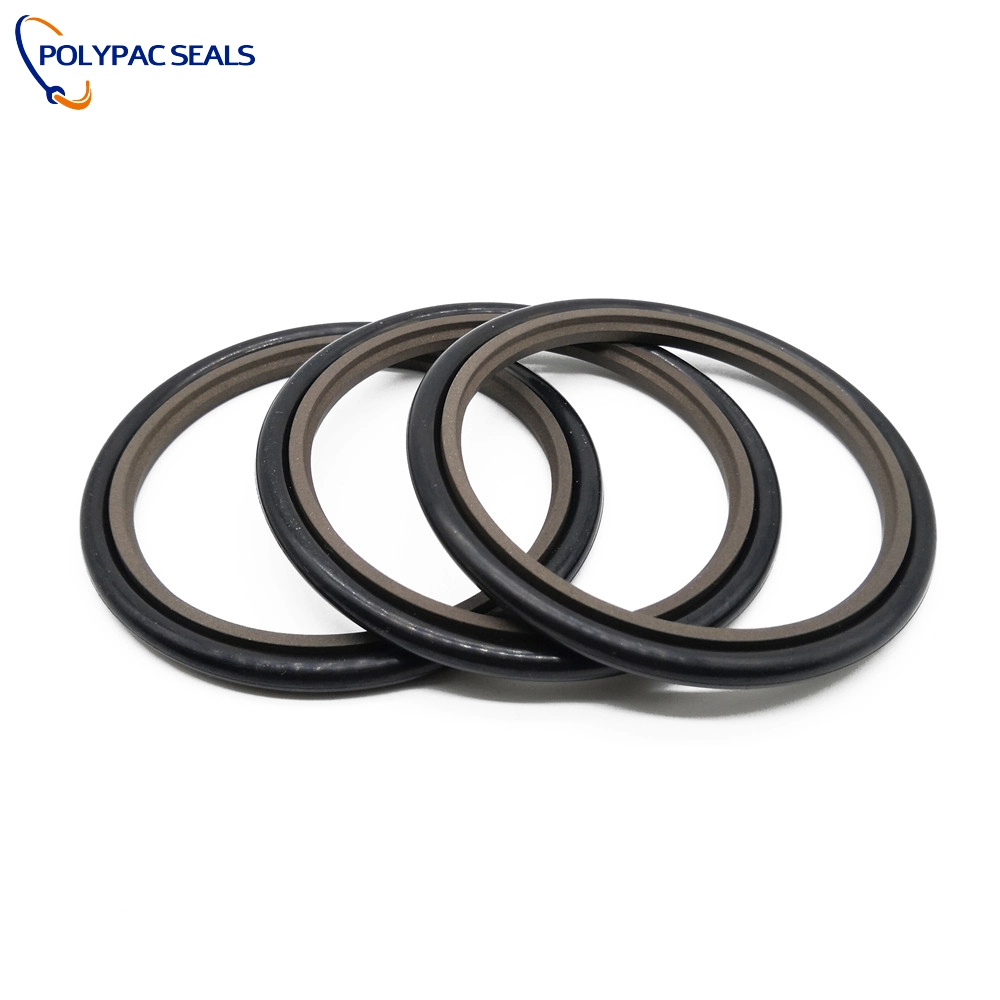
Backup rings (usually made from PTFE or filled PTFE compounds) prevent elastomer extrusion into the gap. My practical rules:
- For pressures up to ~200 bar in well-controlled gland tolerances, a correctly sized elastomer O-ring can be adequate.
- Above ~200–300 bar, I routinely specify backup rings on the low-pressure side. For oscillating or rotating shafts under pressure, I nearly always include back-up rings.
- Choose split or snap-fit backup rings for easy assembly in retrofits; solid rings for new designs where assembly allows.
Material temperature and compatibility data (quick reference)
| Material | Typical temp range (°C) | Common fluids | High-pressure suitability |
|---|---|---|---|
| NBR (Nitrile) | -40 to +120 | Hydraulic oils, mineral oils | Good for many hydraulics; use backup rings above ~200 bar |
| FKM (Viton®) | -20 to +200 | High-temp oils, some aggressive fluids | Excellent thermal and chemical resistance; good with backup rings for very high pressure |
| FFKM (Perfluoroelastomer) | -20 to +260 | Strong acids, aggressive chemicals | Top-end chemical resistance; used where reliability outweighs cost |
| PTFE (incl. filled PTFE) | -200 to +260 | Almost all chemicals & steam | Excellent extrusion resistance; used as backup rings or primary seals in specific designs |
Data above is a condensed engineering summary. For full material datasheets consult manufacturer literature or material standards. See general O-ring information at https://en.wikipedia.org/wiki/O-ring.
Design, installation, and testing best practices
Gland design and extrusion gap control
I always review the groove dimensions relative to the O-ring cross-section. Small extrusion gaps and proper squeeze (10–30% typical for static seals) reduce extrusion and leakage risk. The ISO 3601 standard provides dimensional guidance; refer to ISO 3601 for tolerances and profile definitions.
Installation techniques that prevent early failure
Poor installation is a leading cause of early failure. I train technicians to:
- Inspect O-rings for nicks, cuts, or contamination before assembly.
- Lubricate appropriately to reduce friction and avoid rolling.
- Use assembly tools to avoid pinching when fitting into grooves or over shoulders.
- Verify back-up ring orientation and seating before pressurizing the system.
Testing and acceptance criteria I require
Specification for a high pressure o ring kit should include acceptance tests: hydrostatic pressure hold at design pressure (plus a safety margin), leakage rate thresholds (e.g., < X ml/min), and functional cycling if dynamic. For mission-critical systems I also specify accelerated aging and compression set tests based on the expected service temperature and hours.
How to choose a high pressure o ring kit: practical buyer checklist
Step-by-step selection workflow
When selecting a kit, I follow a repeatable workflow:
- Define application conditions: max pressure, temperature range, fluid type, dynamic vs. static, cycle frequency.
- Choose candidate materials based on chemical compatibility and temperature limits.
- Design groove dimensions and determine if backup rings are required for pressure/extrusion control.
- Select O-ring cross-section, hardness (shore A), and backup ring type; create a prototype kit for bench testing.
- Specify inspection and test criteria in the purchase order, including traceability and lot documentation.
Comparing off-the-shelf kits vs. custom kits
Off-the-shelf kits are cost-effective for standard cylinder sizes and common fluids; they reduce lead time. But in high-pressure or special media environments (e.g., aerospace, subsea, or chemical dosing) I prefer custom kits because they allow choice of High Quality elastomers, engineered backup rings, and full testing documentation tailored to the application.
Cost vs reliability trade-offs
Higher-performance materials (FFKM, filled PTFE) and custom glands increase unit cost, but they reduce downtime risk and long-term maintenance. I perform a simple lifecycle cost comparison for each major project: calculate replacement/repair costs and downtime per year and compare with the incremental cost of a more durable kit.
| Option | Initial cost | Expected service life (typical) | Best for |
|---|---|---|---|
| Standard NBR kit (off-the-shelf) | Low | 1–3 years (varies) | General hydraulics with clean oil |
| FKM + backup rings (custom) | Medium | 3–7 years | High-temp or aggressive fluids |
| FFKM / PTFE solutions (engineered) | High | 7+ years | Critical systems, chemical exposure, subsea |
Polypac: custom sealing capability and why it matters
Polypac is a scientific and technical hydraulic seal manufacturer and oil seal supplier specializing in seal production, sealing material development, and customized sealing solutions for special working conditions. Polypac's custom rubber ring and O-ring factory covers an area of more than 10,000 square meters, with a factory space of 8,000 square meters. Our production and testing equipment are among the most advanced in the industry. As one of the largest companies in China dedicated to the production and development of seals, we maintain long-term communication and cooperation with numerous universities and research institutions both domestically and internationally.
Founded in 2008, Polypac began by manufacturing filled PTFE seals, including bronze-filled PTFE, carbon-filled PTFE, graphite PTFE, MoS₂-filled PTFE, and glass-filled PTFE. Today, we have expanded our product line to include O-rings made from various materials such as NBR, FKM, silicone, EPDM, and FFKM. Polypac's core products include O-Rings, Rod Seals, Piston Seals, End Face Spring Seals, Scraper Seals, Rotary Seals, Back-up Rings, and Dust Rings.
What differentiates Polypac in high-pressure kits
- Technical depth: I value Polypac's history in advanced filled PTFE—this expertise helps them design PTFE backup rings and low-friction sealing solutions that perform under extrusion stress.
- Scale and equipment: A large, well-instrumented factory means consistent process control and better batch traceability—critical when specifying kits for safety-critical applications.
- R&D partnerships: Long-term cooperation with universities and research institutes supports material development and bespoke seal designs for unusual environments.
- Material breadth: From economical NBR to High Quality FFKM and filled PTFE, Polypac offers the material options I specify across projects.
When I recommend Polypac
I recommend Polypac when the application requires customization (special materials, non-standard gland geometries, or validated testing protocols). Their experience with filled PTFE and collaboration with research institutions is a strong advantage for high-pressure and high-performance kits.
FAQ
1. What exactly is a high pressure O-ring kit?
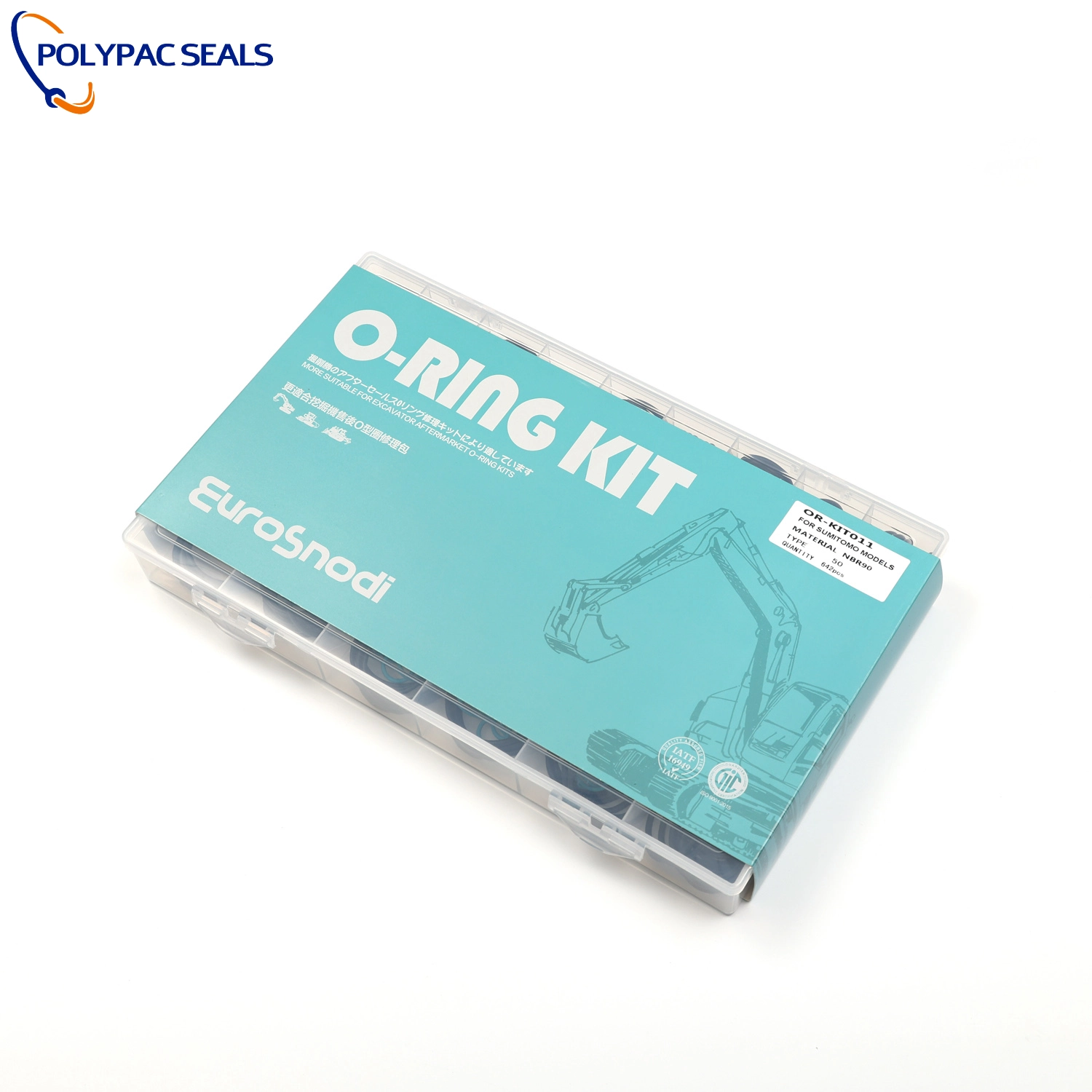
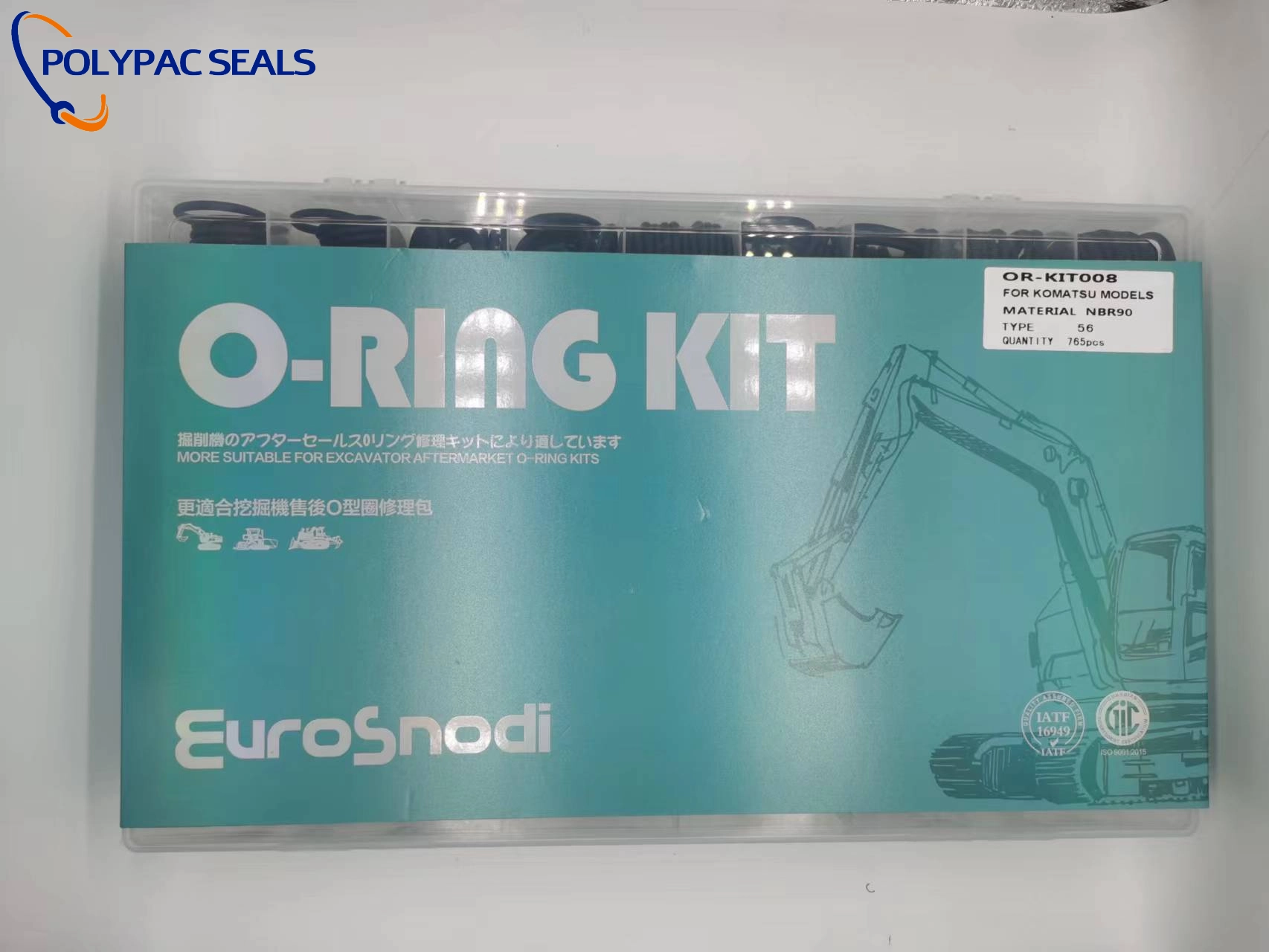
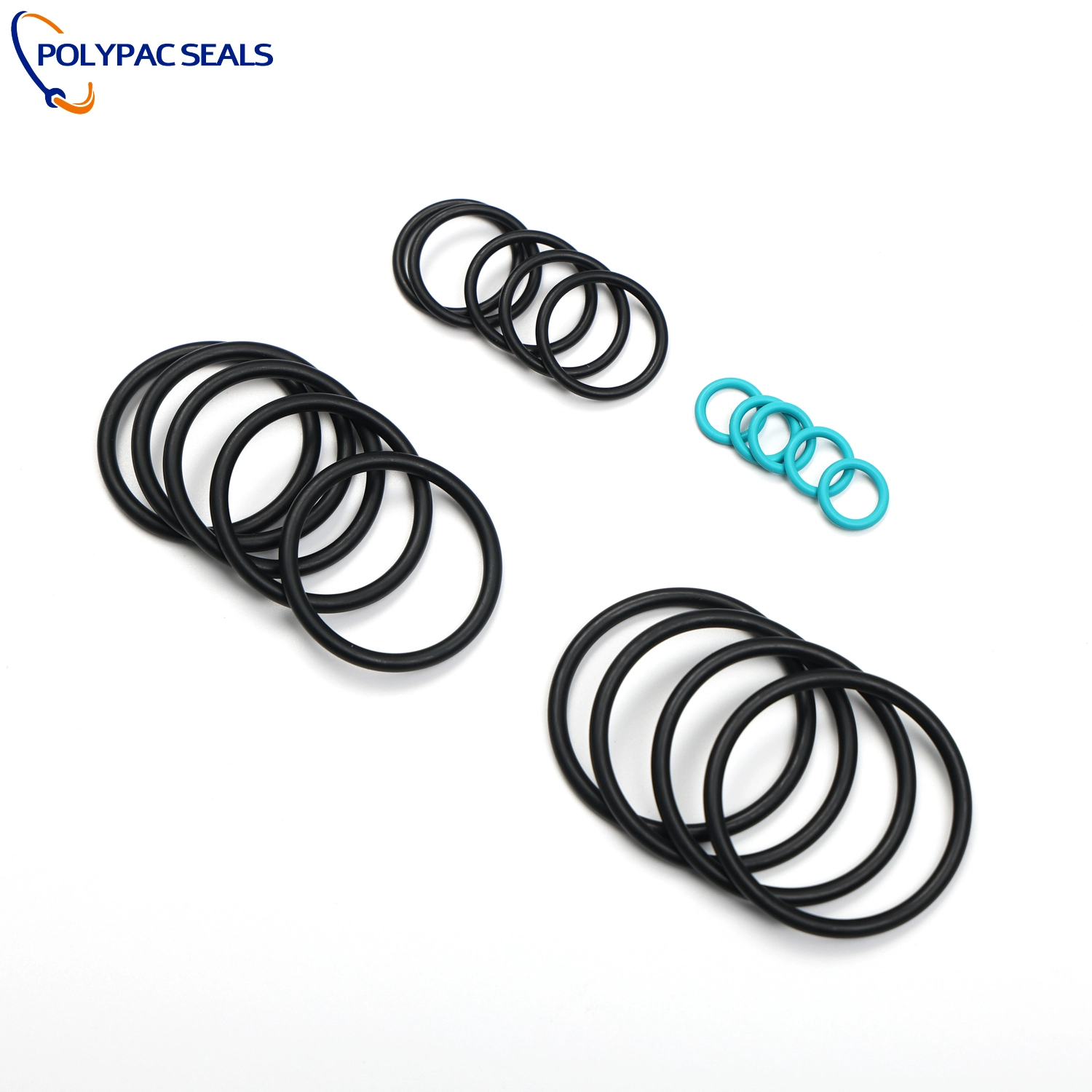
A high pressure o ring kit is a packaged set of seals (typically O-rings plus backup rings and sometimes auxiliary seals) specified for applications where system pressures, temperatures, or fluids make extrusion and rapid wear likely. Kits are sized and material-matched to the equipment they serve.
2. At what pressure do I always need backup rings?
There is no single threshold—gland tolerances, cross-section, and material hardness matter—but as a practical rule I include backup rings when system pressures exceed ~200–300 bar or when operating conditions (oscillation, shaft rotation, or poor groove control) increase extrusion risk.
3. How should I test a new high pressure O-ring kit before full deployment?
Run a hydrostatic hold test at design pressure (with a safety margin), perform functional cycling under expected load and temperature, and check leakage rates. For critical systems include an accelerated aging test to evaluate compression set over time.
4. Can I use PTFE as an O-ring material in high-pressure service?
PTFE has excellent chemical and thermal resistance and very low friction, but it is not elastomeric and needs spring energizers or special geometries for static sealing. PTFE and filled PTFE are often used for backup rings or as primary seals in engineered designs where elasticity is provided by metal springs or secondary elastomers.
5. How do I decide between off-the-shelf kits and custom kits?
Use off-the-shelf kits for common, low-to-moderate pressure systems to save cost and time. Specify custom kits when pressures, temperatures, or media are outside standard ranges, when traceability and testing documentation are required, or when the groove geometry is non-standard.
6. Are there standards I should reference when procuring kits?
Yes. ISO 3601 covers O-ring dimensions and tolerances. For material test methods and performance, consult manufacturer datasheets and relevant ASTM/ISO material standards. I also recommend referencing supplier quality systems and test reports as part of procurement.
If you want help selecting a high pressure o ring kit tailored to your equipment, or a quotation for custom kits, contact us to discuss project details and request material certifications and test data. View our products or get a consultation: contact Polypac for customized O-Rings, Rod Seals, Piston Seals, End Face Spring Seals, Scraper Seals, Rotary Seals, Back-up Rings, and Dust Rings.

How to Choose the Best Hydraulic Piston Seal Kit for High-Pressure Applications

Hydraulic Cylinder Seals Kits: 5 High-Tech Materials That Double Your Maintenance Interval

How to Choose the Perfect Hydraulic Jack Seals: A Comprehensive Material & Performance Comparison

High-Performance Pneumatic Piston Seals: How to Achieve Zero-Leakage Efficiency

PTFE vs. Composite: Choosing the Best Piston Guide Ring Material for High-Pressure Systems
Products
What does "AS568" mean?
Why did my O-ring fail prematurely?
Can I reuse a seal?
What is the difference between NBR and FKM materials?
How important is surface finish on the metal parts that contact the seal?
Stay Updated with Industry Insights
Subscribe to our articles and receive the latest news, expert guidance, and technical updates directly in your E-mail.
Rest assured that your privacy is important to us, and all information provided will be handled with the utmost confidentiality.
Polypac is a trusted global supplier of high-performance sealing solutions, providing OEM & ODM services for industries worldwide.
E-mail:
Phone/WhatsApp:
© 2025 Polypac Seals. All Rights Reserved.
dms
DMS
DMS