












High-Pressure O-Ring Kit Sizing and Pressure Rating Guide
I write as an engineer and seal consultant with years of hands-on experience designing and supplying seals for high-pressure hydraulic systems. In this guide I explain how to size high pressure O-ring kits, interpret pressure ratings, and design for long service life. I emphasize verifiable standards (AS568, ISO 3601, ASTM), commonly accepted industry practices, and practical checks you can use before ordering or assembling a kit. Where appropriate I link to authoritative sources so you can validate recommendations.
Understanding sealing challenges in high-pressure systems
Why high pressure changes the rules
High-pressure applications magnify failure modes typical of O-rings: extrusion, compression set, chemical attack, and frictional wear. Under high differential pressure the elastomer can be forced into clearance gaps, causing extrusion and rapid failure. My first priority in any high pressure design is controlling the extrusion gap with back-up rings, optimized gland geometry, and selecting a material with appropriate hardness and thermal/chemical resistance.
Standards and reference documents I use
I base sizing and tolerance guidance on international and industry standards: AS568 (imperial O-ring sizes), ISO 3601 (metric O-ring dimensions and tolerances), and material/performance classification from ASTM D2000. For practical pressure/extrusion guidance I reference manufacturer handbooks such as the Parker O-Ring Handbook and the general summary on Wikipedia. These references help me convert theory into reliable kit specifications.
Sizing principles for high-pressure O-ring kits
Choosing the correct cross-section and ID (metric vs AS568)
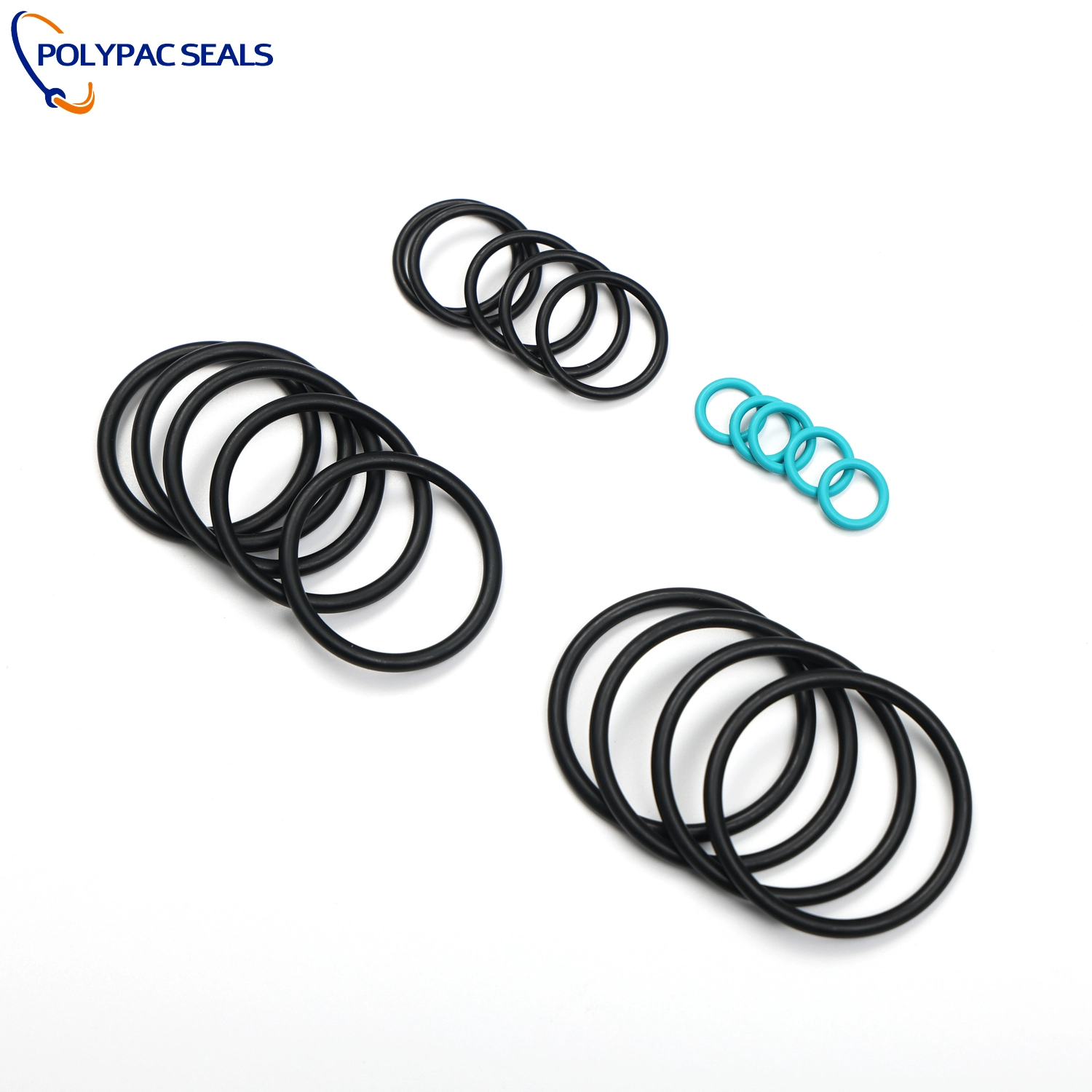
O-ring identification begins with the cross-section and inner diameter. In practice I choose from either AS568 (inch) or ISO 3601 (metric) families depending on the customer's existing designs. For retrofit kits we list both equivalents. Typical high-pressure kits favor thicker cross-sections (e.g., 3.53 mm / 1/8 and larger) because a larger cross-section tolerates higher extrusion risk when combined with a back-up ring and proper gland. Always verify the gland uses the nominal O-ring cross-section and meets recommended groove tolerances from ISO 3601.
Compression (squeeze) and stretch recommendations
Proper squeeze secures a static seal while avoiding excessive compression set. As a rule of thumb I recommend:
- Static seals: 20–30% radial or axial squeeze.
- Dynamic seals (rotary/reciprocating): 10–25% squeeze depending on speed and lubrication.
Percent squeeze is calculated by: percent squeeze = ((cross-section - free groove clearance) / cross-section) × 100%. Verify your gland dimensions against ISO 3601 and the manufacturer's gland tables.
Gland geometry and extrusion control
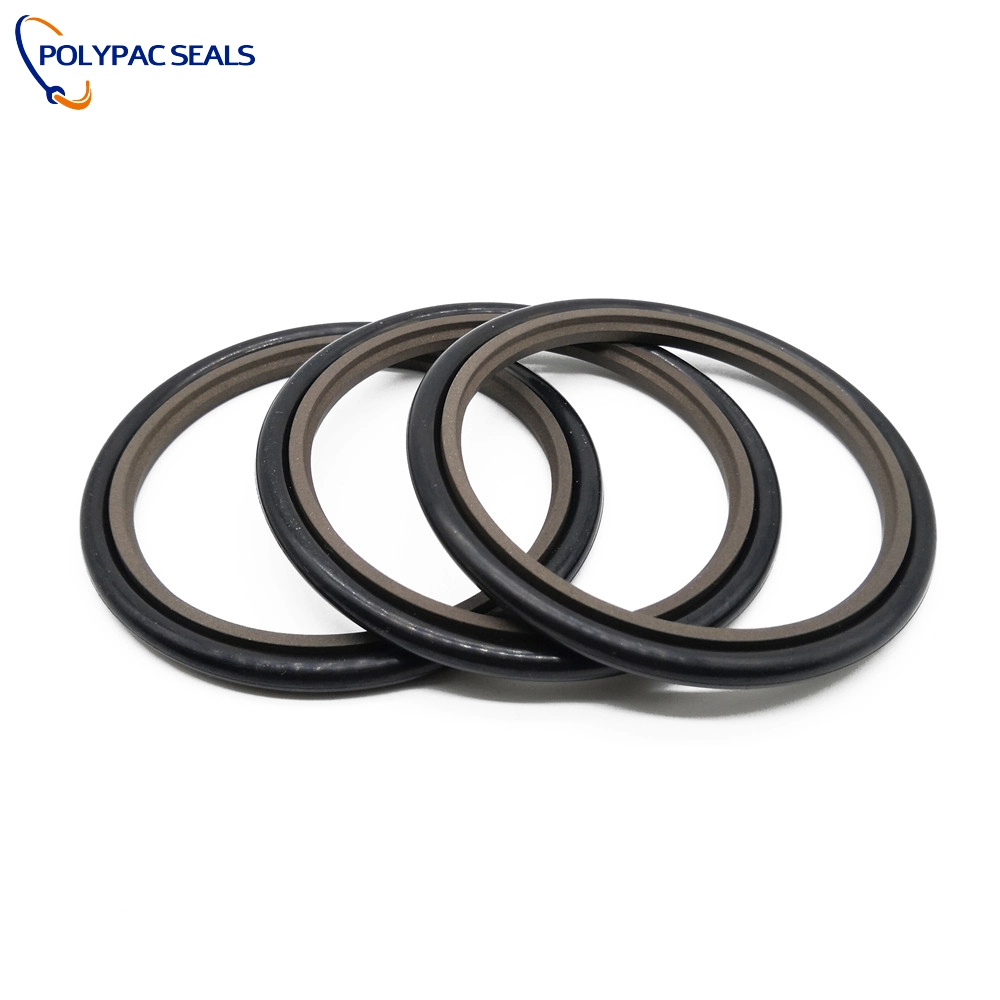
Extrusion prevention is the single most important design consideration in high-pressure equipment. When clearance gaps cannot be reduced by machining tolerances, back-up rings (PTFE, reinforced PTFE, Nylon) are required. I examine the piston/rod geometry and pressure direction: for reciprocating rods, a back-up ring on the high-pressure side is mandatory above certain pressures.
Pressure rating: what limits an O-ring?
Material limits, hardness and temperature
Material selection drives chemical compatibility, temperature capability, and resistance to extrusion. Typical elastomers and their practical characteristics are summarized below. Note: absolute pressure limits are not just a material property — they depend on gland clearance, back-up rings, and dynamic vs static use.
| Material | Typical Temp Range (°C) | Chemical Resistance | Notes on Pressure/Use |
|---|---|---|---|
| NBR (Nitrile) | -40 to +120 | Good to petroleum oils; poor for ketones and some hydraulic fluids | Good for moderate pressures; common in hydraulic kits. |
| FKM (Viton) | -20 to +200 | Excellent hydrocarbon & high temp resistance | Preferred when heat & aggressive fluids present; high hardness options increase extrusion resistance. |
| FFKM (Perfluoroelastomer) | -20 to +275 | Outstanding chemical resistance | Used for very aggressive media; expensive but durable in harsh conditions. |
| EPDM | -50 to +150 | Excellent for water/glycols, poor for oils | Good in water hydraulic systems; avoid with petroleum oils. |
| Silicone | -60 to +180 | Good thermal stability; poor mechanical wear resistance | Not recommended for high-pressure dynamic hydraulic sealing. |
Source references: ISO & manufacturer handbooks such as the Parker O-Ring Handbook and material property datasheets.
When is a back-up ring required?
Back-up rings are recommended whenever the extrusion gap and pressure combination risk forcing the elastomer into the clearance. Practical guidance from industry handbooks suggests back-up rings for many hydraulic applications above a few hundred bar if gland clearance is not minimized. For common hydraulic pressures (e.g., 250–350 bar / ~3500–5000 psi) I always specify back-up rings unless the seal gland is engineered specifically for high-pressure elastomer-only service.
Typical working pressures and configuration guidance
Rather than quoting a single pressure rating, I present typical configurations and the industry-accepted practical working pressures (these are guidelines; final acceptance depends on detailed gland design and fluid conditions):
| Configuration | Typical Safe Working Pressure (guide) | Notes |
|---|---|---|
| O-ring alone, well-machined tight gland | Up to 200–400 bar (3000–6000 psi) | Depends on hardness, cross-section, and extrusion gap control. |
| O-ring + single PTFE back-up ring | Up to 400–700 bar (6000–10,000 psi) | Back-up rings significantly increase extrusion resistance. |
| O-ring + tandem back-up rings or reinforced back-up | >700 bar (10,000 psi) with specialized design | High-pressure systems commonly use composite seals and advanced gland designs. |
For detailed pressure/extrusion tables and gland dimension guidance see the Parker O-Ring Handbook. Always validate with FEA or test rig for extreme conditions.
Building and specifying a high-pressure O-ring kit
What goes into a professional high pressure O-ring kit
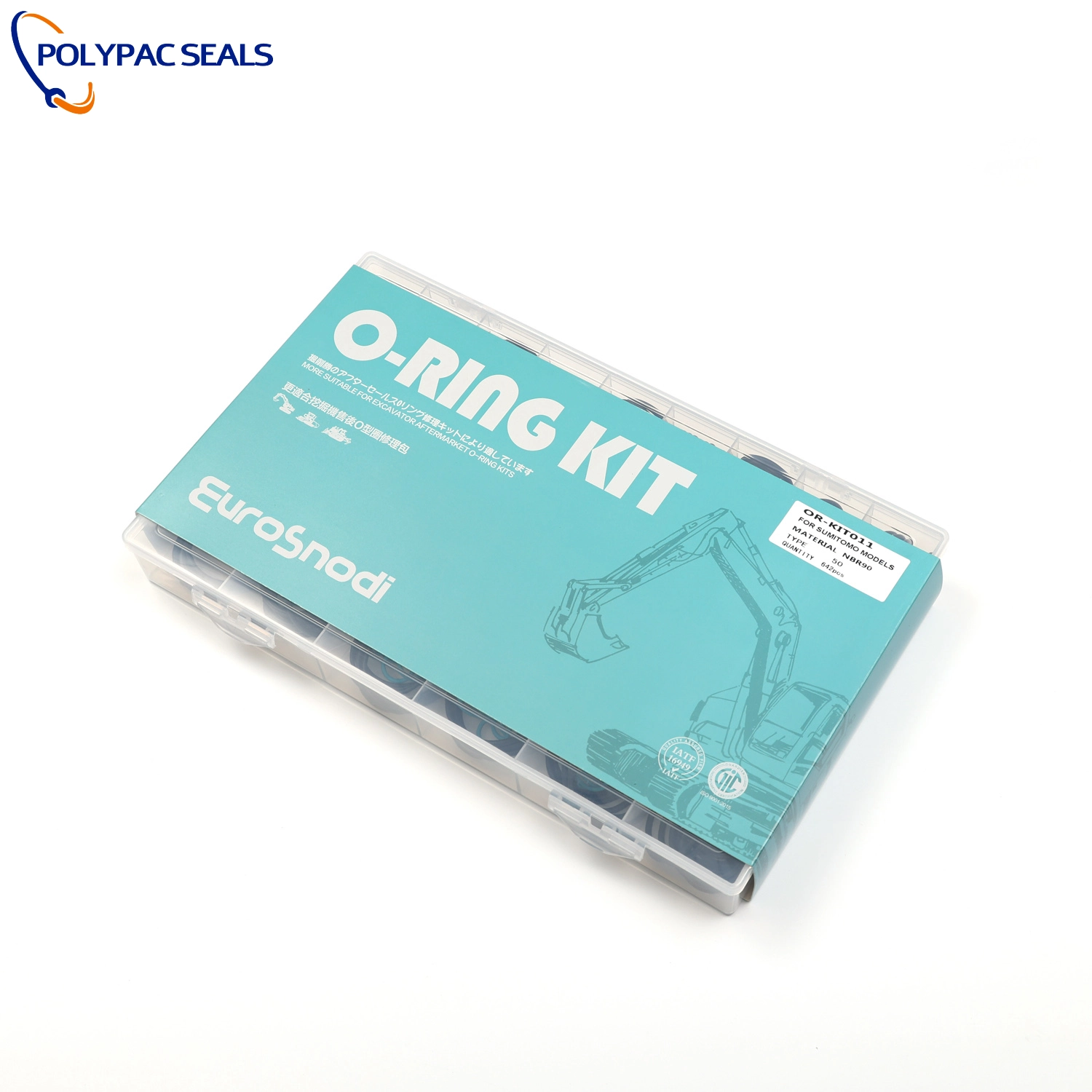
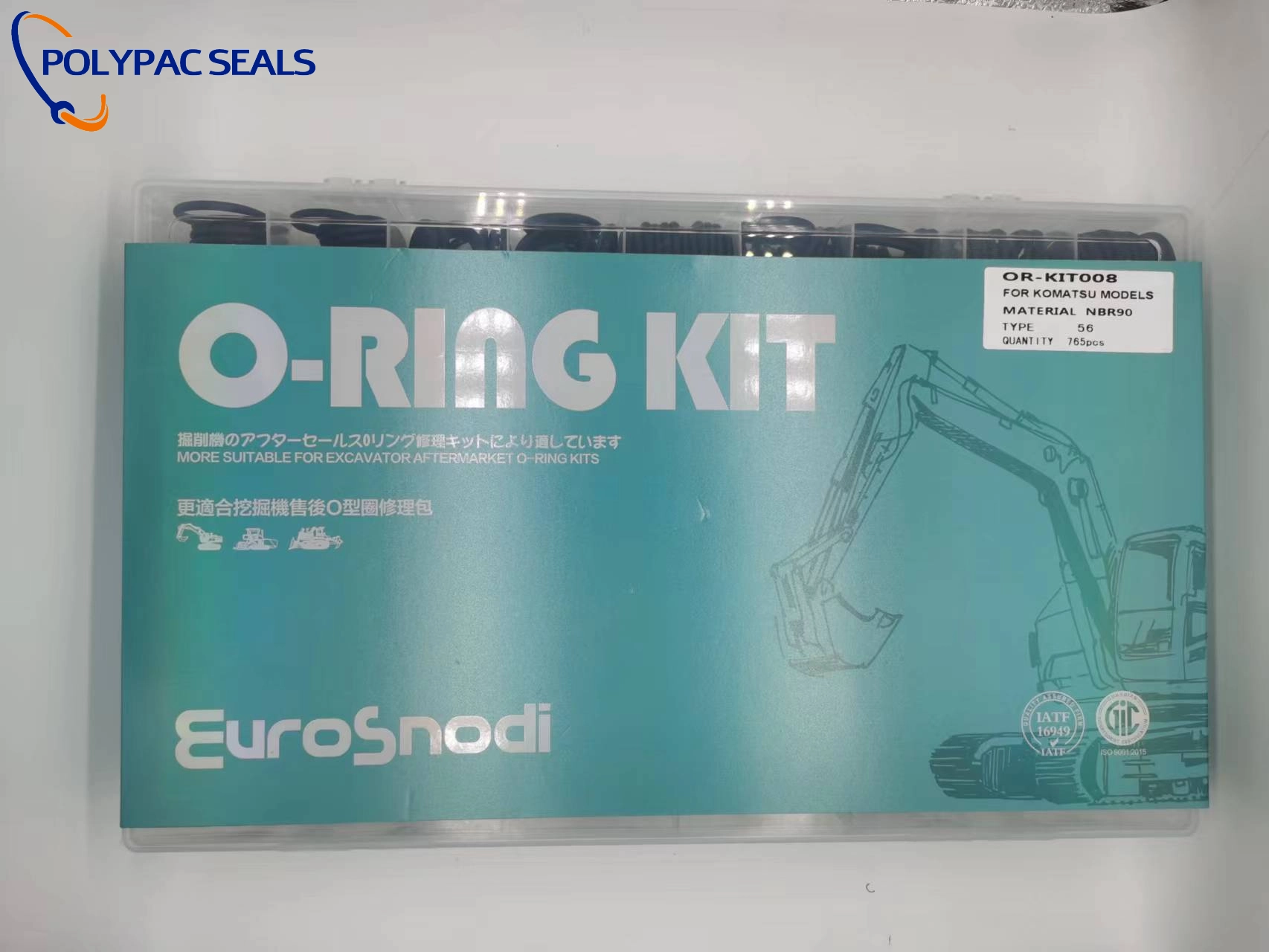
From my experience, a field-ready high pressure O-ring kit contains not just sizes of O-rings, but also back-up rings, installation tools, and documentation. A sample kit contents table I use for hydraulic service trucks is below.
| Item | Example Quantity (per kit) | Notes |
|---|---|---|
| O-rings (AS568 & ISO sizes), assorted | 200–400 pcs | Include common static and dynamic sizes based on fleet inventory. |
| PTFE backup rings (matched to cross-sections) | 100–200 pcs | Thin and thick types; beveled edges for dynamic rods. |
| Installation tools (split picks, polyurethane protectors) | 1 set | Reduces installation damage and nicks. |
| Material & size list, service instructions | 1 copy | Includes hardness, recommended squeeze, and replacement intervals. |
Packaging, traceability and batch testing
I insist on lot traceability and certificates of conformity for kit contents. For high-pressure applications, request data on Shore A hardness, compression set (ASTM D395), and any post-cure or aging test results. Polymers have lot-to-lot variability and batch testing ensures predictable performance in service.
Field installation best practices
Key installation points I enforce are: lubricate the O-ring with system-compatible fluid, avoid sharp edges (polish or chamfer grooves), use proper stretch limits (generally <5% ID stretch for elastomers), and install back-up rings with correct orientation (beveled edges toward the pressure source if specified). After installation perform a controlled pressure test with leak detection before returning equipment to service.
Testing, validation and lifecycle considerations
Recommended bench tests
For qualifying a kit I run accelerated tests: thermal aging, compression set per ASTM D395, and cyclic extrusion tests when possible. A pressure-hold leak test at 1.5× operating pressure for 15–30 minutes is a practical field acceptance test.
Monitoring and replacement intervals
Replacement schedules depend on application duty cycle, fluid cleanliness, and temperature. For heavy duty hydraulic equipment I typically specify inspection or replacement every 6–12 months, with shorter intervals for mobile equipment under abrasive or contaminated fluids. Track seal performance and failure modes to refine kit contents and service intervals.
When to consult seal specialists
If your system operates near material temperature limits, uses aggressive fluids (e.g., phosphate esters, HFA/HFB fluids), or routinely exceeds 350 bar, involve a seal manufacturer or technical consultant early. I frequently run cross-checks with finite element analysis (FEA) on high-pressure sealing grooves and specify custom compounded elastomers or PTFE reinforcements when standard kits are insufficient.
Polypac — capabilities, factory and product summary
Polypac is a scientific and technical hydraulic seal manufacturer and oil seal supplier specializing in seal production, sealing material development, and customized sealing solutions for special working conditions. Polypac's custom rubber ring and O-ring factory covers an area of more than 10,000 square meters, with a factory space of 8,000 square meters. Our production and testing equipment are among the most advanced in the industry. As one of the largest companies in China dedicated to the production and development of seals, we maintain long-term communication and cooperation with numerous universities and research institutions both domestically and internationally.
Founded in 2008, Polypac began by manufacturing filled PTFE seals, including bronze-filled PTFE, carbon-filled PTFE, graphite PTFE, MoS₂-filled PTFE, and glass-filled PTFE. Today, we have expanded our product line to include O-rings made from various materials such as NBR, FKM, silicone, EPDM, and FFKM. Polypac’s main product lines include O-Rings, Rod Seals, Piston Seals, End Face Spring Seals, Scraper Seals, Rotary Seals, Back-up Rings, and Dust Rings.
Why I recommend Polypac for high-pressure O-ring kits:
- Scale and advanced equipment: large factory footprint and industry-level testing ensure consistent production and lot traceability.
- Material development: experience with filled PTFE and advanced elastomer compounds supports custom solutions for extreme environments.
- Technical partnerships: collaborations with universities and research institutes enable R&D-backed sealing solutions and faster development cycles.
If you need a custom high-pressure O-ring kit, Polypac can supply design support, prototype testing, and volume production with QC documentation.
FAQ — Common questions about high pressure O-ring kits
1. What is the difference between an O-ring and a back-up ring?
An O-ring is an elastomeric seal providing contact sealing via compression. A back-up ring (usually PTFE or reinforced PTFE) is a hard non-elastomeric ring positioned adjacent to the O-ring to prevent extrusion into clearance gaps under pressure.
2. How do I know which O-ring size to include in a kit?
Start with the most common AS568 or ISO 3601 sizes used by your fleet or product line. Inspect typical gland cross-sections and order matching cross-sections plus adjacent sizes for field adjustment. Include both metric and AS568 equivalents when equipment origins vary.
3. Can any elastomer handle 5000 psi?
No. Whether an O-ring can withstand 5000 psi depends on gland design, extrusion gap, material hardness, temperature, and use of back-up rings. With the right gland and back-up rings, many elastomers in appropriate durometers can operate at this pressure; otherwise, composite seals or metal-to-metal designs may be needed.
4. How should I store O-rings in a kit to ensure long shelf life?
Store in a cool, dark, dry place away from ozone sources. Avoid contact with oils or solvents not intended for the elastomer. Keep O-rings in original sealed packaging with batch information for traceability.
5. Do I need different kits for static vs dynamic seals?
Yes. Dynamic seals (rod/piston) typically require materials and back-up rings suited to wear and friction; static seals prioritize compression set resistance. I often supply separate sections in a kit for static and dynamic applications, including elasto-chemical recommendations.
Contact / Request a kit
If you need a tailored high pressure O-ring kit or help sizing glands and specifying materials, contact Polypac for technical support and product options. We provide CAD-based gland checks, material datasheets, and prototype runs to validate performance. Request a quote or technical consultation to receive a kit specification based on your system pressures, fluids, and operating temperatures.
Relevant standards and references: O-ring (Wikipedia), ISO 3601, Parker O-Ring Handbook, ASTM D2000.

Piston Lip Seals vs. U-Cups: Choosing the Right Hydraulic Solution for High-Pressure Systems

How to Choose the Best Hydraulic Piston Seal Kit for High-Pressure Applications

Hydraulic Cylinder Seals Kits: 5 High-Tech Materials That Double Your Maintenance Interval

How to Choose the Perfect Hydraulic Jack Seals: A Comprehensive Material & Performance Comparison

High-Performance Pneumatic Piston Seals: How to Achieve Zero-Leakage Efficiency
Products
How can I prevent seal damage during installation?
How important is surface finish on the metal parts that contact the seal?
What is the purpose of the metal spring in a rotary shaft seal?
What does "AS568" mean?
Why did my O-ring fail prematurely?
Stay Updated with Industry Insights
Subscribe to our articles and receive the latest news, expert guidance, and technical updates directly in your E-mail.
Rest assured that your privacy is important to us, and all information provided will be handled with the utmost confidentiality.

Polypac is a trusted global supplier of high-performance sealing solutions, providing OEM & ODM services for industries worldwide.
E-mail:
Phone/WhatsApp:
© 2025 Polypac Seals. All Rights Reserved.
dms
DMS
DMS