












High-Temperature Piston Seal Materials for Engines
Selecting Seals for High-Temperature Engine Applications
Why material choice matters for piston seal material in engines
Piston seals in high-temperature engines operate under combined thermal, mechanical and chemical stress. Choosing the right piston seal material affects leak rate, wear, service life, and maintenance intervals. A material that performs well at ambient temperature may harden, swell, lose elasticity, or chemically degrade at elevated temperatures or in the presence of combustion byproducts, oils, or fuels. This section outlines the core functional requirements and trade-offs you must consider when specifying piston seal material for engines.
Performance requirements for high-temperature piston seal material
When selecting piston seal material, evaluate these primary criteria: continuous and intermittent temperature limits, compression set resistance, friction coefficient, abrasion and wear resistance, chemical compatibility (fuel, oil, coolant, additives), and extrusion resistance. Secondary factors include manufacturability, cost, and availability. For engine applications, temperature and chemical resistance typically drive the selection.
Common piston seal material options and temperature ranges
This section compares widely used piston seal material classes for high-temperature engines: NBR, FKM (Viton®), silicone, EPDM, PTFE (and filled PTFE), perfluoroelastomers (FFKM), and high-performance thermoplastics such as PEEK. Each has strengths and limitations; selection should match the operating envelope.
| Material | Typical continuous temp range (°C) | Chemical resistance | Friction / Wear | Typical uses |
|---|---|---|---|---|
| Nitrile (NBR) | -40 to 100 | Good with petroleum oils; poor with heat-aged fuels and ozone | Moderate | Low-temp pistons, general hydraulic seals |
| FKM (Viton®) | -20 to 200 | Excellent petroleum and high-temp oil resistance | Low to moderate | High-temp engine seals, oil-exposed piston seals |
| Silicone | -60 to 200 | Good thermal stability; poor fuel resistance | Higher friction / wear | Thermal insulation, static seals |
| EPDM | -50 to 150 | Excellent steam and glycol resistance; poor oil/fuel resistance | Moderate | Cooling system seals, not for piston seals in fuel/oil environment |
| PTFE (unfilled) | -200 to 260 | Very good chemical compatibility | Very low friction; poor elastic recovery (needs backing) | High-temp, high-speed piston seals when combined with energizer |
| Filled PTFE (graphite, bronze, MoS2) | -200 to 260 | Improved wear resistance; good chem. resistance | Low friction; improved wear | Dry-running or boundary-lubricated pistons at high temp |
| FFKM (Perfluoroelastomer, e.g., Kalrez) | -10 to 327 (varies) | Exceptional chemical and thermal resistance | Low to moderate | Critical high-temp engine seals and aggressive fluids |
| PEEK (thermoplastic) | -50 to 250 | Excellent chemical, wear and thermal properties | Low wear | Piston rings, guide components, bearing surfaces |
Sources for temperature ranges and properties are listed in References. Use the table as a starting point; specific compound grades vary.
Comparing filled PTFE vs elastomers for piston seal material
For high-temperature engine pistons, a common design choice is between elastomeric piston seal material (e.g., FKM) and PTFE-based seals. Elastomers provide elastic sealing and are forgiving to low-pressure sealing and misalignment, but their upper temperature limits and chemical resistance are limited by the polymer backbone and additives. PTFE and filled PTFE can withstand higher temperatures and most chemicals, with extremely low friction — but PTFE lacks inherent elasticity and typically requires a backup spring or O-ring energizer to maintain contact.
When to choose filled PTFE
- Operating temperatures exceed ~200°C for extended periods.
- Severe chemical exposure (fuel blends, fuels with oxygenates, aggressive lubricants).
- High-speed reciprocation where low friction reduces heat build-up.
When to choose high-temp elastomers (FKM/FFKM)
- Dynamic reciprocating motion with need for elastic recovery and sealing at low pressure.
- Moderate-to-high temps (up to ~200°C for FKM); for higher temps, choose FFKM.
- Where cost and manufacturability (molding, O-ring formats) are important.
Design and installation tips for reliable high-temperature piston seal material
Beyond material selection, design and installation strongly influence seal life. For engine piston seals follow these practical rules:
- Provide thermal expansion clearance and avoid sharp edges — chamfer grooves and piston lands.
- Use appropriate energizers (springs, O-rings) with PTFE piston seals to maintain contact as temperature cycles cause dimensional changes.
- Consider backup rings or anti-extrusion devices when clearance and temperature could allow seal extrusion.
- Specify surface finish and hardness of mating metal surfaces; rough or scored surfaces rapidly wear seals at high temperatures.
- Use lubrication strategies (boundary lubrication or controlled lubrication) compatible with the selected piston seal material.
Failure modes of piston seal material at high temperatures and how to mitigate them
Recognizing failure signatures helps root-cause diagnosis and material improvement:
- Hardening and cracking: common in elastomers oxidized by heat and ozone — use antioxidants or switch to more heat-stable FFKM/filled PTFE.
- Swelling and softening: indicates chemical incompatibility — verify fuel/oil compatibility tables and switch material.
- Abrasion and wear: caused by contaminated lubricants or unsuitable counterface — use filled PTFE or harder thermoplastics like PEEK.
- Extrusion: occurs when pressure plus high temperature reduces material strength — add backup rings and reduce clearance.
Testing and qualification of piston seal material for engine service
Specify accelerated and application-specific testing: thermal aging (ISO/ASTM thermal aging tests), chemical compatibility soak tests, reciprocating wear tests at representative speed and temperature, compression set and sealability tests. Documented test results from suppliers or independent labs should be part of material selection: request typical compression set % at elevated temperature, dynamic friction coefficients, and wear rates (mm3/Nm) for comparison.
Cost vs performance: selecting the right piston seal material for production
High-performance materials such as FFKM and filled PTFE increase unit cost but can dramatically reduce downtime and warranty exposure for high-temperature engines. Use life-cycle cost analysis: compare material cost plus expected service life, maintenance intervals, and failure risk. For high-volume passenger engines, carefully balance cost and performance; for specialty, industrial or turbocharged engines that run hotter and face aggressive fluids, investing in High Quality piston seal material pays off.
Polypac: capabilities in high-temperature piston seal material and customized solutions
Polypac is a scientific and technical hydraulic seal manufacturer and oil seal supplier specializing in seal production, sealing material development, and customized sealing solutions for special working conditions. Polypac's custom rubber ring and O-ring factory covers an area of more than 10,000 square meters, with a factory space of 8,000 square meters. Our production and testing equipment are among the most advanced in the industry. As one of the largest companies in China dedicated to the production and development of seals, we maintain long-term communication and cooperation with numerous universities and research institutions both domestically and internationally.
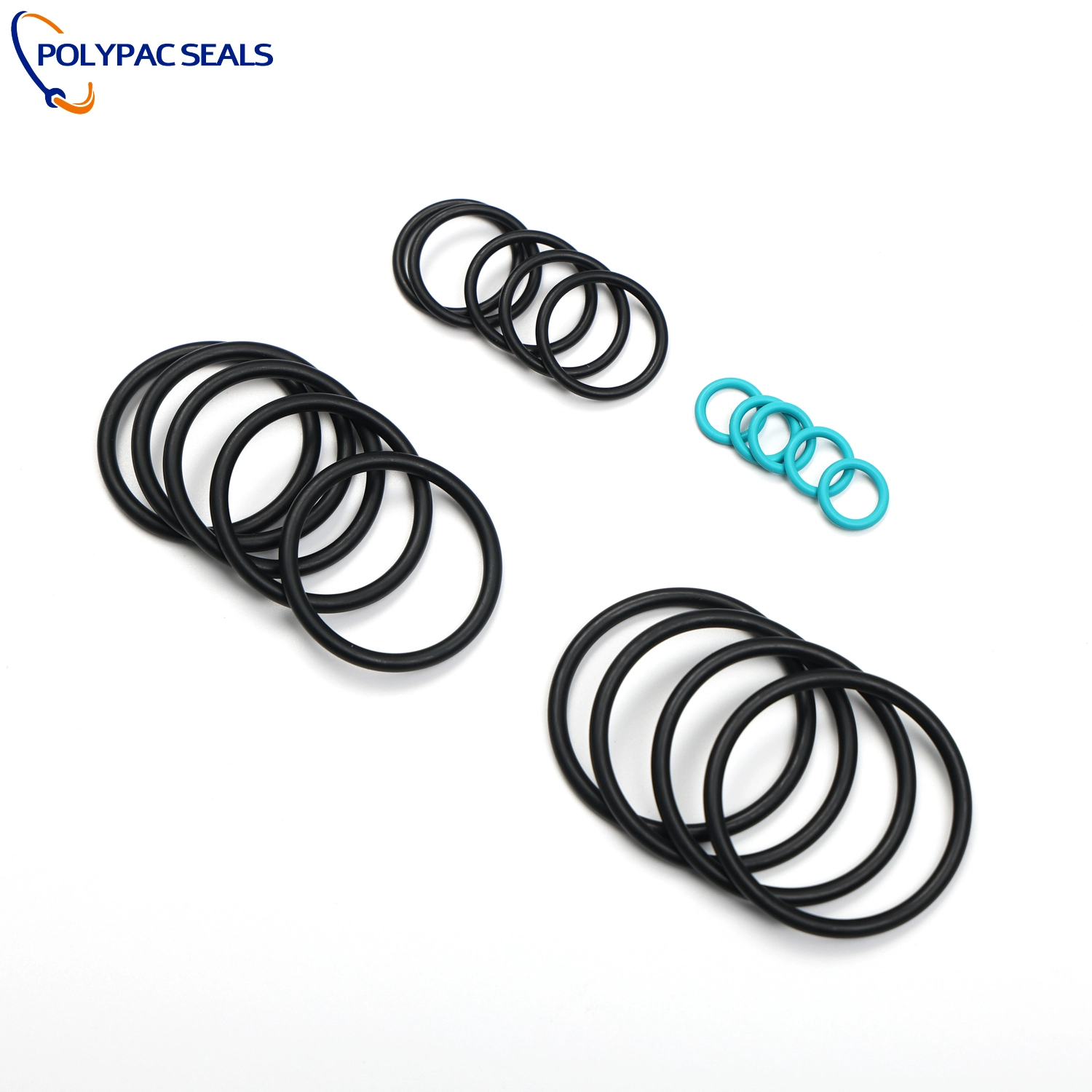
Founded in 2008, Polypac began by manufacturing filled PTFE seals, including bronze-filled PTFE, carbon-filled PTFE, graphite PTFE, MoS₂-filled PTFE, and glass-filled PTFE. Today, we have expanded our product line to include O-rings made from various materials such as NBR, FKM, silicone, EPDM, and FFKM.
Why consider Polypac for piston seal material and parts
- Experience with filled PTFE and high-temp compounds suitable for engine piston seals.
- Custom compound development and in-house testing to validate thermal aging, compression set and wear.
- Large-scale manufacturing with modern equipment ensures consistent quality and quick lead times.
- Collaborations with research institutions enable rapid adoption of new materials and optimizations for special working conditions.
Polypac core products relevant to high-temperature piston seals
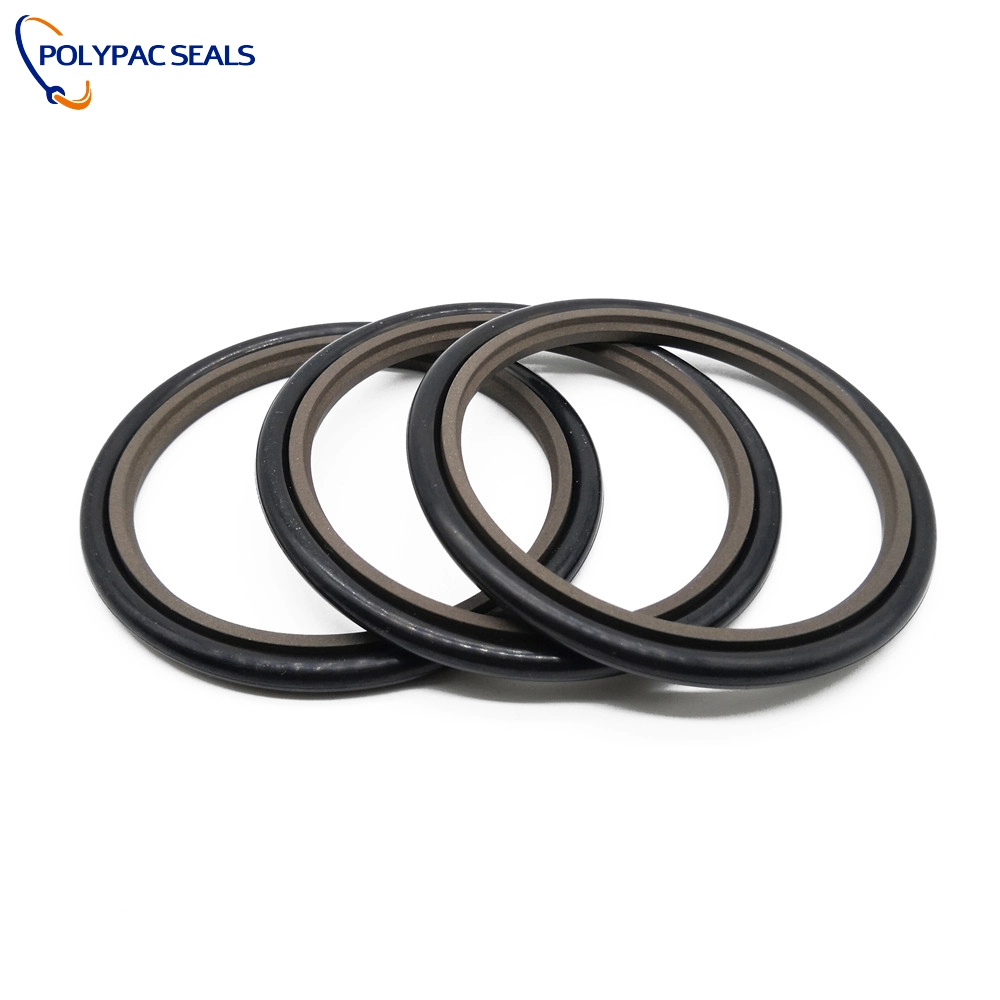
Polypac's offerings include O-Rings, Rod Seals, Piston Seals, End Face Spring Seals, Scraper Seals, Rotary Seals, Back-up Rings, and Dust Rings. For engine applications we commonly supply custom piston seals made from filled PTFE, FKM, FFKM, and specialized rubber-metal assemblies. These products are designed to meet tight tolerances and withstand demanding temperatures and chemical exposures.
Material comparison summary for piston seal material selection
This quick selection guide helps you pick a starting point:
- Temperatures ≤ 120°C and oil environment: FKM (cost-effective, robust).
- Temperatures 150–250°C or aggressive chemicals: filled PTFE or FFKM.
- Very high temp spikes and dry-running conditions: filled PTFE with energizer and wear-optimized filler (graphite, bronze, MoS₂).
- When elastic sealing and low-temperature flexibility are required: consider tailored compound FKM or a hybrid PTFE + elastomer design.
FAQ — Frequently asked questions about high-temperature piston seal material
1. What is the best piston seal material for engines running above 200°C?
Filled PTFE and perfluoroelastomers (FFKM) are the leading choices. Filled PTFE provides excellent thermal and chemical resistance but requires an energizer. FFKM offers elastomeric behavior with very high temp and chemical resistance but at higher cost.
2. Can standard FKM be used as piston seal material in turbocharged engines?
Standard FKM can work up to ~200°C and is widely used in oil-exposed piston seals. For repeated or sustained excursions above 200°C, consider FFKM or filled PTFE to avoid rapid degradation.
3. Are filled PTFE piston seals suitable for reciprocating motion?
Yes. Filled PTFE (graphite, bronze, MoS₂) is commonly used for reciprocating piston seals, particularly at high temperatures and speeds. It’s critical to design an appropriate energizer (spring or O-ring) and to ensure surface finish and lubrication are compatible.
4. How do I test a candidate piston seal material before field deployment?
Run accelerated thermal aging tests, chemical soak tests against representative fluids, and dynamic reciprocating wear tests at representative temperatures, pressures and speeds. Also measure compression set and leak rate under temperature cycling.
5. What causes extrusion of piston seal material at high temperature and how to prevent it?
At high temperature, polymer strength and modulus drop, combined with clearance and pressure lead to extrusion. Prevent with tighter tolerances, backup rings, anti-extrusion geometries, and choosing a higher-modulus material or composite seal design.
6. How does friction affect piston seal selection for hot engines?
High friction raises local temperature and accelerates wear. For hot engines, low-friction materials (PTFE or filled PTFE blends) reduce heat generation. Pair with appropriate surface finishes and lubrication strategies.
Contact and product inquiry (CTA)
If you’re specifying piston seal material for a high-temperature engine, Polypac can help with material selection, prototyping and testing. Contact Polypac for consultation or request samples and datasheets to validate performance in your application. Visit Polypac’s product pages or contact our technical team to discuss custom piston seals, O-rings and filled PTFE components designed for demanding engine environments.
References
- Polytetrafluoroethylene — Wikipedia. https://en.wikipedia.org/wiki/Polytetrafluoroethylene (accessed 2025-12-11)
- Fluoroelastomer — Wikipedia. https://en.wikipedia.org/wiki/Fluoroelastomer (accessed 2025-12-11)
- Nitrile rubber — Wikipedia. https://en.wikipedia.org/wiki/Nitrile_butadiene_rubber (accessed 2025-12-11)
- Silicone — Wikipedia. https://en.wikipedia.org/wiki/Silicone (accessed 2025-12-11)
- EPDM rubber — Wikipedia. https://en.wikipedia.org/wiki/EPDM_rubber (accessed 2025-12-11)
- Polyether ether ketone — Wikipedia. https://en.wikipedia.org/wiki/Polyether_ether_ketone (accessed 2025-12-11)
- Parker O-Ring Handbook — Parker Hannifin (O-Ring selection and temperature guidance). https://www.parker.com (search: Parker O-Ring Handbook) (accessed 2025-12-11)
- Manufacturer datasheets for Kalrez® (dupont) and other perfluoroelastomers — DuPont. https://www.dupont.com (search: Kalrez perfluoroelastomer) (accessed 2025-12-11)

High-Performance Pneumatic Piston Seals: How to Achieve Zero-Leakage Efficiency

PTFE vs. Composite: Choosing the Best Piston Guide Ring Material for High-Pressure Systems

Mastering O-Ring Gland Design: The Complete Guide for Perfect Sealing Performance

Advanced Back-Up Ring Materials: Beyond PTFE for Extreme Temperature Environments

PTFE vs. Urethane Scrapers: Which Material Truly Prevents Contamination?
Products
What is the difference between a static seal and a dynamic seal?
How do I choose the right material for my sealing application?
What is the difference between NBR and FKM materials?
Why did my O-ring fail prematurely?
When should I use a spring-energized seal instead of a standard elastomeric seal?
Stay Updated with Industry Insights
Subscribe to our articles and receive the latest news, expert guidance, and technical updates directly in your E-mail.
Rest assured that your privacy is important to us, and all information provided will be handled with the utmost confidentiality.

Polypac is a trusted global supplier of high-performance sealing solutions, providing OEM & ODM services for industries worldwide.
E-mail:
Phone/WhatsApp:
© 2025 Polypac Seals. All Rights Reserved.
dms
DMS
DMS