












Hydraulic Fluid Compatibility: Selecting Piston Seal Materials
Hydraulic systems depend on reliable sealing to maintain pressure, prevent contamination and extend component life. As an engineer and seal manufacturing consultant, I focus on one core question: which piston seal material will survive and perform in a given hydraulic fluid and operating environment? In this article I analyze hydraulic piston seal compatibility from first principles — chemistry, mechanical stresses, temperature, and contaminants — and provide practical selection guidance, test protocols and maintenance tips backed by authoritative sources and field experience.
Why hydraulic fluid compatibility matters
Chemistry meets mechanics
Compatibility is not only about whether a material swells in a fluid; it's about how the fluid affects hardness, tensile strength, abrasion resistance and dynamic friction over time. A seal that initially fits perfectly can lose dimension due to swelling or become brittle after chemical attack, increasing leakage and accelerating rod and bore wear. For hydraulic piston seal selection, I always evaluate both short-term interactions and long-term aging behavior.
Common failure modes tied to incompatible fluids
Typical failures include extrusion, permanent set, accelerated wear, hardening/cracking, and loss of sealing lip integrity. Many failures that look like mechanical errors are actually chemical incompatibility issues. International standards and industry guidance emphasize material/fluid compatibility as a primary design factor; see the ISO O-ring and hydraulic fluid references for background (Hydraulic fluid — Wikipedia).
Common seal materials and their compatibility profiles
Elastomers: NBR, FKM (Viton), EPDM, Silicone
Elastomers are widely used for rod and piston seals due to their elasticity and sealing resilience. Nitrile rubber (NBR) is a good general-purpose material for mineral oils but degrades with phosphate esters and some fire-resistant fluids. FKM (fluoroelastomer) offers superior resistance to many hydraulic oils and high temperatures but can be incompatible with ketones and certain low-molecular-weight hydrocarbons. EPDM performs poorly with mineral oils but works with water-glycol fluids and steam. Silicone has excellent temperature range but weak wear resistance and limited dynamic life in high-pressure hydraulic systems.
PTFE and filled PTFE
PTFE and filled PTFE (bronze, carbon, graphite, MoS2, glass filled) are chemically inert against most hydraulic fluids and offer low friction and excellent extrusion resistance when combined with proper backup rings. However, PTFE has low elasticity and requires robust gland design; filled grades recover some mechanical shortcomings while retaining chemical resistance. Polytetrafluoroethylene chemistry is documented broadly (PTFE — Wikipedia).
FFKM and specialty compounds
For extreme chemical environments (aggressive synthetic fluids, phosphate esters, or peroxide-containing systems) FFKM (perfluoroelastomer) can be the only viable elastomeric option. These materials combine chemical resistance close to PTFE with elastomeric behavior, but cost and availability must be weighed.
| Material | Common Compatible Fluids | Typical Temp Range (°C) | Notes / Compatibility Behavior | Source |
|---|---|---|---|---|
| NBR (Nitrile) | Mineral hydraulic oils, some synthetic oils | -30 to +120 | Good oil resistance; swelling with phosphate esters, poor with water-glycol | O-ring — Wikipedia |
| FKM (Viton) | Mineral oils, PAOs, many synthetics | -20 to +200 | Excellent heat and oil resistance; check for low-molecular solvents and ketones | Parker O-Ring Handbook |
| EPDM | Water-glycol fluids, brake fluids | -40 to +150 | Poor compatibility with mineral and many synthetic oils | Hydraulic fluid — Wikipedia |
| PTFE / Filled PTFE | Most mineral and synthetic hydraulic fluids | -200 to +260 (depends on filler) | Inert and low friction; requires backup rings and careful gland design | PTFE — Wikipedia |
| FFKM | Aggressive synthetics, phosphate esters | -15 to +300 (grade dependent) | Best chemical resistance among elastomers; cost is high | ISO standards overview |
Selecting the right material for your hydraulic piston seal
Match material properties to operating conditions
I start selection with the lubricant chemistry, operating temperature range, pressure and dynamic conditions (rod speed, reciprocation frequency). For typical mobile or industrial hydraulic systems using mineral oil with moderate temperatures and pressures up to 250 bar, NBR or FKM elastomers or PTFE lip seals are common. For phosphate-ester-based fire-resistant fluids or water-glycol systems, EPDM or FFKM/filled PTFE may be needed.
Pressure, extrusion gap and backup rings
Piston seals at high pressure are at risk of extrusion into the gap between piston and cylinder. Elastomers can be used with backup rings (often PTFE or reinforced thermoplastics). Filled PTFE piston seals are excellent for high-pressure applications when paired with appropriate backup rings. Design standards such as ISO recommendations for hydraulic cylinders and seals should be consulted (ISO — International Organization for Standardization).
Dynamic sealing and friction considerations
Dynamic friction affects heat generation and control response. PTFE and filled PTFE have low friction coefficients, reducing stick-slip and hysteresis. Elastomers with lubricating fillers (e.g., MoS2-filled compounds) can balance friction and resilience. I weigh dynamic leakage risk against friction and choose materials that preserve system control while maintaining durability.
Testing, installation and long-term maintenance
Compatibility testing and validation
Never rely solely on generic compatibility charts for mission-critical systems. I recommend accelerated aging tests: immersion testing per ASTM D471 (rubber property changes after fluid exposure) and dynamic performance tests under representative pressure, temperature and speed. Reference test procedures help quantify swelling, hardness change and tensile degradation; see ASTM resources for methods (ASTM International).
Installation, gland design and tolerances
Material choice drives gland geometry and tolerances. Elastomer piston seals need proper squeeze and compression set allowances; PTFE needs tighter grooves and backup rings to prevent extrusion. I always verify cross-section, groove depth, and surface finish. Surface roughness, rod plating and cylinder bore hardness influence wear rate; specifying appropriate rod surface finish (e.g., Ra 0.2–0.4 μm) and hard chrome plating reduces damage to softer seals.
Field monitoring and predictive maintenance
Hydraulic fluid analysis (viscosity, acidity, water content, particulate contamination) is a practical early-warning tool. If the fluid chemistry drifts (contamination with solvents, fuel dilution, or oxidation byproducts), seals can degrade faster than expected. Regular leak checks, pressure-hold testing and scheduled seal inspections extend service life.
Material comparison and a decision workflow
Decision workflow
My practical workflow when selecting a hydraulic piston seal is:
- Identify hydraulic fluid type and temperature/pressure envelope.
- Eliminate materials incompatible with the fluid chemistry.
- Assess dynamic requirements (friction, speed) and mechanical loads (pressure, extrusion gap).
- Choose candidate materials (NBR, FKM, EPDM, PTFE, filled PTFE, FFKM) and run immersion and dynamic tests if critical.
- Design gland, specify backup rings and installation tolerances, and plan maintenance & monitoring.
Quick compatibility summary
For quick selection: NBR for standard mineral oils, FKM for higher temperatures and many synthetics, EPDM for water-based fluids, PTFE/filled PTFE for chemical inertness and high pressure when combined with backup rings, and FFKM for aggressive fluids when budget allows.
Data-driven case example
In a field project for a hydraulic press using a phosphate ester fire-resistant fluid, we initially used NBR piston seals and observed significant swelling and loss of elasticity within weeks. Switching to a filled PTFE piston seal with FFKM secondary elements for lip support eliminated leakage and increased service life by a factor of four. I documented this with immersion tests and in-service monitoring aligning with ASTM D471 results and machine uptime records.
Polypac: capabilities, product range and how we can help
Who we are and our technical strengths
Polypac is a scientific and technical hydraulic seal manufacturer and oil seal supplier specializing in seal production, sealing material development, and customized sealing solutions for special working conditions. Founded in 2008, Polypac began with filled PTFE seals — bronze-filled PTFE, carbon-filled PTFE, graphite PTFE, MoS2-filled PTFE, and glass-filled PTFE. Today we also supply O-rings in NBR, FKM, silicone, EPDM and FFKM.
Manufacturing footprint and R&D partnerships
Our custom rubber ring and O-ring factory covers more than 10,000 square meters with 8,000 square meters of factory space. Our production and testing equipment are among the most advanced in the industry. As one of the largest companies in China dedicated to seal production and development, we maintain long-term cooperation with multiple universities and research institutions domestically and internationally — enabling material development, testing, and rapid prototyping for special hydraulic fluids and extreme conditions.
Products and typical applications
Polypac supplies a broad range of sealing components optimized for hydraulic piston seal applications: O-Rings, Rod Seals, Piston Seals, End Face Spring Seals, Scraper Seals, Rotary Seals, Back-up Rings, Dust Rings. We support customized compounds, hardness profiles, and filled PTFE grades for demanding environments.
If your equipment uses phosphate esters, water-glycol, biodegradable synthetics, or operates at extreme temperatures, we can run material compatibility screening, provide test samples, and deliver engineered seal solutions that match long-term service requirements.
Frequently Asked Questions (FAQ)
1. How do I know if my current piston seal is chemically incompatible with my hydraulic fluid?
Look for rapid changes in dimensions (swelling), visible cracking, increased leakage under pressure, cushioning deterioration, or hardening/softening of the seal. Fluid analysis revealing solvent contamination, low viscosity or presence of aggressive additives also indicates a risk. Confirm with ASTM D471 immersion testing for elastomers.
2. Can I use PTFE piston seals for all hydraulic fluids?
PTFE is chemically compatible with most hydraulic fluids, but it lacks elasticity and requires careful gland design and backup rings to prevent extrusion. Filled PTFE grades improve mechanical performance. For dynamic sealing where lip conformity matters, elastomers or hybrid solutions (elastomer energized PTFE) can be more appropriate.
3. What's the best material for high temperature and synthetic hydraulic oils?
FKM (fluoroelastomer) is commonly preferred for high temperatures and many synthetic oils. For very aggressive synthetics or systems where the highest chemical resistance is required, FFKM or filled PTFE solutions may be necessary.
4. How should I test seals for compatibility before full-scale deployment?
Use immersion tests per ASTM D471 to assess dimensional and mechanical changes, and conduct dynamic bench tests under representative pressure, temperature, and speed. If possible, run a pilot in the intended equipment and monitor fluid properties and seal condition over time.
5. How do back-up rings and seal geometry affect compatibility and life?
Backup rings prevent extrusion of the sealing element into gaps under high pressure, which is especially crucial for softer elastomers or PTFE. Properly designed grooves and correct tolerances reduce mechanical wear and protect the material from stress concentrations that accelerate chemical degradation.
Contact & product inquiry
If you need help selecting a hydraulic piston seal material, testing a candidate compound, or sourcing custom piston seals and O-rings, contact Polypac for technical consultation and free feasibility evaluation. Visit our product pages or request samples to validate compatibility in your fluid and application. For inquiries, please contact our sales and engineering team to discuss custom sealing solutions, material data sheets and testing services.
References and further reading: Hydraulic fluid overview and properties: https://en.wikipedia.org/wiki/Hydraulic_fluid; O-ring basics and material notes: https://en.wikipedia.org/wiki/O-ring; PTFE material properties: https://en.wikipedia.org/wiki/Polytetrafluoroethylene; Parker O-Ring Handbook for practical compatibility charts: Parker O-Ring Handbook; Standards organizations: ISO, ASTM.

High-Performance Pneumatic Piston Seals: How to Achieve Zero-Leakage Efficiency

PTFE vs. Composite: Choosing the Best Piston Guide Ring Material for High-Pressure Systems

Mastering O-Ring Gland Design: The Complete Guide for Perfect Sealing Performance

Advanced Back-Up Ring Materials: Beyond PTFE for Extreme Temperature Environments

PTFE vs. Urethane Scrapers: Which Material Truly Prevents Contamination?
Products
Why did my O-ring fail prematurely?
How can I prevent seal damage during installation?
What is the difference between a static seal and a dynamic seal?
How important is surface finish on the metal parts that contact the seal?
What does "AS568" mean?
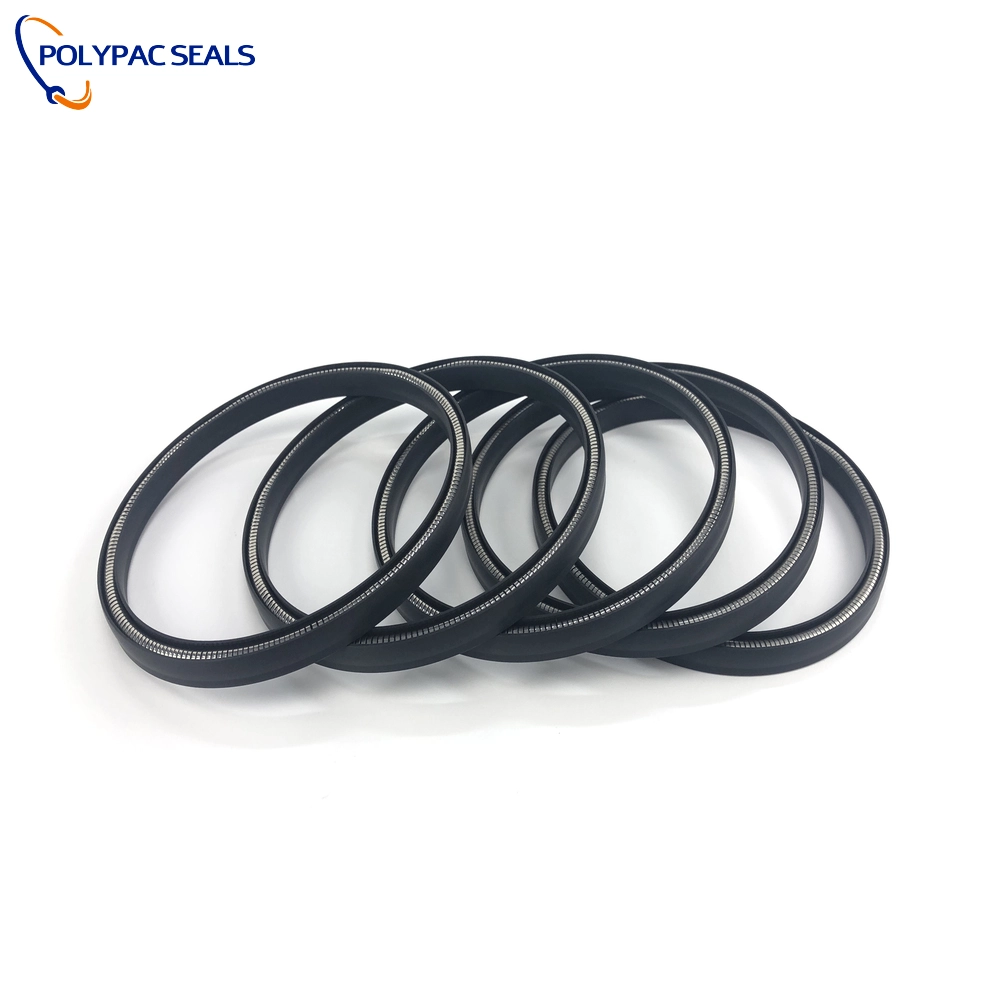
A reliable FKS seal for hydraulic and pneumatic pistons.
Stay Updated with Industry Insights
Subscribe to our articles and receive the latest news, expert guidance, and technical updates directly in your E-mail.
Rest assured that your privacy is important to us, and all information provided will be handled with the utmost confidentiality.

Polypac is a trusted global supplier of high-performance sealing solutions, providing OEM & ODM services for industries worldwide.
E-mail:
Phone/WhatsApp:
© 2025 Polypac Seals. All Rights Reserved.
dms
DMS
DMS