












Inspection and Testing Standards for Back-Up O-Rings
I am a sealing technologist with hands-on experience in seal manufacturing, field failure analysis and quality assurance. In this article I summarize inspection and testing standards for back up o ring assemblies to help engineers, QA teams and procurement professionals reduce extrusion-related failures, set robust acceptance criteria, and choose the right test strategy for production and incoming inspection.
Why proper seal inspection matters
Risk of extrusion and leakage
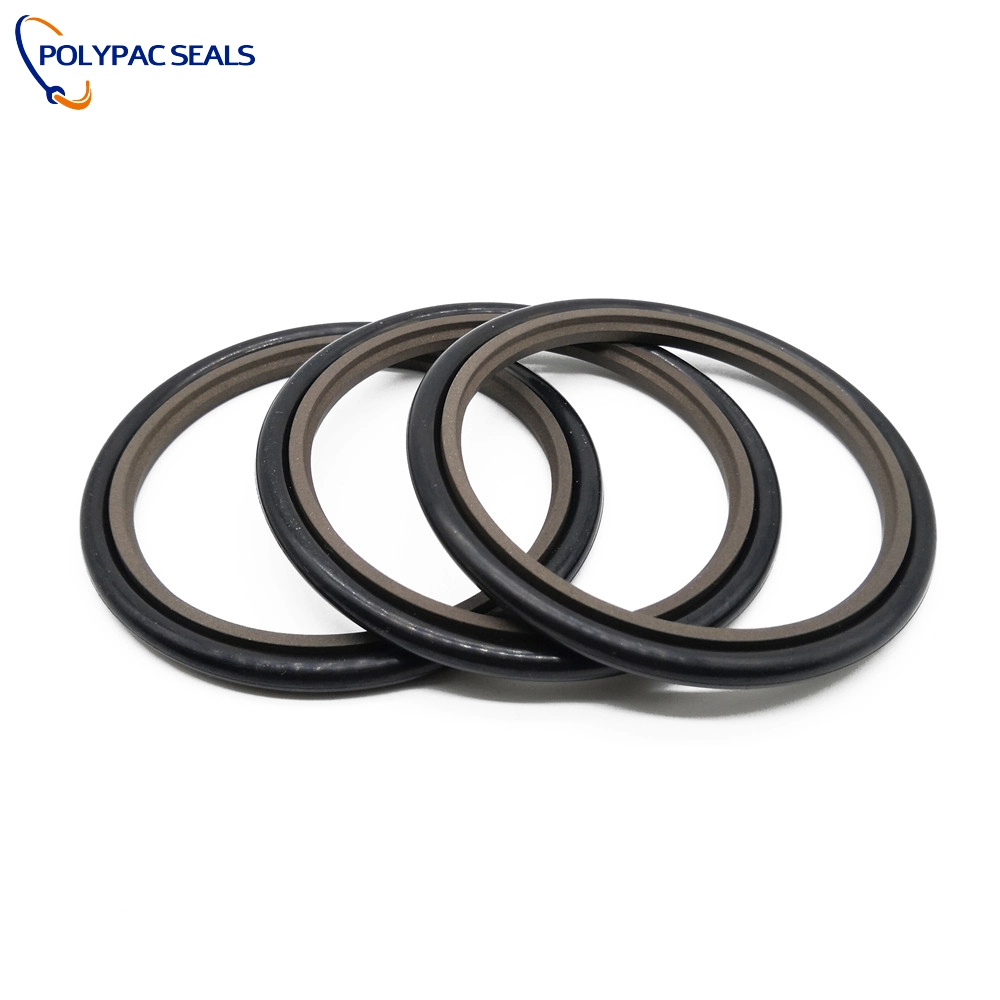
Back-up rings (often called backup rings or anti-extrusion rings) are installed adjacent to elastomeric O-rings to prevent extrusion of the soft elastomer into dynamic or high-pressure gaps. Improper or undocumented inspection increases the risk of extrusion failure, which typically appears as material flow into the clearance gap, partial loss of sealing contact, and ly leakage or catastrophic failure under pressure.
Standards-driven quality reduces warranty and safety costs
Following recognized standards for dimensional checks, hardness, physical properties and performance testing reduces subjective pass/fail decisions and litigation risk. Standards such as ISO 3601 for O-ring terminology and ASTM D2000 for elastomer classification are widely used as reference frameworks in procurement and QA. For O‑ring sizes, the SAE AS568 standard is commonly cited (AS568).
Core inspection checkpoints for back up o ring assemblies
Visual and dimensional inspection
I always begin with a visual inspection under controlled lighting and then perform dimensional checks. Visual criteria include absence of flash, machining marks on mating surfaces, delamination, voids in the back-up ring, and surface contamination. Dimensional checks include ring ID/OD/thickness, cross-section of the elastomeric O-ring, and back-up ring radial and axial dimensions. For O‑rings, reference tolerances are available in industry references and standards such as AS568.
Hardness and material verification
Hardness (Shore A or D depending on material) is measured with a durometer per ASTM D2240. Back-up rings made of PTFE (or filled PTFE) are rigid and measured differently (not by Shore A). Elastomeric O-rings must match the specified compound (e.g., NBR, FKM, EPDM, FFKM). Material verification can include FTIR spectroscopy or TGA for polymer type confirmation, and DSC for thermal transitions.
Surface and microstructure checks
For polymeric back-up rings (PTFE family), I include a microscopy check for voids or delamination, and a surface finish check to ensure no sharp features that could cut the elastomer. SEM or optical microscopy at 10–50x often reveals machining spurs or filler agglomerations that escape visual inspection.
Testing methods and acceptance criteria
Mechanical tests: tensile, elongation, compression set
Tensile strength and elongation at break are performed per ASTM D412. Compression set (ASTM D395) is a critical property for O-rings because high compression set reduces sealing force over time. I set acceptance criteria against the material datasheet and application-specific safety margins—for hydraulic static seals often <20% compression set after 22 hours at 100°C is a typical target for general-purpose NBR; FKM/FFKM have different expectations.
Environmental aging and chemical compatibility
Accelerated aging tests (thermal, hot oil, ozone per relevant ISO/ASTM standards) replicate service conditions. For chemical compatibility I refer to industry chemical resistance charts and perform swelling tests (ASTM D471) in the actual fluid. For high-value or safety-critical systems I also perform thermal cycling and low-temperature flexibility tests.
Sealing performance: leakage and extrusion tests
Functional tests include hydrostatic pressure tests, helium leak detection for micro-leaks, and extrusion tests where components are assembled in test fixtures with controlled clearance gaps. For extrusion resistance I use back-up ring materials and geometries validated by test rigs applying system pressure and measuring extrusion depth after set dwell times. Helium leak testing and dye-penetrant are used depending on required sensitivity; helium leak rates <1x10^-6 mbar·L/s are typical acceptance levels for aerospace-grade seals.
Standards and test matrix (comparison)
The following table summarizes common tests, typical standards and what they verify. All referenced standards are public descriptors or standards organizations’ pages.
| Test Type | Typical Standard / Reference | What it verifies | Suggested Acceptance |
|---|---|---|---|
| Dimensional inspection | SAE AS568, ISO 3601 | ID/OD/CS tolerances, groove fit | Within ± tolerance per drawing / AS568 table |
| Hardness | ASTM D2240 | Compound consistency, cure state | Within ±5 Shore points of spec |
| Tensile / Elongation | ASTM D412 | Mechanical strength | Per material datasheet |
| Compression set | ASTM D395 | Long-term sealing load retention | Application-specific (e.g., <20% typical) |
| Chemical compatibility | ASTM D471 | Swelling, hardness change in fluid | Minimal swelling <10% unless specified |
| Leak / Pressure test | Helium leak standard methods; company protocols | Functional sealing | Leak rate per application (e.g., <1e-6 mbar·L/s for critical) |
Sources: ISO 3601 (ISO), ASTM standards pages (ASTM D2000, D412, D2240), SAE AS568 (SAE).
Practical QA program: sampling, documentation and failure analysis
Sampling and statistical control
I recommend an incoming inspection sample plan (e.g., ANSI/ASQ Z1.4 single sampling) for large batch purchases. Critical orders (safety/pressure systems) should be 100% inspected for dimensions and hardness. Track lot numbers and maintain traceability to cure dates and raw material batches.
Non-conformance handling and root cause analysis
When extrusion or leakage occurs, perform a structured failure analysis: measure actual extrusion gap, inspect mating surface roughness (Ra), hardness mismatch between O-ring and back-up ring, and confirm installation orientation. Use cross-sectional microscopy and FTIR or EDS for compound identification. I document corrective actions (e.g., revised groove tolerance, changed backup ring material, added chamfers) and verify with re-testing.
Measurement equipment and calibration
Durometers, optical comparators, calipers and microscopes must be calibrated per ISO/IEC 17025 or local calibration schedule. Use calibrated fixtures to measure groove geometries and include gage blocks or master rings for dimensional verification.
Materials and design considerations that affect testing
Back-up ring materials and implications
Back-up rings are commonly PTFE or filled PTFE (bronze/PTFE, graphite/PTFE, MoS₂/PTFE) for rigidity and wear resistance. PTFE back-up rings are tolerant of high temperatures and chemical attack but are brittle at low temperatures—thus low-temperature impact tests may be appropriate. When selecting material, consider filler compatibility with the elastomer (e.g., abrasive fillers can damage soft elastomers during installation).
Design features that reduce extrusion risk
Reduce extrusion by: (1) optimizing O-ring cross-section and squeeze, (2) controlling groove clearances, (3) using appropriately shaped back-up rings (single lip, double-lip, or split designs for assembly), and (4) controlling surface finish (Ra <0.8 μm often recommended). I validate design changes with short-run prototype testing including pressure hold and extrusion checks.
Assembly and installation checks
Many field failures are traced to incorrect installation—twists, nicks, or incorrect orientation of split back-up rings. Include an installation inspection step (visual, functional check) and torque/assembly force monitoring (where applicable). For in-situ replacement, document installation tooling and lubricants approved for the O-ring material.
Polypac: capabilities and how we support robust inspection/testing
Polypac is a scientific and technical hydraulic seal manufacturer and oil seal supplier specializing in seal production, sealing material development, and customized sealing solutions for special working conditions. Polypac's custom rubber ring and O-ring factory covers an area of more than 10,000 square meters, with a factory space of 8,000 square meters. Our production and testing equipment are among the most advanced in the industry. As one of the largest companies in China dedicated to the production and development of seals, we maintain long-term communication and cooperation with numerous universities and research institutions both domestically and internationally.
Founded in 2008, Polypac began by manufacturing filled PTFE seals, including bronze-filled PTFE, carbon-filled PTFE, graphite PTFE, MoS₂-filled PTFE, and glass-filled PTFE. Today, we have expanded our product line to include O-rings made from various materials such as NBR, FKM, silicone, EPDM, and FFKM. Our core product range includes O-Rings, Rod Seals, Piston Seals, End Face Spring Seals, Scraper Seals, Rotary Seals, Back-up Rings, and Dust Rings.
What sets Polypac apart is our combined expertise in material development, production scale, and testing capability. We offer in-house compound verification (FTIR), mechanical testing (tensile, compression set), and assembly validation. For customers with special working conditions—high temperature, aggressive fluids, tight extrusion gaps—we provide customized back-up ring designs, prototyping and on-site failure analysis support to close the loop between field performance and design/specification improvements.
FAQ — common questions about inspection and testing for back up o ring
1. What is the primary purpose of a back-up ring?
A back-up ring prevents extrusion of a soft O-ring into a clearance gap under pressure, preserving the sealing surface and extending service life.
2. How do I choose between PTFE and elastomeric back-up rings?
Choose PTFE for high-temperature, chemical-resistant, or high-pressure static applications. Use elastomeric or split designs where flexibility and assembly ease are required. Material selection must be validated with chemical exposure and temperature testing.
3. What are the key inspection tests I should require from suppliers?
Dimensional inspection to AS568/ISO limits, hardness (ASTM D2240), tensile (ASTM D412), compression set (ASTM D395), and evidence of material verification (FTIR or equivalent). For critical applications add leakage/pressure tests and extrusion rig tests.
4. How tight should groove clearances be to prevent extrusion?
There is no universal number—clearance depends on pressure, O-ring compound and temperature—but typical design rules keep the extrusion gap as small as practical and use back-up rings for pressures above the elastomer's extrusion resistance. Validate with prototype extrusion testing under expected pressure and temperature.
5. Can back-up rings themselves fail or damage O-rings?
Yes—sharp edges, filler abrasion in filled PTFE, or incorrect hardness mismatches can cause cutting or accelerated wear on O-rings. Inspection should include surface finish checks and compatibility assessments.
6. When should I require 100% inspection?
Require 100% inspection for safety-critical seals, custom compounds, or when previous lots show elevated defect rates. For commodity runs, statistically valid sampling plans are often sufficient.
If you need help implementing an inspection protocol, selecting backup ring materials, or running acceptance tests tailored to your application, contact Polypac for technical consultation, sample testing and product selection. View our product range and request datasheets or testing certificates by contacting our technical sales team.
Contact / Request a Quote: Email us or request product samples and testing reports to validate back up o ring performance in your specific application.

Piston Lip Seals vs. U-Cups: Choosing the Right Hydraulic Solution for High-Pressure Systems

How to Choose the Best Hydraulic Piston Seal Kit for High-Pressure Applications

Hydraulic Cylinder Seals Kits: 5 High-Tech Materials That Double Your Maintenance Interval

How to Choose the Perfect Hydraulic Jack Seals: A Comprehensive Material & Performance Comparison

High-Performance Pneumatic Piston Seals: How to Achieve Zero-Leakage Efficiency
Products
How can I prevent seal damage during installation?
When should I use a spring-energized seal instead of a standard elastomeric seal?
What is the difference between NBR and FKM materials?
What is the purpose of the metal spring in a rotary shaft seal?
Why did my O-ring fail prematurely?
Stay Updated with Industry Insights
Subscribe to our articles and receive the latest news, expert guidance, and technical updates directly in your E-mail.
Rest assured that your privacy is important to us, and all information provided will be handled with the utmost confidentiality.

Polypac is a trusted global supplier of high-performance sealing solutions, providing OEM & ODM services for industries worldwide.
E-mail:
Phone/WhatsApp:
© 2025 Polypac Seals. All Rights Reserved.
dms
DMS
DMS