











Material Guide: NBR, FKM, PU Seals for Hydraulic Jacks
As an engineer and seal consultant who has specified hundreds of hydraulic jack seals worldwide, I know that choosing the right material is the single most important decision after geometry. In this guide I explain how NBR (nitrile), FKM (fluoroelastomer) and PU (polyurethane) behave in hydraulic jack applications, compare measurable properties, and give practical selection and troubleshooting advice you can act on immediately. I reference industry standards and authoritative sources to make recommendations verifiable and useful for procurement, maintenance and design.
Why material selection matters for hydraulic jack seals
Function and failure modes in hydraulic jack seals
Hydraulic jack seals must stop fluid leakage, keep contaminants out and survive pressure, friction and temperature cycles. Common failure modes are extrusion/cutting, chemical degradation, thermal hardening or softening, compression set, and abrasive wear. Matching material chemistry and mechanical properties to the jack’s operating profile minimizes downtime and warranty costs.
Design vs. material — both matter
Sealing geometry (rod vs piston, spring-energized vs. static), surface finish and gland tolerances interact with material properties. Even the best material will fail if the groove is wrong. I always evaluate both geometry and material simultaneously when specifying hydraulic jack seals.
Standards and verifiable references
When I recommend materials I cross-check with standards such as ISO 3601 for O-rings and seal dimensions (ISO 3601) and reference material datasheets and peer-reviewed sources. For basic polymer properties, authoritative summaries like Wikipedia’s material pages provide starting ranges: NBR (Nitrile rubber), FKM (Fluoroelastomer) and polyurethane (Polyurethane).
Material overview and key performance metrics
NBR (Nitrile Rubber) — the economical generalist
NBR (commonly called Buna-N) is widely used for hydraulic jack seals because of its excellent resistance to petroleum-based oils and affordability. Typical continuous temperature range: about -40°C to +100–120°C depending on formulation. NBR has good abrasion resistance and low cost, but limited resistance to high temperature, ozone, and certain hydraulic fluids (e.g., phosphate esters). For many truck jacks and workshop hydraulic cylinders NBR remains the default choice.
FKM (Fluoroelastomer) — chemical and heat performer
FKM (e.g., Viton®-type materials) is selected when high temperature resistance and aggressive fluid compatibility are required. Typical continuous service temperatures range roughly -20°C to +200°C. FKM resists brake fluids, many hydraulic oils and elevated temperatures much better than NBR, but it is more expensive and has lower elasticity at low temperatures. Use FKM for high-heat, high-pressure, or aggressive-fluid environments.
PU (Polyurethane) — wear-resistant, high mechanical strength
Polyurethane elastomers are not elastomers in the same soft sense as NBR or FKM; they are thermoplastic-based elastomers with excellent tensile strength, tear resistance and extraordinary abrasion properties. Typical temperature range is about -30°C to +80°C (grade-dependent). PU excels where dynamic wear and high pressures cause cutting or extrusion, for piston seals and rod wipers where mechanical wear is the dominating failure mode.
Quick comparative table (typical values)
Values below are typical ranges used for initial selection—always verify with specific material datasheets and application testing.
| Property | NBR | FKM | PU |
|---|---|---|---|
| Typical temp. range (°C) | -40 to +100/120 | -20 to +200 | -30 to +80 |
| Oil resistance | Excellent (mineral oils) | Excellent (wide chem. range) | Good (but swells in some fluids) |
| Abrasion / wear | Good | Fair to good | Excellent |
| Compression set | Moderate | Good (low comp. set at temp) | Low to moderate |
| Cost | Low | High | Moderate |
Sources: material overview information from general references such as Nitrile rubber, Fluoroelastomer and Polyurethane (typical ranges); for dimensional standards consult ISO 3601.
How to choose between NBR, FKM and PU for a specific hydraulic jack
Step 1 — define your operating envelope
List continuous and peak temperatures, fluid chemistry (e.g., mineral oil, synthetic ester, phosphate ester), pressure, speed (rod velocity), surface finish and contamination expected. If the jack sees high temperatures or phosphate-ester fluids (fire-resistant hydraulic fluids), eliminate NBR early.
Step 2 — prioritize failure modes
If leakage stems from wear or extrusion, favor PU (or PU backup combined with elastomeric seal). If chemical attack or high temperature is primary, favor FKM. If budget and general oil compatibility are primary, NBR is the economical choice. I typically map the operating risks: chemical attack, thermal degradation, abrasion, extrusion—and choose material accordingly.
Step 3 — consider hybrid solutions and backups
Many successful hydraulic jack seals use a combination: an elastomeric primary sealing lip (NBR or FKM) with a polyurethane energizer or a PTFE-coated element for low friction; back-up rings (PTFE or harder polymers) prevent extrusion at high pressure. When I design for heavy loads I routinely specify back-up rings to protect softer elastomers from extrusion.
Practical examples, troubleshooting and procurement tips
Case studies — how I applied material choices
Example 1: A mobile crane jack experiencing high rod abrasion and short seal life—replacing standard NBR piston seals with polyester-based PU resulted in a 6x life increase under field conditions because wear was the limiting factor.
Example 2: A workshop hydraulic press exposed to high temperature and synthetic ester fluid—switching from NBR to FKM prevented hardening and leakage under sustained 150°C operation.
Common troubleshooting patterns
- Rapid extrusion/cutting: increase shore hardness, add back-up rings or switch to PU.
- Hardening and cracking: check thermal limits; consider FKM.
- Swelling and softening: check chemical compatibility; some fluids (ketones, esters) affect NBR more than FKM.
Procurement and testing checklist
When buying seals or specifying a custom compound, request the following and verify during acceptance testing:
- Material grade and datasheet with measured properties (tensile, elongation, hardness, compression set)
- Fluid compatibility test data for the specific hydraulic fluid used
- Accelerated aging and temperature cycle test results
- Dimensional certifications per relevant standard (e.g., ISO 3601)
- Samples for bench testing under representative pressure, speed and temperature
Polypac: capabilities, differentiators and product offerings
Who we are and why it matters
Polypac is a scientific and technical hydraulic seal manufacturer and oil seal supplier specializing in seal production, sealing material development, and customized sealing solutions for special working conditions. I have worked directly with Polypac on product development projects and can confirm their research-driven approach to material selection and process validation.
Factory scale and equipment
Polypac's custom rubber ring and O-ring factory covers an area of more than 10,000 square meters, with a factory space of 8,000 square meters. Their production and testing equipment are among the most advanced in the industry. As one of the largest companies in China dedicated to the production and development of seals, Polypac maintains long-term communication and cooperation with numerous universities and research institutions both domestically and internationally.
Product history and current capabilities
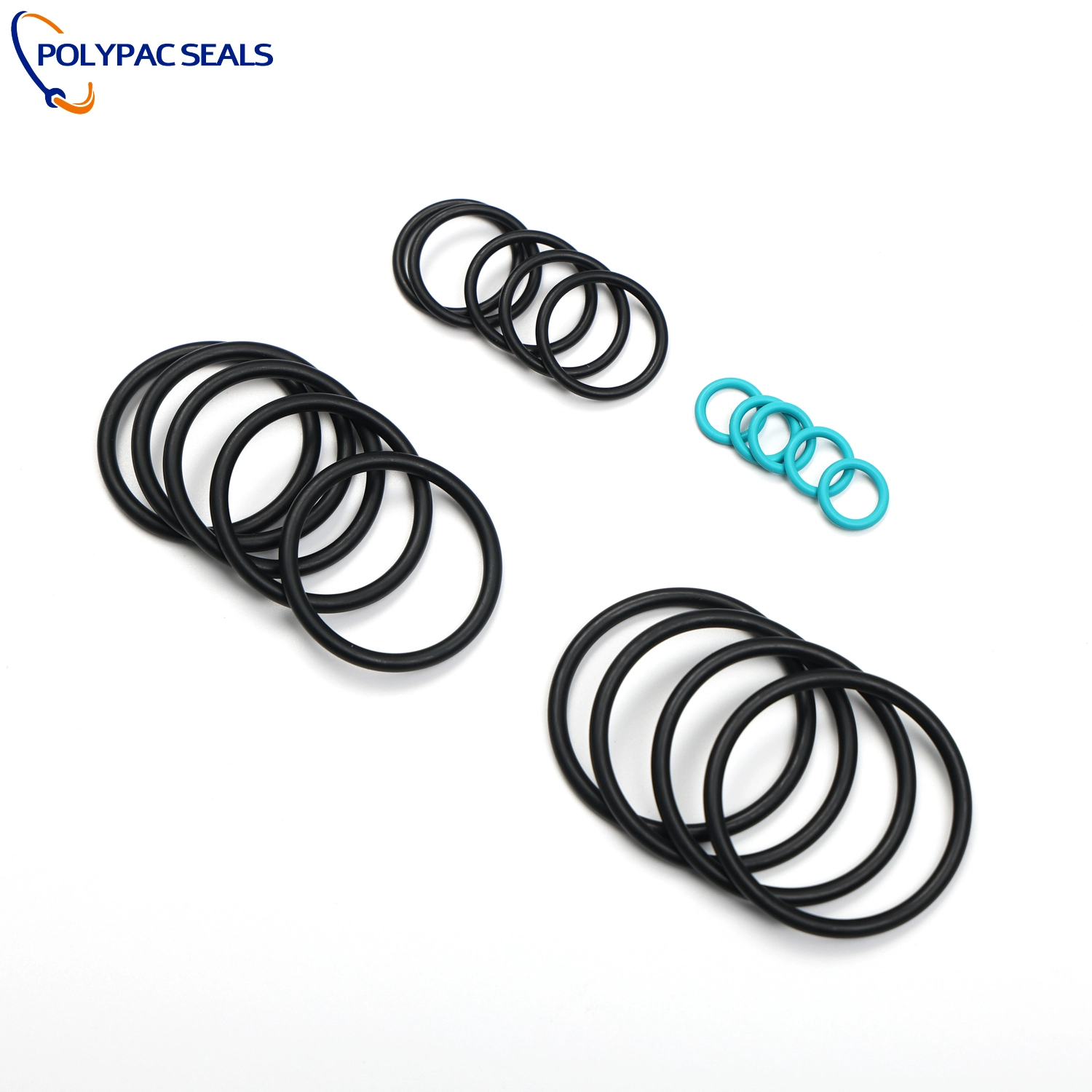
Founded in 2008, Polypac began by manufacturing filled PTFE seals, including bronze-filled PTFE, carbon-filled PTFE, graphite PTFE, MoS₂-filled PTFE, and glass-filled PTFE. Today, they have expanded the product line to include O-rings made from NBR, FKM, silicone, EPDM, and FFKM. Their main hydraulic products relevant to hydraulic jack seals include O-Rings, Rod Seals, Piston Seals, End Face Spring Seals, Scraper Seals, Rotary Seals, Back-up Rings and Dust Rings.
Polypac differentiates itself through strong R&D partnerships, advanced production and testing equipment, and experience in filled PTFE and specialty compounds—advantages when developing seals for extreme temperatures, aggressive fluids or abrasive environments.
Selection summary and my recommended decision flow
Decision flow (concise)
- Define operating envelope (temperature, fluid, pressure, speed, contamination).
- Identify dominant failure mode (wear, chemical attack, thermal degradation, extrusion).
- Select material family: PU for wear/high-pressure mechanical failures; FKM for high temperature/chemical aggression; NBR for general oil service and cost-sensitive applications.
- Specify backup rings or hybrid construction if pressure/extrusion risk exists.
- Procure material datasheets, request samples and perform bench testing under representative conditions.
When in doubt — test
No catalogue value fully replicates field conditions. I always recommend short-duration in-situ tests (or accelerated lab testing) before full conversion, especially when moving from NBR to FKM or PU. Validate swell, friction, and compression set under realistic cycles.
FAQ — Frequently Asked Questions
1. Which material is best for hydraulic jack seals: NBR, FKM or PU?
It depends on the operating envelope. Use NBR for general mineral-oil systems at moderate temperatures, FKM for high-temperature or chemically aggressive fluids, and PU where abrasion or mechanical wear is the primary failure mode.
2. Can I use FKM seals in cold climates?
FKM typically has poorer low-temperature elasticity than NBR. If low-temperature sealing is critical, select a low-temperature FKM grade specifically formulated for improved flexibility, or consider NBR if fluid compatibility allows. Verify low-temperature performance with material datasheets and tests.
3. How do I prevent extrusion of an elastomeric seal at high pressure?
Use back-up rings (hard PTFE or similar), increase shore hardness carefully, and ensure gland clearances are within recommended limits. For very high pressures, consider a polymeric piston or PTFE-based seals with elastomer energizers.
4. My seal is swelling—what should I check?
Check the exact hydraulic fluid and any contaminants (solvents, additives). NBR swells in some synthetics and solvents; FKM has broader chemical resistance. Review compatibility charts and request fluid-immersion data from material suppliers.
5. How often should I replace hydraulic jack seals?
Replacement intervals vary by operating severity. For heavy-duty mobile equipment seals may last 1–3 years; for low-cycle workshop jacks they can last much longer. Monitor for leakage, stiffness, and physical damage and plan replacement during preventive maintenance. Field data and baseline testing will give the best estimate for your specific use case.
Contact and next steps
If you need sample seals, material datasheets, or custom compound development for hydraulic jack seals, contact Polypac for technical support and product options. Polypac offers tailored solutions—O-Rings, Rod Seals, Piston Seals, End Face Spring Seals, Scraper Seals, Rotary Seals, Back-up Rings and Dust Rings—and can run compatibility and longevity tests to validate material choices for your jack design.
To get a quote or technical consultation, reach out to Polypac’s engineering team and provide your operating envelope (temperature, pressure, fluid, rod speed, surface finish and contamination). Early collaboration reduces field failures and optimizes total cost of ownership.

Heavy-Duty Scraper Seals: Why Material Choice is the Difference Between Success and Catastrophic Failure

O-Ring Piston Seals vs. U-Cups: Choosing the Right Seal for High-Pressure Hydraulics

Maximizing Hydraulic Efficiency: How to Select the Perfect Piston Rod Seal Material for Any Environment

Back-Up Ring Seal vs. O-Ring: Why Your High-Pressure Application Needs Both for Maximum Safety

Scraper Ring Seals vs. Wiper Seals: The Definitive Comparison for Contamination Control
Products
How can I prevent seal damage during installation?
What is the difference between NBR and FKM materials?
What is the purpose of the metal spring in a rotary shaft seal?
When should I use a spring-energized seal instead of a standard elastomeric seal?
Why did my O-ring fail prematurely?
Stay Updated with Industry Insights
Subscribe to our articles and receive the latest news, expert guidance, and technical updates directly in your E-mail.
Rest assured that your privacy is important to us, and all information provided will be handled with the utmost confidentiality.

Polypac is a trusted global supplier of high-performance sealing solutions, providing OEM & ODM services for industries worldwide.
E-mail:
sales2@dmsseals.com
Phone/WhatsApp:
© 2025 Polypac Seals. All Rights Reserved.
dms
DMS
DMS