












How to Measure and Replace Hydraulic Piston Seals Correctly
Hydraulic piston seals are critical for cylinder performance, efficiency and safety. Correct measurement and replacement avoid leaks, loss of pressure, accelerated wear and costly downtime. This article explains why seals fail, how to measure piston, rod and gland dimensions precisely, how to choose appropriate materials (NBR, FKM, PTFE, FFKM, EPDM, silicone), step-by-step replacement techniques, and preventive practices. Practical tolerances, tools, and standards references are provided so technicians and engineers can make verifiable, repeatable decisions.
Common Causes of Hydraulic Seal Failure
Wear, abrasion and particle contamination
Solid particle contamination and abrasive wear are among the leading causes of hydraulic seal failure. Stiff particles and abrasive fluids score the sliding surfaces and erode seal lips, accelerating leakage. Seals operating in contaminated environments often fail prematurely if proper filtration, scrapers and dust rings are not used.
Extrusion, nibbling and pressure spikes
Under high pressure or improper gland clearance, elastomeric seals can extrude into gaps between piston and bore and then be sheared (nibbling). This is especially common where there is insufficient back-up support or where the extrusion gap exceeds the seal material capability. Use of back-up rings or higher durometer materials or PTFE-based composite seals reduces extrusion risk.
Chemical attack, thermal aging and incompatible materials
Chemical exposure (hydraulic fluids, water, solvents) and elevated temperatures cause swelling, hardening or softening of elastomers. Selecting the wrong elastomer for the fluid environment (for example, using standard NBR with phosphate-ester fluids at high temperature) will reduce life. Refer to material compatibility charts and standards when selecting replacement seals.
Accurate Measurement of Hydraulic Piston Seals
What to measure: piston, rod, gland and extrusion gap
Before ordering replacement piston seals, measure these key dimensions:
- Piston diameter (D) — measure at multiple axial positions using a micrometer or bore gauge to detect ovality.
- Bore (cylinder) ID — use an inside micrometer or bore gauge; roundness and surface finish matter for seal life.
- Rod diameter (if rod passes through same gland) — measure with micrometer; note any wear grooves.
- Groove width and depth — measure piston groove free width and groove bottom diameter; important for cross-section selection.
- Radial clearance / extrusion gap — difference between bore ID and piston outer diameter; also check axial clearance near gland.
Document original part numbers and take photos of old seals and grooves; this helps identify nonstandard profiles.
Tools and measurement method
Recommended tools: outside micrometer (0–100 mm), inside bore gauge (dial bore gauge), vernier caliper (for quick checks), feeler gauges (for small gaps), and optical comparator if available for groove profile. For critical applications, use a roundness tester and surface roughness gauge (Ra). Follow these steps:
- Clean components thoroughly to remove oil and debris.
- Measure each dimension three times at 120° intervals to detect eccentricity or taper.
- Record measurements and calculate mean and maximum deviation.
Tolerances and practical ranges
Exact tolerances depend on seal type, pressure and speed. Typical practical guidance used across industry (verify against OEM and standards like Parker and SKF) is:
| Feature | Typical Range | Notes |
|---|---|---|
| Rod-to-seal radial clearance | 0.03–0.10 mm | Lower end for low-speed, precision; higher for slight misalignment |
| Piston-to-bore radial clearance | 0.05–0.20 mm | Higher clearances require anti-extrusion devices |
| Groove width tolerance | ±0.05 mm | Ensure adequate compression for O-rings / lip seals |
| Surface roughness (Ra) | 0.2–0.8 µm | Too smooth or too rough reduces sealing performance |
These ranges are general. For precise guidance consult manufacturer technical data or standards such as the Parker O-Ring handbook (Parker O-Ring Handbook), ISO publications, and SKF technical notes.
Step-by-Step Replacement Procedure
Preparation and safety
Safety first: depressurize the system, lockout/tagout, and drain hydraulic fluid to a safe container. Use personal protective equipment (gloves, eye protection) and keep a clean, lint-free workspace. Collect the cylinder manufacturer data and replacement seal kit if available.
Removing the old seal without damaging parts
Use plastic or brass tools to pry seals—never steel picks that gouge metal. Mark component orientation and groove faces before removal. Inspect piston and rod surfaces for grooves, corrosion or scoring. If the rod or bore is damaged beyond acceptable tolerances, hone or replace the component before installing new seals.
Installing new seals and reassembly checks
Best practices for installation:
- Check seal and component dimensions against your recorded measurements.
- Lubricate seals with clean hydraulic fluid or compatible assembly grease—do not use incompatible solvents that swell elastomers.
- Use protective sleeves or chamfer the rod edge slightly (0.5–1.0 mm) to avoid cutting seals during installation.
- For composite PTFE seals use correct backup rings and orientation to prevent extrusion.
- After assembly, perform pressure and leak tests at low pressure, then ramp to operating pressure while monitoring for leaks and unusual temperature rise.
Document torque values for fasteners, cylinder preloads and initial operating conditions for predictable future maintenance.
Materials, Selection and Best Practices
Material comparison: temperature, chemical resistance and typical uses
Choose materials according to fluid type, temperature, pressure and dynamic conditions. The table below summarizes common elastomers and PTFE compounds:
| Material | Typical Temp Range (°C) | Chemical Resistance | Typical Applications |
|---|---|---|---|
| NBR (Nitrile) | -30 to +100 | Good with mineral oils & hydraulic fluids; poor with ketones & phosphate esters | General hydraulic seals, economical rod/piston seals |
| FKM (Viton) | -20 to +200 | Excellent with petroleum fluids, high temp & oxidation | High-temp hydraulic systems |
| EPDM | -50 to +150 | Good with water glycol fluids, brake fluids; poor with petroleum oils | Water-based hydraulics |
| Silicone | -60 to +200 | Good high/low temp; limited with hydraulic oils | Low-friction, extreme temp seals (limited hydraulic use) |
| PTFE / Filled PTFE | -200 to +260 | Excellent chemical resistance and low friction | High-temp, chemical, high-speed piston seals; often combined with elastomer energizer |
| FFKM | -10 to +320 | Exceptional chemical and thermal resistance (High Quality) | Critical, aggressive environments (costly) |
Sources for material property ranges include manufacturer datasheets and industry references such as the Parker O-Ring handbook (Parker O-Ring Handbook) and SKF sealing guides.
When to use PTFE or composite piston seals
PTFE and filled PTFE seals (bronze-, carbon-, graphite- or MoS₂-filled) offer low friction, high temp and chemical resistance. They are beneficial for high-speed or high-temp applications, and where minimal stick-slip is required. Note that PTFE typically requires a supportive elastomer energizer or metal spring and may need closer machining tolerances and back-up rings to prevent extrusion.
Standards and references to verify choices
Validate your selection against international standards and technical handbooks. Useful references:
- ISO guidance on sealing components: ISO standards search (search for hydraulic seals and O-rings)
- Manufacturer technical handbooks like the Parker O-Ring Handbook
- General equipment context: Hydraulic cylinder (Wikipedia) and O-ring (Wikipedia)
Maintenance, Troubleshooting and When to Consider Custom Seals
Inspection intervals and predictive maintenance
Routine inspections should include visual checks for external leaks, monitoring of pressure and temperature, and scheduled downtime inspections to examine seals and sliding surfaces. Typical intervals depend on duty cycle but a quarterly visual check and annual internal inspection are common for industrial equipment with moderate duty. For heavy duty or mission-critical systems, use condition monitoring with pressure and temperature sensors to predict failure trends.
Common installation mistakes and how to avoid them
Frequent errors include incorrect groove dimensions, using the wrong material for the fluid, installing seals twisted or backwards, and not protecting lips during installation. Prevent these by using detailed checklists, training technicians, and using installation tools (protective sleeves, chamfer tools, assembly lube).
When to choose custom sealing solutions
Standard seals work for many applications but when you face extreme pressure, temperature swings, aggressive fluids, abrasive media, or unique geometries, custom seals and materials are necessary. Custom options include filled PTFE profiles, specialty FFKM compounds, hybrid seals combining PTFE with elastomer energizers, and special coatings.
Polypac is a scientific and technical hydraulic seal manufacturer and oil seal supplier specializing in seal production, sealing material development, and customized sealing solutions for special working conditions. Polypac's custom rubber ring and O-ring factory covers an area of more than 10,000 square meters, with a factory space of 8,000 square meters. Our production and testing equipment are among the most advanced in the industry. As one of the largest companies in China dedicated to the production and development of seals, we maintain long-term communication and cooperation with numerous universities and research institutions both domestically and internationally.
Founded in 2008, Polypac began by manufacturing filled PTFE seals, including bronze-filled PTFE, carbon-filled PTFE, graphite PTFE, MoS₂-filled PTFE, and glass-filled PTFE. Today, we have expanded our product line to include O-rings made from various materials such as NBR, FKM, silicone, EPDM, and FFKM. Polypac's main product range includes O-Rings, Rod Seals, Piston Seals, End Face Spring Seals, Scraper Seals, Rotary Seals, Back-up Rings and Dust Rings.
Why consider Polypac? Key advantages:
- Comprehensive in-house R&D and material development capabilities.
- Advanced production and testing equipment ensuring consistent quality.
- Large-scale manufacturing enabling competitive lead times and custom batches.
- Collaborations with universities and research institutions to stay at the cutting edge of sealing technology.
For projects that require tailored sealing geometries, special compound approvals, or combined material assemblies (e.g., PTFE on elastomer energizer), Polypac provides engineering consultation and sample validation programs to ensure compatibility and performance under your specified working conditions.
Quick Reference Tables and Troubleshooting Checklist
When to replace vs repair
| Condition Observed | Action | Rationale |
|---|---|---|
| Minor lip wear, no leakage | Monitor; plan replacement at next shutdown | Residual life likely adequate; avoid premature downtime |
| Visible extrusion or nibbling | Replace seal; inspect groove and consider back-up ring | Extrusion indicates insufficient support—leak likely soon |
| Deep grooves or rod scoring | Repair/hone or replace rod/bore; do not install new seal on damaged surface | New seal will fail rapidly on damaged surfaces |
| Compatibility swelling or hardening | Replace with compatible material; review fluid and temp | Material degradation indicates chemical mismatch |
Troubleshooting checklist
- Confirm system pressure and temperature are within design ranges.
- Inspect seal, rod and bore for scoring, corrosion and wear.
- Measure critical dimensions and compare to allowable tolerances.
- Check fluid cleanliness (particle counts) and filtration elements.
- Verify seal material compatibility with hydraulic fluid and additives.
- Confirm installation orientation, groove fits and presence of back-up rings.
FAQs
1. How do I know if a piston seal needs replacement or if the cylinder is the problem?
Start by isolating symptoms: if leakage only occurs at the piston area when the rod is stationary, seals are likely the issue. If there is scoring or ovality of the bore or rod, mechanical repair may be necessary. Measure tolerances and inspect surfaces to determine whether seals alone will fix the problem.
2. Can I reuse old seals if they look OK?
Reusing seals is not recommended for critical systems. Elastomers deform under load and may show micro-cracks or permanent set not visible externally. Replacing seals during cylinder rebuilds is best practice to ensure predictable performance.
3. What is the best material for hydraulic piston seals?
There is no single best material—selection depends on fluid type, temperature, pressure and dynamic conditions. NBR is economical for mineral oil systems, FKM for higher temperatures and harsh fluids, and PTFE composites for high speed/temperature or aggressive environments.
4. How tight should the piston-to-bore clearance be?
Typical piston-to-bore radial clearances range from 0.05 to 0.20 mm depending on application. Tighter clearances improve sealing but require better alignment and surface finish. Always confirm against seal supplier recommendations and equipment OEM data.
5. When should I use back-up rings?
Use back-up rings when operating pressures exceed the extrusion resistance of the seal material or when radial clearances are large. Back-up rings prevent extrusion and extend seal life, particularly with PTFE and low-durometer elastomers.
6. Are PTFE piston seals compatible with all hydraulic fluids?
PTFE has excellent chemical resistance to most fluids, but the overall seal assembly (energizer, spring, adhesives) must be checked for compatibility. Confirm with datasheets and supplier guidance for your specific fluid and additives.
Contact and Product Information
If you need assistance measuring, selecting or sourcing piston seals, Polypac offers technical consultation, custom seal design and prototype production. Explore our product range — O-Rings, Rod Seals, Piston Seals, End Face Spring Seals, Scraper Seals, Rotary Seals, Back-up Rings, Dust Rings — and request sample kits or CAD drawings to validate fit. Contact Polypac for quotations, material datasheets and engineering support.
References and further reading:
- Parker O-Ring Handbook: https://www.parker.com/literature/O-Ring%20Handbook.pdf
- Hydraulic cylinder (Wikipedia): https://en.wikipedia.org/wiki/Hydraulic_cylinder
- O-ring (Wikipedia): https://en.wikipedia.org/wiki/O-ring
- ISO standards search (seals): https://www.iso.org/standards.

High-Performance Pneumatic Piston Seals: How to Achieve Zero-Leakage Efficiency

PTFE vs. Composite: Choosing the Best Piston Guide Ring Material for High-Pressure Systems

Mastering O-Ring Gland Design: The Complete Guide for Perfect Sealing Performance

Advanced Back-Up Ring Materials: Beyond PTFE for Extreme Temperature Environments

PTFE vs. Urethane Scrapers: Which Material Truly Prevents Contamination?
Products
What is the purpose of the metal spring in a rotary shaft seal?
What does "AS568" mean?
Can I reuse a seal?
How do I choose the right material for my sealing application?
How important is surface finish on the metal parts that contact the seal?
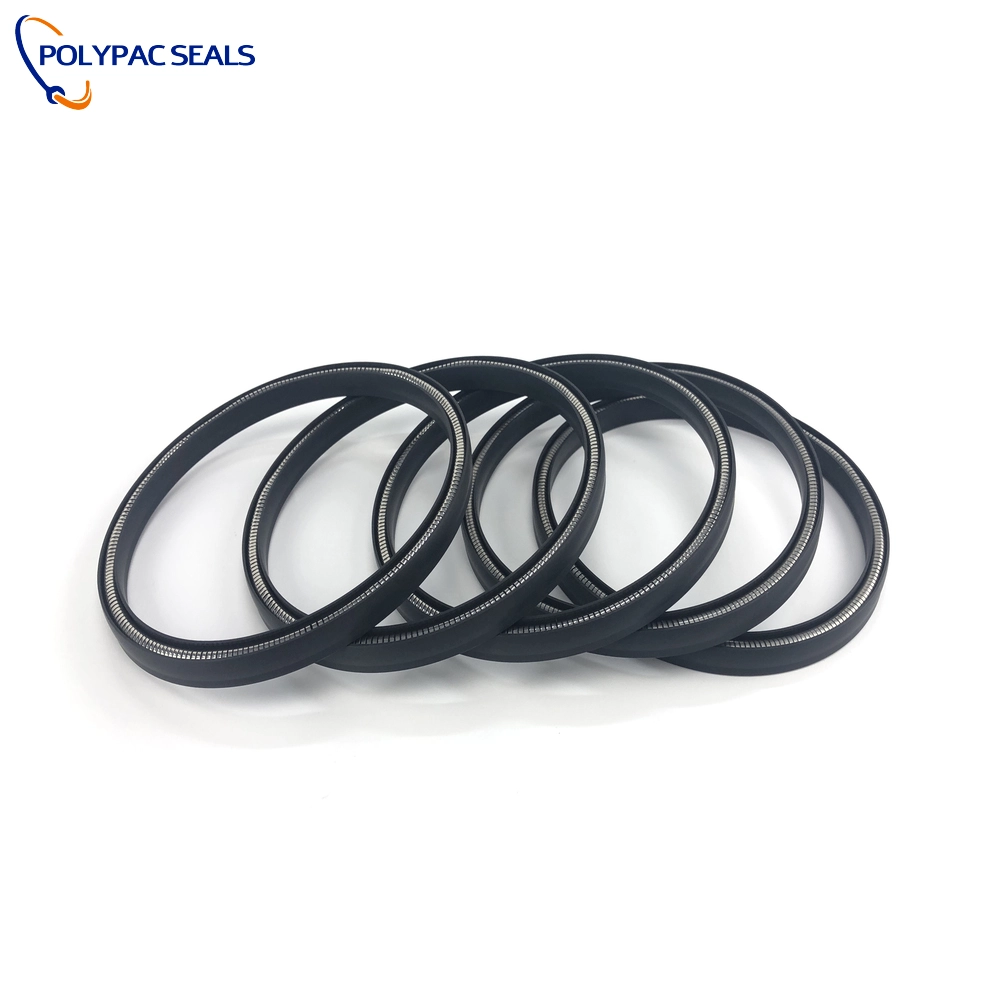
A reliable FKS seal for hydraulic and pneumatic pistons.
Stay Updated with Industry Insights
Subscribe to our articles and receive the latest news, expert guidance, and technical updates directly in your E-mail.
Rest assured that your privacy is important to us, and all information provided will be handled with the utmost confidentiality.
Polypac is a trusted global supplier of high-performance sealing solutions, providing OEM & ODM services for industries worldwide.
E-mail:
Phone/WhatsApp:
© 2025 Polypac Seals. All Rights Reserved.
dms
DMS
DMS