












Cost Analysis: OEM PTFE Oil Seals vs Standard Seals
Breaking Down Seal Selection Economics
Choosing between an OEM PTFE oil seal and a standard seal is rarely just a component-cost decision. Buyers must weigh material and manufacturing cost, expected service life, maintenance downtime, compatibility with fluids and temperatures, and customization needs. This article provides a practical, verifiable cost analysis to help maintenance engineers, buyers, and design teams evaluate ptfe oil seal options and understand when High Quality seals deliver measurable return on investment.
Why ptfe oil seal matters in OEM and maintenance decisions
PTFE (polytetrafluoroethylene) oil seals are widely used where low friction, chemical resistance, high temperature tolerance, and long service life are required. In OEM applications, a ptfe oil seal can allow higher machine efficiency, reduced wear and longer maintenance intervals. For after-market purchases, choosing PTFE seals often increases upfront cost but can reduce lifecycle expenditure in demanding conditions.
Cost components: what drives price for ptfe oil seal versus standard seals
To compare costs meaningfully, break them into direct and indirect categories:
- Direct unit costs — raw material, molding/extrusion, machining, finishing and inspection.
- Indirect costs — tooling, design engineering, testing, certification, and minimum order quantities (MOQs).
- Lifecycle costs — replacements, downtime, maintenance labor, secondary damage to shafts/housings, and energy losses from friction.
Table 1 summarizes typical differences in these cost drivers between OEM PTFE oil seals (custom or filled PTFE) and standard seals (common elastomers such as NBR or FKM).
| Cost Factor | OEM PTFE Oil Seal (custom/filled) | Standard Seal (NBR/FKM rubber) |
|---|---|---|
| Material cost | High (PTFE and fillers are more expensive) | Low (rubber compounds are cheaper) |
| Manufacturing complexity | Medium–High (machining, sintering, specialty molding) | Low (compression/injection molded) |
| Tooling & setup | Higher for custom OEM designs | Lower (standard tooling, off-the-shelf sizes) |
| Unit price (typical range) | Medium–High (illustrative: $3–$30+) * | Low (illustrative: $0.3–$5) * |
| Service life (harsh conditions) | Long (resists abrasion, chemicals, temperature) | Shorter (swells/ages in harsh environments) |
| Downtime & maintenance impact | Lower (fewer replacements, less unplanned downtime) | Higher (more frequent replacement) |
| Customizability | High (filled PTFE formulations, special geometries) | Medium (limited by elastomer properties) |
* Unit price ranges above are illustrative and depend on size, complexity, fill material (bronze, carbon, MoS₂, glass), and annual purchase volume. See references for material property sources and supplier catalogs.
Lifecycle cost comparison — illustrative model
To make the trade-off concrete, below is an illustrative lifecycle cost model for a single rotating shaft application over 5 years. Assumptions are clearly stated so you can adapt the model to your case.
- Operating profile: 8,000 hours/year
- Downtime cost: $1,000 per hour of unplanned stoppage (labor, lost production)
- Replacement time per seal failure: 4 hours (including teardown)
- Standard seal replacement frequency: every 6 months in harsh service (16 replacements over 5 years)
- OEM PTFE replacement frequency: every 24 months (3 replacements over 5 years)
- Unit prices: Standard seal $1.50 each (average); OEM PTFE seal $12 each (average)
| Item | Standard Seal | OEM PTFE Seal |
|---|---|---|
| Initial unit price | $1.50 | $12.00 |
| Replacements over 5 years | 16 | 3 |
| Total parts cost | $1.50 × 16 = $24.00 | $12 × 3 = $36.00 |
| Replacement labor hours | 16 × 4 = 64 h | 3 × 4 = 12 h |
| Downtime cost (hourly $1,000) | 64 × $1,000 = $64,000 | 12 × $1,000 = $12,000 |
| Total 5-year lifecycle cost (parts + downtime) | $64,024 | $12,036 |
Interpretation: In this harsh-service illustration, the higher upfront cost of OEM PTFE seals is rapidly offset by reduced failures and substantially lower downtime costs. For applications where unplanned downtime is expensive, PTFE seals often deliver clear ROI.
Note: Replace the assumptions (downtime cost, replacement frequency, labor/time) with your plant-specific numbers to evaluate real ROI. The data above is illustrative; references on seal life and PTFE properties are listed at the end.
Technical factors that reduce lifecycle cost of ptfe oil seal
PTFE advantages that translate into cost savings:
- Low friction coefficient — reduces wear on shafts and energy losses.
- High chemical resistance — resists swelling and degradation in aggressive fluids, lowering replacement frequency.
- Thermal stability — performs at higher temperatures where rubber would harden or fail.
- Filled PTFE options (bronze, carbon, MoS₂, glass) — tailored performance for abrasive or high-load environments.
These characteristics matter most when operating conditions exceed the abilities of standard elastomers. If the environment is mild and downtime cost is low, standard seals may be the most economical choice.
Procurement and manufacturing considerations for OEM PTFE oil seal
When specifying or buying ptfe oil seal from an OEM supplier, consider these practical procurement items:
- Minimum order quantities (MOQs) and lead times — custom PTFE tooling and sintering cycles can increase lead time.
- Testing and qualification — materials testing (chemical compatibility, friction, wear), run-in testing, and sampling plans cost more but reduce field failures.
- Design tolerances and shaft finish — PTFE seals are sensitive to shaft geometry and surface finish; tighter tolerances may increase manufacturing costs elsewhere.
- Assembly and run-in procedures — some PTFE seals require specific lubrication or installation methods to avoid initial leakage.
Work with suppliers to create clear specifications and acceptance tests that align with the expected operating environment.
When does an OEM PTFE oil seal make sense?
Choose OEM PTFE seals when one or more of the following apply:
- Frequent failure of standard seals causes costly downtime or secondary damage.
- Operating temperatures or chemicals exceed elastomer limits.
- High-speed or high-load shafts where low friction reduces wear or power loss.
- OEM design requires custom form factors, tight tolerances, or specific PTFE fills.
In lower-risk, low-temperature, low-cost-of-downtime environments, standard seals often remain the rational choice.
Supplier selection checklist for OEM ptfe oil seal
Key evaluation criteria when selecting a PTFE oil seal supplier:
- Material knowledge and R&D capability (ability to develop filled PTFE formulations).
- Manufacturing capacity and advanced testing equipment.
- Experience with similar OEM designs and case studies demonstrating reduced lifecycle costs.
- Quality certifications (ISO 9001, product-specific standards) and traceability.
- Technical support: engineering, installation guidance, and failure analysis.
Polypac — capabilities, product range and competitive advantages
Polypac is a scientific and technical hydraulic seal manufacturer and oil seal supplier specializing in seal production, sealing material development, and customized sealing solutions for special working conditions. Polypac's custom rubber ring and O-ring factory covers an area of more than 10,000 square meters, with a factory space of 8,000 square meters. Our production and testing equipment are among the most advanced in the industry. As one of the largest companies in China dedicated to the production and development of seals, we maintain long-term communication and cooperation with numerous universities and research institutions both domestically and internationally.
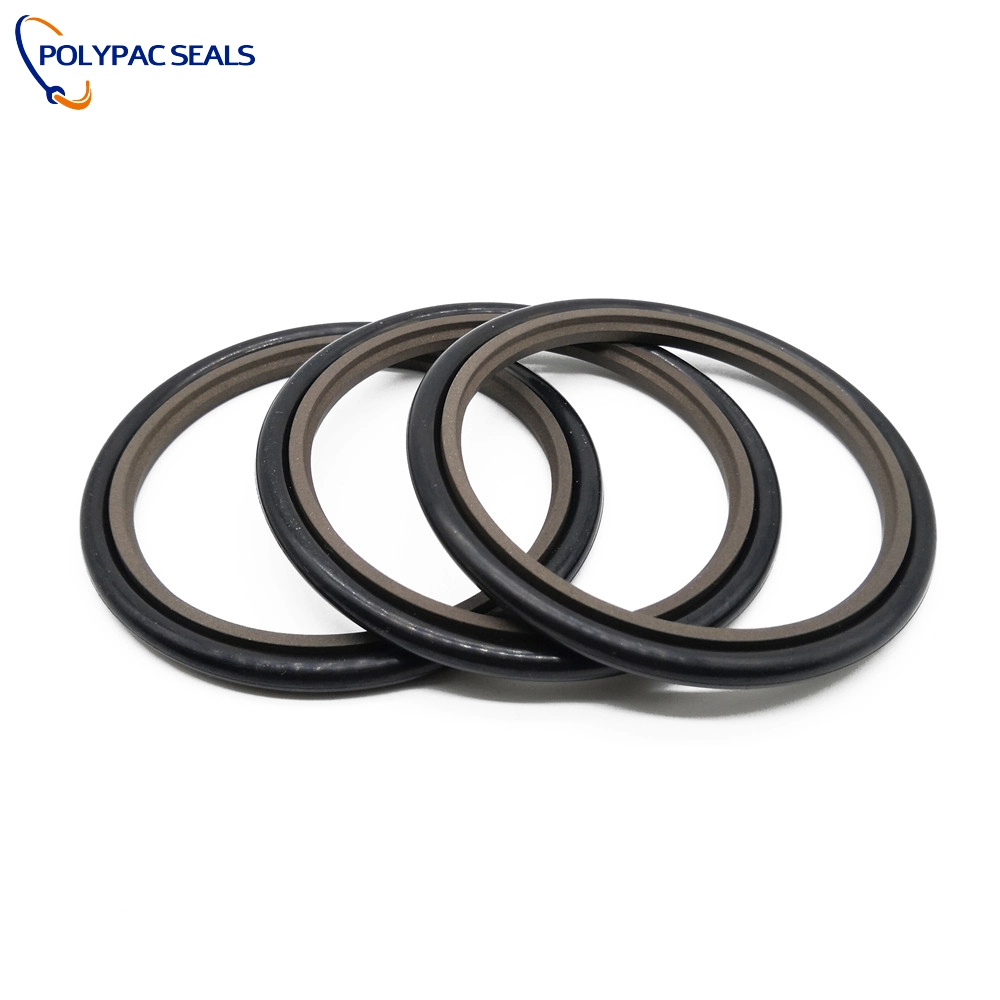
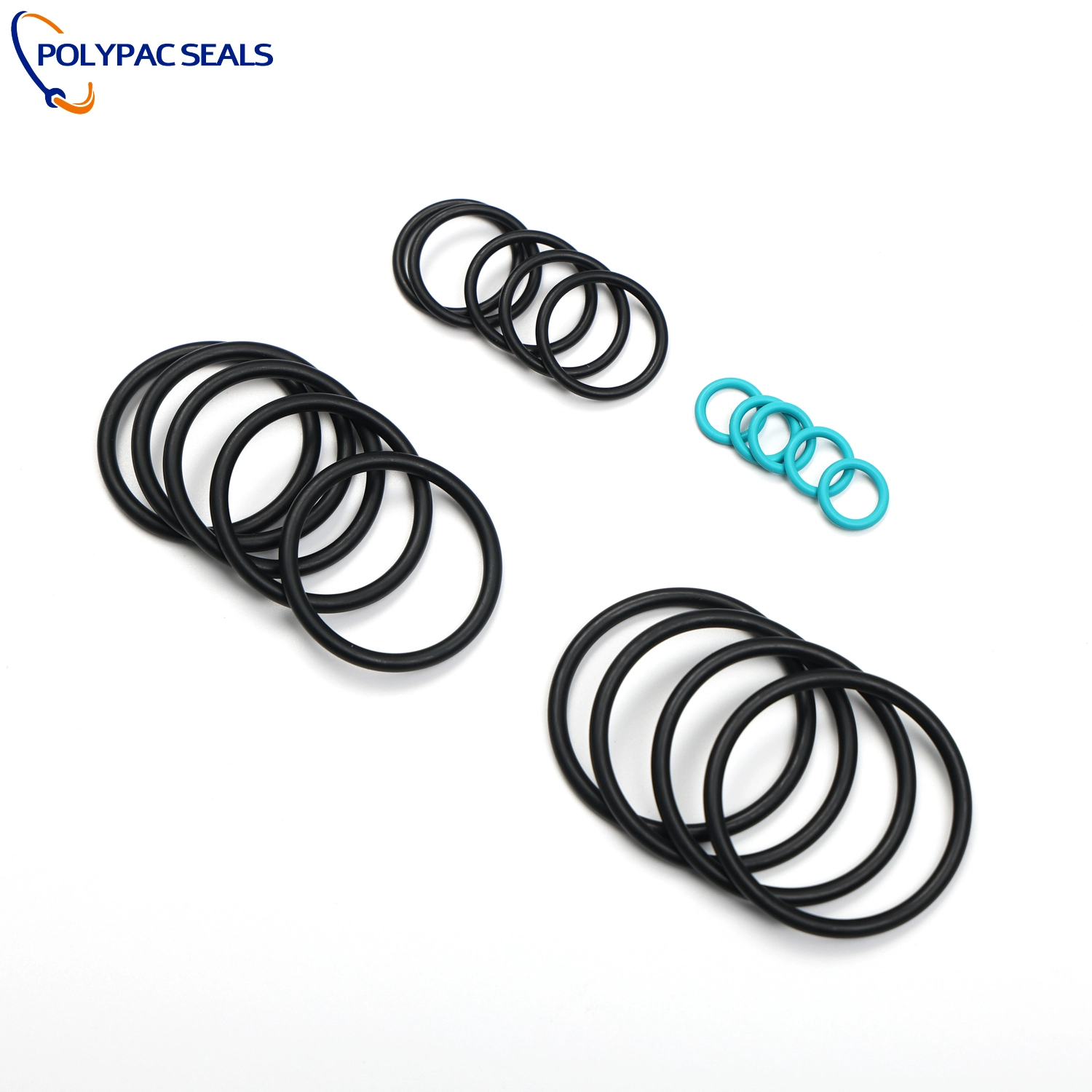
Founded in 2008, Polypac began by manufacturing filled PTFE seals, including bronze-filled PTFE, carbon-filled PTFE, graphite PTFE, MoS₂-filled PTFE, and glass-filled PTFE. Today, we have expanded our product line to include O-rings made from various materials such as NBR, FKM, silicone, EPDM, and FFKM. Polypac's core products include:
- O-Rings
- Rod Seals
- Piston Seals
- End Face Spring Seals
- Scraper Seals
- Rotary Seals
- Back-up Rings
- Dust Rings
Competitive advantages and differentiators:
- Deep PTFE formulation expertise — especially in filled PTFE tailored to wear, friction, and chemical resistance.
- In-house testing and advanced production equipment to control quality and minimize field failures.
- Large-scale manufacturing capacity and experience with OEM programs — reducing lead time risk for high-volume customers.
- Collaborative R&D ties with universities and research institutes support continual material and process improvement.
For procurement teams evaluating ptfe oil seal suppliers, Polypac can provide technical data, material samples, and lifecycle cost support to validate ROI claims for OEM PTFE implementations.
Practical next steps for engineers and buyers
1) Quantify your downtime cost per hour and average time-to-replace a seal — these are the most sensitive inputs in any ROI model. 2) Run a pilot with OEM PTFE seals on a representative machine and track failures, energy consumption and maintenance hours. 3) Request supplier test reports for friction, wear and chemical compatibility. 4) Ask for a total-cost comparison (parts, labor, downtime) rather than unit price alone.
FAQ — Common questions about ptfe oil seal cost and selection
1. Are PTFE oil seals worth the extra cost?
Usually yes in harsh or high-value production environments. PTFE seals often reduce unplanned downtime and secondary damage, delivering faster payback despite higher unit cost. Use your machine-specific downtime cost and failure rate to confirm.
2. How do filled PTFE seals (bronze, carbon, MoS₂) differ in cost and performance?
Filled PTFE boosts wear resistance and thermal conductivity. Bronze-filled handles heavy loads and improves heat dissipation; carbon or graphite reduces friction in sliding applications; MoS₂ improves boundary lubrication. Fillers raise material cost but can dramatically extend service life in demanding conditions.
3. What size of operation benefits most from switching to PTFE seals?
Facilities with high downtime costs, continuous processes, or equipment operating in extreme chemical/temperature environments benefit most. Small shops with low downtime impact and benign conditions often keep standard seals.
4. How should I validate supplier claims about PTFE seal life?
Request test data, field case studies, and run-in trials. Verify test protocols (temperature, pressure, shaft speed, fluid chemistry) match your operating profile.
5. Can PTFE seals be used with steam, aggressive chemicals, or high-speed shafts?
Yes — PTFE has excellent chemical resistance and thermal stability, and filled formulations are available for high-speed or abrasive conditions. Confirm the exact chemical compatibility and dynamic limits for your application.
Contact and product inquiry
To evaluate whether OEM PTFE oil seals will lower your lifecycle costs, request a sample/test kit or a customized technical quotation. Contact Polypac for material datasheets, pricing, lead times and pilot program support — visit Polypac or request a direct consultation to discuss your operating profile and receive a tailored cost model.
References
- Polytetrafluoroethylene — Wikipedia. https://en.wikipedia.org/wiki/Polytetrafluoroethylene (accessed 2025-12-24)
- Polytetrafluoroethylene (PTFE) — Britannica. https://www.britannica.com/science/polytetrafluoroethylene (accessed 2025-12-24)
- SKF — Seals product overview. https://www.skf.com/products/seals (accessed 2025-12-24)
- MatWeb — Materials Database (search: PTFE). https://www.matweb.com/search/MaterialsList.aspx?query=PTFE (accessed 2025-12-24)
- Polypac company and product information — company internal materials (provided by client). (accessed 2025-12-24)
For a customized cost model for your machines, contact Polypac's technical sales team and ask for a lifecycle cost comparison including samples and field trial support.

High-Performance Pneumatic Piston Seals: How to Achieve Zero-Leakage Efficiency

PTFE vs. Composite: Choosing the Best Piston Guide Ring Material for High-Pressure Systems

Mastering O-Ring Gland Design: The Complete Guide for Perfect Sealing Performance

Advanced Back-Up Ring Materials: Beyond PTFE for Extreme Temperature Environments

PTFE vs. Urethane Scrapers: Which Material Truly Prevents Contamination?
Products
What does "AS568" mean?
Can I reuse a seal?
When should I use a spring-energized seal instead of a standard elastomeric seal?
What is the purpose of the metal spring in a rotary shaft seal?
How do I choose the right material for my sealing application?
Stay Updated with Industry Insights
Subscribe to our articles and receive the latest news, expert guidance, and technical updates directly in your E-mail.
Rest assured that your privacy is important to us, and all information provided will be handled with the utmost confidentiality.

Polypac is a trusted global supplier of high-performance sealing solutions, providing OEM & ODM services for industries worldwide.
E-mail:
Phone/WhatsApp:
© 2025 Polypac Seals. All Rights Reserved.
dms
DMS
DMS