











Comparing OEM and Aftermarket Piston Guide Rings for Buyers
I often advise procurement teams, maintenance managers and design engineers across Europe, North America and Asia on selecting piston guide rings. In this article I compare OEM and aftermarket piston guide rings from the perspective of fit, material, testing, lifecycle cost and application risk. I explain how to read material specifications, how to quantify acceptance criteria, and when a custom solution is justified. Wherever possible I reference authoritative sources and practical inspection steps you can apply in procurement and quality control.
Understanding Piston Guide Ring Functionality
What is a piston guide ring?
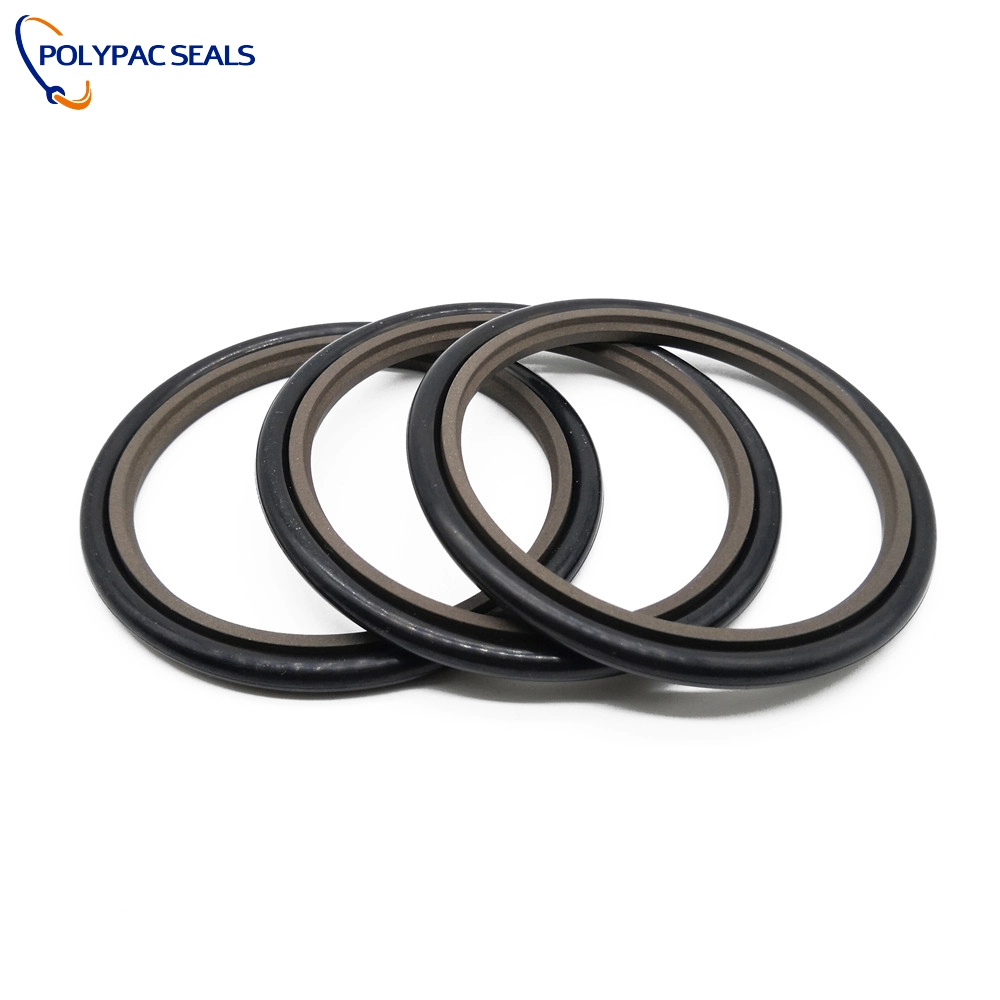
A piston guide ring is a component used in hydraulic cylinders and reciprocating equipment to maintain piston concentricity inside the bore, control side loads and protect the sealing elements from excessive wear or extrusion. Unlike power piston rings that control fluid leakage and pressure, guide rings primarily handle mechanical guidance and abrasion protection. For background on piston rings and related components see the general overview on Wikipedia.
How guide rings differ from piston seals and other sealing elements
Guide rings do not usually provide primary pressure sealing; that role is taken by piston seals (such as polyurethane or PTFE energy seals) and rod seals. Guide rings reduce metal-to-metal contact and prevent seal extrusion under side loads. This separation of function improves system life: a worn guide ring often leads to premature seal failure. For a primer on common seal types and polymer materials, review the O-ring and PTFE articles.
Common materials and design features
Guide rings are commonly made from filled PTFE, reinforced plastics (polyether ether ketone variants in high temperature cases), phenolic composites, or engineered polymers (Nylon, UHMW-PE). Key design attributes include cross-section geometry, chamfers for installation, lubrication grooves, and bore surface compatibility. Material selection should reflect operating pressure, temperature, contaminant environment and reciprocation speed.
Comparing OEM and Aftermarket Piston Guide Rings
Design and dimensional accuracy
OEM guide rings are typically designed to the original equipment manufacturer's tolerances and installation methods. That means dimensions (ID/OD/width) and features (lead-in chamfers, clearance to piston and bore) match the OEM drawing set. Aftermarket alternatives vary: some are manufactured to equivalent CAD models while lower-tier aftermarket parts are sometimes produced with wider tolerances, which can affect fit and cause tilt or increased side-loading.
Material compounds and performance differences
OEM suppliers often specify proprietary filled PTFE or custom blends validated for the application; they may use glass-filled, bronze-filled, MoS2-filled or carbon-filled PTFE to control wear, friction and embed particulates. Many aftermarket vendors use standard grades which perform well in general duty but may not match specialized OEM formulations in abrasive or high-temperature environments. For material property context consult polymer datasheets and industry sources such as SKF's seal guidance SKF seals overview.
Quality control, testing and traceability
OEM programs usually include incoming material certificates (ICPMs), process control, and batch traceability. Higher-end aftermarket manufacturers also provide similar documentation, but the level of QC can vary widely. Insist on hardness, microstructure (for filled PTFE), dimensional inspection, and where applicable, thermal or tribological test reports. Where standards apply, reference ISO and other authoritative organizations: International Organization for Standardization (ISO) provides relevant guidance for dimension control and material testing practices.
Quick comparison table: OEM vs Aftermarket
| Criterion | OEM | Aftermarket |
|---|---|---|
| Dimensional fidelity | High — built to OEM drawing tolerances | Varies — some match closely, low-cost options wider tolerances |
| Material specification | Proprietary/optimized compounds | Standard grades or tuned blends from third parties |
| Testing & traceability | Comprehensive QC and traceability | From full QC to minimal documentation depending on supplier |
| Cost | Typically higher unit cost | Often lower initial cost, variable lifecycle cost |
| Availability & lead time | May be long for legacy parts; stable supply for current models | Often faster for common sizes; custom sizes may vary |
Cost, Availability and Total Cost of Ownership
Upfront cost versus lifecycle cost
When evaluating piston guide rings, it's critical to compute lifecycle cost, not just unit price. A slightly more expensive OEM part that extends seal life by 25% can reduce downtime and maintenance costs substantially. For example, if an OEM guide ring costs 20% more but prevents two premature seal replacements each year, the real savings are clear. I advise clients to model replacement frequency, labor cost per maintenance, and potential production loss when making procurement decisions.
Warranty, support and warranty claims
OEM parts frequently carry equipment vendor support and warranty alignment. Aftermarket suppliers might offer warranties, but warranty interpretation can be ambiguous when aftermarket parts are fitted on OEM equipment. If equipment uptime and covered warranty are important, document the supplier's warranty terms and consider service-level agreements.
Lead times, stocking strategies and custom solutions
Aftermarket suppliers often stock standard sizes enabling fast fulfillment. For critical or bespoke applications, a hybrid approach works well: keep a safety stock of proven aftermarket guide rings for emergency repairs and maintain a planned inventory of OEM or custom rings for scheduled overhauls. For high-variety operations, consider vendor-managed inventory or blanket orders to reduce lead-time impact.
Choosing the Right Piston Guide Ring for Your Application
Match ring selection to operating conditions
Key parameters to define before selecting a guide ring are: operating pressure and side load, temperature range, reciprocation speed, media compatibility (hydraulic fluid, contaminants), and bore surface finish. For abrasive or contaminated environments I prioritize filled PTFE or composite guide rings with wear-resistant fillers; for high-temperature or chemically aggressive fluids I advise high-performance polymers certified for those conditions.
Inspection, acceptance criteria and testing to require
When receiving a batch, apply a simple inspection protocol: visual defects, dimensional checks (ID/OD/width), hardness or material identification (where applicable), and a representative friction/wear test if you maintain an in-house tribology bench. Require material certificates and, if possible, a sample full-life bench test for critical runs. For guidance on best practices in seal selection and testing see the SKF technical pages and broader standardization insight from ISO.
When to specify custom seals or partner with manufacturers
Custom guide rings are appropriate when the application has extremes of temperature, unusual bore materials, high side loads, or space constraints that standard rings cannot address. Partnering with a technical manufacturer early yields better lifecycle performance. I typically recommend engaging a seal supplier at the design stage so they can advise tolerances, surface finish requirements and recommended mating seal materials.
Supplier spotlight: Polypac's capabilities and why that matters
In my consulting practice I evaluate suppliers on material development, manufacturing control, testing capability and R&D partnerships. Polypac is a scientific and technical hydraulic seal manufacturer and oil seal supplier specializing in seal production, sealing material development, and customized sealing solutions for special working conditions. Polypac's custom rubber ring and O-ring factory covers an area of more than 10,000 square meters, with a factory space of 8,000 square meters. Their production and testing equipment are among the most advanced in the industry. As one of the largest companies in China dedicated to the production and development of seals, Polypac maintains long-term communication and cooperation with numerous universities and research institutions both domestically and internationally.
Founded in 2008, Polypac began by manufacturing filled PTFE seals, including bronze-filled PTFE, carbon-filled PTFE, graphite PTFE, MoS2-filled PTFE, and glass-filled PTFE. Today, they have expanded their product line to include O-rings made from various materials such as NBR, FKM, silicone, EPDM, and FFKM. Polypac's main product portfolio relevant to piston guide ring buyers includes O-Rings, Rod Seals, Piston Seals, End Face Spring Seals, Scraper Seals, Rotary Seals, Back-up Rings and Dust Rings.
Polypac differentiates themselves by combining material science (filled PTFE variants), large-scale manufacturing, and academic partnerships to validate formulations and endurance under simulated operational conditions. For buyers this translates into: available custom compound development, robust QC, and the ability to support both prototype and high-volume production. When I audit supplier capabilities, the combination of documented testing, factory-scale equipment and institutional collaboration typically indicates an ability to deliver engineered guide ring solutions to demanding applications.
Practical Buyer Checklist
Before you buy
- Define operational envelope: pressure, temperature, speed, contamination level.
- Request material certificates and process capability data (Cp/Cpk) for critical dimensions.
- Ask for example wear test data or references from similar applications.
Inspection on receipt
- Perform dimensional spot checks, inspect for porosity or contaminant inclusions.
- Verify batch traceability; record supplier lot numbers for warranty claims.
- Run a sample in your assembly and monitor for early wear/signs of incompatibility.
Long-term strategy
- Establish a parts performance log tracking ring life, seal life, and failure modes.
- Adopt a mixed sourcing strategy when appropriate: OEM for critical systems; qualified aftermarket for routine repairs.
- Engage suppliers for continuous improvement and material updates based on field data.
Frequently Asked Questions (FAQ)
1. Can I always substitute an aftermarket piston guide ring for an OEM unit?
Not always. If the aftermarket ring matches OEM dimensions and material grade and the supplier provides test data, substitution can be acceptable. For critical systems with high loads or warranty implications, validate with a trial and field data before full replacement.
2. How do material fillers like bronze or MoS2 affect guide ring performance?
Fillers change wear characteristics and friction. Bronze-filled PTFE increases load capacity and reduces creep under static side loads; MoS2 improves boundary lubrication and reduces friction in dry or marginally lubricated conditions. Selection should be based on tribological conditions and compatibility with hydraulic fluid.
3. What inspection steps can I perform in-house to validate incoming guide rings?
At a minimum: dimensional checks (ID/OD/width), visual surface inspection, hardness testing if relevant, and confirmation of material certificates and batch numbers. For critical applications perform a bench wear test or reciprocating tribometer test if available.
4. Are there standards that govern piston guide ring manufacturing?
While piston guide rings themselves are often specified by OEM drawings, broader standards from organizations such as ISO guide material testing, dimensional control and quality systems. Use relevant ISO standards for polymer testing and your OEM's documented acceptance criteria.
5. When should I request a custom guide ring instead of using off-the-shelf parts?
Request custom rings when operating envelopes exceed standard material limits (very high temperature, aggressive chemistries), when bore or piston geometries are non-standard, or when you need optimized life-performance trade-offs. Early supplier engagement reduces redesign and rework costs.
6. How should I balance initial price and long-term reliability?
Calculate total cost of ownership: include part cost, expected life, labor to replace, downtime cost, and the risk of collateral damage (e.g., seal extrusion leading to cylinder damage). Often paying more upfront for a proven, tested ring reduces long-term expense.
If you would like a supplier evaluation, custom material proposal, or sample testing plan, contact our team to discuss your application details and required performance metrics. You can view Polypac's product range and request samples or technical datasheets directly through their corporate channels.
Contact/Consultation CTA: For technical consultations, custom sealing solutions, or to request samples and test reports, please contact Polypac's technical sales team or email our application engineers to begin a specification review and sample program.
References and further reading: general seal and material overviews on Wikipedia - Piston ring, Wikipedia - O-ring, material context on PTFE, and industry seal guidance from SKF. For standardized practices consult ISO.

Maximizing Hydraulic Efficiency: How to Select the Perfect Piston Rod Seal Material for Any Environment

Back-Up Ring Seal vs. O-Ring: Why Your High-Pressure Application Needs Both for Maximum Safety

Scraper Ring Seals vs. Wiper Seals: The Definitive Comparison for Contamination Control

Metal vs. Composite: Which Hydraulic Guide Ring Increases Cylinder Life by 40%?

Piston Lip Seals vs. U-Cups: Choosing the Right Hydraulic Solution for High-Pressure Systems
Products
How can I prevent seal damage during installation?
What is the difference between NBR and FKM materials?
How do I choose the right material for my sealing application?
Can I reuse a seal?
What is the purpose of the metal spring in a rotary shaft seal?
Stay Updated with Industry Insights
Subscribe to our articles and receive the latest news, expert guidance, and technical updates directly in your E-mail.
Rest assured that your privacy is important to us, and all information provided will be handled with the utmost confidentiality.
Polypac is a trusted global supplier of high-performance sealing solutions, providing OEM & ODM services for industries worldwide.
E-mail:
sales2@dmsseals.com
Phone/WhatsApp:
© 2025 Polypac Seals. All Rights Reserved.
dms
DMS
DMS