










Cost Comparison: OEM vs Aftermarket Piston Guide Rings
In this article I analyze costs and value of piston guide ring options—OEM versus aftermarket—by breaking down material, manufacturing, QA, supply chain, and lifecycle costs. I combine industry references and hands-on seal manufacturing experience to give maintenance managers, rebuild shops, and OEM engineers a clear, verifiable decision framework for selecting piston guide rings that meet performance, compliance, and total-cost-of-ownership goals.
Understanding piston support and guidance
What a piston guide ring is and why it matters
In hydraulic and reciprocating machinery, the piston guide ring (also referenced in literature as a guide band or guide ring) controls lateral movement of the piston inside the cylinder, preventing metal‑to‑metal contact and protecting sealing elements like piston seals and rod seals. Proper piston guidance reduces wear on seals, maintains concentricity, and helps ensure consistent friction characteristics throughout the stroke. For an overview of piston rings and their role in engines or hydraulic applications see the general reference on piston rings (Wikipedia: Piston ring).
Materials and construction typical for guide rings
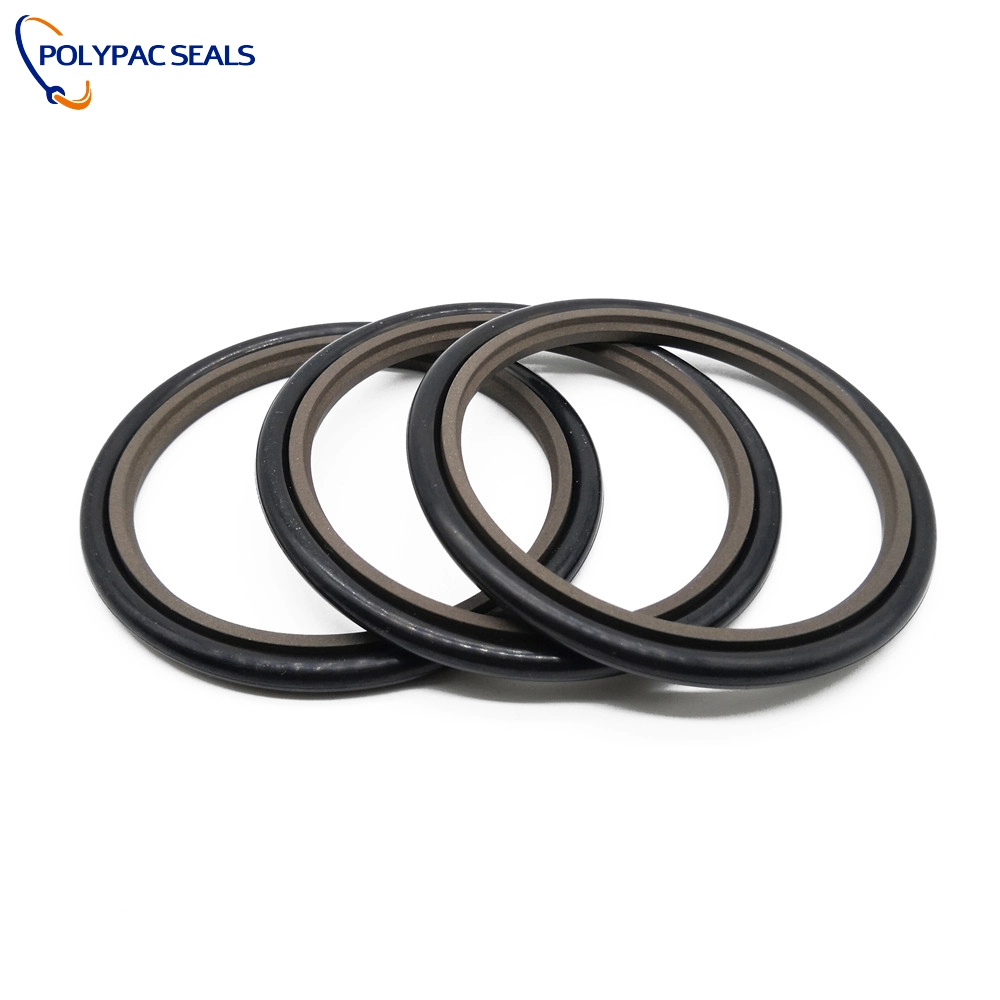
Common guide ring materials include filled PTFE (bronze, carbon, graphite, glass, MoS2), elastomers (NBR, FKM/ Viton, EPDM, silicone), and composite materials combining fabric, polymer, and metal backing. Material choice directly affects friction, abrasion resistance, compressibility, and compatibility with fluid media (hydraulic oil, fuels, process fluids). Guidance rings for heavy duty hydraulic cylinders often use filled PTFE or polymer composites for low friction and high wear resistance; softer elastomeric guide rings are used where damping or slight compliance is required.
Cost components: what drives OEM vs aftermarket prices
Direct material and manufacturing costs
Material selection is a principal cost driver. Filled PTFE compounds and specialty FFKM elastomers carry higher raw material cost than standard NBR or plain PTFE. Manufacturing processes—precision machining, molding, post‑processing (baking, sizing), and inspection—add to unit cost. OEM suppliers often invest in tighter dimensional tolerances and additional finishing steps, increasing per‑piece cost compared with generic aftermarket parts.
Quality assurance, traceability and regulatory overhead
OEM parts typically include documented material certificates, batch traceability, and stricter QA (e.g., dimensional control to tighter limits, surface roughness specs). This compliance and paperwork translates into higher cost but reduces risk for critical applications. If your installation is subject to standards or warranty constraints, that QA High Quality is often necessary. For context on quality standards for sealing components see ISO resources such as ISO 3601 (O-rings) and related sealing standards (ISO).
Supply chain, branding and warranty
OEM parts typically include warranty coverage tied to the OEM equipment warranty. Aftermarket parts often compete on price and availability but may not be covered by the equipment manufacturer. The overhead of maintaining certified supply chains, long‑term service agreements, and spare part forecasting adds to OEM pricing. Conversely, aftermarket manufacturers sell via broad channels and can offer lower price points and faster lead times.
Comparative analysis: cost, performance and lifecycle
Quantitative cost comparison (typical ranges)
Below I present typical cost ranges you can expect in the market. These are industry-observed ranges intended to be representative; exact prices vary by size, material, and region. Sources: industry parts catalogs, aftermarket sellers and service cost databases such as RepairPal and major parts distributors like RockAuto.
| Item | Typical OEM price (per ring / set) | Typical Aftermarket price (per ring / set) | Notes |
|---|---|---|---|
| Single guide ring (standard hydraulic sizes) | $20–$80 | $8–$45 | OEM includes certified material; aftermarket wide range based on compound |
| Piston ring set for industrial engine/hydraulic piston | $80–$400 | $40–$180 | OEM sets usually packaged with seals and documentation |
| Installed repair (parts + labor) | $300–$1,200 | $200–$900 | Labor varies by teardown complexity; major cost is downtime |
These ranges are consistent with public parts listings and industry repair estimates. Always request actual quotes from suppliers; large-bore custom guide rings will be priced differently and often higher than off-the-shelf ranges.
Lifecycle comparison: wear rates and replacement intervals
Performance and working life depend on material, surface finish of the cylinder bore, contamination control, and operating conditions (pressure, temperature, speed, and fluid). As a guideline:
- High-quality OEM filled PTFE guide rings in properly maintained systems: expected service life 3–10 years depending on duty cycle.
- Good aftermarket equivalents with correct material selection: service life often close to OEM in benign conditions but can be 10–30% shorter in harsh or marginal applications.
- Low-cost generic aftermarket rings or mismatched materials: risk of premature wear, increased seal failure, and potential cylinder scoring.
For in-depth tribological analysis see published reviews on piston ring friction and wear (example literature: ScienceDirect review on tribology of piston rings (ScienceDirect)).
Risk, warranty and total cost of ownership (TCO)
Failure modes tied to lower-cost rings
Common failures associated with substandard guide rings include accelerated abrasive wear, extrusion or deformation under high side loads, chemical incompatibility with fluids (leading to swelling or hardening), and insufficient guidance causing seal edge damage. Those failures propagate into increased leakage, higher friction (energy loss), and unscheduled downtime. If the core asset is under warranty, using non‑OEM parts may void coverage.
Quantifying TCO: why lowest purchase price can be most expensive
When calculating TCO, include not only the purchase price but also installation labor, downtime costs, risk of collateral damage (cylinder bore scoring requiring re-bore), and the probability-weighted cost of catastrophic failure. For example, an inexpensive $20 aftermarket ring that fails prematurely could trigger a $2,000+ repair if it damages the cylinder bore. I recommend a simple TCO formula for decisions:
TCO = Purchase price + Installation cost + (Downtime cost × Probability of failure) + Expected collateral repair cost
When aftermarket makes sense and when OEM is necessary
Choose aftermarket rings when:
- You require quick replacement low on the risk curve (non-critical equipment).
- You can verify material composition, dimensional accuracy and have acceptance testing (e.g., bench run or shop refurbishment).
- Cost containment outweighs marginal increases in longevity.
Choose OEM (or high‑grade custom) when:
- The equipment is critical to operations or covered by warranty.
- The operating environment is extreme (high pressure, high temperature, abrasive contamination) and requires proven compounds and traceable QA.
- Downtime and collateral repair costs are high relative to parts cost.
Practical selection process and my recommendations
Step-by-step selection checklist
- Define operating envelope: pressure, temperature, stroke speed, contamination level, and media.
- Identify required material properties: chemical resistance, friction coefficient, compressive strength.
- Request material datasheets and certificates: composition, shore hardness, tensile properties.
- Assess dimensional tolerances and surface finish compatibility with bore.
- Evaluate supplier QA: traceability, batch testing, and references for similar applications.
- Calculate TCO, including downtime scenarios, and decide whether to test aftermarket parts in non-critical systems first.
Testing and acceptance practices I use
Before committing to a large aftermarket purchase, I recommend: 1) bench testing for friction and wear under simulated loading; 2) a limited field trial; and 3) inspection of ring wear patterns after first 100–500 hours. Use a clear acceptance standard (e.g., maximum linear wear, change in leakage or friction) before approving full-scale use.
When custom solutions beat both OEM and generic aftermarket
In many industrial applications the best option is a custom guide ring optimized for your working conditions. Custom compounds (e.g., specific filled PTFE formulations) or hybrid constructions can achieve a better balance of wear life, friction, and cost. This is where specialist manufacturers provide the most value—delivering tailored sealing and guiding solutions rather than a one-size-fits-all aftermarket product.
Polypac: an example partner for custom, high-quality guide rings
Polypac is a scientific and technical hydraulic seal manufacturer and oil seal supplier specializing in seal production, sealing material development, and customized sealing solutions for special working conditions. Polypac's custom rubber ring and O-ring factory covers an area of more than 10,000 square meters, with a factory space of 8,000 square meters. Our production and testing equipment are among the most advanced in the industry. As one of the largest companies in China dedicated to the production and development of seals, we maintain long-term communication and cooperation with numerous universities and research institutions both domestically and internationally.
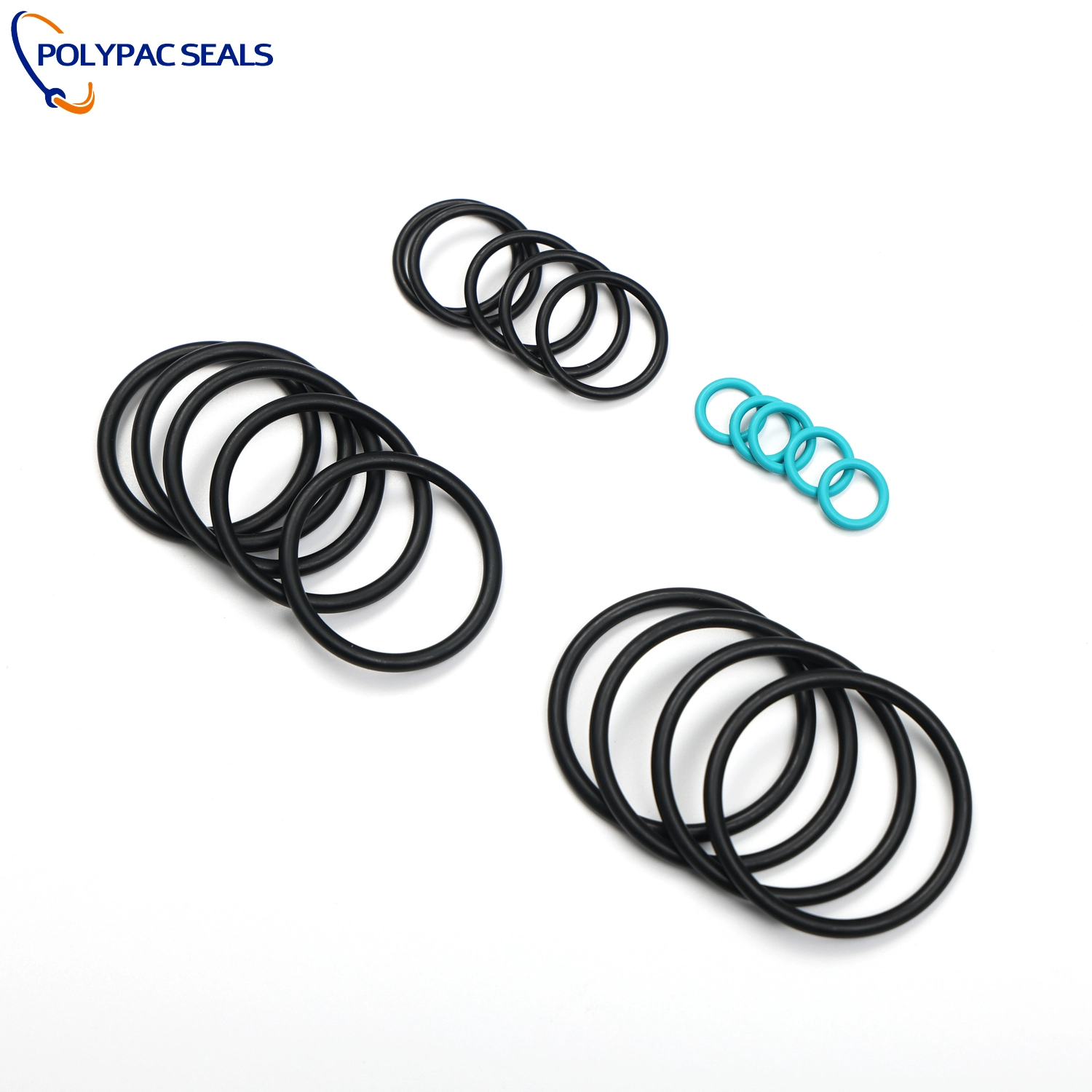
Founded in 2008, Polypac began by manufacturing filled PTFE seals, including bronze-filled PTFE, carbon-filled PTFE, graphite PTFE, MoS2-filled PTFE, and glass-filled PTFE. Today, we have expanded our product line to include O-rings made from various materials such as NBR, FKM, silicone, EPDM, and FFKM. Polypac's main products include O-Rings, Rod Seals, Piston Seals, End Face Spring Seals, Scraper Seals, Rotary Seals, Back-up Rings, and Dust Rings.
Why consider Polypac for piston guide rings:
- Technical depth: long history in filled PTFE and elastomer development for sealing and guiding applications.
- Manufacturing scale and advanced testing equipment to ensure consistent quality and traceability.
- Custom capability: if off-the-shelf OEM or aftermarket options are unsuitable, Polypac can develop compounds and geometries tuned to your operating envelope.
For contact or to request samples and technical datasheets, please contact Polypac's sales and engineering team for a consultation and product quote.
FAQ
1. What is the main difference between an OEM piston guide ring and an aftermarket ring?
OEM rings are typically designed and manufactured to the equipment maker's specifications with documented materials, tighter tolerances, and warranty support. Aftermarket rings vary widely in quality and pricing; some are equivalent to OEM, others are lower-cost alternatives with less documentation.
2. Can using aftermarket guide rings void my equipment warranty?
Yes—many equipment manufacturers specify OEM parts as a condition of the warranty. Always check your warranty terms before installing non‑OEM parts.
3. How do I verify the quality of an aftermarket piston guide ring?
Request material safety data sheets and material composition certificates, inspect dimensional tolerances, perform bench or shop acceptance tests, and, if possible, obtain references from other customers with similar duty cycles.
4. Are custom guide rings more expensive than OEM or aftermarket?
Initial unit price for custom rings can be higher due to development and tooling; however, when you account for extended service life, reduced downtime, and fewer collateral repairs, custom solutions often reduce total cost of ownership for demanding applications.
5. How often should piston guide rings be inspected or replaced?
Inspection intervals depend on the duty cycle and environment. For critical equipment I recommend an initial inspection after the first 100–500 hours of reassembly, then establish a predictive interval based on observed wear—commonly annual for many hydraulic systems or sooner under heavy contamination or high‑temperature service.
6. Where can I find standards and technical guidance for seal selection?
Useful references include ISO standards on sealing elements (for example ISO 3601 for O-rings) and technical literature on tribology and sealing design; also manufacturer technical datasheets and independent tribology reviews such as articles on ScienceDirect.
Contact us to discuss specific piston guide ring requirements, request a quote, or obtain sample parts for evaluation. View Polypac's product catalog and contact information to start a technical consultation and to see O-Rings, Rod Seals, Piston Seals, End Face Spring Seals, Scraper Seals, Rotary Seals, Back-up Rings, and Dust Rings.

Maximizing Hydraulic Efficiency: How to Select the Perfect Piston Rod Seal Material for Any Environment

Back-Up Ring Seal vs. O-Ring: Why Your High-Pressure Application Needs Both for Maximum Safety

Scraper Ring Seals vs. Wiper Seals: The Definitive Comparison for Contamination Control

Metal vs. Composite: Which Hydraulic Guide Ring Increases Cylinder Life by 40%?

Piston Lip Seals vs. U-Cups: Choosing the Right Hydraulic Solution for High-Pressure Systems
Products
What is the difference between NBR and FKM materials?
How important is surface finish on the metal parts that contact the seal?
How can I prevent seal damage during installation?
When should I use a spring-energized seal instead of a standard elastomeric seal?
How do I choose the right material for my sealing application?
Stay Updated with Industry Insights
Subscribe to our articles and receive the latest news, expert guidance, and technical updates directly in your E-mail.
Rest assured that your privacy is important to us, and all information provided will be handled with the utmost confidentiality.
Polypac is a trusted global supplier of high-performance sealing solutions, providing OEM & ODM services for industries worldwide.
E-mail:
sales2@dmsseals.com
Phone/WhatsApp:
© 2025 Polypac Seals. All Rights Reserved.
dms
DMS
DMS