












Performance Testing and Quality Standards for Piston Seals
Summary for and search: Hydraulic piston seals are critical components in hydraulic cylinders that control leakage, friction and service life across a wide range of pressures, temperatures and media. Performance testing and compliance with quality standards—covering material specifications (NBR, FKM, PTFE), dynamic testing, extrusion resistance, and dimensional tolerances—are essential to ensure reliability in construction, mobile hydraulics, industrial presses and aerospace systems. This guide outlines the test methods, acceptance criteria, failure mechanisms and standards you should use to select, validate and procure piston seals with verifiable performance.
Fundamentals of sealing in hydraulic systems
What a hydraulic piston seal must achieve
A hydraulic piston seal must: prevent fluid bypass across the piston, minimize friction and stick-slip, resist extrusion under high pressure, tolerate temperature cycles and chemical exposure, and provide predictable wear life. In practice this means a seal design (profile, reinforcement, spring) and material selection that balance compression set, hardness, and tribological behavior. The term hydraulic piston seal covers single-acting and double-acting designs and often works together with rod seals, wipers and backup rings in a sealing system.
Key performance metrics
Primary measurable metrics for piston seals include leakage rate (ml/min or drops/min), friction torque/force, wear rate (volume loss or cross-section reduction per million cycles), extrusion gap tolerance (mm) and compression set (% after specified aging). Test results should be recorded under controlled pressure, temperature and stroke speed to be comparable between suppliers and specifications.
Relevant reference documents and terminology
Use authoritative sources to standardize terminology and test expectations: ISO fluid power vocabulary and component standards help align requirements (see ISO resources ISO catalog). For common seal types and basic concepts, see the mechanical seal overview on Wikipedia (Seal (mechanical)) and O-ring characteristics (O-ring). Manufacturer technical libraries (e.g., Trelleborg or Parker) provide application notes and typical material data sheets (Trelleborg Knowledge Center).
Performance testing methods for piston seals
Bench testing: standardized dynamic and static tests
Bench tests reproduce operating conditions in a controlled environment to measure leakage and friction. Typical bench tests include:
- Static pressure hold: pressurize the cylinder and measure leakage across the piston over time to detect permeation or sealing lip deformation.
- Dynamic reciprocating test: run the piston at specified frequency, stroke and pressure to measure steady-state leakage, friction force and onset of stick-slip.
- Endurance (run-in) cycle: extended cycling (often millions of cycles) to measure wear rate and to capture long-term behavior such as compression set and material embrittlement.
Test parameters should be specified in procurement documents: pressure (bar/MPa), stroke length (mm), speed (mm/s), fluid type (mineral oil, phosphate ester, water-glycol), temperature (°C) and rod/piston surface finish (Ra). Bench results are the primary acceptance evidence for a seal design.
Accelerated aging and compatibility tests
Thermal aging, ozone and chemical compatibility tests evaluate long-term integrity. Examples:
- Heat aging per ASTM D573 or equivalent to measure hardness change and compression set after exposure to elevated temperature.
- Fluid immersion tests to detect swelling, softening or extraction of additives when exposed to hydraulic fluids or contaminant chemicals.
These tests help predict in-service changes in dimensions and mechanical properties that affect sealing performance.
Measuring extrusion and pressure spikes
Extrusion resistance is critical where clearances are large or pressures spike. Test methods use a backup ring arrangement or controlled extrusion gap to assess whether a seal will flow into the gap under peak pressure. In some applications, incremental pressure spike tests (short-duration high-pressure pulses) are used to verify that sealing lips and energizers maintain function during hydraulic shocks.
Quality standards, materials and acceptance criteria
Standards and specifications to reference
Standards provide consistent acceptance criteria and test procedures. Useful references include:
- ISO standards for hydraulic components and O-rings (see ISO 3601 — Fluid systems — O-rings).
- ASTM material standards and test methods for elastomers (e.g., ASTM D2000 classification of rubber materials).
- Industry manufacturer handbooks and technical bulletins (Parker, Trelleborg, SKF) for application-specific test recommendations and material data.
Common sealing materials and properties
Material choice is often decisive for seal life. Typical materials and approximate usable temperature ranges:
| Material | Typical temp. range (°C) | Key strengths | Weaknesses |
|---|---|---|---|
| NBR (Nitrile) | -40 to +120 | Good oil resistance, low cost | Poor high-temp and ozone resistance |
| FKM (Viton) | -20 to +200 | Excellent heat and chemical resistance | Higher cost, lower elasticity at low temp |
| Silicone | -60 to +180 | Excellent low-temp flexibility | Poor tear resistance, limited fuel resistance |
| PTFE (Virgin / Filled) | -200 to +260 | Low friction, wide temp. range, chemical inert | High creep, needs spring or energizer |
Sources: manufacturer datasheets and technical libraries (e.g., Trelleborg knowledge center), general material handbooks. Use material-specific test data when specifying acceptance criteria.
Acceptance criteria and sampling plans
Define acceptance by measurable thresholds: maximum allowable leakage rate at X bar and Y temperature, maximum wear after Z cycles, compression set specification after thermal aging, and dimensional tolerances (ID/OD/thickness). Use statistical sampling (e.g., AQL plans) for production lots and 100% inspection for critical custom seals. Document testing frequency and re-test triggers (e.g., if lot fails or material batch changes).
Design, failure analysis and practical procurement guidance
Common failure modes and root causes
Frequent failure modes for hydraulic piston seals include:
- Extrusion and lip failure due to excessive pressure or insufficient backup support.
- Wear from abrasive contaminants or poor surface finish.
- Chemical degradation from incompatible fluids or additives.
- Thermal aging and hardening leading to leakage.
- Assembly damage (nicks, cuts) and installation errors.
Root cause analysis should combine visual inspection, material testing (FTIR / hardness / tensile), and operating-history review (pressure spikes, contaminants, temperature cycles).
Design and surface engineering best practices
To maximize piston seal life:
- Specify surface finish and hardness for mating parts (typical piston surface Ra < 0.4 μm and hardness > 40 HRC for some bearings).
- Provide backup rings for large extrusion gaps and for high-pressure applications.
- Use coated or filled PTFE for low friction and poor lubrication environments; pair with elastomeric energizers to maintain contact pressure.
- Design geometries to allow maintenance and inspection, and select seals tolerant to expected contamination levels.
Procurement checklist
When buying hydraulic piston seals, require:
- Material certificates (raw material composition and batch traceability).
- Test reports showing leakage, friction and endurance performance under specified conditions.
- Dimensional drawings with tolerances and inspection reports.
- Quality system evidence (e.g., ISO 9001 certification) and supplier R&D/test capabilities.
Polypac: manufacturer capabilities, product range and why it matters
Polypac overview and technical strengths
Polypac is a scientific and technical hydraulic seal manufacturer and oil seal supplier specializing in seal production, sealing material development, and customized sealing solutions for special working conditions. Founded in 2008, Polypac began with filled PTFE seals and has expanded into a broad product range and multi-material capability. Polypac's production and testing facilities are among the most advanced in the industry, supporting both standard and highly customized hydraulic piston seal solutions.
Factory scale, equipment and R&D partnerships
Polypac's custom rubber ring and O-ring factory covers an area of more than 10,000 square meters, with a factory space of 8,000 square meters. Production and testing equipment include modern dynamic test rigs, extrusion-capture fixtures and automated molding and inspection stations. As one of China's larger dedicated seal manufacturers, Polypac maintains long-term communication and cooperation with universities and research institutions both domestically and internationally—enabling material development (e.g., specialty PTFE blends and FFKM compounds) and application-specific testing protocols.
Product portfolio and application focus
Polypac's product line spans custom O-rings and rubber rings and a full set of hydraulic seals: O-Rings, Rod Seals, Piston Seals, End Face Spring Seals, Scraper Seals, Rotary Seals, Back-up Rings, Dust Ring. The company offers filled PTFE variants (bronze-filled, carbon-filled, graphite PTFE, MoS₂-filled, glass-filled PTFE) and elastomers including NBR, FKM, silicone, EPDM and FFKM to match demanding hydraulic media and temperatures.
Why choose a technical partner like Polypac
Key differentiators: integrated material development for optimized friction and wear, well-instrumented test labs for validated endurance and leakage data, and custom molding capability enabling tight tolerances for critical hydraulic piston seal applications. For buyers, this means faster validation cycles, traceable material certificates and the ability to develop seals that meet specific extrusion-gap, pressure and temperature challenges.
Testing comparison: common methods and when to use them
| Test Method | Primary Purpose | Typical Duration | When to require in spec |
|---|---|---|---|
| Static pressure hold | Leakage under steady pressure | Hours to days | All critical hydraulic piston seals |
| Dynamic reciprocating endurance | Wear, friction, stick-slip | Thousands to millions of cycles | High-cycle or safety-critical cylinders |
| Thermal aging & chemical immersion | Long-term material stability | Days to weeks | High-temp or aggressive-fluid applications |
| Extrusion gap test | Resistance to extrusion under spikes | Short (pulses) | High-pressure or large-clearance systems |
FAQ — Frequently asked questions
1. How do I specify a leakage requirement for a hydraulic piston seal?
Define leakage as a volumetric rate (e.g., ml/min) at a given pressure, temperature and stroke speed. Include measurement duration and fluid type. For example: Maximum leakage 0.5 ml/min at 250 bar, 50°C, mineral oil, 10 mm/s stroke, measured after 1 hour of stabilization.
2. When should I use PTFE vs. elastomer piston seals?
Use PTFE or filled PTFE when low friction, high temperature, or aggressive fluid resistance is required; pair with an energizer for adequate contact. Elastomers (NBR, FKM) are suitable for typical hydraulic oil applications where elasticity and sealing under low contact stress are important. Consider hybrid solutions (PTFE sealing face + elastomer energizer) for combined benefits.
3. What causes seal extrusion and how can I prevent it?
Extrusion occurs when soft sealing material flows into the gap between mating components under high pressure. Prevent it with backup rings, reduced extrusion gap, stiffer material or filled PTFE compounds, and design features that limit gap exposure during pressure spikes.
4. How often should I require endurance testing from a supplier?
For standard applications, suppliers should provide representative dynamic test results (e.g., 100k–500k cycles). For critical or high-cycle applications, require endurance testing to the expected lifetime cycles or an agreed accelerated protocol. Always request test conditions and raw data for traceability.
5. What documentation should accompany a seal delivery?
Include material certificates (composition, batch), dimensional inspection reports, test reports for specified acceptance tests (leakage, endurance, aging), and traceability information. If available, include installation instructions and recommended lubrication and surface-finish guidelines.
6. Can seals be repaired in the field?
Seals should not be repaired; they are replaced. Reuse risks include compromised material properties and hidden damage. For reversible systems, keep spares with matching batch numbers and check storage/aging conditions to avoid premature failures.
If you have more specific application parameters (pressure, cylinder bore, fluid type, temperature range, expected cycles), contact our technical team for an application review and a tailored test protocol.
Contact & product inquiry — Polypac
For custom hydraulic piston seals, O-rings and sealing solutions, contact Polypac for technical consultation, sample testing and quotation. Polypac offers testing reports, material certificates and customized manufacturing for special working conditions. Visit our product pages or request a technical datasheet to start a project.
Relevant external resources and standards: ISO (general standards) https://www.iso.org/standards., O-ring basics on Wikipedia https://en.wikipedia.org/wiki/O-ring, mechanical seals overview https://en.wikipedia.org/wiki/Seal_(mechanical), Trelleborg sealing knowledge https://www.tss.trelleborg.com/en/knowledge-center.

High-Performance Pneumatic Piston Seals: How to Achieve Zero-Leakage Efficiency

PTFE vs. Composite: Choosing the Best Piston Guide Ring Material for High-Pressure Systems

Mastering O-Ring Gland Design: The Complete Guide for Perfect Sealing Performance

Advanced Back-Up Ring Materials: Beyond PTFE for Extreme Temperature Environments

PTFE vs. Urethane Scrapers: Which Material Truly Prevents Contamination?
Products
Why did my O-ring fail prematurely?
What is the difference between a static seal and a dynamic seal?
How do I choose the right material for my sealing application?
How important is surface finish on the metal parts that contact the seal?
Can I reuse a seal?
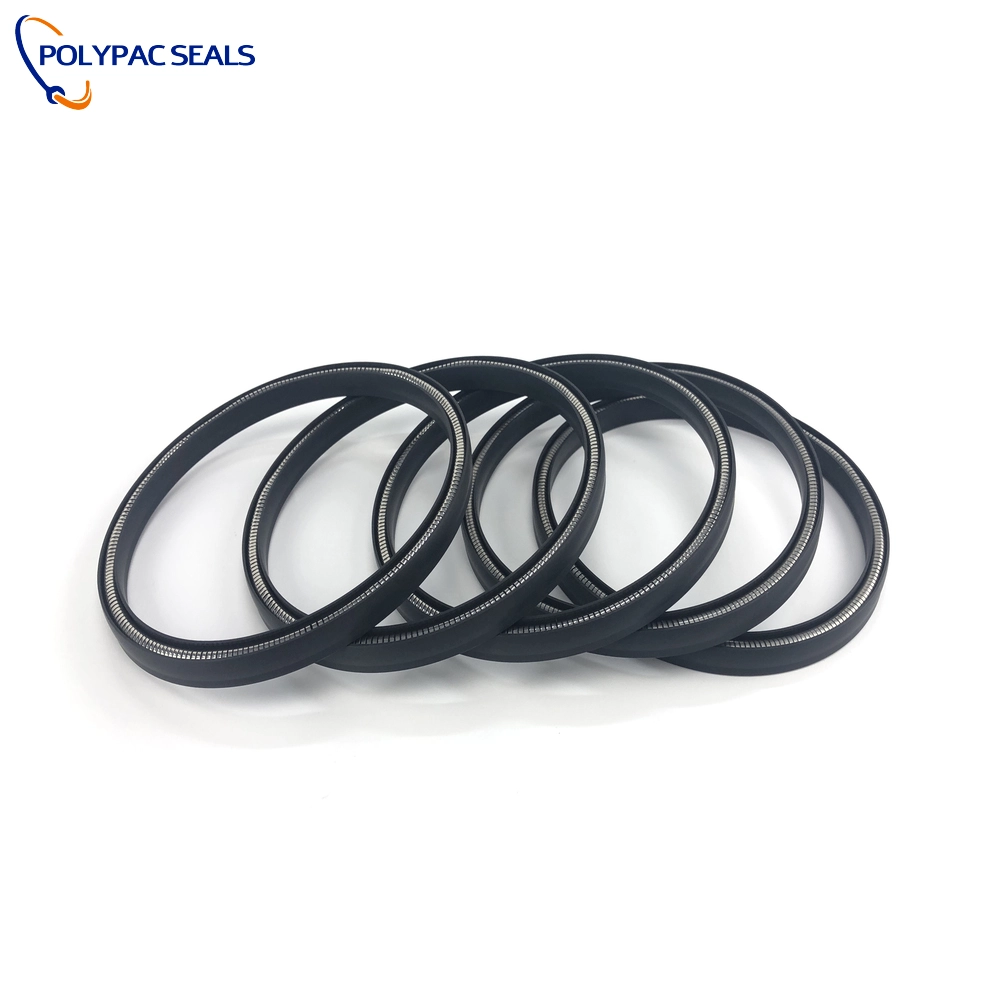
A reliable FKS seal for hydraulic and pneumatic pistons.
Stay Updated with Industry Insights
Subscribe to our articles and receive the latest news, expert guidance, and technical updates directly in your E-mail.
Rest assured that your privacy is important to us, and all information provided will be handled with the utmost confidentiality.
Polypac is a trusted global supplier of high-performance sealing solutions, providing OEM & ODM services for industries worldwide.
E-mail:
Phone/WhatsApp:
© 2025 Polypac Seals. All Rights Reserved.
dms
DMS
DMS