











Piston Guide Ring Materials: PTFE vs Bronze vs Composite
In my work with hydraulic systems and sealing technology, selecting the correct piston guide ring material is one of the highest-impact decisions for long-term performance and reliability. Piston guide rings (also called guide bands or wear rings) control piston radial movement, protect cylinder walls, reduce metal-to-metal contact, and affect friction and leakage. In this article I compare PTFE (including filled grades), bronze, and modern composite materials. I discuss their tribological properties, thermal behavior, lubrication strategies, wear mechanisms, and application guidance. I back recommendations with referenced material data and standards so you can make a verifiable choice for your system.
Understanding piston guide rings and their functional requirements
What a piston guide ring must deliver
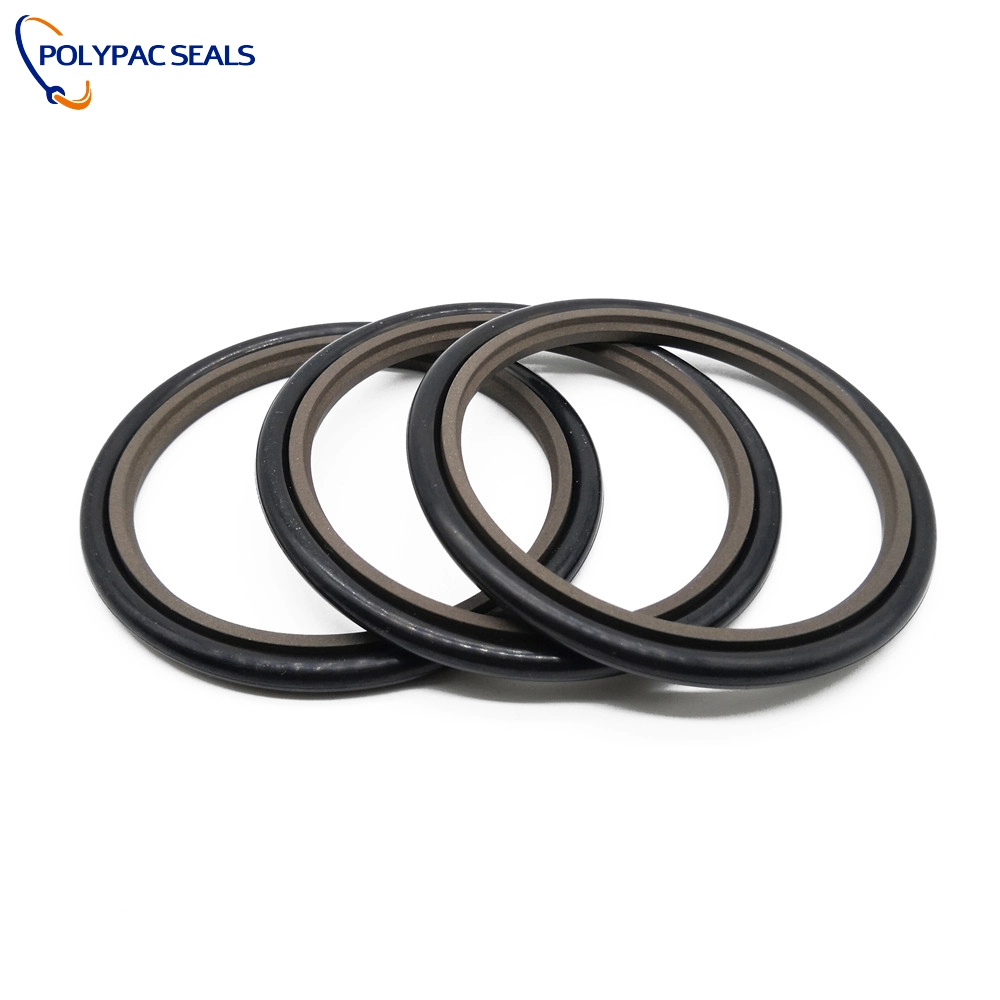
A piston guide ring’s core functions are to: maintain piston concentricity, minimize cross-port leakage, prevent scoring of cylinder bores, and manage friction and wear. Achieving these goals requires balancing low friction (for efficiency), sufficient stiffness (to prevent tilt), good wear resistance (for service life), and chemical and thermal compatibility with fluids and operating temperatures. I always start by listing the application's operating pressure, temperature, speed (surface velocity), lubricity of the fluid, and contamination level before recommending a material.
Key performance metrics I evaluate
When I evaluate candidate materials I focus on: coefficient of friction, abrasive and adhesive wear behavior, compressive strength and creep, thermal conductivity and operating temperature range, compatibility with hydraulic fluids, and manufacturability/price. These factors determine both performance and lifecycle cost.
Standards and data sources I rely on
For material and dimensional guidance I consult recognized standards and databases. For example, general material properties for PTFE and composites are summarized on Wikipedia (PTFE) and for composite materials (composites). For bronze alloys and properties I often use technical sheets such as MatWeb (MatWeb). For seal standards and nomenclature, ISO documentation like ISO 3601 (O-rings) informs dimensional and testing expectations (ISO 3601).
Material comparisons: PTFE, Bronze, and Composite guide rings
PTFE (unfilled and filled): strengths and limits
PTFE is prized for its exceptionally low friction coefficient and chemical inertness. Filled grades (bronze-filled, carbon-filled, glass-filled, MoS₂-filled) increase wear resistance and reduce creep. PTFE performs well across -200°C to +260°C (service limit ~260°C for virgin PTFE) and resists most hydraulic fluids. However, virgin PTFE has low compressive strength and can cold-flow (creep) under sustained load; filled PTFE mitigates this.
Bronze guide rings: performance traits
Bronze (typically phosphor bronze or bearing bronze alloys) offers excellent compressive strength, dimensional stability, and high load capacity. Bronze guide rings are forgiving when used with lubricated systems and have high wear resistance against hard cylinder bores. Their coefficient of friction is higher than PTFE, and they require effective lubrication to avoid scuffing. Bronze also has higher thermal conductivity, aiding heat dissipation.
Composite guide rings: versatility and design
Composite guide rings (engineered polymer + fabric or fiber reinforcements) are designed to combine the low friction of polymers with the structural stability of reinforcements. Typical constructions include PTFE fabric over polymer backing or polymer matrix composites. They can be optimized for low friction, good wear resistance, and compatibility with non-lubricated or marginally lubricated systems. Composites vary widely by formulation, so selection must be based on tested performance data.
Quantitative comparison and selection guidance
Property comparison table
Below I summarize comparable ranges based on material datasheets, MatWeb, and published tribology literature. Values are representative ranges; always confirm with supplier datasheets for your specific grade.
| Property | PTFE (filled) | Bronze | Composite (PTFE+fabric/backing) |
|---|---|---|---|
| Typical coefficient of friction (dry) | 0.05–0.15 (PTFE) | 0.15–0.4 (lubricated much lower) | 0.06–0.20 (grade dependent) |
| Wear resistance (relative) | Moderate to good (filled grades much better) | High (best under good lubrication) | Good to very good (optimized designs) |
| Temperature range | -200°C to +260°C | -50°C to +300°C+ | -40°C to +200°C (varies by polymer) |
| Hydraulic fluid compatibility | Excellent | Excellent (metal-metal, compatible) | Excellent to good (check matrix compatibility) |
| Lubrication requirement | Low (self-lubricating) | Requires lubrication for best life | Designed for low-lubrication or lubricated systems |
| Typical application strengths | Low friction, chemical resistance, tight clearances | Heavy loads, abrasive conditions, high temp | Balanced performance, customized environments |
How I choose by application
To pick a material I map the application parameters to material strengths:
- Low-speed, low-pressure, or non-lubricating systems: filled PTFE or composite is often best for low friction and minimal wear.
- High-load or contaminated environments with good lubrication: bronze guide rings excel due to their structural robustness.
- Applications requiring a balance of low friction and strength (e.g., medium loads, limited lubrication): engineered composites typically offer the best trade-off.
Failure modes, testing, and practical recommendations
Common failure mechanisms I observe
Wear, thermal degradation, stick-slip, and creep are common failure modes. PTFE can exhibit cold flow under continuous compressive stress; bronze can gall or scuff without lubrication; composites can delaminate or abrade if the fabric wears through. Contamination (abrasive particles) accelerates wear for all materials, making filtration and rod scrapers important.
Testing and validation I recommend
Before production implementation, I recommend: bench tribometer testing with representative pressures and speeds, full-scale cylinder endurance tests, and compatibility testing with the actual hydraulic fluid and any additives. Where standardized tests exist, reference them—for example, ISO test procedures for hydraulic components and materials. For material selection, request supplier datasheets and test reports showing wear rates (mm³/N·m or mg loss) under defined conditions.
Design details that influence guide ring performance
Design choices such as radial clearance, ring width, groove geometry, and backup features significantly affect friction and life. For example, too tight a radial clearance increases friction and deformation in PTFE; too loose a clearance increases tilt and leakage. Back-up rings or composite backing layers can control deformation. I always model radial clearance against operating temperature and expected thermal expansion of both piston and guide ring materials.
Polypac capabilities and how I typically partner with suppliers
Why supplier capability matters
Material performance depends on manufacturing quality, tight tolerances, and consistent compound formulation. I therefore prefer to work with suppliers that have in-house material development, rigorous QC, and testing capabilities. This reduces batch-to-batch variability and speeds up custom development for special working conditions.
About Polypac and how they fit advanced guide-ring projects
Polypac is a scientific and technical hydraulic seal manufacturer and oil seal supplier specializing in seal production, sealing material development, and customized sealing solutions for special working conditions. Polypac's custom rubber ring and O-ring factory covers an area of more than 10,000 square meters, with a factory space of 8,000 square meters. Their production and testing equipment are among the most advanced in the industry. As one of the largest companies in China dedicated to the production and development of seals, Polypac maintains long-term communication and cooperation with numerous universities and research institutions both domestically and internationally.
Founded in 2008, Polypac began by manufacturing filled PTFE seals, including bronze-filled PTFE, carbon-filled PTFE, graphite PTFE, MoS₂-filled PTFE, and glass-filled PTFE. Today, they have expanded their product line to include O-rings made from various materials such as NBR, FKM, silicone, EPDM, and FFKM. Their main products relevant to piston guide ring projects include O-Rings, Rod Seals, Piston Seals, End Face Spring Seals, Scraper Seals, Rotary Seals, Back-up Rings, and Dust Rings.
How I use Polypac in projects
When I need custom compounds, filled PTFE grades, or composite guide ring assemblies, I leverage Polypac’s R&D and manufacturing capacity to develop tailored solutions. Their combination of material science, test equipment, and university collaborations accelerates development cycles and provides traceable test data—critical when validating guide ring performance under atypical fluids or extreme temperatures.
FAQs
1. Which guide ring material gives the lowest friction?
Filled PTFE and PTFE-based composites typically offer the lowest coefficient of friction. For the absolute lowest friction in many environments, filled PTFE grades (e.g., bronze-filled, MoS₂-filled) are preferred because they retain PTFE’s low friction while improving wear resistance.
2. Are bronze guide rings suitable for non-lubricated systems?
Bronze performs best in lubricated systems. In non-lubricated or marginally lubricated systems, bronze is prone to scuffing and higher wear. For those cases, PTFE or engineered composites are usually better choices.
3. How does temperature affect material choice?
PTFE handles a wide temperature range up to about 260°C; bronze can tolerate higher temperatures but needs appropriate lubricants; composites vary by polymer matrix—many perform well up to 150–200°C. Consider both short-term peak temperature and continuous operating temperature when selecting a material.
4. How important is radial clearance for guide ring life?
Very important. Too little clearance increases friction and deformation (especially for PTFE), while too much clearance causes piston tilt and increased leakage. Clearance must be chosen considering material deformation (creep), thermal expansion, and manufacturing tolerances.
5. Can I replace a bronze guide ring with PTFE to reduce friction?
Often yes, but only after evaluating load, speed, lubrication, and contamination. If the system carries heavy side loads or abrasive contaminants, PTFE may wear prematurely unless a filled grade or composite design is used. I recommend bench testing representative cycles before field retrofit.
Contact and product inquiry
If you’d like assistance selecting guide ring materials, running comparative testing, or sourcing custom-filled PTFE and composite guide rings, I recommend contacting Polypac for detailed product data and prototypes. You can reach out to discuss application parameters, request material datasheets, or arrange pilot testing. Polypac’s product range (O-Rings, Rod Seals, Piston Seals, End Face Spring Seals, Scraper Seals, Rotary Seals, Back-up Rings, Dust Ring) and custom development capabilities make them a practical partner for both standard and special working conditions.
Contact us to review your application and request samples or a quotation—early material validation reduces risk and avoids costly field failures.

Scraper Ring Seals vs. Wiper Seals: The Definitive Comparison for Contamination Control

Metal vs. Composite: Which Hydraulic Guide Ring Increases Cylinder Life by 40%?

Piston Lip Seals vs. U-Cups: Choosing the Right Hydraulic Solution for High-Pressure Systems

How to Choose the Best Hydraulic Piston Seal Kit for High-Pressure Applications

Hydraulic Cylinder Seals Kits: 5 High-Tech Materials That Double Your Maintenance Interval
Products
What is the difference between NBR and FKM materials?
What is the purpose of the metal spring in a rotary shaft seal?
What is the difference between a static seal and a dynamic seal?
How do I choose the right material for my sealing application?
When should I use a spring-energized seal instead of a standard elastomeric seal?
Stay Updated with Industry Insights
Subscribe to our articles and receive the latest news, expert guidance, and technical updates directly in your E-mail.
Rest assured that your privacy is important to us, and all information provided will be handled with the utmost confidentiality.

Polypac is a trusted global supplier of high-performance sealing solutions, providing OEM & ODM services for industries worldwide.
E-mail:
sales2@dmsseals.com
Phone/WhatsApp:
© 2025 Polypac Seals. All Rights Reserved.
dms
DMS
DMS