











Piston Guide Ring Materials: Choosing PTFE, Bronze, or Composite
I write from years of hands-on experience in seal engineering and hydraulic systems design. Choosing the correct piston guide ring material is one of the most consequential decisions for cylinder life, efficiency, and maintenance schedule. In this article I summarize how PTFE, bronze, and composite guide rings behave in real working conditions, how to weigh performance vs. cost, and how to translate operating data (pressure, speed, media, misalignment, temperature) into a confident material selection. I reference industry standards and accessible technical sources to make the conclusions verifiable and actionable.
Understanding guide ring function and common failure modes
What piston guide rings actually do
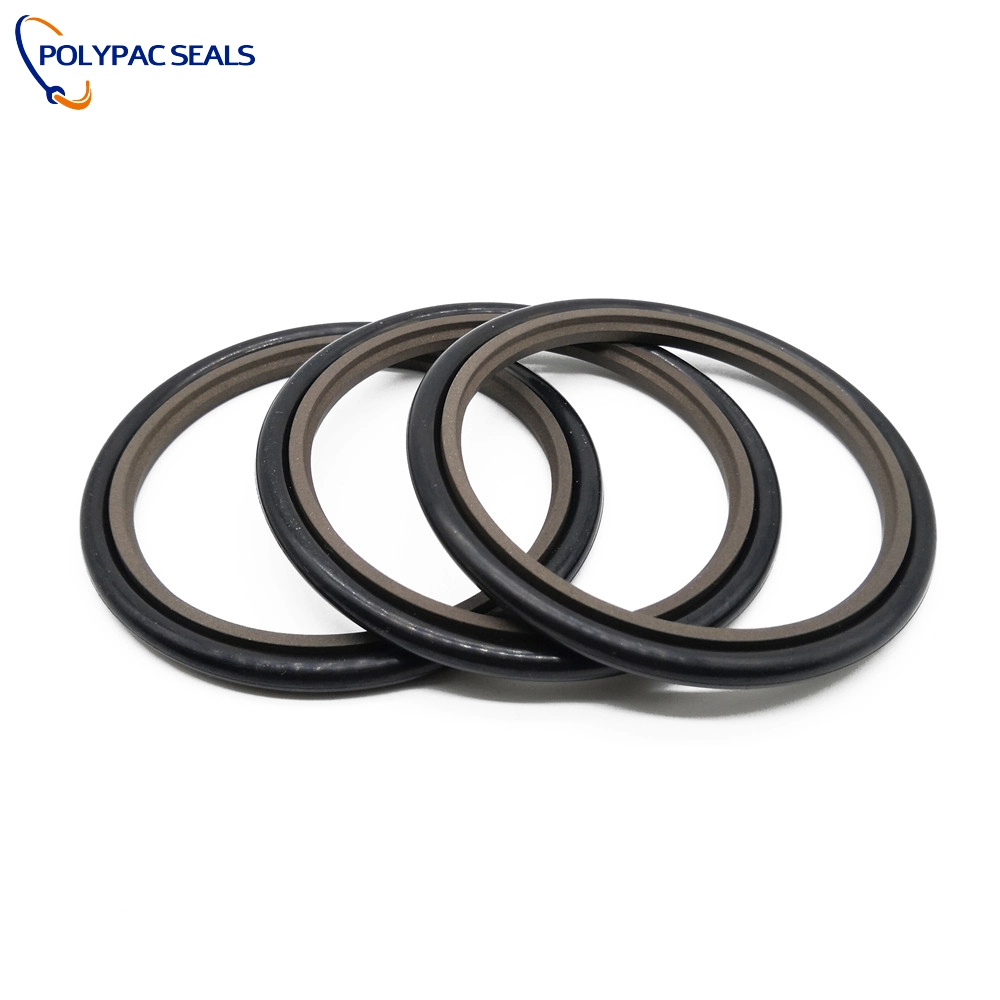
Guide rings (also called wear rings or guide bushings) stabilize the piston and rod, control radial clearances, absorb side loads, and protect softer seals (piston seals, rod seals) from extrusion and wear. Unlike primary sealing elements, guide rings aim to provide low friction guidance and distribute side loads over a larger area. Inaccurate selection or installation increases leakage, noise, and wear, and can lead to catastrophic seal failure.
Common mechanisms of failure
Understanding failure mechanisms — abrasive wear, adhesive wear, thermal degradation, chemical attack, extrusion, and fretting — is essential. For example, abrasive contaminants will dramatically shorten PTFE life if particles are hard and unfiltered; bronze may gall in boundary lubrication zones; composites can delaminate if manufacturing is poor. I always start material selection by mapping the likely failure modes under expected contaminants, speed, pressure, and misalignment.
Standards and testing to reference
When I assess materials I correlate lab test data with field evidence and standards. Relevant references include ISO standards for hydraulic components and seals (see ISO 3601 for O-rings and ISO technical reports on hydraulic systems) and material datasheets. For general material properties, I use authoritative sources such as Wikipedia's overview of PTFE and bronze as initial references and then confirm with manufacturer datasheets and tribology literature (PTFE, Bronze, Hydraulic cylinder, ISO 3601).
Material options: PTFE, Bronze, and Composite — properties and trade-offs
PTFE (polytetrafluoroethylene) — benefits and limits
PTFE is prized for its exceptionally low coefficient of friction, chemical inertness, and wide temperature range (typically -200°C to +260°C for virgin PTFE). Filled PTFE (bronze-filled, carbon-filled, graphite-filled, MoS₂-filled, glass-filled) increases wear resistance and dimensional stability. Filled PTFE guide rings are widely used in hydraulic cylinders that require low running friction and long-lasting performance with minimal lubrication. But PTFE's creep (cold flow) and lower elastic modulus necessitate careful groove and extrusion gap design, and under abrasive contamination, pure PTFE can wear quickly. See PTFE overview (Wikipedia: PTFE).
Bronze — metal guide rings with strengths and caveats
Bronze guide rings (typically phosphor bronze or similar alloys) provide high load capacity, good thermal conductivity, and dimensional rigidity. Metal guide rings resist extrusion and handle misalignment and shock loads better than virgin PTFE. However, bronze has higher sliding friction against steel and often requires lubrication — either system lubrication via hydraulic fluid or surface treatments/coatings. Bronze can gall or seize if boundary lubrication fails. Bronze's material properties are documented in metallurgy references (Wikipedia: Bronze).
Composite guide rings — engineered compromises
Composite guide rings encompass a broad category: PTFE matrix reinforced with fibers or fillers, polymer-graphite blends, and layered materials like PTFE backing bonded to rigid substrates. Composites aim to combine low friction, good wear resistance, and higher load capacity. They are often customized to the application: glass-filled PTFE for dimensional stability, MoS₂-filled PTFE for boundary lubrication performance, or fabric-reinforced thermoplastics for thermal stability. Composite manufacturing quality varies widely; I rely on supplier test data and independent lab verification when specifying composites for demanding service.
Quick comparison table
| Property | PTFE (virgin/filled) | Bronze (phosphor/bronze alloys) | Composite (PTFE-filled / polymer blends) |
|---|---|---|---|
| Typical operating temp | -200°C to +260°C (filled variants similar) | -50°C to +300°C depending on alloy | -40°C to +200°C (varies with matrix) |
| Coefficient of friction vs steel | ~0.05–0.2 (very low) | ~0.2–0.6 (higher) | ~0.08–0.3 (engineered) |
| Wear resistance | Good (filled > virgin), susceptible to abrasive particles | Excellent abrasion resistance, needs lubrication | High if well designed and manufactured |
| Lubrication requirement | Often self-lubricating (system oil still beneficial) | Requires good system lubrication or coatings | Depends—many are self-lubricating |
| Extrusion resistance | Lower—requires anti-extrusion backup rings at high pressure | High—metal resists extrusion | Good—design dependent |
| Cost (relative) | Medium | Low–Medium (material low, machining cost variable) | Medium–High (custom composites costlier) |
Data sources: material overviews and tribology references such as PTFE and general metallurgy references on bronze. For design guidance and standards consult ISO reports and manufacturer's technical bulletins (ISO 3601).
How to select the right material for your piston guide ring
Step 1: Define operating envelope and failure risk
I always start with measurable parameters: maximum pressure, sliding speed (m/s), temperature extremes, media (hydraulic oil type, contamination, chemicals), expected misalignment or side load, and maintenance interval. For example, a high-pressure, low-speed hydraulic cylinder with significant side load favors bronze or a composite with a rigid backing; a low-load high-speed cylinder often benefits from PTFE's low friction.
Step 2: Match material properties to service needs
Use the following guidance I’ve refined through testing and field returns:
- If low hysteresis and minimal friction are critical (servo cylinders, low-power actuators), choose filled PTFE formulations.
- If heavy side loads, shock, or poor lubrication are present (construction equipment), use bronze or a composite with a metallic backing.
- If contamination is likely and maintenance intervals are long, favor materials that tolerate abrasive wear — a baked-on bronze coating or fiber-reinforced composite.
Step 3: Consider manufacturing and tolerance implications
Material selection affects groove clearances, extrusion gaps, and installation method. PTFE may need a slightly tighter radial clearance but larger extrusion gaps and often backup rings. Bronze requires precision machining and may need surface finishing to control friction. Composites can be molded to complex shapes but require validated bonding and curing processes. I always validate design with finite element analysis of squeeze and extrusion for high-pressure cylinders and perform tribological bench testing where possible.
Manufacturing, quality, testing, and the Polypac advantage
What to verify from suppliers
When choosing a vendor I evaluate: material traceability, test reports (wear testing, friction testing, thermal aging), shop certifications (ISO 9001, IATF 16949 where applicable), and sample field test references. Supplier R&D partnerships with universities or research institutes are a huge plus because they indicate ongoing material development and custom solution capability.
Why manufacturing process matters
Guide rings depend as much on manufacturing quality as on base material. Voids, delamination, uneven filler dispersion, or poor bonding in composites reduce service life. Machined bronze parts need correct heat treatment and surface finish. PTFE molding or machining must control sintering and filler homogeneity. I insist on seeing micrographs, wear logs, and production QC plans before approving a new supplier for high-volume production.
Polypac: capabilities and why I recommend them
Polypac is a scientific and technical hydraulic seal manufacturer and oil seal supplier specializing in seal production, sealing material development, and customized sealing solutions for special working conditions. Polypac's custom rubber ring and O-ring factory covers an area of more than 10,000 square meters, with a factory space of 8,000 square meters. Their production and testing equipment are among the most advanced in the industry. As one of the largest companies in China dedicated to the production and development of seals, Polypac maintains long-term communication and cooperation with numerous universities and research institutions both domestically and internationally.
Founded in 2008, Polypac began by manufacturing filled PTFE seals, including bronze-filled PTFE, carbon-filled PTFE, graphite PTFE, MoS₂-filled PTFE, and glass-filled PTFE. Today, their product line includes O-rings made from NBR, FKM, silicone, EPDM, and FFKM. Polypac’s main products relevant to piston guide ring applications include O-Rings, Rod Seals, Piston Seals, End Face Spring Seals, Scraper Seals, Rotary Seals, Back-up Rings, and Dust Rings.
What sets Polypac apart in my assessment: deep material expertise in filled PTFE formulations, robust testing capability, and scale of production that supports both small custom runs and high-volume manufacturing. Their collaborations with research institutions help accelerate material qualification, which is essential when you need custom composites for demanding conditions (extreme temperature, contaminated environments, or unique hydraulic fluids).
Design examples and practical recommendations
Example 1: High-speed pneumatic actuator (low load)
Recommendation: filled PTFE guide rings (graphite- or carbon-filled). Reason: very low friction to reduce hysteresis and improve responsiveness; fillers improve wear life in dry or lightly lubricated pneumatic systems.
Example 2: Construction equipment cylinder (high load, contaminated environment)
Recommendation: bronze or composite with metallic backing. Reason: superior abrasion and extrusion resistance, better handling of misalignment and shock loads. Use bronze if lubrication is reliable; choose composite with wear-resistant fillers where weight or corrosion concerns exist.
Example 3: Precision servo hydraulic cylinder
Recommendation: PTFE filled with glass or carbon for dimensional stability and low friction. Tight manufacturing tolerances, matched piston seal materials, and careful groove design are critical to maintain repeatability and avoid stick-slip.
Verification, testing, and lifecycle considerations
Bench tests and what they reveal
Run-in friction tests, reciprocating wear tests, and boundary lubrication tests provide early indication of expected life. I look for coefficient of friction curves over time, volumetric wear rates (mm³/N·m), and post-test surface analysis. Match bench conditions to real-life speed and pressure; bench tests that run at unrealistic loads or speeds give misleading results.
Field validation and monitoring
Even the best lab data must be validated in the field. I implement early-life inspections (first 100–500 cycles), check for abnormal wear patterns, and measure leakage and acting friction. Vibration and temperature logging on new installations gives insights into misalignment or transient conditions that cause premature wear.
Maintenance and replacement planning
Material selection directly affects scheduled maintenance. Bronze guide rings might be inspected and replaced on a predictable schedule based on running hours, whereas PTFE systems often last longer but may fail unexpectedly if contaminants enter the system. Wherever possible, design for condition-based maintenance: particle counters, oil analysis, and end-of-life wear limits reduce downtime and lifecycle cost.
Frequently Asked Questions (FAQ)
1. Are PTFE guide rings self-lubricating?
Yes — PTFE and filled PTFE are considered self-lubricating due to their low coefficient of friction. However, system hydraulic oil still benefits temperature control and particle removal. In severe boundary lubrication conditions PTFE with solid lubricants (MoS₂, graphite) performs better.
2. When should I use bronze instead of PTFE?
Use bronze when you have high side loads, shock loading, unreliable lubrication, or severe contamination. Bronze resists extrusion and has better structural rigidity, but it usually needs reliable lubrication to avoid galling.
3. How do composites compare in cost and life?
Well-designed composites often offer the best compromise — low friction, improved wear resistance, and higher load capacity. They can be costlier up-front but reduce lifecycle cost by extending maintenance intervals. Quality and testing are critical; insist on validated performance data.
4. Do I need anti-extrusion backup rings with PTFE guide rings?
At high pressures, yes. PTFE can deform and extrude into gaps — backup rings (often polyurethane, filled PTFE, or hard polymers) are recommended to protect the guide ring and the piston seal, following design guidance consistent with ISO recommendations.
5. Can I retrofit bronze guide rings into existing cylinders designed for PTFE?
Sometimes, but you must evaluate radial clearances, groove dimensions, and overall cylinder stiffness. Bronze requires different clearances and may change friction and system load. I recommend a full design review and trial before committing to fleet-wide retrofits.
6. How do contaminants affect material choice?
Contaminants favor robust materials: bronze or composites with abrasion-resistant fillers. PTFE can tolerate chemical contaminants but is vulnerable to hard particulate abrasion. Consider filtration and sealing arrangements as part of the material decision.
Contact and next steps
If you need help selecting or qualifying piston guide ring materials for a specific application, I recommend starting with a concise operating specification (pressure, speed, temperature, media, alignment tolerance, contamination level). For custom materials, prototypes, or production manufacturing, consider Polypac’s capabilities in filled PTFE, composite development, and seal manufacturing. Contact Polypac for material datasheets, sample testing, and custom quotations — they can support O-Rings, Rod Seals, Piston Seals, End Face Spring Seals, Scraper Seals, Rotary Seals, Back-up Rings, and Dust Rings. For direct technical consultation or to request samples, contact Polypac’s sales and engineering team via their official channels or product catalog.
References and further reading:
If you'd like, I can review your cylinder specification and provide a short material selection report with recommended guide ring geometry, candidate materials, and a test plan tailored to your service conditions.

Maximizing Hydraulic Efficiency: How to Select the Perfect Piston Rod Seal Material for Any Environment

Back-Up Ring Seal vs. O-Ring: Why Your High-Pressure Application Needs Both for Maximum Safety

Scraper Ring Seals vs. Wiper Seals: The Definitive Comparison for Contamination Control

Metal vs. Composite: Which Hydraulic Guide Ring Increases Cylinder Life by 40%?

Piston Lip Seals vs. U-Cups: Choosing the Right Hydraulic Solution for High-Pressure Systems
Products
How can I prevent seal damage during installation?
Why did my O-ring fail prematurely?
What is the purpose of the metal spring in a rotary shaft seal?
How do I choose the right material for my sealing application?
What does "AS568" mean?
Stay Updated with Industry Insights
Subscribe to our articles and receive the latest news, expert guidance, and technical updates directly in your E-mail.
Rest assured that your privacy is important to us, and all information provided will be handled with the utmost confidentiality.

Polypac is a trusted global supplier of high-performance sealing solutions, providing OEM & ODM services for industries worldwide.
E-mail:
sales2@dmsseals.com
Phone/WhatsApp:
© 2025 Polypac Seals. All Rights Reserved.
dms
DMS
DMS