












Piston Rod Seal Failure Modes and Root Cause Analysis
Understanding Piston Rod Seal Performance and Failure
What piston rod seals do and why they fail
Piston rod seals (rod seals) maintain hydraulic fluid containment while accommodating reciprocating rod movement under pressure. Proper function depends on correct seal geometry, compatible materials, precise installation, surface finish, lubrication, and system cleanliness. Failures usually manifest as external leakage, increased friction, noise, or accelerated wear—and each symptom points to one or more root causes.
How failure analysis improves uptime and cost-efficiency
Root cause analysis (RCA) turns reactive replacement into targeted corrective action: specifying better materials, redesigning grooves, correcting surface finish, improving filtration, or changing operating procedures. A structured RCA reduces repeat failures, lowers fluid consumption and contamination risk, and extends seal and cylinder life—typically the highest-impact interventions in mobile and industrial hydraulics.
Common Failure Modes: Symptoms, Causes, and Diagnostics
Surface damage and abrasion
Symptoms: visible scoring or grooving on the rod, rapid seal wear, particulate in the hydraulic fluid, and progressively worsening leakage.
Root causes: contaminated fluid (abrasive particles), hard/rough rod surface finish, poor scraper/dust ring performance, or insufficient lubrication. Diagnosis uses fluid analysis (particle count and ferrous/non-ferrous content), rod inspection with magnification, and checking dust-excluding components.
Extrusion and nibbling
Symptoms: seal material missing at edges, chatter marks, and intermittent leakage under high pressure. Typical in thin backup locations or when clearance between seal and groove is excessive.
Root causes: intermittent high pressure spikes, incorrect seal cross-section or back-up ring omission, and oversized gland clearance. Use pressure-history logging and groove dimension inspection to confirm.
Thermal degradation and chemical attack
Symptoms: hard, brittle or swollen seals; changes in color; elevated friction with heat generation; and smell or residues consistent with chemical attack.
Root causes: incompatible elastomer with fluid or temperature, oxidation at elevated temperatures, or contamination with aggressive chemicals (e.g., solvents, acids, or alkaline cleaners). Confirm by material compatibility charts, laboratory swelling tests, and reviewing operating temperature and fluid chemistry.
Root Cause Matrix and Corrective Actions
Failure-signature vs. probable cause (table)
| Failure Signature | Probable Root Causes | Immediate Corrective Action | Long-term Prevention |
|---|---|---|---|
| External leakage during operation | Worn lip, hardening, incorrect groove/tolerances, rod damage | Replace seal, inspect rod for scratches | Specify correct seal size/material, rework rod surface, improve filtration |
| Rapid abrasive wear | Contaminated fluid, damaged dust ring, rough rod finish | Fluid flush and filter change, replace dust ring and seal | Install fine filtration (ISO 4406 target), use wear-resistant materials |
| Seal extrusion or nibbling | High pressure spikes, inadequate backup rings, oversize clearance | Install back-up rings, reduce peak pressures | Redesign gland, add pressure-limiting valves, choose PTFE or filled PTFE where appropriate |
| Thermal cracking or hardening | Excessive temperatures, incompatible elastomer | Replace with heat-resistant compound (e.g., FKM/FFKM) | Assess fluid and ambient temperatures, adjust material selection |
| Swelling or softening | Chemical incompatibility with hydraulic fluid or contaminants | Replace with compatible elastomer, change fluid if required | Use compatibility charts, lab test potential fluids vs. candidate elastomers |
How to prioritize corrective actions
Use a tiered approach: 1) Eliminate contamination sources (maintenance and filtration), 2) Correct geometric and surface factors (rod finish, groove dimensions), 3) Optimize material selection for operational temperature and fluid chemistry, 4) Add hydraulic protections (accumulators, pressure reliefs) to prevent spikes. Track Mean Time Between Failures (MTBF) after each change to quantify improvement.
Materials, Design and Installation Factors
Material selection guidelines
Select elastomer or polymer based on pressure, speed, temperature and fluid compatibility. Common choices:
- NBR (Nitrile) — good general-purpose, oil-resistant, moderate temp.
- FKM (Viton) — higher temperature and chemical resistance.
- FFKM — for extreme chemical resistance and high temperatures.
- PTFE and filled-PTFE — for very low friction and extrusion resistance at high pressures.
Consult validated compatibility data and perform accelerated swelling tests for custom fluids or additives.
Design: groove geometry, backup rings and surface finish
Correct groove depth, width and corner radii prevent extrusion and ensure sealing lip preload. Backup rings (PTFE or thermoplastic) are crucial where extrusion gaps and pressures are high. Rod surface finish is typically specified as Ra 0.2–0.8 µm for rod seals; hardness and chrome plating/induction hardening helps reduce wear. Verify with calipers, micrometers and profilometers during inspection.
Installation best practices
Prevent nicking and twisting during install: use soft expansion cones or PTFE sleeves; lubricate the seal lip with system fluid; avoid sharp edges in the gland and chamfer rod ends. Record batch and material codes at assembly to support traceability in future RCA.
Case Studies and Practical Troubleshooting
Case A — Mobile excavator: intermittent leakage after heavy use
Problem: Operator reported slow drip at cylinder head after repeated cycles under load. Inspection found rod scratches and sand intrusion. Root cause: inadequate dust-excluding lip and worn scraper combined with dusty environment. Correction: replaced seals with reinforced lip design, fitted robust dust ring, improved maintenance intervals and added breathers with filtration. Result: eliminated leakage and reduced wear rate by >60% over six months (operator logs).
Case B — Press cylinder: high-pressure extrusion and rapid seal loss
Problem: Repeated blowouts at high pressure zones. Root cause: original elastomer lacked extrusion resistance; groove clearance exceeded acceptable limits and no backup ring. Correction: moved to filled PTFE rod seal with PTFE backup rings, refined groove tolerances, and installed pressure-limiting valve to remove spikes. Result: failure frequency dropped to zero in next year.
Monitoring and predictive maintenance
Implement oil analysis (particle counts, water content), pressure trend logging, and scheduled borescope or rod inspections. Trends in particulate increase or pressure spikes are early indicators allowing preemptive service. For critical assets, consider vibration and temperature sensors near cylinders to correlate operating conditions with seal performance.
Polypac: Manufacturer Profile and Relevant Solutions
Polypac capabilities and product range
Polypac is a scientific and technical hydraulic seal manufacturer and oil seal supplier specializing in seal production, sealing material development, and customized sealing solutions for special working conditions. Polypac's custom rubber ring and O-ring factory covers an area of more than 10,000 square meters, with a factory space of 8,000 square meters. Our production and testing equipment are among the most advanced in the industry. As one of the largest companies in China dedicated to the production and development of seals, we maintain long-term communication and cooperation with numerous universities and research institutions both domestically and internationally.
Founded in 2008, Polypac began by manufacturing filled PTFE seals, including bronze-filled PTFE, carbon-filled PTFE, graphite PTFE, MoS₂-filled PTFE, and glass-filled PTFE. Today, we have expanded our product line to include O-rings made from various materials such as NBR, FKM, silicone, EPDM, and FFKM. Polypac's main products include O-Rings, Rod Seals, Piston Seals, End Face Spring Seals, Scraper Seals, Rotary Seals, Back-up Rings, and Dust Rings.
Why choose Polypac — technical differentiators
Polypac differentiates through: 1) advanced material development and filled PTFE expertise for high-pressure and high-wear applications, 2) large-scale production capacity combined with laboratory testing and collaborative R&D ties to universities, 3) a broad elastomer portfolio (NBR, FKM, FFKM, silicone, EPDM) enabling tailored compatibility, and 4) ISO-level quality processes and in-line testing equipment to ensure dimensional and material consistency. For customers facing severe abrasion, extrusion, or chemical challenges, Polypac provides custom compound formulation and precision machining of PTFE components.
Practical Checklist: Diagnosing a Failed Piston Rod Seal
Step-by-step on-site RCA checklist
- Document operating conditions (pressure, speed, temperature, cycle count).
- Collect and analyze fluid sample (ISO particle count, water content, additive presence).
- Inspect rod surface finish, hardness and chrome condition; photograph defects.
- Remove seal and examine failure pattern (abrasion, extrusion, thermal cracking, chemical swelling).
- Check gland and groove dimensions against drawing tolerances.
- Review installation history and maintenance logs for contamination events or pressure spikes.
- Define corrective action: immediate repair + longer-term design/material updates and filtration or hydraulic controls.
Key measurement targets
- Rod surface finish: Ra 0.2–0.8 µm typical for rod seals.
- Rod hardness: >55 HRC or equivalent hard chrome for heavy-duty applications.
- Fluid cleanliness: aim for ISO 4406 code based on application; hydraulic mobile equipment often targets 18/16/13 or better; critical systems 16/14/11 or better.
- Gland clearances: follow manufacturer recommendations and ISO/OEM specs for each seal cross-section.
FAQs
1. What is the most common cause of piston rod seal failure?
Contamination (abrasive particles, dust, or water) is the most frequent root cause. It causes abrasion, cuts and accelerated wear. Effective filtration and robust dust-excluding scrapers are primary preventive measures.
2. Can I prevent extrusion without changing the seal material?
Yes. Adding backup rings, improving gland tolerances, reducing pressure spikes (hydraulic damping or pressure relief), and using narrower extrusion gaps can prevent extrusion even if material stays the same.
3. How do I choose between elastomer seals and PTFE-based seals?
Use elastomers (NBR, FKM) for general use with lower sliding friction and better resilience. Use PTFE or filled-PTFE where high pressure, chemical attack, or extreme wear is present—PTFE offers low friction and excellent extrusion resistance but requires compatible gland design because it has low elasticity.
4. How often should piston rod seals be inspected or replaced?
Inspection frequency depends on duty cycle and environment. For heavy-duty or contaminated environments, monthly visual checks and quarterly detailed inspections are common. Replace seals when leakage exceeds acceptable limits or when wear is visually confirmed. Use predictive monitoring (oil analysis, pressure logs) to optimize intervals.
5. Will polishing the rod surface extend seal life?
Yes—improving rod surface finish within specified Ra limits and ensuring hard chrome or equivalent hardening reduces abrasive wear on seals. However, avoid over-polishing: too smooth a surface can affect film retention; follow recommended finish ranges (Ra 0.2–0.8 µm).
6. What tests can confirm chemical compatibility of a seal material?
Swelling tests (ASTM D471), tensile strength change, hardness change after fluid exposure, and accelerated aging under temperature are standard. For critical applications, laboratory compatibility testing with the exact fluid formulation and additives is recommended.
Contact & Product Inquiry
If you need help diagnosing piston rod seal failures, specifying materials, or sourcing custom seals, contact Polypac for technical consultation and product solutions. View Polypac’s product range and request samples for O-Rings, Rod Seals, Piston Seals, End Face Spring Seals, Scraper Seals, Rotary Seals, Back-up Rings, and Dust Rings. For customized PTFE formulations, extrusion-resistant designs or sealing material development, Polypac offers R&D-backed support and production scale to meet industrial requirements.
Request a quote or technical consultation at Polypac: sales@polypac.com (or visit our website) — mention your application details (pressure, speed, fluid, temperature, and failure photos) for the fastest response.
References
- SKF — Hydraulic and Pneumatic Seals. SKF product information and engineering guidance. https://www.skf.com/group/products/seals/hydraulic-and-pneumatic-seals (accessed 2026-01-11)
- Parker O-Ring Handbook — material and design data. Parker Hannifin. https://www.parker.com/Literature/Seals%20Division%20Europe/English%20Seals%20Division%20Library/Parker%20O-Ring%20Handbook.pdf (accessed 2026-01-11)
- Wikipedia — Hydraulic cylinder. Overview of hydraulic cylinder function and components. https://en.wikipedia.org/wiki/Hydraulic_cylinder (accessed 2026-01-11)
- ISO — ISO 3601 (O-rings). Standards for dimensions and tolerances (reference). https://www.iso.org/standard/57210. (accessed 2026-01-11)
- Industry guidance — Hydraulics & Pneumatics (technical articles and practical tips for seal selection and maintenance). https://www.hydraulicspneumatics.com/ (accessed 2026-01-11)

Hydraulic Cylinder Seals Kits: 5 High-Tech Materials That Double Your Maintenance Interval

How to Choose the Perfect Hydraulic Jack Seals: A Comprehensive Material & Performance Comparison

High-Performance Pneumatic Piston Seals: How to Achieve Zero-Leakage Efficiency

PTFE vs. Composite: Choosing the Best Piston Guide Ring Material for High-Pressure Systems

Mastering O-Ring Gland Design: The Complete Guide for Perfect Sealing Performance
Products
How can I prevent seal damage during installation?
How do I choose the right material for my sealing application?
How important is surface finish on the metal parts that contact the seal?
What is the purpose of the metal spring in a rotary shaft seal?
When should I use a spring-energized seal instead of a standard elastomeric seal?
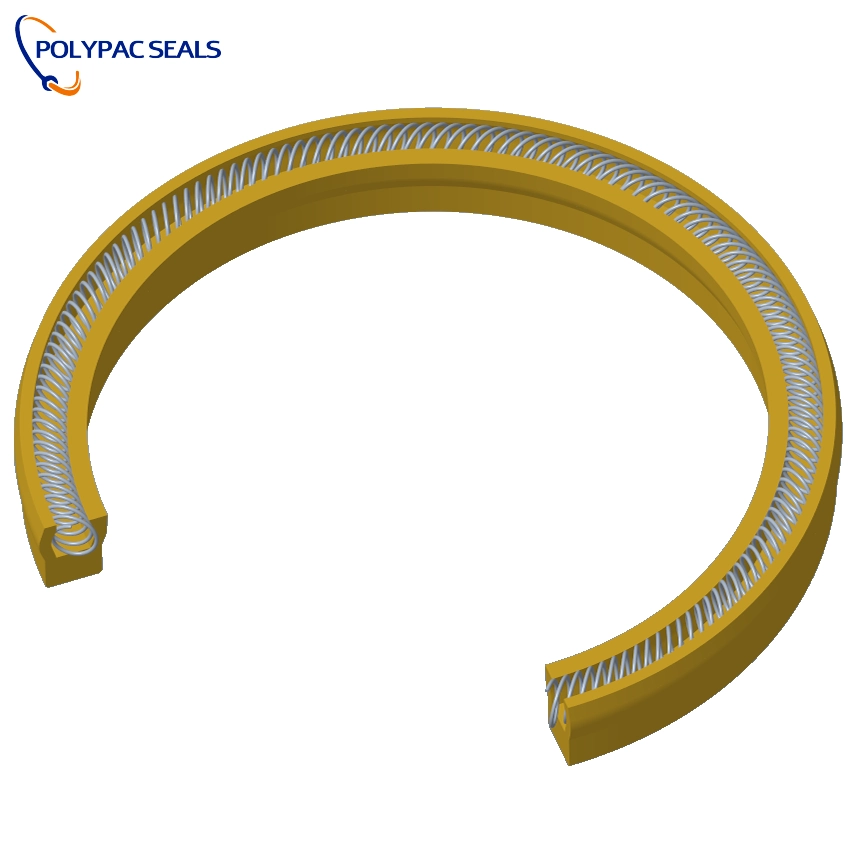

Polypac RSJ Seals: Single-acting piston rod seal designed for hydraulic systems. Featuring a durable dust lip, it ensures reliable sealing and protection against contaminants. Ideal for hydraulic applications requiring high-performance RSJ seals and piston rod sealing solutions.
Stay Updated with Industry Insights
Subscribe to our articles and receive the latest news, expert guidance, and technical updates directly in your E-mail.
Rest assured that your privacy is important to us, and all information provided will be handled with the utmost confidentiality.

Polypac is a trusted global supplier of high-performance sealing solutions, providing OEM & ODM services for industries worldwide.
E-mail:
Phone/WhatsApp:
© 2025 Polypac Seals. All Rights Reserved.
dms
DMS
DMS