











Piston Rod Seal Materials: PTFE, NBR, PU, and Metal Options
I often get asked which material is best for a piston rod seal. The short answer is: it depends on operating pressure, sliding speed, temperature, fluid compatibility, contamination risk, and system geometry. In this article I summarize the functional needs of piston rod seals, compare PTFE, NBR, PU and metal options in realistic operating conditions, provide a decision flow to help you choose the right material, and explain how advanced manufacturers (like Polypac) develop and validate custom solutions for demanding hydraulic environments.
Understanding piston rod seal function, failure modes, and key selection drivers
Roles and performance goals of a piston rod seal
A piston rod seal is intended to keep the hydraulic fluid inside a cylinder while excluding contaminants from outside. My practical view is that an effective rod seal must balance low leakage (fluid retention), low friction (to reduce power loss and stick‑slip), wear resistance, and long service life under the intended operating profile. Typical acceptance criteria I use with clients include leakage rate, life hours (or strokes), and acceptable coefficient of friction under dynamic conditions.
Common failure mechanisms I observe
From field inspections and lab testing, the most frequent failure causes are extrusion/cold flow under high pressure, abrasive wear from particles, chemical attack from incompatible fluids, thermal degradation, and installation damage. Understanding which failure mode dominates in your equipment is the first step to choosing materials: for instance, PTFE-based seals resist extrusion and chemicals but can have high permeability and require special design to reduce piston ring leakage; polyurethane is abrasion‑resistant but sensitive to certain chemicals and temperature extremes.
Relevant standards and diagnostic references
When I evaluate designs I reference industry resources such as seal manufacturer application guides and technical references like the general O‑ring / sealing discussion on Wikipedia (O-ring) and material resources such as the PTFE, NBR, and polyurethane pages for baseline material properties. For hydraulic sealing practice I also consult manufacturer technical literature (SKF, Parker, etc.) and test to ISO or industry test protocols where available.
Material options: PTFE, NBR, PU, and metal — properties, advantages, and limitations
PTFE (polytetrafluoroethylene) — low friction, high temperature and chemical resistance
PTFE is prized for its extremely low coefficient of friction, wide temperature range, and excellent chemical inertness. In rod seal applications I use PTFE (often filled with glass, carbon, bronze, or MoS₂) where sliding friction and chemical compatibility are top priorities. Typical continuous service temperatures: approximately −200°C to +260°C; filled grades can reduce cold flow and improve wear. However, PTFE is relatively soft versus metallic components and can be susceptible to creep/extrusion under high unit pressures unless properly supported by backup rings or energizing elements. More on PTFE: Wikipedia: PTFE.
NBR (nitrile rubber) — economical, good oil resistance, common in hydraulic systems
NBR (nitrile) is a workhorse elastomer for hydraulic seals due to its good resistance to mineral oils and favorable cost. Typical operating range is roughly −40°C to +120°C (depends on formulation). NBR has good resilience for lip sealing geometries, but it has lower abrasion and tear resistance than PU, and poorer performance with some synthetic fluids (ester‑based fluids, certain low‑molecular additive chemistries). For many medium‑pressure hydraulic rod seals I still recommend NBR when temperatures and chemistry are within limits. Reference: Wikipedia: NBR.
Polyurethane (PU) — excellent abrasion and extrusion resistance for dynamic applications
Polyurethane elastomers excel in dynamic sealing where wear and extrusion resistance matter. Their high tear strength and load‑bearing capacity make them ideal for rod seals exposed to contamination or frequent cycling. Typical temperature range is roughly −30°C to +80°C for common grades (high‑temp polyurethanes extend this). Polyurethane is less tolerant of certain chemicals (strong acids, some ester fluids) and can be compromised by ozone at high concentrations. For heavy duty mobile hydraulics I frequently specify PU rod seals when abrasive contamination is a primary failure driver. See: Wikipedia: Polyurethane.
Metal and spring‑energized seals — extreme environments and specialty use
Metallic sealing elements (e.g., metal face seals, spring‑energized metal seals) are chosen where elastomers/polymers cannot meet temperature, pressure, or chemical demands. These seals often use a metal jacket combined with a PTFE or polymer sealing surface and a spring energizer to maintain contact. They are common in cryogenic, very high temperature, high vacuum, or aggressive chemical environments. Metal seals generally sacrifice some compliance and may require extremely fine rod finishes and precision housings. For background on mechanical sealing in general: Wikipedia: Mechanical seals.
Comparative properties table (approximate ranges and typical behavior)
| Property / Material | PTFE (filled) | NBR | Polyurethane (PU) | Metal / spring‑energized |
|---|---|---|---|---|
| Typical temp range | −200°C to +260°C (grade dependent) | −40°C to +120°C | −30°C to +80°C (special grades higher) | −200°C to +600°C (material dependent) |
| Friction (sliding) | Very low | Moderate | Moderate–low | Variable (depends on facing material) |
| Abrasion resistance | Moderate (filled improves) | Moderate | High | High (if metal face) |
| Extrusion resistance | Moderate–low (requires backup ring) | Moderate | High | Very high |
| Chemical compatibility | Excellent (broad) | Good with mineral oils; limited with esters | Good (select chemistries problematic) | Depends on metal/coating |
Notes: values above are approximate and must be validated against supplier datasheets and system test results. Material datasheets from suppliers (or manufacturer technical literature such as SKF/Parker) are recommended for final selection.
How I select a piston rod seal — practical decision flow and design considerations
Step 1 — Define operating envelope
I begin by documenting: maximum pressure, typical and peak sliding speed, temperature range, fluid type and contamination level (ISO 4406 particle counts if available), rod finish and hardness, and mounting space (groove dimensions). If fluid is mineral oil and temperatures moderate, NBR or PU may be appropriate. If chemical attack, extreme temperature, or low friction is the priority, PTFE or metal/PTFE hybrids may be better.
Step 2 — Match material to dominant failure mode
If abrasive wear is the main issue, PU often extends life. If extrusion at high pressure is a problem, consider reinforced PTFE with backup rings or a metal/spring energized option. If slippage and friction limit performance (e.g., precise positioning, low hysteresis), PTFE‑based designs usually perform best.
Step 3 — Validate with testing
After selecting candidate materials I always recommend bench testing in a test rig that replicates pressure, speed, temperature and contamination. Observed wear patterns and leakage data guide final geometry and material tweaks. For acceptance we often adopt cycle‑to‑failure testing and compare to expected duty life with appropriate safety margin.
Manufacturing, customization, and why Polypac can be your partner
Polypac’s capability snapshot (practical advantages I evaluate)
Polypac is a scientific and technical hydraulic seal manufacturer and oil seal supplier specializing in seal production, sealing material development, and customized sealing solutions for special working conditions.
Polypac's custom rubber ring and O-ring factory covers an area of more than 10,000 square meters, with a factory space of 8,000 square meters. Our production and testing equipment are among the most advanced in the industry. As one of the largest companies in China dedicated to the production and development of seals, we maintain long-term communication and cooperation with numerous universities and research institutions both domestically and internationally.
Founded in 2008, Polypac began by manufacturing filled PTFE seals, including bronze-filled PTFE, carbon-filled PTFE, graphite PTFE, MoS₂-filled PTFE, and glass-filled PTFE. Today, we have expanded our product line to include O-rings made from various materials such as NBR, FKM, silicone, EPDM, and FFKM.
Products and technical differentiation I rely on
Polypac’s product range relevant to piston rod sealing includes O‑rings, rod seals, piston seals, end face spring seals, scraper seals, rotary seals, back‑up rings, and dust rings. In my assessments, their strengths include:
- Extensive experience with filled PTFE compounds — important where low friction and chemical resistance are required.
- In‑house material development capability to tailor hardness, fillers and glass/metal content for specific wear and extrusion profiles.
- Advanced testing equipment and an 8,000 m2 factory footprint that supports scale and rapid prototyping.
- Active R&D ties with universities and research institutions—useful for complex applications such as aerospace, subsea, or extreme temperature hydraulics.
How I work with Polypac or similar suppliers
When specifying a customized rod seal I engage the supplier early with a full operating brief (pressure, speed, temperature, contamination, target life). For critical applications I require prototypes and joint bench testing. With Polypac I can leverage their material database (filled PTFE varieties, NBR, PU, high‑performance FFKM options) and production capacity to iterate quickly and validate the chosen solution.
Testing, installation tips and maintenance to maximize seal life
Recommended testing and acceptance criteria
Key tests I use during validation: pressure hold/leakage, dynamic test cycles at intended speed and load, wear life (cycles to specified leakage), and chemical exposure soak tests. Where standards exist, reference them — for example, basic O‑ring geometry and interchangeability discussions can be found in public technical references such as Wikipedia: O-ring, and manufacturer test protocols (SKF, Parker) outline dynamic test regimes.
Installation and surface preparation
Proper groove dimensions, chamfers, and rod surface finish are critical. I typically specify rod surface roughness in the Rz/Ra range recommended by the seal manufacturer (often Ra 0.2–0.8 µm for PTFE faces; PU can tolerate slightly rougher surfaces). Lubrication during installation reduces nicking and premature failure. Backup rings, wipers/scrapers, and dust exclusion devices are integral components — neglecting these often reduces service life dramatically.
Maintenance and monitoring
Preventive maintenance I recommend includes scheduled fluid cleanliness checks (target ISO 4406 levels appropriate to your system), periodic inspection of rod surfaces, and monitoring leakage trends. Small increases in leakage often precede abrupt failures; addressing contamination or replacing seals early can avoid cylinder damage.
Frequently Asked Questions (FAQ)
1. Which material gives the lowest friction for piston rod seals?
PTFE and PTFE‑filled compounds provide the lowest sliding friction among common seal materials. For low‑friction, precision control applications I typically recommend PTFE variants, with the caveat that extrusion resistance must be managed through design (backup rings, energizers).
2. When should I choose polyurethane over NBR?
Choose PU when abrasive wear or high mechanical loads are the main concern — for example, mobile hydraulics with particulate contamination or high cycle frequency. NBR remains attractive where cost and compatibility with mineral oils are dominant factors and operating conditions are moderate.
3. Are metal seals necessary for high temperature applications?
Yes—when polymer materials cannot meet the temperature or chemical environment, metal or spring‑energized metal seals (often with a PTFE sliding surface) are appropriate. They require precise geometry and surface finish but deliver performance in extreme environments.
4. How do I reduce extrusion and cold‑flow in PTFE seals?
Use filled PTFE grades (bronze, glass, carbon) to reduce creep, incorporate back‑up rings to physically block extrusion gaps, and design grooves to minimize pressure-induced deformation. Validation testing under representative pressure cycles is essential.
5. What testing should I demand from my seal supplier?
Insist on dynamic life testing under representative pressure, speed and temperature; chemical compatibility tests if fluids are non‑standard; and dimensional/interchangeability checks. For high‑value applications, request material certificates, test reports, and witness testing where feasible.
6. How important is rod surface finish?
Extremely important. An incorrect finish increases wear, leakage, and risk of lip damage. Follow manufacturer recommendations (typical Ra values vary by material) and ensure no burrs or nicks remain after machining.
Contact, product selection and next steps
If you need help selecting or qualifying piston rod seals, I can assist with application analysis, material selection, and test protocol design. For manufacturing and custom material support, Polypac offers a broad product line and the R&D and production capacity to deliver tailored solutions — including O‑rings, rod seals, piston seals, end face spring seals, scraper seals, rotary seals, back‑up rings and dust rings.
To discuss your application or request a quotation, contact Polypac or your sealing specialist with the operating brief (pressure, speed, temperature, fluid, contamination level, geometry). Early collaboration reduces iteration time and yields a seal that meets your lifecycle and performance targets.
References and further reading (selected):
- PTFE — Wikipedia
- NBR — Wikipedia
- Polyurethane — Wikipedia
- O‑ring and sealing background — Wikipedia
- SKF Seals — technical resources
If you'd like, I can review your hydraulic cylinder drawings and recommend a shortlist of materials and seal geometries, then coordinate prototype production and testing with Polypac.
Contact Polypac for custom piston rod seals and material development, or reach out to me to schedule an application review and material selection consultation.

High-Performance Pneumatic Piston Seals: How to Achieve Zero-Leakage Efficiency

PTFE vs. Composite: Choosing the Best Piston Guide Ring Material for High-Pressure Systems

Mastering O-Ring Gland Design: The Complete Guide for Perfect Sealing Performance

Advanced Back-Up Ring Materials: Beyond PTFE for Extreme Temperature Environments

PTFE vs. Urethane Scrapers: Which Material Truly Prevents Contamination?
Products
What is the purpose of the metal spring in a rotary shaft seal?
When should I use a spring-energized seal instead of a standard elastomeric seal?
How do I choose the right material for my sealing application?
What is the difference between NBR and FKM materials?
Can I reuse a seal?
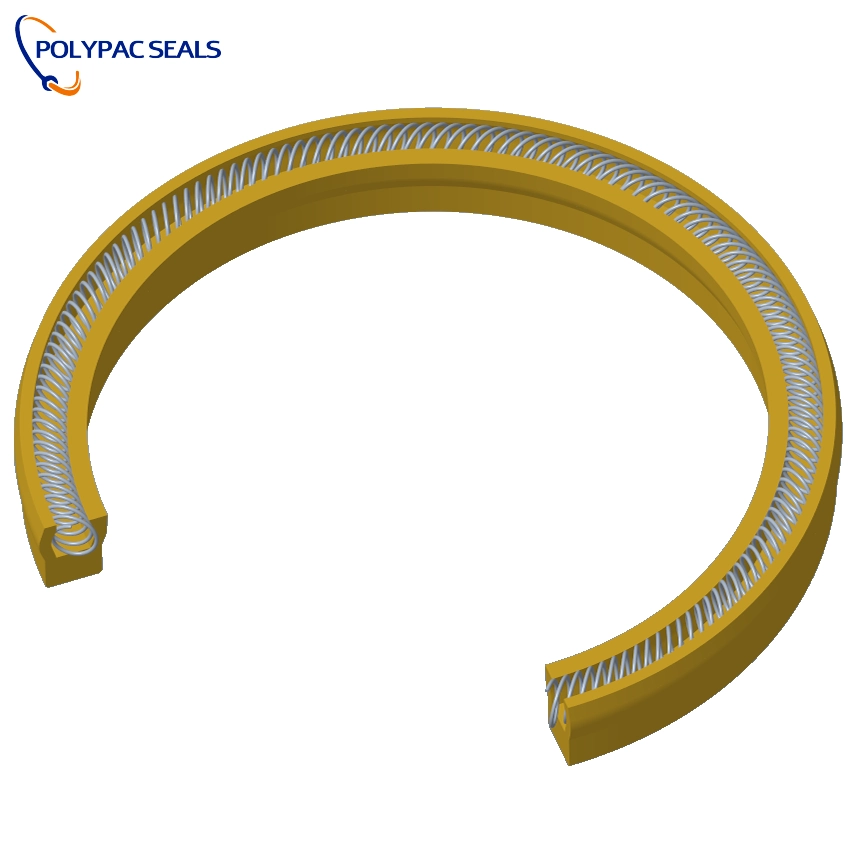

Polypac RSJ Seals: Single-acting piston rod seal designed for hydraulic systems. Featuring a durable dust lip, it ensures reliable sealing and protection against contaminants. Ideal for hydraulic applications requiring high-performance RSJ seals and piston rod sealing solutions.
Stay Updated with Industry Insights
Subscribe to our articles and receive the latest news, expert guidance, and technical updates directly in your E-mail.
Rest assured that your privacy is important to us, and all information provided will be handled with the utmost confidentiality.

Polypac is a trusted global supplier of high-performance sealing solutions, providing OEM & ODM services for industries worldwide.
E-mail:
Phone/WhatsApp:
© 2025 Polypac Seals. All Rights Reserved.
dms
DMS
DMS