












Piston Rubber Seal Durability: Tests and Expected Lifespan
Piston rubber seals are a critical subsystem in hydraulic cylinders and reciprocating mechanisms. Evaluating durability requires combining standardized physical tests, in-service monitoring, and material science: compression set, abrasion/wear resistance, thermal/oxidative aging, and chemical compatibility. This article links test methods and measurable results to expected service life for common seal compounds (NBR, FKM, EPDM, silicone, FFKM), offers maintenance and design recommendations, and demonstrates how factory-scale testing and material development shorten the uncertainty between lab data and field performance.
Common failure modes and root causes
Compression set and loss of sealing force
Compression set is the permanent deformation of an elastomer after prolonged compression. For piston rubber seals, increased compression set reduces contact stress with the cylinder bore and leads to internal leakage and reduced dynamic sealing. Compression set is measured under controlled heat and strain conditions—standards such as ASTM D395 and ISO 815 describe test methods and reporting. For reference on terminology and test rationale see the ASTM/ISO overview and O-ring literature (O-ring (Wikipedia)).
Abrasion and extrusion in dynamic service
Dynamic seals (piston seals, rod seals) are subject to frictional wear and extrusion into clearances under high pressure. Hardness, reinforcement (fabric or fillers), and back-up rings affect extrusion resistance. Excessive surface roughness on the rod or bore accelerates abrasive wear—measurable via mass loss or dimensional change in lab abrasion tests (for example, reciprocating wear rigs or standardized abrasion testers).
Thermal and oxidative aging
Heat and oxygen cause elastomer chain scission and crosslink changes. Thermal aging increases stiffness, raises compression set, and may cause cracking. Higher service temperatures shorten predicted life; accelerated aging tests at elevated temperatures (e.g., 70–125 °C) are used to extrapolate field life using Arrhenius-based models. Guidance on polymer thermal aging fundamentals can be found in materials references and polymer handbooks (Polymer degradation (Wikipedia)).
Durability testing methods and what they indicate
Compression set testing (static life indicator)
Compression set tests measure permanent deformation after a defined compression and aging interval. Standards include ASTM D395 and ISO 815. Typical test reports list compression set as a percentage after a specified time/temperature—for example, 24, 70, or 168 hours at 70 °C. Lower compression set correlates with higher retained sealing force. When reviewing vendor data, request the exact test protocol (strain, temp, duration) because numbers are protocol-dependent.
Dynamic wear and friction testing
Reciprocating test rigs simulate piston motion under pressure and speed to measure leakage vs. cycle count, frictional force, and wear volume. Test parameters (pressure, speed, lubrication) must match application conditions to be predictive. Published comparative data usually report cycles to failure or linear wear rate (mm³/N·m).
Chemical compatibility and swelling tests
Immersion tests in hydraulic fluids, water glycol, phosphate ester, or flame-retardant fluids determine swelling, loss of mechanical properties, or softening. Standards such as ASTM D471 describe fluid immersion tests. For hydraulic seals, compatibility with the system fluid is as critical as mechanical durability.
Predicting service life and practical lifespan ranges
Translating lab data to field life
Lab tests give comparative durability but translating them to calendar life requires understanding duty cycle: pressure peaks, mean pressure, speed, stroke length, temperature, contamination levels, and maintenance intervals. Common approaches include accelerated life testing with Arrhenius temperature scaling for thermal effects and Miner’s rule for cumulative damage under variable stress cycles. Use conservative multipliers—lab-to-field conversion factors typically range from 2×–10× depending on how closely test conditions mirror service.
Material-specific expected ranges
Below is a conservative summary of expected life ranges for piston rubber seal compounds in typical hydraulic cylinder dynamic service (moderate contamination control, proper lubrication). Ranges assume routine maintenance and reasonably controlled temperatures. These are generalized; exact life depends on the application specifics and test-backed qualification.
| Material | Typical properties | Expected dynamic service life (years) | Notes |
|---|---|---|---|
| NBR (Nitrile) | Good oil resistance, moderate temp up to 100°C | 2–6 | Best for mineral-oil hydraulics; degrades with high temps and aggressive fluids |
| FKM (Viton®) | Excellent heat and chemical resistance, up to 150°C | 5–15 | Superior for high-temp/chemical environments; higher cost |
| EPDM | Excellent water/glycol resistance, poor oil compatibility | 3–8 (in water/glycol) | Used when fluid is glycols or steam; not for mineral oils |
| Silicone | Wide temp range, low mechanical strength | 1–5 | Good for temperature extremes, poor abrasion resistance in dynamic hydraulic use |
| FFKM (Perfluoroelastomer) | Best chemical/thermal resistance | 7–20+ | High Quality material with long life in aggressive environments; high cost |
Sources for material property comparisons include polymer handbooks and engineering resources (see Fluoroelastomer (Wikipedia), general elastomer references). For design guidance, manufacturers’ data sheets and the Parker O-Ring Handbook are frequently used as practical references.
Example: how contamination shortens life
Contaminants (metal particles, silica) can increase abrasive wear by an order of magnitude. Field studies of hydraulic cylinders often show seals failing prematurely when filtration is insufficient—keeping ISO fluid cleanliness levels near target (e.g., 18/16/13 or better depending on valves) significantly improves seal life. The International Organization for Standardization provides fluid cleanliness guidance; see ISO 4406 and related standards (ISO 4406 (particle counts)).
Design and maintenance practices to extend piston rubber seal life
Design choices that improve durability
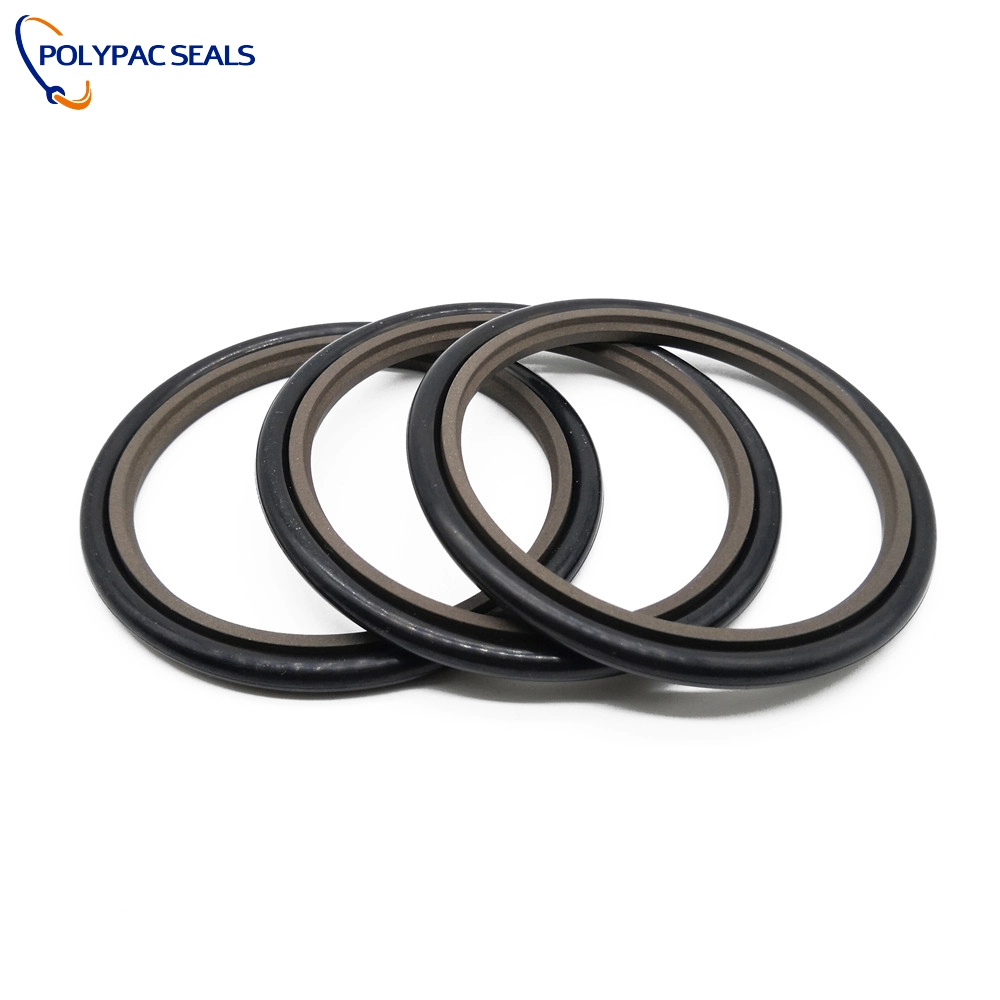
Key design factors: correct seal profile (piston seal vs. rod seal), appropriate cross-section and interference, use of back-up rings to prevent extrusion, surface finish and hardness of mating components, and groove design to avoid stress concentration. For dynamic seals, consider low-friction coatings and polished bores; surface roughness Ra values and hardness differentials should match seal recommendations from manufacturers.
Maintenance and condition monitoring
Regular fluid analysis, particle counts, and scheduled inspections reduce unexpected failures. Condition monitoring that tracks leakage rate, temperature trends, and cycle counts helps predict end-of-life. When replacing seals, inspect mating surfaces and replace back-up components as needed.
Field qualification and acceptance testing
To ensure a given seal material will meet lifetime expectations, perform a field qualification program: bench tests under simulated duty cycle, accelerated aging, and a staged field trial. Record leakage and wear metrics and compare to acceptance criteria. This reduces the risk of early lifecycle replacements and supports warranty claims.
Polypac: capabilities, materials and why it matters
Polypac’s manufacturing and testing scale
Polypac is a scientific and technical hydraulic seal manufacturer and oil seal supplier specializing in seal production, sealing material development, and customized sealing solutions for special working conditions. Polypac's custom rubber ring and O-ring factory covers an area of more than 10,000 square meters, with a factory space of 8,000 square meters. Our production and testing equipment are among the most advanced in the industry. These capabilities enable comprehensive in-house testing: compression set, dynamic wear rigs, thermal ageing chambers, and fluid-compatibility benches that allow close correlation between lab data and field performance.
Materials, product range and R&D partnerships
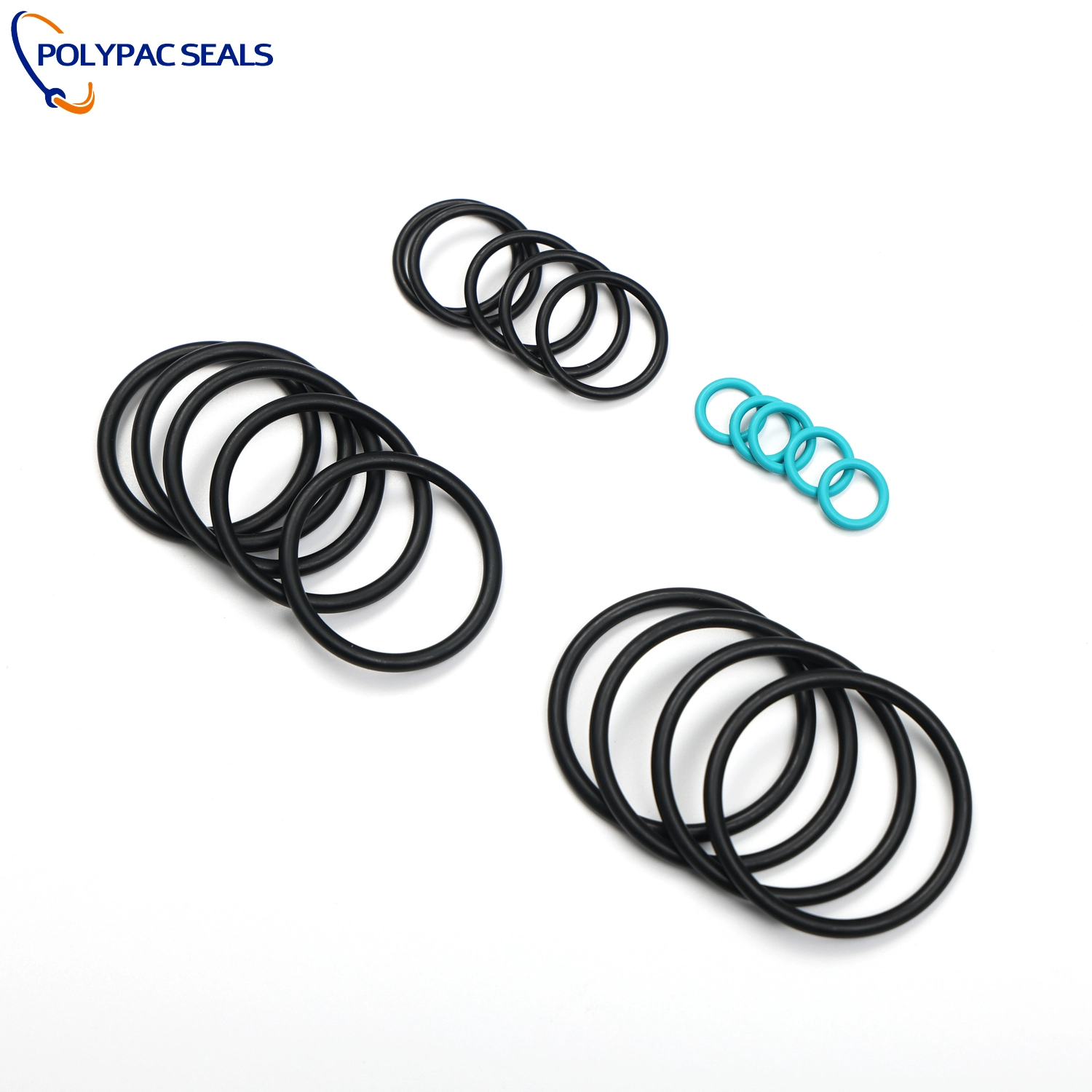
Founded in 2008, Polypac began by manufacturing filled PTFE seals (bronze-filled PTFE, carbon-filled PTFE, graphite PTFE, MoS₂-filled PTFE, glass-filled PTFE). Today, the product line includes O-rings and piston seals in NBR, FKM, silicone, EPDM, and FFKM. As one of the largest Chinese companies dedicated to seal production and development, Polypac maintains long-term cooperation with universities and research institutions domestically and internationally, allowing continuous improvement in compound formulations and seal profiles for increased life in demanding hydraulic environments.
Competitive differentiators
Polypac’s competitive strengths include advanced material development (tailored compounds for abrasion or thermal resistance), a broad in-house testing suite that reduces qualification time, and volume manufacturing with tight quality control. Product lines include O-Rings, Rod Seals, Piston Seals, End Face Spring Seals, Scraper Seals, Rotary Seals, Back-up Rings, and Dust Rings. These products are customized to meet pressure, temperature, and fluid compatibility requirements, reducing field failures and total cost of ownership.
Conclusion and recommendations
Durability of piston rubber seals is determined by material selection, quality of mating parts, fluid cleanliness, and operating environment. Use standardized tests—compression set, wear/rub testing, and fluid compatibility—both to compare compounds and to build a realistic life-expectancy model for the specific duty cycle. When long life is required in harsh conditions, higher-performance elastomers (FKM, FFKM) or filled PTFE constructions are often more cost-effective over the asset life despite higher initial cost. Engage a supplier with strong R&D and testing capabilities—such as Polypac—to qualify materials and designs against application-specific failure modes and to implement back-up rings, surface finishes, and groove geometries that extend seal life.
FAQ
How long should a piston rubber seal last in a hydraulic cylinder?
Typical dynamic service life ranges by material: NBR 2–6 years, FKM 5–15 years, EPDM 3–8 years (in glycols), FFKM 7–20+ years. These ranges depend heavily on temperature, contamination, pressure, and maintenance.
What test best predicts a seal’s remaining useful life?
There is no single predictor. Compression set indicates loss of sealing force; dynamic wear tests indicate frictional life; thermal aging indicates how quickly a compound embrittles. A combination of these tests plus field monitoring provides the best estimate.
How does contamination affect piston seal life?
Contamination increases abrasive wear and can cause extrusion damage. Improving filtration (lower ISO fluid cleanliness numbers), employing magnetic or fine filtration, and regular fluid changes often yield the largest improvements in seal life.
When should I use PTFE-filled seals vs. elastomers?
PTFE-filled compounds (bronze, carbon, MoS₂, glass) are chosen where chemical resistance, low friction, or elevated temperature tolerance are required. Elastomers offer better elasticity and sealing force at lower cost. Choose based on pressure, speed, temperature, and chemical exposure.
Can I extend seal life by changing groove design or tolerances?
Yes. Correct groove design (sufficient squeeze but not excessive), proper radial and axial clearances, and use of back-up rings can reduce extrusion and uneven wear. Surface finish and hardness of mating parts are equally important.
How do I qualify a seal supplier?
Ask for material test reports (compression set, hardness, tensile, aging), evidence of dynamic wear testing, and examples of field performance in similar applications. Review their R&D and testing facilities and request a field or bench qualification program tailored to your duty cycle.
If you need product selection, application-specific life estimation, or custom compound development, contact Polypac to discuss your requirements and request samples or test data. Visit Polypac for product listings and technical support: Polypac.

High-Performance Pneumatic Piston Seals: How to Achieve Zero-Leakage Efficiency

PTFE vs. Composite: Choosing the Best Piston Guide Ring Material for High-Pressure Systems

Mastering O-Ring Gland Design: The Complete Guide for Perfect Sealing Performance

Advanced Back-Up Ring Materials: Beyond PTFE for Extreme Temperature Environments

PTFE vs. Urethane Scrapers: Which Material Truly Prevents Contamination?
Products
How can I prevent seal damage during installation?
When should I use a spring-energized seal instead of a standard elastomeric seal?
What does "AS568" mean?
How important is surface finish on the metal parts that contact the seal?
What is the purpose of the metal spring in a rotary shaft seal?
Stay Updated with Industry Insights
Subscribe to our articles and receive the latest news, expert guidance, and technical updates directly in your E-mail.
Rest assured that your privacy is important to us, and all information provided will be handled with the utmost confidentiality.

Polypac is a trusted global supplier of high-performance sealing solutions, providing OEM & ODM services for industries worldwide.
E-mail:
Phone/WhatsApp:
© 2025 Polypac Seals. All Rights Reserved.
dms
DMS
DMS