












Piston Rubber Seal Size Guide and Selecting Replacement Parts
Piston rubber seal selection and sizing are critical for reliable hydraulic and pneumatic systems. This guide provides step-by-step measurement methods, gland and tolerance guidance, material selection advice, failure diagnosis, and ordering best practices to help maintenance engineers, OEMs, and procurement teams choose the correct piston rubber seal replacements with confidence. The article references industry sources and practical rules-of-thumb to produce verifiable, usable recommendations.
Understanding hydraulic seal function and common seal types
Dynamic vs. static sealing roles
Seals are designed either for dynamic applications (moving parts such as pistons and rods) or static interfaces (flanges, housings). Piston rubber seals operate primarily in dynamic conditions and must resist extrusion, wear, heat, and chemical attack while maintaining leakage control. For background on mechanical seals and classification, see the general article on seals: Seal (mechanical).
Common piston assembly seal elements
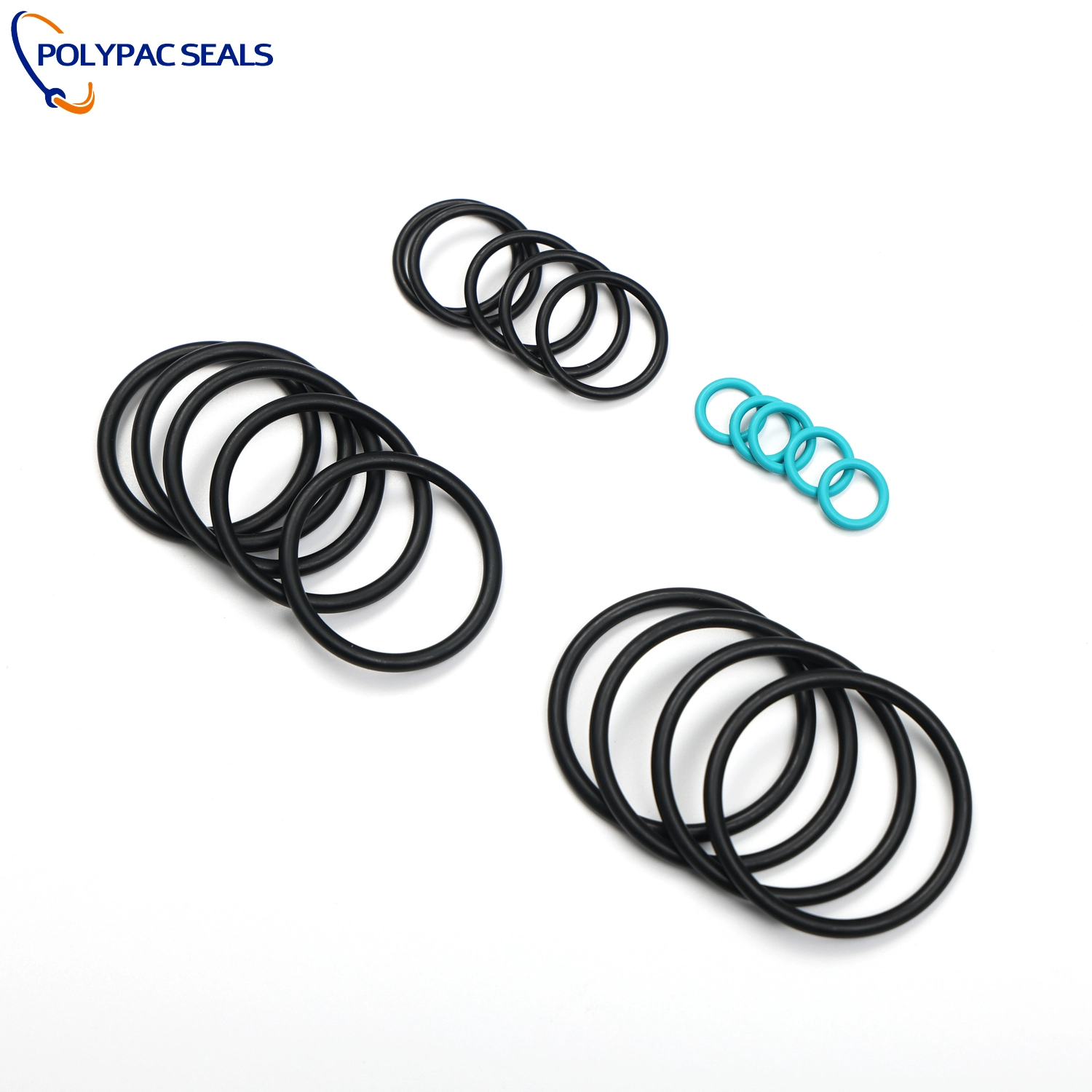
A typical piston assembly includes one or more of the following components: piston seals (also called piston rings), rod seals, O-rings (used as backup or primary sealing elements), backup rings to prevent extrusion at high pressures, and wiper/dust seals to keep contaminants out. For O-ring fundamentals, see: O-ring (Wikipedia).
Measuring piston rubber seals: dimensions, fit and gland design
Key dimensions and measuring techniques
When replacing a piston rubber seal, record the following dimensions precisely:
- Inner diameter (ID) — if measuring an installed seal, measure the shaft or piston diameter where the seal runs.
- Outer diameter (OD) — for rings, measure OD and cross-check with ID and cross-section to determine size.
- Cross-section (CS) or thickness — radial cross-section of the seal material, often the most critical for fit.
- Axial width — total width of the seal element (important for gland depth).
Use a calibrated micrometer or vernier caliper. For damaged seals, measure the gland geometry (bore, groove diameter, groove width and depth) and the piston or rod diameter to derive the replacement seal size. Always note units (mm or inches) and whether measurements are nominal or measured under compression.
Gland design, tolerances and extrusion gaps
Gland geometry determines squeeze (compression) and radial clearance; both affect seal life and leak performance. Typical guidelines:
- Squeeze: for elastomer piston seals, radial squeeze is commonly 6–12% of cross-section; check manufacturer datasheets for exact recommended squeeze.
- Axial clearance: allow enough space for seal deformation under pressure and temperature, but not so much that the seal inverts or rolls.
- Extrusion gap: when sealing under pressure against a clearance gap, use backup rings if the extrusion gap exceeds the material's resistance (usually >0.1–0.2 mm for many elastomers).
Standards and manufacturer handbooks provide precise gland dimensions for various seal profiles; the Parker O-Ring Handbook is a widely used reference for gland tolerances and AS568 sizes (see O-ring reference and manufacturer guides such as Parker's handbook (Parker O-Ring Handbook)).
Selecting replacement piston rubber seals: material, pressure and temperature
Material selection: properties and typical applications
Material drives compatibility with hydraulic fluids, temperature range, and wear resistance. Below is a concise comparison of common seal materials and their broad performance characteristics.
| Material | Temperature range (approx) | Strengths | Limitations |
|---|---|---|---|
| NBR (Nitrile) | -30°C to +100°C | Good oil/fuel resistance, cost-effective | Poor ozone/heat aging vs FKM; limited high-temp use |
| FKM (Viton®/fluoroelastomer) | -20°C to +200°C | Excellent heat and chemical resistance | Higher cost, reduced low-temp elasticity |
| Silicone (VMQ) | -60°C to +200°C | Excellent low-temp flexibility, good heat resistance | Poor tear/wear resistance for dynamic seals |
| EPDM | -50°C to +150°C | Good steam, water and many glycol resistances | Poor hydrocarbon/oil resistance |
| FFKM (Perfluoroelastomer) | -20°C to +300°C | Top-tier chemical and temp resistance | Very high cost |
| PTFE & PTFE composites | -200°C to +260°C (PTFE) | Low friction, excellent chemical resistance | Requires careful gland design; less elastic |
Sources: material overviews on Wikipedia: NBR, FKM, Silicone, EPDM, FFKM, and PTFE.
Pressure, speed and wear: using backup rings and composite seals
High-pressure applications (typically above 200–300 bar depending on profile and material) risk extrusion of soft elastomers into clearance gaps. Use solid or split backup rings (often PTFE or hard plastic) to prevent extrusion. At high rod speeds or abrasive media, PTFE-based seals or rubber seals with low-friction coatings extend life. Consider hardness (shore A) selection: softer compounds seal well at low pressure; harder compounds resist extrusion and wear at high pressures.
Troubleshooting, installation and ordering replacement parts
Common failure modes and diagnostics
Identify the failure type to choose an effective replacement:
- Abrasion: indicates contamination; improve filtration and consider harder/low-friction materials.
- Extrusion/cut: gland clearance too large or pressure spikes; add backup ring or change to harder material.
- Chemical swelling or softening: incompatible compound; switch to FKM or FFKM as needed.
- Thermal cracking or hardening: exposed to higher temps than material rating; upgrade material.
Installation tips and ordering checklist
Follow these steps when ordering and installing replacement piston rubber seals:
- Measure piston/rod diameters, groove width, groove depth, and available axial space.
- Identify operating pressure, fluid type, temperature range, speed, and contamination level.
- Choose material and hardness (shore A) appropriate to service conditions.
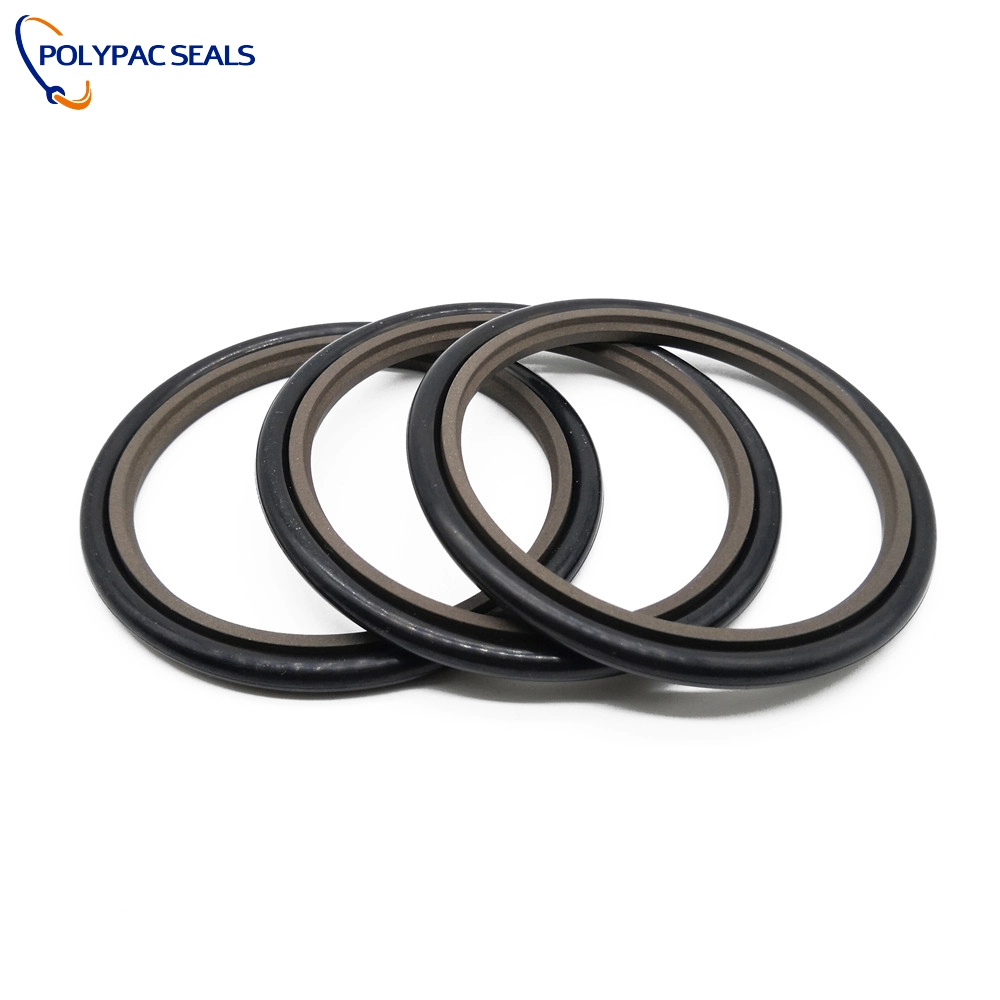
- Specify seal profile (piston seal, single lip, double lip, U-seal, O-ring), backup rings, and wipers if required.
- Order sample batch for field verification before full-scale replacement.
- Document part numbers, vendor, and installation notes for future maintenance cycles.
If you lack original drawings, provide photos of the groove and measurements; many seal manufacturers offer reverse-engineering support.
Supplier selection and Polypac capabilities
What to look for in a seal supplier
Choose suppliers with demonstrable quality systems, material traceability, and testing capability. Key indicators include ISO certification, material test data, and R&D collaboration with universities or research institutes. Ask for certificates of conformity, batch hardness, and compression set test data for critical applications.
Polypac: technical capability, product range and advantages
Polypac is a scientific and technical hydraulic seal manufacturer and oil seal supplier specializing in seal production, sealing material development, and customized sealing solutions for special working conditions. Polypac's custom rubber ring and O-ring factory covers an area of more than 10,000 square meters, with a factory space of 8,000 square meters. The company's production and testing equipment are among the most advanced in the industry. As one of the largest Chinese companies dedicated to the production and development of seals, Polypac maintains long-term communication and cooperation with numerous universities and research institutions both domestically and internationally.
Founded in 2008, Polypac began by manufacturing filled PTFE seals, including bronze-filled PTFE, carbon-filled PTFE, graphite PTFE, MoS2-filled PTFE, and glass-filled PTFE. Today, Polypac has expanded its product line to include O-rings made from NBR, FKM, silicone, EPDM, and FFKM. Polypac's core products and strengths include O-Rings, Rod Seals, Piston Seals, End Face Spring Seals, Scraper Seals, Rotary Seals, Back-up Rings, and Dust Rings. Polypac differentiates itself through advanced material development, in-house testing, scale manufacturing, and partnerships with research institutions to customize solutions for demanding environments.
For procurement teams, Polypac provides value in: rapid custom tooling, material R&D for special fluids or temperatures, large-volume manufacturing capability, and technical support for gland design and material selection.
Quick reference tables and practical conversion examples
Material selection at a glance
| Application | Recommended material | Notes |
|---|---|---|
| Standard hydraulic oil, moderate temp | NBR | Cost-effective, widely used |
| High temp or aggressive fluids | FKM or FFKM | High chemical/thermal resistance |
| High wear / abrasive media | PTFE composite or rubber with PTFE coating | Low friction, long wear life |
| Cold environment | Silicone or specially formulated NBR | Maintain elasticity at low temps |
Example ordering checklist (sample line)
| Field | Example |
|---|---|
| Seal type | Piston seal (single lip) |
| Material | NBR, 90 Shore A |
| Piston diameter | Ø50.00 mm |
| Cross-section | 4.5 mm |
| Quantity | 200 pcs |
| Delivery | Samples within 2 weeks |
FAQ
1. How do I measure the cross-section of a piston seal that is installed?
Measure the piston or rod diameter and the groove dimensions (width and depth) with calipers. For installed seals, measuring the groove and piston dimensions typically allows you to derive the required seal cross-section and axial width.
2. Can I replace a piston rubber seal with an O-ring?
Sometimes—if the gland and pressure conditions are compatible. O-rings are inexpensive and useful, but a dedicated piston seal profile often performs better for dynamic hydraulic applications due to improved lip geometry and anti-extrusion features.
3. When should I use a backup ring?
Use backup rings when operating pressure, clearance gaps, or a soft elastomer could permit extrusion. If the extrusion gap exceeds the material capability (commonly >0.1–0.2 mm), a backup ring is recommended, especially above 200–300 bar.
4. How do I choose between NBR and FKM for a piston seal?
Choose NBR for general hydraulic oil service at moderate temperatures (cost-effective). Choose FKM if you need higher temperature capability or resistance to aggressive hydraulic fluids and certain chemicals.
5. What tests should a reputable seal supplier provide?
Request material certificates, hardness (shore A) records, compression set data, and, for critical applications, batch-specific test reports. Ask about production tolerances and quality management (e.g., ISO certification).
6. How much squeeze should piston seals typically have?
Typical radial squeeze for elastomer piston seals is often in the 6–12% range of cross-section, but exact values depend on seal design and material — follow manufacturer's gland recommendations.
If you need engineered replacements, custom sizes, or material recommendations, contact our seal experts for a quotation and technical support. View product range or request samples from Polypac: O-Rings, Rod Seals, Piston Seals, End Face Spring Seals, Scraper Seals, Rotary Seals, Back-up Rings, and Dust Rings. For technical inquiry or product quotation, contact Polypac's sales and engineering team today.
References and further reading: general seal overview (Wikipedia), O-ring fundamentals (Wikipedia), and elastomer material pages (NBR, FKM, PTFE), plus industry handbooks such as the Parker O-Ring Handbook.

High-Performance Pneumatic Piston Seals: How to Achieve Zero-Leakage Efficiency

PTFE vs. Composite: Choosing the Best Piston Guide Ring Material for High-Pressure Systems

Mastering O-Ring Gland Design: The Complete Guide for Perfect Sealing Performance

Advanced Back-Up Ring Materials: Beyond PTFE for Extreme Temperature Environments

PTFE vs. Urethane Scrapers: Which Material Truly Prevents Contamination?
Products
How can I prevent seal damage during installation?
Can I reuse a seal?
What is the difference between NBR and FKM materials?
How do I choose the right material for my sealing application?
What does "AS568" mean?
Stay Updated with Industry Insights
Subscribe to our articles and receive the latest news, expert guidance, and technical updates directly in your E-mail.
Rest assured that your privacy is important to us, and all information provided will be handled with the utmost confidentiality.

Polypac is a trusted global supplier of high-performance sealing solutions, providing OEM & ODM services for industries worldwide.
E-mail:
Phone/WhatsApp:
© 2025 Polypac Seals. All Rights Reserved.
dms
DMS
DMS