











Piston Seals: The Ultimate Guide to Efficiency & Leak-Free Hydraulics | Polypac
Discover Polypac’s guide to piston seals, featuring expert U-cup sealing solutions designed for maximum efficiency and leak-free hydraulics. Enhance your hydraulic systems with reliable, durable seals tailored for optimal performance and long-lasting operation.
Within a hydraulic cylinder, immense force is generated to perform critical work—from lifting heavy loads to precise industrial automation. At the core of this force generation is a component that must be perfectly sealed: the piston. Piston seals are the unsung heroes responsible for containing this power, directly influencing the force, speed, and efficiency of your entire hydraulic system.
As a specialist in high-performance hydraulic seals, Polypac engineers piston seals that stand up to the most demanding pressures and conditions. This guide will delve into why these seals are fundamental to your cylinder's operation and how choosing the right one unlocks peak performance.
What is a Piston Seal?
A piston seal is a dynamic sealing element installed in the groove of a hydraulic cylinder's piston. Its primary function is to create a tight, leak-proof barrier between the piston and the cylinder bore, effectively separating the high-pressure and low-pressure sides of the cylinder.
This critical barrier serves two key purposes:
-
Preventing Internal Leakage: By sealing the clearance between the piston and cylinder wall, it stops hydraulic fluid from bypassing the piston. This ensures that the full system pressure is converted into linear force and motion.
-
Maintaining System Efficiency: Minimizing internal leakage preserves system pressure, leading to consistent and precise cylinder movement, improved energy efficiency, and accurate control of loads.
In short, a high-performance piston seal is what translates hydraulic pressure into reliable, powerful mechanical work.
How Do Piston Seals Work? The Principles of Containment
The effectiveness of a piston seal lies in its ingenious response to system pressure.
- Pressure-Activated Sealing: Most modern piston seals are designed with a lip or geometry that is "energized" by the system's hydraulic pressure. As pressure increases, it forces the sealing lip outward against the cylinder bore, creating a tighter seal. This self-compensating feature ensures optimal performance even as minor wear occurs.
- Bidirectional vs. Unidirectional: Piston seals can be single-acting (sealing pressure from one direction) or double-acting (sealing pressure from both directions). Double-acting seals are symmetrical and are essential for cylinders where pressure alternates on both sides of the piston.
- The Role of Low-Friction: Advanced seal designs minimize friction between the seal and the cylinder bore. This reduces stick-slip phenomena, ensures smooth movement (especially at low speeds), and improves the overall energy efficiency of the system.
Common Types of Hydraulic Piston Seals
Selecting the right type of piston seal is crucial for application success. Polypac offers a comprehensive range to meet every need.
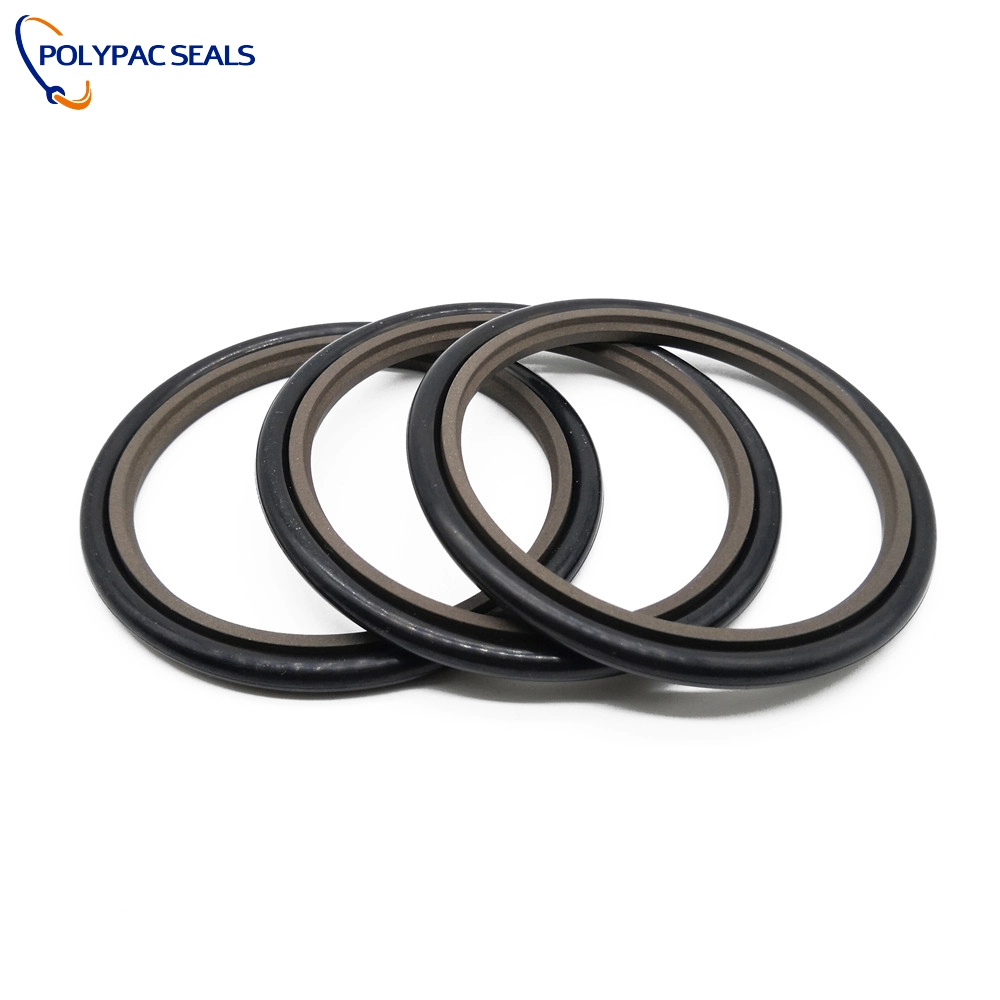
- Double-Acting Piston Seals (Symmetrical): These are the workhorses for standard hydraulic cylinders. Their symmetrical design allows them to seal pressure applied from either direction of piston movement efficiently.
- U-Cups: A versatile and common elastomeric seal shape used for both piston and rod sealing. They offer good sealing performance and easy installation.
- Glyd Rings (PTFE Composites): These consist of a PTFE sealing ring with an elastomeric O-ring energizer. They are known for their extremely low friction, high-temperature capability, and compatibility with a wide range of fluids.
- Piston Wear Rings / Guide Rings: While not a seal themselves, these components are critical partners to the piston seal. They support the piston, prevent metal-to-metal contact, and absorb radial loads, ensuring the seal functions correctly and lasts longer.
- Integrated Seal & Bearing Kits: For maximum performance, Polypac provides integrated solutions that combine a piston seal, wear ring, and other components into a single, easy-to-install unit.
Consequences of Piston Seal Failure
A failing piston seal directly undermines your cylinder's performance. Key indicators include:
- Cylinder Creep: The cylinder slowly moves or drifts under load because fluid is leaking past the piston seal.
- Loss of Power or Force: Internal leakage prevents the build-up of full system pressure, resulting in weak or slow cylinder operation.
- Inefficient Operation: The hydraulic pump must work continuously to compensate for leakage, leading to higher energy consumption and increased heat generation.
- Inconsistent Speed: Erratic or jerky cylinder movement, particularly during precise operations.
Engineer Your Success with Polypac Piston Seals
Standard seals can handle basic operations, but extreme pressures, temperature variations, and demanding duty cycles require a superior solution. Polypac's piston seals are engineered for excellence.
- Designed for Special Working Conditions: We specialize in developing sealing solutions for challenging environments, including high-pressure shocks, wide temperature ranges, and aggressive hydraulic fluids.
- Advanced Material Development: Our in-house material expertise allows us to formulate compounds that offer exceptional wear resistance, low friction, and long-term durability.
- Global Quality, Certified Reliability: Our ISO 9001 & IATF 16949 certified manufacturing guarantees that every piston seal delivers the consistent, high-quality performance that global industries rely on.


Products
What is the purpose of the metal spring in a rotary shaft seal?
Can I reuse a seal?
What does "AS568" mean?
How important is surface finish on the metal parts that contact the seal?
What is the difference between a static seal and a dynamic seal?
Stay Updated with Industry Insights
Subscribe to our articles and receive the latest news, expert guidance, and technical updates directly in your E-mail.
Rest assured that your privacy is important to us, and all information provided will be handled with the utmost confidentiality.
Polypac is a trusted global supplier of high-performance sealing solutions, providing OEM & ODM services for industries worldwide.
E-mail:
Phone/WhatsApp:
© 2025 Polypac Seals. All Rights Reserved.
dms
DMS
DMS