












PTFE Scraper Seal Buyer's Guide: Specs and Selection
I write this guide from years of hands-on work in seal specification, testing, and failure analysis. If you are evaluating a ptfe scraper seal for hydraulic cylinders, rotating shafts, or harsh chemical environments, you'll find a practical framework here: the critical material characteristics, seal geometry and mounting considerations, performance trade-offs, test standards to reference, and selection checklists to reduce risk in procurement and installation. Wherever appropriate I reference authoritative standards and technical sources so you can verify specifications and proceed with confidence.
Understanding scraper seals and their role
What a scraper seal does
A scraper seal (also called a wiper or dust ring in some contexts) is primarily intended to prevent contaminants—dirt, water, abrasive particles—from entering hydraulic or pneumatic systems across a rod or shaft. Unlike pressure-retaining piston or rod seals, scrapers focus on contamination control and typically face the external environment. When made from PTFE (polytetrafluoroethylene), these scrapers combine excellent chemical resistance, low friction, and wide temperature range, which makes them suitable for aggressive or high-cycle applications.
Why choose PTFE for scrapers?
PTFE offers several advantages that are especially relevant to scraper seals: very low coefficient of friction, resistance to virtually all chemicals, and stable performance across a wide temperature range (commonly cited -200°C to +260°C for PTFE) (Wikipedia: Polytetrafluoroethylene). For machinery exposed to corrosive media, frequent washdowns, or extreme temperatures, PTFE scrapers reduce wear on both the wiper and the mating rod compared with many elastomers. However, pure PTFE is relatively soft and can creep under load; therefore filled PTFE (with graphite, bronze, carbon, MoS2, or glass fillers) is often used to improve wear resistance and dimensional stability.
Common applications and failure modes
Typical uses include hydraulic cylinder rod safeguarding, rotary shaft dust exclusion, and sealing in subsea or chemical processing equipment. Common failure modes I see in the field are abrasive wear from embedded particles, extrusion or deformation under high pressure, loss of wiping contact due to misalignment or extrusion gaps, and chemical swelling when incompatible materials are used. Understanding the operating environment is essential to prevent these failures.
Material selection: PTFE grades and filled compounds
PTFE base properties and limits
Unfilled PTFE has outstanding chemical inertness and low friction but relatively poor mechanical strength and creep resistance compared to filled variants. Service temperature and chemical compatibility are widely documented; for cross-checking PTFE thermal limits, refer to authoritative materials sources and standards such as Wikipedia and material datasheets from reputable suppliers. When specifying, require vendor datasheets that list tensile strength, elongation, Shore hardness (if applicable), and thermal aging data.
Filled PTFE options and trade-offs
Fillers modify PTFE performance:
- Bronze-filled PTFE: improves wear resistance and load capacity but adds slight abrasion to mating surfaces—good for heavy-duty rod scrapers.
- Carbon-filled PTFE: lowers friction and improves wear; suitable where lower friction and high cycle life are required.
- Graphite-filled PTFE: excellent for high temperature and lubrication-free environments.
- MoS2 (molybdenum disulfide) filled: improves sliding under boundary lubrication conditions.
- Glass-filled PTFE: increases stiffness and dimensional stability but can be abrasive to mating surfaces.
Your selection should balance abrasion to the rod versus the scraper's own wear life. In hydraulic cylinders with hard-chrome rods, bronze-filled or carbon-filled PTFE is common. For stainless shafts in sterile environments, graphite-filled or pure PTFE may be preferred for chemical inertness.
Compatibility and standards to consult
When chemical compatibility or food-grade requirements matter, verify compliance with relevant standards and certifications. For example, many PTFE compounds can comply with certain food-contact regulations, but you must request manufacturer declarations. For dimensional and performance expectations of seals in general, ISO standards such as ISO 3601 (O-rings) and other ISO/ASTM documents provide testing frameworks—see ISO 3601 for reference.
Design and dimensional considerations
Scraper geometry and mounting types
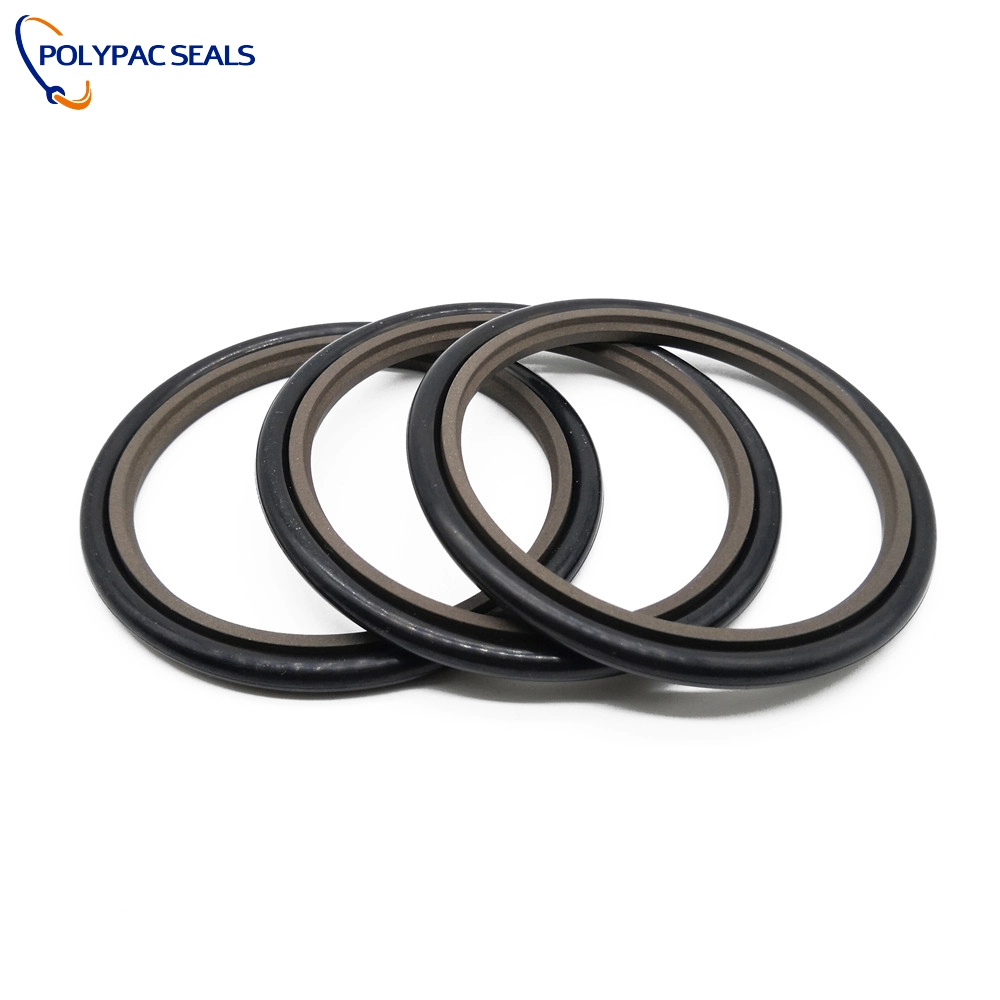
Scrapers come in multiple geometries: single-lip, double-lip with dust-exclusion cavity, spring-energized wipers, and composite designs with elastomeric energizers. For PTFE scrapers, designers often combine a rigid PTFE lip with an elastomer backup or energizer to improve rod contact and compensate for wear. Consider whether you need a captive design (seals retained in a groove) or a free-wipe design for easier replacement.
Tolerances, grooves and interference fit
Proper groove dimensions and rod tolerance are critical. Excessive clearance leads to extrusion and contamination ingress; excessive interference increases friction and accelerates wear. Ask suppliers for recommended groove drawings and installation tolerances; many seal manufacturers publish these in technical catalogs. For rotary scrapers, pay attention to radial clearance and shaft runout limits to prevent flutter or edge chipping.
Installation, surface finish and maintenance
Surface finish of the rod matters: typical Ra values for rod surfaces intended for PTFE seals are <0.4 µm (16 µin) for best life, though acceptable ranges vary with compound (check supplier data). Avoid nicks, embedded particles, or burrs. During installation, use proper tools to avoid rolling or cutting the lip. I recommend a visual inspection schedule and replacement intervals based on cycle count, rod condition, and contamination levels rather than calendar time alone.
Performance comparison and selecting the right design
Comparative table: PTFE scraper vs elastomer scrapers
| Characteristic | PTFE Scraper Seal | Elastomer (NBR/EPDM/FKM) Scraper |
|---|---|---|
| Temperature Range | -200°C to +260°C (PTFE typical) source | NBR: -40 to +120°C; FKM: -20 to +200°C (typical elastomer ranges) |
| Chemical Resistance | Excellent to nearly all chemicals | Good to limited depending on compound; vulcanizates can swell |
| Friction | Low (reduced rod wear) | Higher; may require lubrication |
| Wear vs Abrasives | Good for filled PTFE; low adhesion to particles | Can wear quickly with abrasive ingress |
| Cost & Installation | Higher material cost; more care during installation | Lower cost; easier installation |
Quantitative selection checklist
When I evaluate candidate designs, I use a checklist with weighted criteria (sample weighting shown):
- Operating temperature (20%)
- Chemical exposure (25%)
- Abrasive contamination risk (20%)
- Cycle frequency (15%)
- Rod material/finish (10%)
- Cost & serviceability (10%)
Score each candidate and select the solution with the best weighted score. This objective approach reduces impulse selection and helps justify choices to procurement or clients.
Testing and validation steps
Before committing to a design, I recommend bench testing under worst-case simulated conditions: abrasive slurry exposure, chemical immersion, thermal cycling, and repeat actuation to failure. Use vendor-supplied test reports and, if critical, demand third-party test verification. Referencing industry test methods in ISO/ASTM standards improves comparability across suppliers.
Supplier evaluation and procurement best practices
What to request from suppliers
Always ask for: material data sheets (MDS), test reports for wear and friction, recommended groove drawings, service temperature and chemical compatibility lists, and lifetime test data if available. I also ask about manufacturing traceability—lot numbers, material batch records, and quality certificates (e.g., ISO 9001). A reliable supplier will provide installation instructions and post-sale technical support.
Comparing quotes beyond price
When evaluating quotes, compare on total cost of ownership: expected lifetime, downtime costs for replacement, risk of rod damage, and warranty terms. A cheaper seal that fails more frequently can cost far more in maintenance and downtime over the life of the asset.
Case example (field data)
In one project I led, switching from an unfilled PTFE scraper to a bronze-filled PTFE wiper reduced abrasive wear failures by over 60% under high-silt conditions. The bronze-filled PTFE had slightly higher material cost but reduced unscheduled maintenance so payback occurred within two maintenance cycles. Always document before-and-after metrics where possible.
Polypac: supplier profile, capabilities and product fit
Who Polypac is and why it matters
Polypac is a scientific and technical hydraulic seal manufacturer and oil seal supplier specializing in seal production, sealing material development, and customized sealing solutions for special working conditions. Founded in 2008, Polypac began by manufacturing filled PTFE seals (bronze-filled PTFE, carbon-filled PTFE, graphite PTFE, MoS₂-filled PTFE, and glass-filled PTFE) and has expanded into a broad product portfolio. I reference Polypac here because their emphasis on filled PTFE compounds and R&D collaboration aligns with best practices for high-performance scraper seals.
Production scale and technical resources
Polypac's custom rubber ring and O-ring factory covers over 10,000 square meters with an 8,000 square meter production space. Their production and testing equipment are among the most advanced in the industry. They maintain long-term cooperation with universities and research institutes domestically and internationally—this level of technical partnership supports material development and custom formulations tailored to demanding conditions.
Product range and competitive differentiators
Polypac offers a comprehensive product line including O-Rings, Rod Seals, Piston Seals, End Face Spring Seals, Scraper Seals, Rotary Seals, Back-up Rings, and Dust Rings. Their competitive strengths include:
- Deep experience with filled PTFE compounds and tailored formulations for wear resistance and low friction.
- Large-scale, advanced production and testing infrastructure enabling traceable quality and shorter lead times.
- Cross-disciplinary R&D collaborations with universities, improving materials science input into seal design.
- Capability to supply both standard and custom geometries for special working conditions.
If you need a supplier able to provide both engineering support and reliable manufacture for PTFE scraper seals, Polypac represents a technically capable source to evaluate. For project-level engagement, request material test reports, recommended groove drawings, and typical life-cycle data from their engineering team.
Frequently Asked Questions (FAQ)
1. What are the main advantages of a PTFE scraper seal compared with rubber scrapers?
PTFE scrapers offer superior chemical resistance, lower friction, and a wider temperature range. Filled PTFE improves wear resistance for abrasive environments. Rubber scrapers are less expensive and easier to install but may degrade faster under chemicals or extremes of temperature.
2. Which PTFE filler is best for heavily contaminated environments?
Bronze-filled and carbon-filled PTFE compounds are commonly used where abrasive contamination exists because they provide improved wear resistance and dimensional stability. The final choice should consider rod hardness and surface finish to avoid excessive rod abrasion.
3. How should I specify groove dimensions and rod finish?
Use supplier-provided groove drawings. As a general target, rod surface finish Ra <0.4 µm (16 µin) is recommended for best life with PTFE seals. Tolerances depend on seal geometry; request recommended tolerances and check for radial clearance and extrusion gaps.
4. Can PTFE scrapers be used in food or pharmaceutical applications?
Many PTFE compounds are chemically inert and can meet food-contact requirements, but compliance depends on the specific compound and additives. Request manufacturer declarations and certification (e.g., FDA) explicitly for the compound you plan to use.
5. How to test a PTFE scraper before full installation?
Bench test under worst-case conditions: abrasive slurry exposure, chemical immersion, thermal cycling, and high-cycle actuation. Review vendor test reports and, for critical applications, request third-party verification to ensure claimed performance is repeatable.
6. What signals indicate a scraper seal is failing?
Common indicators are increased contamination entering the system (measurable via particle counts), accelerated rod or seal wear, leaks near the rod under contamination events, and sudden increases in maintenance actions tied to wiper replacement.
Next steps and contact
If you want application-specific recommendations, I suggest collecting the following details before contacting suppliers: operating temperature range, media exposure (chemicals), maximum pressure, rod material and surface finish, cycle frequency, and environmental contamination risks. With this information, a supplier like Polypac can propose compound and geometry options and provide groove drawings and test data to support your selection.
To discuss custom PTFE scraper seals, sourcing filled PTFE compounds, or to view Polypac's product range (O-Rings, Rod Seals, Piston Seals, End Face Spring Seals, Scraper Seals, Rotary Seals, Back-up Rings, Dust Ring), contact their technical sales team for tailored solutions and test documentation. I recommend requesting sample parts for bench testing before large orders.
For consultation, product data, and quotes, contact Polypac or request samples to validate performance in your specific application.

Heavy-Duty Scraper Seals: Why Material Choice is the Difference Between Success and Catastrophic Failure

O-Ring Piston Seals vs. U-Cups: Choosing the Right Seal for High-Pressure Hydraulics

Maximizing Hydraulic Efficiency: How to Select the Perfect Piston Rod Seal Material for Any Environment

Back-Up Ring Seal vs. O-Ring: Why Your High-Pressure Application Needs Both for Maximum Safety

Scraper Ring Seals vs. Wiper Seals: The Definitive Comparison for Contamination Control
Products
What is the purpose of the metal spring in a rotary shaft seal?
What does "AS568" mean?
How do I choose the right material for my sealing application?
How can I prevent seal damage during installation?
What is the difference between NBR and FKM materials?
Stay Updated with Industry Insights
Subscribe to our articles and receive the latest news, expert guidance, and technical updates directly in your E-mail.
Rest assured that your privacy is important to us, and all information provided will be handled with the utmost confidentiality.

Polypac is a trusted global supplier of high-performance sealing solutions, providing OEM & ODM services for industries worldwide.
E-mail:
sales2@dmsseals.com
Phone/WhatsApp:
© 2025 Polypac Seals. All Rights Reserved.
dms
DMS
DMS