












Troubleshooting Common PTFE Seal Failures and Solutions

Troubleshooting Common PTFE Seal Failures and Solutions
Understanding the PTFE Seal: performance expectations for hydraulic applications
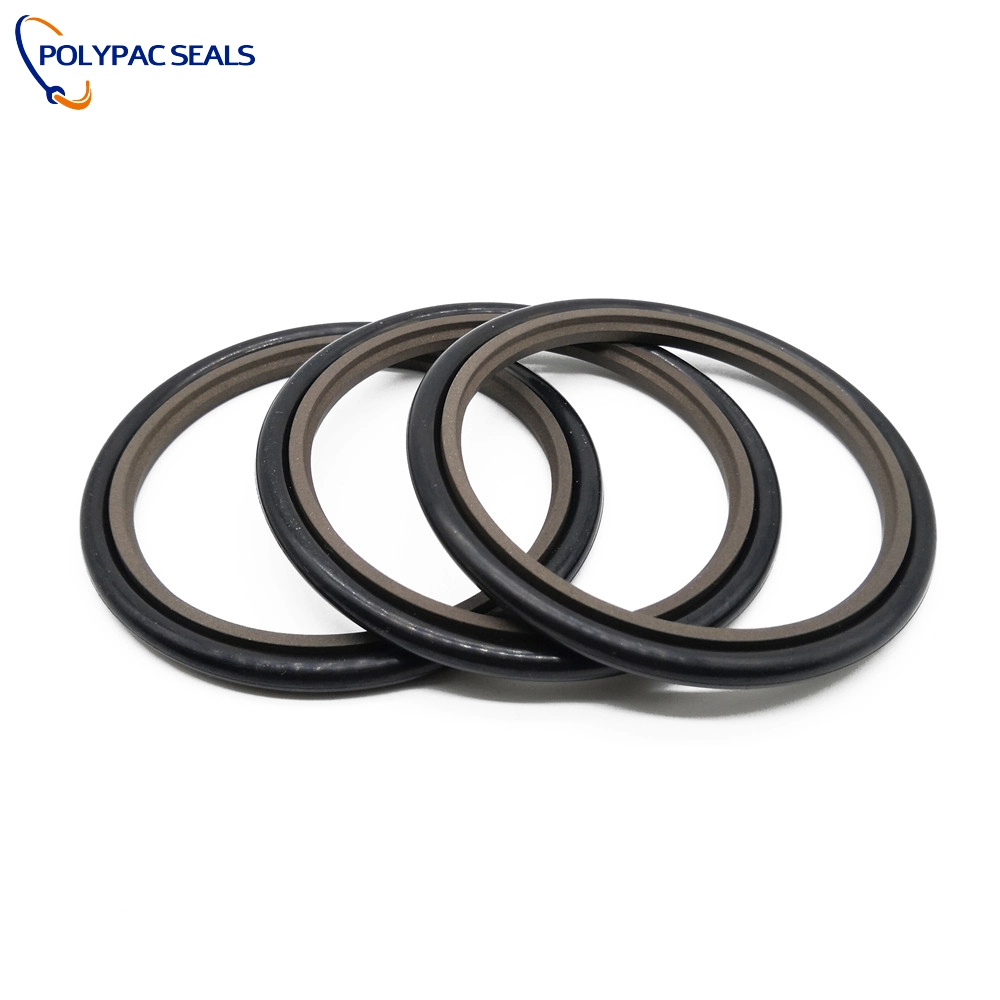
PTFE Seal materials are widely used in hydraulic pistons because of their excellent chemical resistance, low friction and wide temperature tolerance. However, unlike resilient elastomers, PTFE is a thermoplastic with different mechanical behavior: low elastic recovery, higher stiffness variability at temperature extremes, and susceptibility to extrusion if not properly supported. Knowing these properties is the first step to troubleshooting failures and selecting the right seal, such as Polypac’s GNS Piston Seal | Bidirectional PTFE Seal for Hydraulic Cylinders, designed specifically to address the typical PTFE limitations in high-pressure piston applications.
Common failure mode: Extrusion and blowout — diagnosis and preventative measures with PTFE Seal solutions
Symptoms: sudden leakage under pressure, visible lip deformation or missing seal fragments after operation.
Causes: PTFE’s low modulus and limited elastic recovery can allow material to be forced into the clearance gap between piston and cylinder bore when system pressure spikes or when groove clearance is excessive. Repeated extrusion accelerates degradation until blowout occurs.
Solutions:
- Use backup rings made from harder plastics (e.g., PTFE composite or PEEK) in the groove to block extrusion paths. Backup rings are standard for high-pressure PTFE Seal applications.
- Adopt compact, bidirectional designs such as GNS Piston Seal which are engineered to minimize exposed lip areas and use optimized cross-sections to reduce extrusion risk.
- Verify and tighten groove and shaft/bore tolerances to manufacturer specs; excessive clearance is the main mechanical facilitator of extrusion.
- Consider staged sealing: a primary PTFE Seal for low friction and a secondary energizing ring (elastomer or spring-energized) for improved sealing under varying pressure.
Leakage and poor sealing: diagnosing causes of failed PTFE Seal performance
Symptoms: continuous weepage, slow loss of hydraulic pressure, or intermittent leakage during cycling.
Causes: worn seal lips, improper groove geometry, insufficient preload/energization, poor surface finish on piston or bore, or incompatible fluids leading to degraded seating.
Solutions:
- Check surface finish: recommended piston surface roughness Ra is typically 0.1–0.4 µm for PTFE piston seals. Excessively smooth or rough surfaces can both lead to sealing issues.
- Confirm groove dimensions and radial clearance per the GNS Piston Seal installation guidelines. Over‑sized grooves reduce lip contact pressure.
- Ensure correct energization: for bidirectional PTFE Seal designs, verify the energizing profile and backup elements are intact and functioning.
- Replace degraded seals; PTFE can cold-flow and lose effective lip geometry after long use, especially under high temperature and constant load.
Abrasive wear and grooving: managing particulate-induced PTFE Seal failures
Symptoms: rapid wear of seal lips, scored piston rod or cylinder bore, particulate found inside hydraulic fluid.
Causes: contaminated fluid with abrasive particles, poor filtration, or seal design that traps debris against the sliding surface. PTFE has low friction but can be susceptible to abrasive wear when hard particles are present.
Solutions:
- Improve contamination control: upgrade filtration (beta ratings), install magnetic or centrifugal separators where appropriate, and implement particle-count maintenance routines.
- Consider lip geometry that aids particle exclusion (scraper/ wiper arrangements on rod ends) and use composite-filled PTFE blends with improved wear resistance for harsh environments.
- Perform regular inspections and oil analysis to detect early wear trends and correct causes before seal failure.
Chemical attack and swelling: ensuring PTFE Seal compatibility with fluids
Symptoms: changes in seal dimensions, softening (in case of filled PTFE blends), or loss of mechanical integrity over time.
Causes: while pure PTFE has excellent chemical resistance, some PTFE blends and energizing components (e.g., elastomer energizers or filler materials) may react with aggressive fluids, leading to swelling or degradation.
Solutions:
- Conduct fluid compatibility checks for all seal components (PTFE lip, energizer, backup ring). Polypac’s GNS Piston Seal specification lists recommended fluid compatibility; consult product datasheets where possible.
- Use virgin PTFE or chemically resistant composite PTFE grades for aggressive fluids, and ensure energizers are made from compatible elastomers (e.g., HNBR, FKM) if used.
- Perform accelerated compatibility testing for any new hydraulic fluids in the system before full deployment.
Stick–slip and friction irregularities: diagnosing dynamic issues with PTFE Seal operation
Symptoms: jerky piston movement, noise during operation, inconsistent control response in cylinders using PTFE Seal components.
Causes: low friction of PTFE is usually beneficial, but in some installations the interplay between PTFE and mating surface finishes or the presence of inadequate lubrication can cause stick–slip. Temperature changes can also change frictional characteristics.
Solutions:
- Improve surface finish consistency and ensure the correct hardness of piston/back-up surfaces. A micro-finish that promotes steady boundary lubrication helps reduce stick–slip.
- Consider lubricated PTFE blends or partners (e.g., filled PTFE or a compatible lubricant film) for sensitive control applications.
- For demanding low-speed applications, bidirectional seals designed for smooth dynamic response—such as the GNS Piston Seal—reduce stick–slip by stabilizing contact pressure and friction behavior.
Thermal degradation and dimensional change: managing temperature-related PTFE Seal failures
Symptoms: loss of sealing at high temperatures, brittle behavior at low temperatures, increased leakage or accelerated wear.
Causes: PTFE has a broad usable temperature window but mechanical properties vary with temperature: stiffness decreases with heat and increased creep/cold-flow can occur under elevated temperatures and pressure.
Solutions:
- Confirm operating temperature range against PTFE compound specifications. For standard PTFE, use is often safe from roughly −200°C to +260°C for chemical resistance, but mechanical sealing behavior at elevated temperature can degrade depending on load and time—verify per application.
- When long-term high-temperature sealing is required, choose filled PTFE grades or add heat-resistant backup elements and ensure groove tolerances account for thermal expansion.
- In cold environments, consider low-temperature modified PTFE blends to maintain flexibility and reduce the risk of brittle fracture.
Installation and handling damage: preventing mechanical causes of PTFE Seal failure
Symptoms: immediate leak after installation, tears or nicks visible on seal lips, deformation from installation forces.
Causes: PTFE seals can be damaged by sharp edges, improper tools, twisting during installation, or excessive installation interference. Unlike elastomers, PTFE cannot stretch significantly without damage; it can be cut by burrs or sharp seal grooves.
Solutions:
- Use dedicated installation tools and protect the sealing surfaces with sleeves or tape during assembly.
- Inspect all hardware for burrs and sharp edges; chamfer mating edges and maintain recommended fillet radii on rods and bores.
- Follow the GNS Piston Seal installation guidelines for compression and orientation; a well-engineered seal profile reduces installation sensitivity.
Comparison: PTFE Seal vs common sealing materials — performance at a glance
The table below summarizes typical properties relevant to hydraulic piston seals. These are generalized figures and must be verified against specific material datasheets for design decisions.
| Property | PTFE (virgin or filled) | Elastomer (e.g., NBR, HNBR) | Polyurethane (PU) |
|---|---|---|---|
| Temperature range | Approx. −200°C to +260°C (chemical resistance) | Approx. −40°C to +150°C (varies) | Approx. −30°C to +80°C |
| Friction | Very low | Moderate | Higher |
| Elastic recovery | Low (requires energizer) | High | High |
| Pressure capability | High if backed up (with backup rings/energizers) | Good (limited by extrusion resistance) | Good to very good (wear resistant) |
| Chemical resistance | Excellent | Variable | Good but variable |
Sources: material datasheets and manufacturer guidelines (see references at article end).
How GNS Piston Seal | Bidirectional PTFE Seal for Hydraulic Cylinders addresses common failures
Polypac’s GNS Piston Seal is designed to bridge PTFE’s material advantages with engineering features that reduce common failure modes:
- Bidirectional sealing profile minimizes lip exposure and equalizes pressure in both directions, reducing extrusion risk during rapid pressure reversals.
- Compact geometry suits modern cylinder grooves where space is limited, while maintaining sufficient sealing contact area for reliable service.
- Engineered for high pressure: when combined with correct backup rings and groove tolerances, GNS Piston Seal performs reliably in demanding industrial applications.
- Durable PTFE grade and optional filled variants provide improved wear resistance without sacrificing low friction characteristics.
Practical best practices when replacing or specifying PTFE Seal products like GNS Piston Seal
Checklist for selection and maintenance:
- Confirm fluid compatibility for all seal materials and energizers.
- Specify correct groove dimensions, radial clearance and surface finish per the GNS datasheet.
- Use backup rings and energizers appropriate for operating pressure and temperature.
- Implement filtration and contamination control to protect seals from abrasive wear.
- Train assembly staff on careful installation techniques and provide the correct tools to prevent installation damage.
- Schedule periodic inspection and fluid analysis to identify early wear trends.
Polypac brand advantages: why choose GNS Piston Seal for your hydraulic cylinders
Polypac’s GNS Piston Seal brings practical benefits:
- Industry-focused design: GNS is purpose-built for hydraulic pistons where space, pressure and bidirectional operation matter.
- Quality and testing: Polypac employs rigorous dimensional control and material testing to ensure repeatable performance.
- Customization: options for filled PTFE grades, energizer selections and support components (backup rings) to match specific applications.
- Technical support: engineering guidance for groove tolerances, installation and troubleshooting to reduce field failures.
Maintenance protocol and inspection guide for PTFE Seal longevity
Routine checks to extend seal life:
- Visual inspection for lip damage, extrusion signs, or wear every scheduled maintenance cycle (frequency depends on duty cycle).
- Fluid analysis for particle count and contamination; if particle levels rise above recommended values, upgrade filtration.
- Measure surface roughness and hardness during rebuilds; recondition rods and bores when surface defects are detected.
- Log operating temperatures and pressures; correlate with seal replacement trends to predict service life.
FAQ — Common questions about PTFE Seal failures and GNS Piston Seal
Q: How can I tell if a PTFE Seal failed due to extrusion?
A: Look for torn or missing pieces, or a clear protrusion of material into the clearance gap. Extrusion usually follows repeated high-pressure spikes and large clearances. Backup rings are a primary prevention.
Q: Are PTFE Seals suitable for very high-pressure hydraulic systems?
A: Yes, when correctly designed with backup rings, proper groove tolerances and appropriate energizing, PTFE seals like GNS can be used in high-pressure systems. Design and installation are critical.
Q: What causes stick–slip with PTFE Seals and how do I fix it?
A: Stick–slip is often caused by mismatched surface finish or insufficient lubrication. Solutions: adjust surface microfinish, choose a PTFE compound optimized for dynamic sealing, or add controlled lubrication.
Q: Can I retrofit a GNS Piston Seal into an existing cylinder?
A: Often yes, if groove dimensions and radial clearances match the GNS specifications. Consult Polypac’s technical data for compatibility and consider groove rework or backup ring changes when necessary.
Q: How do I choose between virgin PTFE and filled PTFE for my seal?
A: Use virgin PTFE when chemical resistance and low friction are primary needs. Filled PTFE (e.g., glass, bronze) improves wear resistance and dimensional stability under load; choose based on wear data, fluid compatibility and operating conditions.
Contact us / View product — Ready-to-use PTFE Seal solutions
If you’re troubleshooting a piston seal issue or specifying new seals, Polypac’s GNS Piston Seal | Bidirectional PTFE Seal for Hydraulic Cylinders is engineered for durable, low-friction, high-pressure sealing. Contact our technical sales team for groove checks, material recommendations and quotation, or visit our product page to view specifications and download the GNS datasheet.
References and sources
- Parker Hannifin — Sealing Handbook and PTFE material guides (manufacturer material datasheets and application notes).
- SKF — Sealing solutions and installation best practices (technical articles on PTFE seals and backup ring usage).
- Trelleborg — Hydraulic sealing guidelines and surface finish recommendations.
- EN/ISO standards for hydraulic cylinders and sealing (general industry standards for groove tolerances and testing procedures).
- Material datasheets from major PTFE suppliers and engineering handbooks on sealing technology.
Note: For final design and installation, always consult the specific product datasheet and Polypac technical support to ensure compatibility and to obtain precise groove and tolerance values.

High-Performance Pneumatic Piston Seals: How to Achieve Zero-Leakage Efficiency

PTFE vs. Composite: Choosing the Best Piston Guide Ring Material for High-Pressure Systems

Mastering O-Ring Gland Design: The Complete Guide for Perfect Sealing Performance

Advanced Back-Up Ring Materials: Beyond PTFE for Extreme Temperature Environments

PTFE vs. Urethane Scrapers: Which Material Truly Prevents Contamination?
Products
What does "AS568" mean?
When should I use a spring-energized seal instead of a standard elastomeric seal?
What is the purpose of the metal spring in a rotary shaft seal?
What is the difference between NBR and FKM materials?
What is the difference between a static seal and a dynamic seal?
Stay Updated with Industry Insights
Subscribe to our articles and receive the latest news, expert guidance, and technical updates directly in your E-mail.
Rest assured that your privacy is important to us, and all information provided will be handled with the utmost confidentiality.

Polypac is a trusted global supplier of high-performance sealing solutions, providing OEM & ODM services for industries worldwide.
E-mail:
Phone/WhatsApp:
© 2025 Polypac Seals. All Rights Reserved.
dms
DMS
DMS