












Types of PTFE seals: rings, gaskets, and custom shapes
Why PTFE seals are chosen for demanding sealing applications
PTFE seals are widely used in industries that require extreme chemical resistance, wide temperature tolerance, and low friction. When a designer or procurement manager types ptfe seals into a search box, they are typically seeking materials and seal geometries that will withstand aggressive chemicals, high temperatures, or low-lubrication environments. This article explains the main types—rings, gaskets, and custom shapes—how they differ, what filled PTFE variants offer, and practical guidance to select and specify the right PTFE sealing solution for your application.
Understanding PTFE material properties relevant to ptfe seals
PTFE (polytetrafluoroethylene) stands out for several properties that directly affect seal performance: exceptionally broad temperature range, outstanding chemical inertness, very low coefficient of friction, and good dielectric characteristics. Typical design values you should consider:
- Continuous service temperature range: approximately -200°C to +260°C (peak higher, melting ~327°C).
- Chemical resistance: resistant to nearly all acids, bases and solvents (except molten alkali metals and elemental fluorine).
- Low friction coefficient: typically 0.05–0.10 (dry).
- Density ~2.1–2.3 g/cm³ depending on filler.
These characteristics make ptfe seals attractive for chemical processing, semiconductor, food processing (with appropriate grades), cryogenics, and high-temperature hydraulic services. (See references section for sources.)
Common performance implications for ptfe seals
Because virgin PTFE has relatively high cold-flow (creep) under static load and lower elastic recovery compared with elastomers, many PTFE seals are engineered as filled or as composite constructions (PTFE laminated on an elastomeric core) to improve load-bearing, extrusion resistance and sealing reliability under fluctuating pressures and thermal cycles.
PTFE rings (including O-rings and backup rings) — design and use cases for ptfe seals
PTFE rings cover both O-ring style cross-sections (molded or machined) and backup rings used to support elastomer O-rings in high-pressure applications. Key considerations when selecting ptfe rings:
- Static vs dynamic: PTFE rings perform best in static sealing (flanges, pipe joints) and low-frequency reciprocating applications; filled PTFE options improve wear for dynamic use.
- Backup rings: PTFE backup rings are often specified alongside elastomer O-rings to prevent extrusion at high pressures—especially in high-temperature environments where elastomers would fail.
- Manufacturing formats: molded rings, machined rings from PTFE rod, or molded/turned filled PTFE.
PTFE gaskets — sheet-based solutions and custom cut shapes for ptfe seals
PTFE gaskets are typically cut or die-cut from PTFE sheet material or molded to non-standard profiles. They are the go-to for flange connections where chemical attack or wide temperature swing is expected. Advantages include exceptional chemical compatibility and low permeability. Limitations arise from PTFE's creep characteristics; proper gasket design (compression control, use of knurled or filled grades) and bolt load management are essential.
When to prefer PTFE gaskets
Use PTFE gaskets when chemical inertness and temperature tolerance are primary requirements, and when flange surface finish and hardware allow control of compression to limit creep. For applications requiring higher load retention and lower creep, filled PTFE or PTFE-jacketed metal gaskets may be appropriate.
Custom-shaped PTFE seals — machining, molding, and composite solutions for ptfe seals
Custom PTFE shapes are common when standard rings or gaskets cannot meet geometry, sealing interface, or installation constraints. Custom options include:
- Machined PTFE parts from rod or billet for tight tolerance seals and rings.
- Molded complex profiles for integrated sealing features (e.g., combined seal-scraper profiles).
- PTFE bonded to elastomer cores (e.g., PTFE-laminated O-rings) to combine chemical resistance with elastic recovery.
Custom manufacturing enables tailored solutions for rotary seals, complex valve seats, and multi-function elements where a single component must seal, bear loads, and/or provide wear resistance.
Filled PTFE options — material variants and application guidance for ptfe seals
Filled PTFE grades add materials such as bronze, carbon, graphite, MoS₂, or glass to modify properties—particularly to reduce creep, increase thermal conductivity, and improve wear resistance for dynamic sealing. Typical filled PTFE grades and their benefits:
| Filled PTFE Type | Primary Benefit | Typical Applications |
|---|---|---|
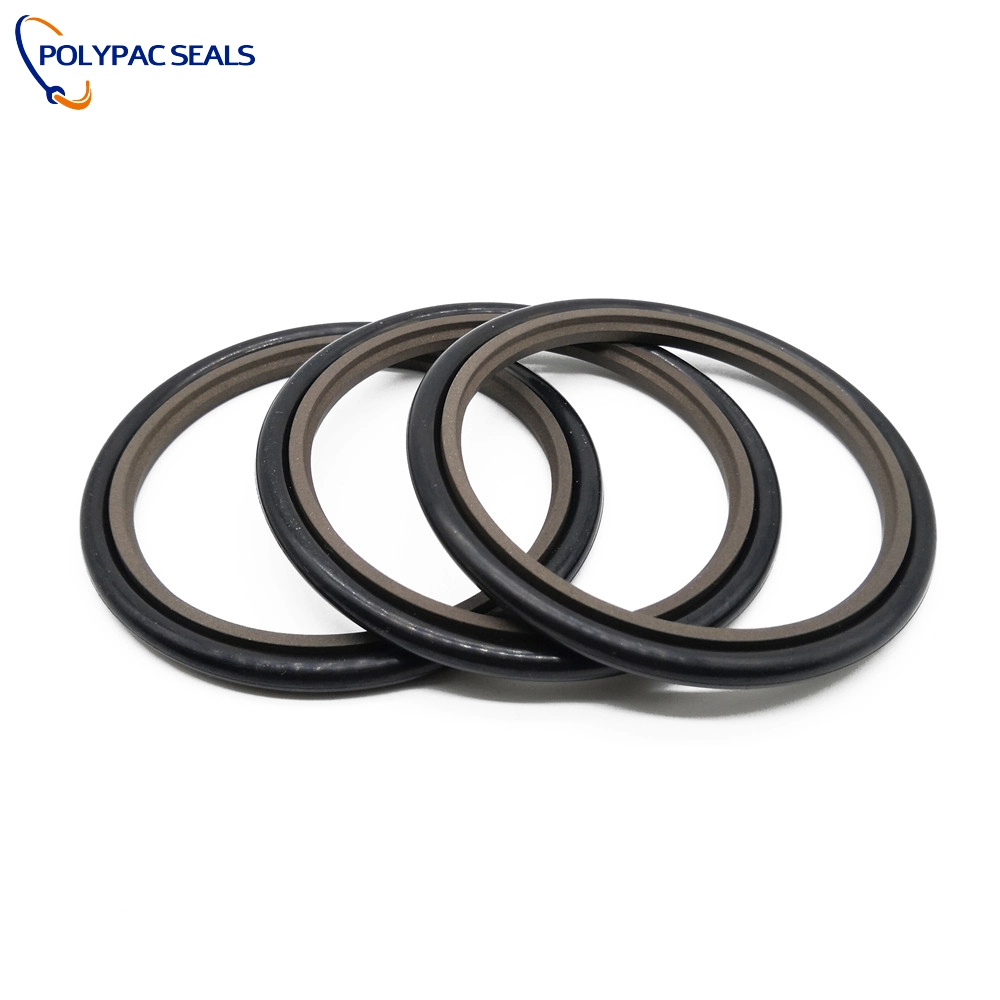
| Bronze-filled PTFE | Improved thermal conductivity and wear resistance; reduced cold flow | Hydraulic pistons, valves, bearings |
| Carbon-filled PTFE | Improved friction and wear performance; good compressive strength | Reciprocating seals, low-friction dynamic seals |
| Graphite-filled PTFE | Enhanced high-temperature performance and lubricity | High-temperature valves, steam systems |
| MoS₂-filled PTFE | Excellent dry-lubrication and wear resistance | Applications with poor lubrication or high sliding speeds |
| Glass-filled PTFE | Higher stiffness and reduced creep | Static seals requiring dimensional stability |
Selection of a filled grade should be based on testing or proven field results for the specific sliding speed, pressure, temperature and chemical exposure expected.
Comparing rings, gaskets, and custom shapes — quick selection guide for ptfe seals
The following table summarizes the practical differences to help narrow design choices quickly.
| Type | Best for | Advantages | Limitations |
|---|---|---|---|
| PTFE rings (O-rings / backup rings) | Static seals, as backup to elastomers, low-frequency motion | Chemical resistance, temperature range, easy installation | Cold flow/creep under load; limited elastic recovery (use with elastomer cores or fillers) |
| PTFE gaskets | Flanged joints in corrosive or high-temp systems | Excellent inertness; low permeability | Requires bolt load control; potential creep |
| Custom PTFE shapes | Complex interfaces, rotary seals, integrated functions | Tailored performance; combine PTFE with other materials | Higher NRE and tooling cost for small volumes |
Design, testing, and specification tips for long-life ptfe seals
To achieve reliable life from ptfe seals follow these practical rules:
- Specify the correct grade: use filled PTFE for dynamic loads or where extrusion and wear are concerns.
- Provide precise gland dimensions and surface finish: PTFE components can tolerate less roughness than many elastomers to avoid accelerated wear on counterfaces.
- Control compression and bolt torque for gaskets to minimize creep.
- Design for assembly: chamfers, lubrication during assembly, and tool accessibility reduce damage to PTFE seals.
- Test in representative media and cycle conditions. Bench testing often uncovers issues that static chemical charts cannot predict.
Manufacturing methods and quality controls for ptfe seals
Common manufacturing processes for ptfe seals include compression molding, sintering, machining from extruded rod or billet, and die-cutting for sheet gaskets. Quality control should include dimensional inspection, hardness/compressive set testing for elastomeric composites, and functional testing at pressure/temperature cycles relevant to the end-use.
Polypac: custom PTFE seal manufacturing capabilities and specialization
Polypac is a scientific and technical hydraulic seal manufacturer and oil seal supplier specializing in seal production, sealing material development, and customized sealing solutions for special working conditions.
Polypac's custom rubber ring and O-ring factory covers an area of more than 10,000 square meters, with a factory space of 8,000 square meters. Our production and testing equipment are among the most advanced in the industry. As one of the largest companies in China dedicated to the production and development of seals, we maintain long-term communication and cooperation with numerous universities and research institutions both domestically and internationally.
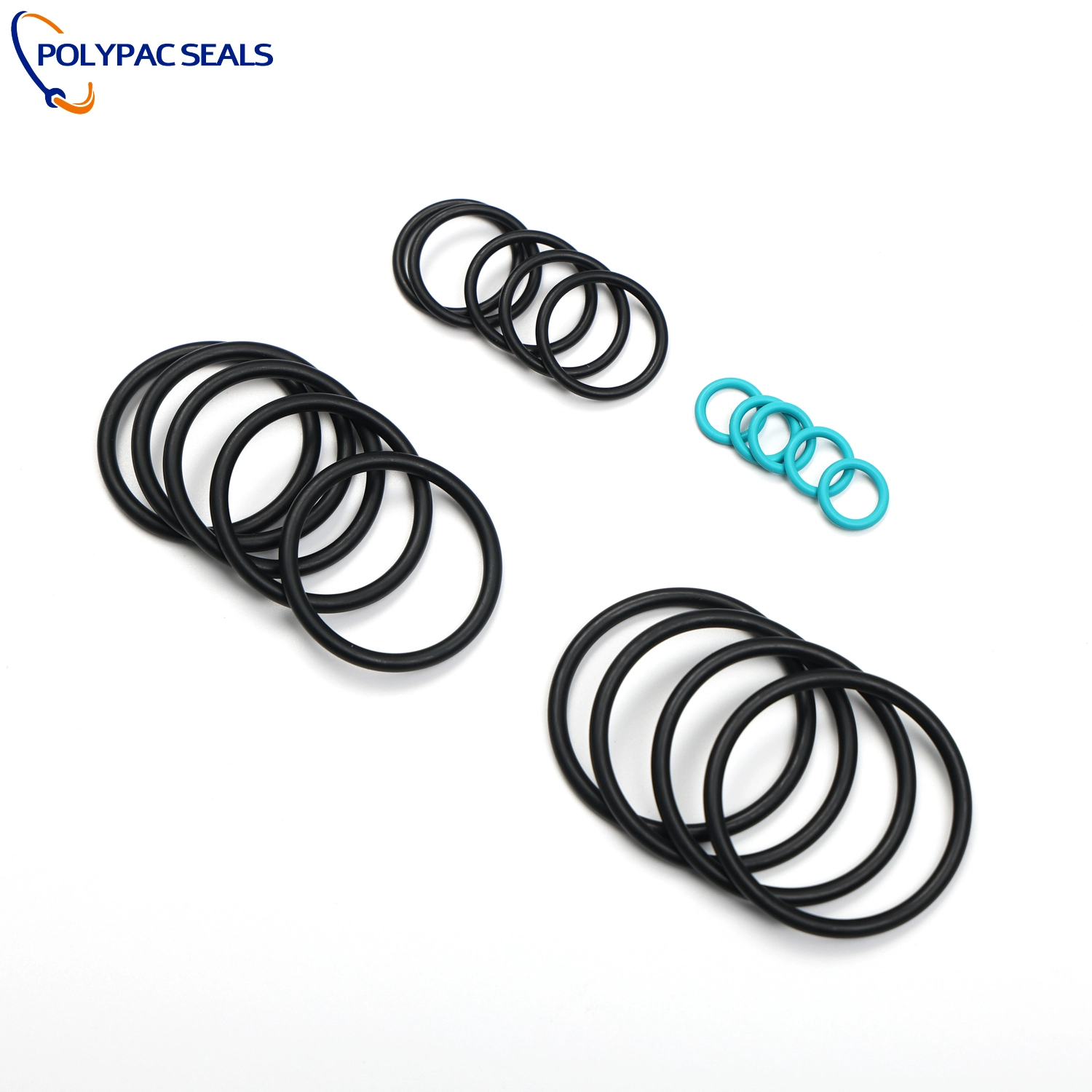
Founded in 2008, Polypac began by manufacturing filled PTFE seals, including bronze-filled PTFE, carbon-filled PTFE, graphite PTFE, MoS₂-filled PTFE, and glass-filled PTFE. Today, we have expanded our product line to include O-rings made from various materials such as NBR, FKM, silicone, EPDM, and FFKM.
Polypac main products and competitive advantages for ptfe seals
Polypac's core product range includes O-Rings, Rod Seals, Piston Seals, End Face Spring Seals, Scraper Seals, Rotary Seals, Back-up Rings, and Dust Rings. Key competitive differentiators:
- Broad material expertise: filled PTFE derivatives and multiple elastomer compounds to match diverse media and temperature requirements.
- Advanced equipment and scale: large manufacturing area and modern testing capabilities support consistency and capacity for both prototyping and volume production.
- R&D collaboration: ongoing partnerships with universities and institutes underpin materials development and validation testing.
- Custom engineering: capability to produce complex PTFE shapes, laminated composites, and high-precision machined components.
If your application requires evaluation of filled PTFE options, custom profile design, or material qualification testing, Polypac can provide application engineering support, prototyping, and scaled production services tailored to industry-specific standards.
Cost, lead time and procurement considerations for ptfe seals
PTFE seals generally cost more than standard elastomer seals due to material cost and, for custom shapes, additional machining or tooling. Lead times depend on complexity and quantity: off-the-shelf PTFE gaskets and standard backup rings are quick to ship, while molded custom seals or machined assemblies typically require prototyping and longer lead times. Working with an experienced manufacturer (like Polypac) that offers both material development and production scale can reduce iteration cycles and overall time-to-production.
FAQ — common questions about ptfe seals
Q1: What is the difference between PTFE O-rings and standard elastomer O-rings?
A1: PTFE O-rings offer superior chemical and temperature resistance and much lower friction, but have less elastic recovery and higher cold-flow (creep). Elastomer O-rings provide better sealing under low compression and dynamic compliance. Combining a PTFE jacket with an elastomer core can provide the advantages of both.
Q2: When should I choose filled PTFE over virgin PTFE for seals?
A2: Choose filled PTFE when you need improved wear resistance, reduced creep, higher stiffness, or better thermal conductivity—common in dynamic sealing, high-pressure sealing, and applications where extrusion or dimensional stability is a concern.
Q3: Can PTFE seals be used in high-pressure hydraulic systems?
A3: Yes. PTFE seals are used in hydraulic systems, but often in combination with backup rings or bonded elastomer cores. Filled PTFE grades and proper groove design are critical to prevent extrusion and ensure longevity under pressure.
Q4: How do chemical compatibility and temperature limits affect PTFE seal selection?
A4: PTFE is compatible with most chemicals and operates across a wide temperature range (-200°C to +260°C typical). However, verify compatibility for specific concentrated reagents (e.g., molten alkali metals, elemental fluorine) and consider filled grades if thermal conductivity or wear is a concern.
Q5: How long do PTFE seals last?
A5: Seal life depends on application conditions—pressure, temperature cycling, sliding speed, chemical exposure, and proper installation. With correct grade selection and design, PTFE seals often last longer than elastomers in corrosive/high-temp service, but they may require replacement sooner if subject to high creep or abrasive wear.
Q6: Can you provide custom PTFE seal design and prototyping services?
A6: Yes. Manufacturers like Polypac offer custom design, material selection, prototyping, and testing services to validate shapes and grades in real-world conditions prior to full-scale production.
Contact and product inquiry — get engineered PTFE sealing solutions
For tailored recommendations, material samples, prototype quotes, or volume pricing on ptfe seals (rings, gaskets, and custom shapes), contact Polypac's technical sales team. We provide engineering support to select the optimal PTFE grade, design glands, and perform qualification testing to minimize field risk. View product catalogs or request a consultation via our website or by contacting our sales engineers directly.
References
- Polytetrafluoroethylene (PTFE) — Wikipedia. https://en.wikipedia.org/wiki/Polytetrafluoroethylene. Accessed 2025-11-28.
- PTFE material properties — Matmatch. https://matmatch.com/materials/matm-ptfe-polytetrafluoroethylene. Accessed 2025-11-28.
- PTFE (Teflon) Facts & Properties — Chemours/Teflon resources. https://www.chemours.com/en/brands/teflon. Accessed 2025-11-28.
- Seal selection guidance and backup ring use — Parker O-Ring Handbook (industry reference). https://www.parker.com/ (see Parker seal resources). Accessed 2025-11-28.
Note: For application-specific data (pressure limits, friction at specific speeds, or life-cycle testing), always request manufacturer test reports or independent lab validation relevant to your operating conditions.

High-Performance Pneumatic Piston Seals: How to Achieve Zero-Leakage Efficiency

PTFE vs. Composite: Choosing the Best Piston Guide Ring Material for High-Pressure Systems

Mastering O-Ring Gland Design: The Complete Guide for Perfect Sealing Performance

Advanced Back-Up Ring Materials: Beyond PTFE for Extreme Temperature Environments

PTFE vs. Urethane Scrapers: Which Material Truly Prevents Contamination?
Products
What is the difference between a static seal and a dynamic seal?
Can I reuse a seal?
How important is surface finish on the metal parts that contact the seal?
How do I choose the right material for my sealing application?
How can I prevent seal damage during installation?
Stay Updated with Industry Insights
Subscribe to our articles and receive the latest news, expert guidance, and technical updates directly in your E-mail.
Rest assured that your privacy is important to us, and all information provided will be handled with the utmost confidentiality.

Polypac is a trusted global supplier of high-performance sealing solutions, providing OEM & ODM services for industries worldwide.
E-mail:
Phone/WhatsApp:
© 2025 Polypac Seals. All Rights Reserved.
dms
DMS
DMS