












Materials Comparison: PTFE vs Elastomer Back-Up O-Rings
As a sealing consultant with years of hands-on experience in hydraulic and static sealing systems, I know that the choice of a back up o ring material can be decisive for longevity and reliability. In this article I summarize how PTFE and elastomer back-up rings behave in service, where each material excels or fails, and how to match material selection to pressure, temperature, chemical exposure and extrusion gap conditions. I include practical selection rules, a comparative data table, references to standards, and manufacturer-grade recommendations so you can make verifiable, service-ready decisions.
Why back-up rings matter in sealing systems
Back-up rings: function and failure modes
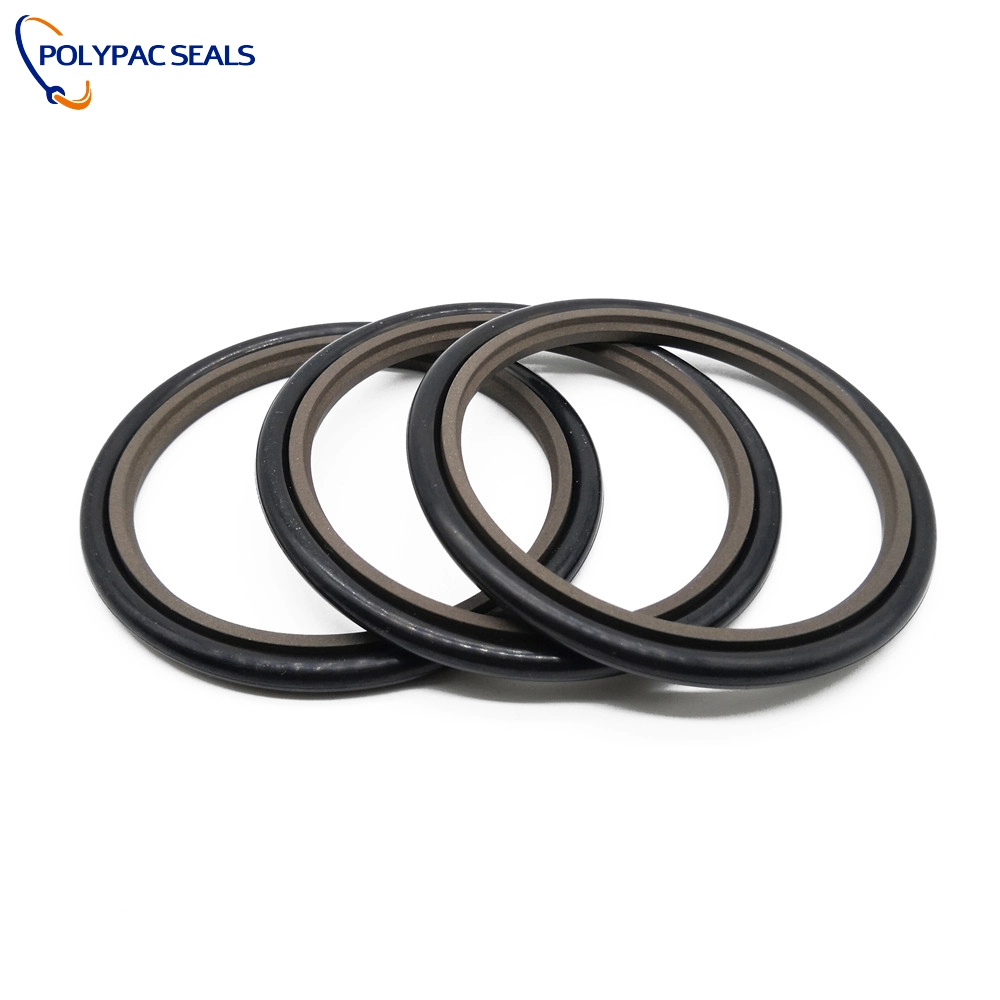
A back-up ring is typically used alongside an O-ring to prevent extrusion of the soft elastomer into a clearance gap under pressure. Without proper backing, an O-ring can extrude, tear, or be rapidly abraded, leading to leakage. I routinely see failures caused by three root causes: improper material selection for temperature/chemistry, insufficient cross-section or hardness mismatch, and installation damage. Understanding how a chosen back up o ring reacts under these stresses is essential to avoiding unplanned downtime.
When to use PTFE versus elastomer back-up rings
PTFE back-up rings are often chosen for high-temperature, chemically aggressive or very low-friction systems; elastomer back-up rings (made from NBR, FKM, EPDM or silicone variants) are selected where compliance, ease of assembly and cost are primary concerns. I use PTFE-backed designs when extrusion gaps are large or continuous contact with aggressive fluids is expected. For moderate pressures and dynamic interfaces with small extrusion gaps, elastomeric back-up rings can be preferable due to better elastic conformity.
Material properties and performance comparison
Mechanical and tribological behavior
PTFE is a semi-crystalline thermoplastic with very low coefficient of friction and excellent wear resistance in many applications; however, it is relatively stiff and has limited elastic recovery compared with rubber. Elastomers are viscoelastic and offer large elastic recovery and energy absorption, which helps maintain seal contact and compensate for minor misalignments. For dynamic seals I always weigh friction vs. sealing conformity: PTFE reduces friction but can increase leak risk if not complemented by an appropriate O-ring geometry.
Chemical compatibility and temperature range
PTFE is well-known for broad chemical inertness and can reliably operate from roughly -200°C to +260°C in many grades (see polytetrafluoroethylene summary) (source). Elastomers vary: NBR handles oils and fuels well up to ~120°C; FKM (Viton®) extends high-temperature capability to ~200°C and resists many aggressive fluids; EPDM resists steam and many glycols but is attacked by hydrocarbons. I always consult specific compound datasheets for exact limits and run compatibility tests for unfamiliar fluids.
Extrusion resistance and pressure capability
Extrusion resistance is central to the back-up ring role. PTFE offers excellent extrusion resistance at high pressures because it is hard to deform into a gap; however, brittle behavior under shock and limited elastic bite can create sealing challenges if the O-ring cannot press PTFE against the lip properly. Elastomer back-up rings are more forgiving in assembly and can partially absorb gap variations, but under very high pressure they may themselves extrude unless the hardness and cross-section are correctly specified. Industry practice often uses PTFE back-ups above certain pressure thresholds or in larger extrusion gaps.
Quantitative comparison and selection guidance
Comparative table: PTFE vs typical elastomer back-up rings
| Property | PTFE (typical filled grades) | Elastomers (NBR / FKM / EPDM) | Source / Notes |
|---|---|---|---|
| Temperature range | -200°C to +260°C (service dependent) | NBR: -40°C to +120°C; FKM: -20°C to +200°C; EPDM: -50°C to +150°C | PTFE; NBR; FKM |
| Chemical resistance | Excellent to most chemicals, solvents, fuels, acids | Good to oils/greases (NBR), excellent fuels/chemicals (FKM), poor to hydrocarbons (EPDM) | Generalized; always verify with compound datasheets |
| Friction | Very low | Higher (depends on durometer & lubrication) | Low friction can reduce wear but affect sealing contact |
| Elastic recovery | Low (thermoplastic behavior) | High (viscoelastic rubber) | Elastomers better maintain contact after compression cycles |
| Extrusion resistance | High (especially filled PTFE) | Moderate to low unless specially compounded or backed | Design-dependent; use PTFE for large gaps/high pressure |
| Manufacturability | Requires machining/molding; filled PTFE available | Easier molding, lower cost for high volumes | Consider lead time and tolerance control |
| Typical applications | High-temp, aggressive chemistry, high-pressure backing | General hydraulics, automotive, moderate temps/pressures | Application-specific selection recommended |
Data sources: material summaries at PTFE and elastomer references (NBR, FKM). For standards on O-ring dimensions and tolerances see ISO 3601 (ISO 3601).
Pressure/geometry selection rules I use
- Low pressure (<10 MPa) and small extrusion gaps: elastomeric back-up rings (proper durometer) often suffice.
- Medium pressure (10–30 MPa) or larger gaps: consider filled PTFE back-up rings or composite designs (PTFE lip with elastomeric support).
- High pressure (>30 MPa) or aggressive chemicals: filled PTFE back-up rings are preferred for their extrusion resistance and chemical stability.
Testing, installation and long-term considerations
Recommended testing procedures
Before committing to a material, I recommend a three-step validation: 1) chemical compatibility soak tests at expected temperatures, 2) static pressure hold tests to evaluate extrusion and creep, and 3) dynamic cycling tests when motion is involved. Use standardized test methods where possible (e.g., ASTM D395 for compression set of elastomers) (ASTM D395). For critical applications, accelerated aging (temperature/ozone/fuel exposure) will reveal long-term degradation modes.
Installation best practices
Proper installation avoids nicking and misalignment that often precipitate failure. PTFE back-up rings are less forgiving of sharp edges and require chamfers and lubricants during assembly to prevent damage. Elastomer back-up rings tolerate some deformation during assembly but still require correct gland design and lubrication. I always verify gland widths, chamfers and surface finish; if manufacturing tolerances are marginal, choose the more compliant solution or redesign the gland.
Service monitoring and maintenance
Monitor systems for incremental leakage, changes in friction (stick-slip), and pressure spikes. Replace back-up rings at scheduled intervals in critical systems rather than waiting for failures, and keep records of material performance — this empirical feedback is often the best guide to future material choices.
Polypac: manufacturing capability and why it matters for back-up ring selection
Polypac is a scientific and technical hydraulic seal manufacturer and oil seal supplier specializing in seal production, sealing material development, and customized sealing solutions for special working conditions. Polypac's custom rubber ring and O-ring factory covers an area of more than 10,000 square meters, with a factory space of 8,000 square meters. Our production and testing equipment are among the most advanced in the industry. As one of the largest companies in China dedicated to the production and development of seals, we maintain long-term communication and cooperation with numerous universities and research institutions both domestically and internationally.
Founded in 2008, Polypac began by manufacturing filled PTFE seals, including bronze-filled PTFE, carbon-filled PTFE, graphite PTFE, MoS₂-filled PTFE, and glass-filled PTFE. Today, we have expanded our product line to include O-rings made from various materials such as NBR, FKM, silicone, EPDM, and FFKM. Polypac's product strengths include O-Rings, Rod Seals, Piston Seals, End Face Spring Seals, Scraper Seals, Rotary Seals, Back-up Rings, and Dust Rings.
Why this matters: choosing a back up o ring from a manufacturer with integrated material development and lab facilities means you can obtain tailored compounds, filled PTFE variants optimized for your extrusion and friction balance, and validated test reports. Polypac's R&D partnerships with universities and its large-scale production capacity enable quick turnarounds on prototypes and consistent long-term supply — an important competitive edge when designs move from prototype to production.
Polypac's competitive differentials
- In-house compound development and filled PTFE capabilities for customized extrusion resistance.
- Advanced production and testing equipment that support batch traceability and validated property data.
- Wide product range: from classical elastomer O-rings to high-performance PTFE back-up rings and composite solutions.
Practical selection checklist (my field-tested approach)
Step-by-step decision flow
- Define operating temperature, pressure, media, and movement (static/dynamic).
- Measure actual extrusion gap tolerances and machining finish.
- Eliminate materials incompatible with media or temperature extremes.
- If pressure & gap exceed elastomer extrusion limits, select filled PTFE or composite back-up rings.
- Prototype with real fluids and pressure cycles; iterate on durometer and geometry.
Common mistakes I see and how to avoid them
- Selecting materials by name (PTFE is always better) without checking geometry — choose by system context.
- Ignoring dynamic friction requirements — PTFE reduces friction but may change sealing behavior on motion interfaces.
- Omitting pre-installation inspection — even the best back-up ring fails if nicked or assembled incorrectly.
FAQ (Common questions about back-up O-rings)
1. What is the main difference between a PTFE back-up ring and an elastomer back-up ring?
PTFE provides higher extrusion resistance and chemical/temperature tolerance but has low elastic recovery; elastomers offer better elastic conformity and easier installation but can extrude at high pressure unless specifically designed or compounded.
2. When should I prefer filled PTFE back-up rings?
Prefer filled PTFE when facing high pressures, aggressive chemicals, wide extrusion gaps, or high-temperature service where elastomers will fail or age rapidly.
3. Can I use PTFE back-up rings in dynamic applications?
Yes, but you must assess friction and sealing contact. In many dynamic systems a composite approach (elastomer O-ring with PTFE back-up) or lubrication strategy works best; validate with dynamic cycling tests.
4. How do I test a chosen material before full-scale deployment?
Perform chemical soak tests, static pressure extrusion tests, and dynamic cycling under representative temperatures and pressures. Use standards like ASTM D395 for elastomer compression set and follow ISO 3601 for dimensional checks (ISO 3601).
5. Are filled PTFE back-up rings machinable for custom profiles?
Yes. Filled PTFE grades (bronze-, carbon-, glass- or MoS₂-filled) can be machined or molded to custom profiles and are routinely used where tailored extrusion resistance and low friction are required.
6. How do I choose between NBR and FKM elastomer back-up rings?
Choose NBR for oil-based hydraulic systems with moderate temperature; choose FKM (Viton®) for higher temperatures and aggressive fluids. Refer to compound datasheets for exact chemical compatibility.
If you have a specific application — provide operating pressure, temperature range, fluid, movement type and gland dimensions — I can recommend a tested material and geometry. For production and custom solutions, contact Polypac to request samples, material datasheets, and test reports. Our R&D and manufacturing capacity allow rapid prototyping of filled PTFE and elastomer compounds to match your working conditions.
Contact Polypac to discuss custom back-up O-rings and sealing solutions or to view our product catalog: we specialize in O-Rings, Rod Seals, Piston Seals, End Face Spring Seals, Scraper Seals, Rotary Seals, Back-up Rings, and Dust Rings. Reach out for engineering support, material selection, and sample orders.

How to Choose the Best Hydraulic Piston Seal Kit for High-Pressure Applications

Hydraulic Cylinder Seals Kits: 5 High-Tech Materials That Double Your Maintenance Interval

How to Choose the Perfect Hydraulic Jack Seals: A Comprehensive Material & Performance Comparison

High-Performance Pneumatic Piston Seals: How to Achieve Zero-Leakage Efficiency

PTFE vs. Composite: Choosing the Best Piston Guide Ring Material for High-Pressure Systems
Products
How can I prevent seal damage during installation?
What is the difference between NBR and FKM materials?
How do I choose the right material for my sealing application?
What does "AS568" mean?
Can I reuse a seal?
Stay Updated with Industry Insights
Subscribe to our articles and receive the latest news, expert guidance, and technical updates directly in your E-mail.
Rest assured that your privacy is important to us, and all information provided will be handled with the utmost confidentiality.

Polypac is a trusted global supplier of high-performance sealing solutions, providing OEM & ODM services for industries worldwide.
E-mail:
Phone/WhatsApp:
© 2025 Polypac Seals. All Rights Reserved.
dms
DMS
DMS