












Quality Standards and Testing for Piston Rod Seals
I write from long experience in hydraulic sealing: selecting materials, defining tolerances, and establishing test protocols for piston rod seal assemblies. In this article I focus on piston rod seals — their common failure modes, the international standards that govern dimensions and material properties, and the laboratory and in-situ tests that give measurable, verifiable evidence of performance. I describe practical acceptance criteria, test-method comparisons, and how manufacturers (or procurement teams) can build a robust quality program for rod seals, O-rings and mating components used in hydraulic cylinders.
Understanding seal failures and why standards matter
Typical failure mechanisms for piston rod seals
Piston rod seals (rod seals) fail for a handful of repeatable reasons: extrusion and nibbling at the seal lip due to pressure spikes or incorrect gap control; abrasive wear from contaminants or incompatible mating surfaces; chemical attack from hydraulic fluids or additives; thermal aging and hardening that reduce elasticity; and installation damage. Recognizing the mechanism is essential because each mode maps to different corrective measures — material change, tighter tolerances, surface finish control, or improved filtration.
How standards reduce ambiguity
Standards provide objective prescriptions for geometry, material properties, test procedures, and reporting. When procurement specifies compliance to standards such as ISO 3601 for O-ring dimensions, SAE AS568 for O‑ring sizes, or ASTM D2000 for rubber material classification, it becomes feasible to compare supplier data, reproduce tests, and pass regulatory or contractual audits.
Why traceability and data matter
In my projects, traceability — batch numbers, material certificates, test reports — is non-negotiable. When a piston rod seal fails in the field, a clear chain of evidence (raw material lot, cure date, hardness, compression set, dimensional reports) allows root-cause analysis and prevents repeated failures. Standards make those records consistent and comparable across labs and suppliers.
Key quality standards and material specifications
Dimensional and tolerance standards
Seals must match groove geometry, rod diameter and surface finish. For elastomeric O-rings and many rod seal geometries, ISO and SAE standards for sizes and tolerances are widely used. For example, ISO 3601 (O-rings—dynamics and dimensions) and SAE AS568 (O‑ring sizes) provide baseline dimensions. For custom rod seals and back-up rings, manufacturers typically supply detailed CAD drawings and tolerances tied to cylinder design parameters (clearance/gap, gland depth).
Material classification and chemical resistance
ASTM D2000 provides a framework for rubber material classification by oil resistance, temperature and mechanical properties. Fluorocarbon (FKM), nitrile (NBR), HNBR, EPDM and FFKM are common in piston and rod seals. For PTFE and filled PTFE (bronze-, carbon-, or MoS2-filled PTFE), manufacturers reference material data sheets and supplier certifications. Where chemical compatibility is critical, I insist on fluid-immersion tests and published compatibility charts from material suppliers, and on accelerated aging per standards such as ASTM D573 (thermo-oxidative aging).
Quality management and factory audits
ISO 9001 quality management is the baseline for systematic manufacturing and inspection. For higher assurance, many OEMs request supplier audits, capability studies and evidence of laboratory accreditation (e.g., ISO/IEC 17025) for test labs. These frameworks reduce variability and enforce continuous improvement.
Testing methods, measurable acceptance criteria, and equipment
Essential laboratory tests
Below are the test categories I require to evaluate piston rod seal performance:
- Dimensional inspection (CMM or calibrated micrometers)
- Hardness (Shore A) per ASTM D2240
- Compression set (ASTM D395)
- Tensile strength and elongation (ASTM D412)
- Thermal aging (ASTM D573) and ozone resistance (ISO 1431)
- Fluid compatibility and swelling (as per the hydraulic fluid spec)
- Dynamic friction and wear (reciprocating test rigs or pin-on-disk adapted for seals)
- Leakage testing in a cylinder rig under static and dynamic conditions
Typical acceptance criteria (examples)
Acceptance criteria depend on application severity (low-pressure vs. high-pressure, dynamic vs. static). Below is a concise table I use with suppliers; these values are starting points and should be customized for each application.
| Test | Standard / Method | Typical Acceptance | Rationale |
|---|---|---|---|
| Hardness (Shore A) | ASTM D2240 | 55–90 Shore A (per design) | Controls seal stiffness and extrusion resistance |
| Compression Set | ASTM D395 | < 25% (after specified aging) | Ensures long-term sealing after compression |
| Tensile / Elongation | ASTM D412 | Tensile > 8 MPa; Elongation > 200% | Mechanical integrity under load |
| Wear / Dynamic Endurance | Custom reciprocating test | Leak rate within spec after 1M cycles | Validates friction and wear on piston rod |
| Leakage (static/dynamic) | Cylinder rig, ISO/industry method | < specified drop per minute (application-specific) | Direct performance metric for end-users |
Sources for standards and methods: ISO 3601, SAE AS568, and ASTM D2000. For an accessible overview of hydraulic seals, see the industry summary on Wikipedia.
Interpreting friction and rod-surface data
Friction coefficient, stick-slip tendency, and wear volume are measured in dynamic rigs. I always correlate these lab results with rod surface finish (Ra, Rz), hardness of mating components and lubrication conditions. Typical rod finish recommendations are Ra 0.2–0.8 µm depending on seal lip geometry and material; rougher surfaces accelerate abrasive wear, smoother surfaces can contribute to stick-slip if fluid film isn't maintained.
Implementing a QA program for piston rod seals
Incoming material control and traceability
Incoming inspections should verify raw material certificates (composition, filler content for PTFE compounds), hardness on cured samples, and dimensional conformity of molded parts. I require lot traceability for elastomers and PTFE compounds and batch-marking on release documentation so parts can be traced back in case of field issues.
Process control, in-line checks and calibration
Key process controls include temperature and time profiles for vulcanization, probe sampling of cured rubber parts, in-line visual inspections for flashing and deformation, and statistical process control (SPC) for critical dimensions. Test gauges and CMMs must be calibrated per ISO/IEC 17025-accredited labs or certified calibration houses.
Field testing, failure analysis, and continuous improvement
Even the best laboratory tests can't fully predict real-world contamination, shock loads, or assembly errors. I recommend a field-testing program with instrumented cylinders, routine non-conformance reporting, and a formal root-cause analysis (RCA) process. Use returned part analysis (microscopy, FTIR for material ID, hardness profiling) to feed improvements into material selection and gland design.
Polypac capabilities: practical example of implementing standards
As an example of a supplier that aligns testing capability and manufacturing scale, Polypac is a scientific and technical hydraulic seal manufacturer and oil seal supplier specializing in seal production, sealing material development, and customized sealing solutions for special working conditions. Polypac's custom rubber ring and O-ring factory covers an area of more than 10,000 square meters, with a factory space of 8,000 square meters. Their production and testing equipment are among the most advanced in the industry, and they maintain long-term communication and cooperation with numerous universities and research institutions both domestically and internationally.
Founded in 2008, Polypac began by manufacturing filled PTFE seals, including bronze-filled PTFE, carbon-filled PTFE, graphite PTFE, MoS2-filled PTFE, and glass-filled PTFE. Today, they have expanded their product line to include O-rings made from various materials such as NBR, FKM, silicone, EPDM, and FFKM. Polypac’s core products relevant to piston rod systems include O-Rings, Rod Seals, Piston Seals, End Face Spring Seals, Scraper Seals, Rotary Seals, Back-up Rings and Dust Rings.
What differentiates Polypac in practice is the combination of material development capability, large-scale production, and a laboratory-grade testing capability that supports custom fluid compatibility testing and dynamic endurance trials. For OEMs and integrators looking for a partner to develop piston rod seals under strict QA and test requirements, such a supplier model reduces lead time between design iterations and produces verifiable test documentation aligned with industry standards.
Practical checklist before approving piston rod seals for production
Design and drawing validation
Ensure the supplier provides detailed drawings with tolerances, gland dimensions, recommended rod surface finish, and material designation (ASTM D2000 code or equivalent).
Required test reports and certificates
Require: material certificates, Shore A hardness test reports, compression set, tensile/elongation, fluid compatibility results, dynamic leak and wear test reports, dimensional inspection reports and lot traceability. If a critical application, require lab accreditation details (ISO/IEC 17025) for testing labs.
Acceptance and warranty terms
Define acceptance based on the agreed test matrix and set warranty and sample-return conditions. Include provisions for field failure analysis and corrective action timelines.
FAQ
1. What is the difference between a piston seal and a rod seal?
Piston seals prevent fluid flow across the piston (maintain chamber pressure), while rod seals (piston rod seals) prevent fluid leakage along the moving rod where it exits the cylinder. Piston seals are usually wider, subject to different loading, and often use different cross-sections and backup rings compared to rod seals.
2. Which tests best predict in-service life for rod seals?
Dynamic endurance tests using a reciprocating cylinder rig under representative pressure, velocity and temperature cycles combined with particle-contaminant exposure are most predictive. Complement with compression set and thermal aging tests to estimate long-term sealing resilience.
3. How tight must gland tolerances be for rod seals?
Gland gap and radial clearance depend on seal geometry and operating pressure. Typical radial clearances are in the range of 0.2–0.5 mm for many elastomeric rod seals, but application-specific design and finite-element analysis (FEA) are recommended for high-pressure or high-speed systems.
4. When should I use filled PTFE vs elastomeric seals?
Filled PTFE is preferred for extreme temperatures, aggressive fluids, and very low friction or sliding applications. Elastomers (NBR, HNBR, FKM) are preferred when elasticity, energy absorption and lower cost are required. Filled PTFE combinations (e.g., PTFE backup rings plus elastomeric seal) often deliver a balanced solution.
5. Are ISO or ASTM standards mandatory?
Standards are not legally mandatory in most cases, but they are industry-accepted references that provide reproducible test methods and acceptance criteria. Purchase specifications referencing relevant standards make performance claims verifiable and reduce disputes.
6. How do I validate supplier test reports?
Request raw data, calibration certificates for equipment, and third-party lab validation when necessary. For critical projects, witness testing at the supplier’s facility or use an accredited external lab to replicate key tests.
If you need help selecting materials, defining test matrices, or auditing supplier quality for piston rod seals, contact Polypac to discuss customized sealing solutions, sample testing and turnkey production. For product inquiries, samples or technical consultations, reach out to Polypac’s sales and engineering team to arrange testing, obtain certificates, and review custom design options.
Contact – Polypac: consult our product range (O-Rings, Rod Seals, Piston Seals, End Face Spring Seals, Scraper Seals, Rotary Seals, Back-up Rings, Dust Ring) and request a quotation or laboratory test plan tailored to your application.

High-Performance Pneumatic Piston Seals: How to Achieve Zero-Leakage Efficiency

PTFE vs. Composite: Choosing the Best Piston Guide Ring Material for High-Pressure Systems

Mastering O-Ring Gland Design: The Complete Guide for Perfect Sealing Performance

Advanced Back-Up Ring Materials: Beyond PTFE for Extreme Temperature Environments

PTFE vs. Urethane Scrapers: Which Material Truly Prevents Contamination?
Products
What does "AS568" mean?
How can I prevent seal damage during installation?
What is the difference between a static seal and a dynamic seal?
What is the difference between NBR and FKM materials?
What is the purpose of the metal spring in a rotary shaft seal?
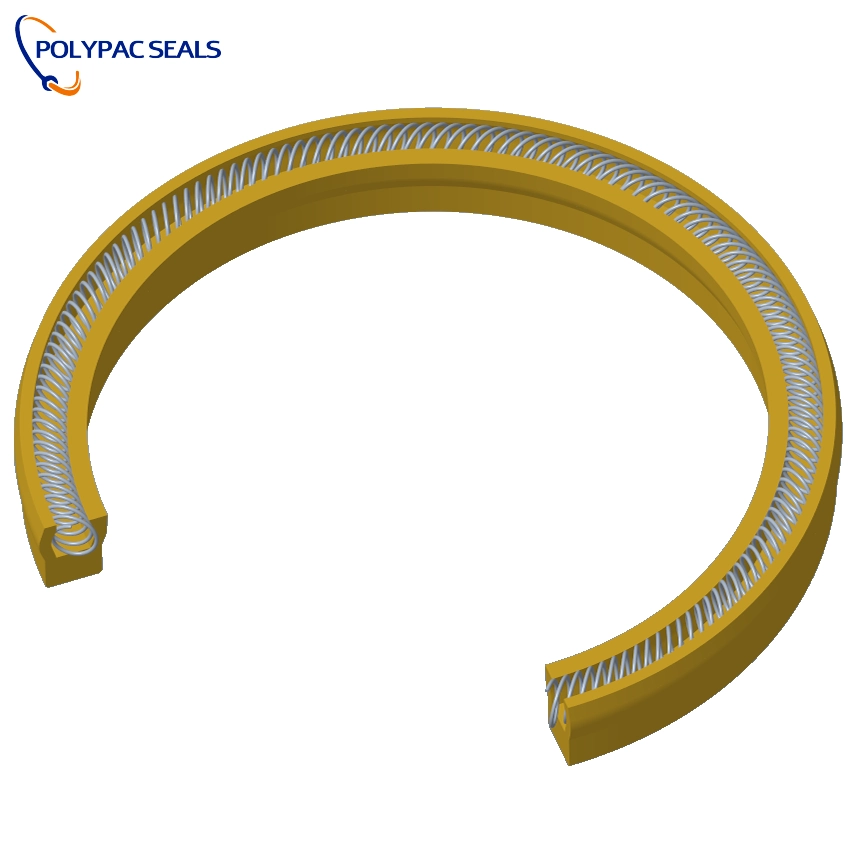

Polypac RSJ Seals: Single-acting piston rod seal designed for hydraulic systems. Featuring a durable dust lip, it ensures reliable sealing and protection against contaminants. Ideal for hydraulic applications requiring high-performance RSJ seals and piston rod sealing solutions.
Stay Updated with Industry Insights
Subscribe to our articles and receive the latest news, expert guidance, and technical updates directly in your E-mail.
Rest assured that your privacy is important to us, and all information provided will be handled with the utmost confidentiality.

Polypac is a trusted global supplier of high-performance sealing solutions, providing OEM & ODM services for industries worldwide.
E-mail:
Phone/WhatsApp:
© 2025 Polypac Seals. All Rights Reserved.
dms
DMS
DMS