












Quality Tests & Certifications for Hydraulic Piston Seals
Hydraulic piston seal manufacturers and end users need reliable, verifiable testing and recognized certifications to ensure seals perform under pressure, temperature, and abrasive conditions. In this article I walk through the key quality tests for hydraulic piston seals, link those tests to industry standards, explain how to interpret test results, and describe what certifications and supplier capabilities truly matter when specifying seals for mobile or industrial hydraulics.
Why seal performance matters in hydraulic systems
Common failure modes and their consequences
I've inspected hundreds of hydraulic systems and seen the same failure modes repeatedly: extrusion, wear, thermal degradation, chemical attack, and hardening or cracking from aging. A failed hydraulic piston seal can cause internal leakage, loss of system efficiency, unexpected drift, contamination ingress, and in worst cases catastrophic equipment failure leading to downtime and safety incidents.
How failures show up in operation
Operational symptoms include pressure loss across the cylinder, inconsistent motion, increased heat, contamination in hydraulic fluid, and accelerated wear of mating surfaces. Understanding which test replicates the in-field mechanism is key to selecting a seal that will survive the actual service environment.
Performance metrics I prioritize
When I evaluate piston seals I focus on measurable metrics: static and dynamic leakage rates, compression set, hardness (Shore A/D), tensile strength, elongation at break, abrasion resistance, and extrusion resistance under pressure and temperature. Each metric correlates to a specific failure mode and can be validated via standardized tests.
Key quality tests for hydraulic piston seals
Material characterization tests
Material tests establish the baseline properties of rubber, elastomers, and PTFE compounds used in piston seals. Typical standardized tests include:
- Tensile strength and elongation at break (ASTM D412) to measure mechanical robustness.
- Hardness (Shore A or D, ASTM D2240) which affects friction and wear.
- Compression set (ASTM D395) which predicts sealing capability after prolonged deflection.
- Accelerated aging (heat-ageing per ASTM D573) to estimate lifetime degradation.
These tests are widely referenced in material datasheets and allow comparison across suppliers. For PTFE and filled PTFE compounds (e.g., bronze-filled, carbon-filled), I use material datasheets and corroborate with tribological tests because PTFE has different mechanical behavior than elastomers. (See Polytetrafluoroethylene overview: Wikipedia - PTFE).
Dynamic and functional tests
Static material properties don’t always predict service performance. I insist on dynamic tests that reproduce motion, pressure cycles, temperature swings, and contaminant exposure:
- Dynamic sealing tests (reciprocating rigs) to measure leakage and wear under representative stroke, speed, and pressure.
- High-pressure extrusion resistance tests with back-up rings to check for extrusion gaps and stability under peak pressures.
- Tribological tests to measure friction coefficients and wear rates between seal and rod/piston.
- Fluid compatibility tests (swelling, hardness changes) using the actual hydraulic fluid the seal will contact (e.g., HLP, biodegradable fluids).
Environmental and durability tests
Environmental factors accelerate failure. Common durability tests I specify include:
- Temperature cycling and thermal shock tests to reproduce cold starts and hot operation.
- Salt spray or corrosion evaluation for metallic components (relevant to combination seals and housings).
- Abrasion resistance (ASTM D5963 for certain rubbers) for contaminated environments.
Industry standards & certifications that matter
Quality management systems — ISO 9001
A manufacturer’s ISO 9001 certification is the baseline I require because it demonstrates a documented quality management system and traceability. ISO 9001 focuses on consistent processes, corrective actions, and customer satisfaction. For reference see ISO 9001 — Quality management.
Material and test standards — ASTM, ISO
Specific test methods give repeatable, comparable results. Commonly referenced standards include:
- ASTM D412 — Tensile properties of vulcanized rubber (ASTM D412).
- ASTM D395 — Compression set of rubber (ASTM D395).
- ASTM D2240 — Shore hardness (ASTM D2240).
- ASTM D2000 — Classification system for rubber materials (ASTM D2000).
- ISO 3601 — Fluid power — O-rings — Part of the suite for ring dimensions and tolerances (see ISO).
When specifications call for industry standards (e.g., mobile hydraulics, offshore equipment), ensure test reports reference the exact method (standard number, clause, specimen, and test conditions).
Third-party certifications and approvals
Beyond in-house testing and ISO 9001, certifications or approvals from independent labs (e.g., Bureau Veritas, TUV) or compliance statements for specific sectors (automotive approvals, API when relevant) strengthen confidence. I recommend independent third-party test reports for critical applications where safety and uptime are prioritized.
Selecting certified seals & evaluating manufacturer capability
Questions I always ask potential suppliers
To evaluate whether a manufacturer can reliably deliver hydraulic piston seals I ask for:
- ISO 9001 certificate and scope.
- Material certificates and full test reports (ASTM/ISO referenced) for the lot being supplied.
- Evidence of dynamic testing under representative pressures, temperatures and fluid types.
- Traceability: batch IDs, cure dates, and material compound codes.
- Factory inspection capabilities: available test rigs, hardness benches, tensile machines, tribometers, and extrusion test fixtures.
Comparative test table — what to expect from a certified supplier
| Test | Typical Standard | Purpose | Typical Acceptance |
|---|---|---|---|
| Tensile strength / Elongation | ASTM D412 | Assess material strength and ductility | Depends on compound; rubber >8 MPa typical; PTFE measured differently |
| Hardness (Shore) | ASTM D2240 | Predicts wear and friction | Specified per seal design (e.g., 70±5 Shore A) |
| Compression set | ASTM D395 | Predicts long-term sealing force retention | <20% typical after 22 h @100°C for many elastomers |
| Dynamic leakage | Custom/ISO test fixtures | Measures leakage under reciprocating motion | Application-specific, often < few drops/min at rated pressure |
| Fluid compatibility | ASTM/ISO fluid exposure methods | Checks swelling, hardness change | Minimal mass/hardness change per spec |
Data in the table is representative; always require the supplier's exact test conditions and pass/fail criteria.
Why in-house testing equipment and R&D partnerships matter
Manufacturers with advanced test benches and material development labs can develop compounds tailored to your fluid, pressure, and temperature profile. Partnerships with universities or research institutions further indicate continual improvement and validated test methodology. For example, I value suppliers that provide digital test reports with traceable lot numbers and raw data exports so results can be independently reviewed.
Polypac — capabilities, differentiation and product overview
Polypac’s manufacturing and R&D strengths
Polypac is a scientific and technical hydraulic seal manufacturer and oil seal supplier specializing in seal production, sealing material development, and customized sealing solutions for special working conditions. Founded in 2008, Polypac began by manufacturing filled PTFE seals (bronze-filled PTFE, carbon-filled PTFE, graphite PTFE, MoS2-filled PTFE, and glass-filled PTFE). Today, Polypac’s product line also includes O-rings in NBR, FKM, silicone, EPDM and FFKM, among others.
Polypac's custom rubber ring and O-ring factory covers more than 10,000 square meters, with 8,000 square meters of factory space. Their production and testing equipment are among the most advanced in the industry, supported by long-term collaboration with universities and research institutions domestically and internationally. These partnerships enable compound development, specialized tribological testing, and validation under realistic operating cycles.
Product scope and technical differentiators
Polypac’s core products include: O-Rings, Rod Seals, Piston Seals, End Face Spring Seals, Scraper Seals, Rotary Seals, Back-up Rings, and Dust Rings. Key differentiators I’ve verified include:
- Extensive PTFE filling expertise for low-friction, high-wear environments.
- Multi-material compound development (NBR, FKM, FFKM, silicone) enabling tailored chemical compatibility and temperature performance.
- Advanced testing rigs for dynamic leakage and extrusion resistance, plus full traceable test reporting.
When I evaluate Polypac or similar suppliers, I look for documented test evidence mapped to the standards I listed above and sample-based validation in the customer’s fluid and temperature range.
Practical guidance for implementing test requirements in procurement
Specifying tests in purchase documents
Include these elements in purchase specifications:
- Reference standards (e.g., ASTM D412, D395) with clause-level detail.
- Operational parameters: maximum pressure, temperature range, speed, stroke length, fluid type and contamination limits.
- Required documentation: material certificates, full test reports, batch traceability, and independent lab reports if applicable.
Acceptance testing and on-site verification
For critical seals, conduct acceptance testing on delivery: visual inspection, dimensional verification, hardness spot checks, and a sample dynamic test if possible. Keep a retained sample from each lot for future failure analysis and warranty claims.
Frequently Asked Questions (FAQ)
1. What tests prove a piston seal will hold pressure without leakage?
Dynamic leakage tests under representative pressure, stroke and speed conditions are the most telling. Combine those with compression set and extrusion resistance tests to ensure static sealing and structural stability under load. Always request the full test protocol and raw data.
2. Is ISO 9001 enough to trust a seal manufacturer?
ISO 9001 is necessary but not sufficient for critical applications. It ensures quality management systems, but you also need material certificates, standardized test data, and preferably independent third-party validation of critical performance tests.
3. How do I choose between PTFE-filled seals and elastomer piston seals?
PTFE and filled PTFE excel in low friction and high-wear or high-temperature environments; elastomers provide better elasticity, energy storage and sealing preload. Choose based on operating temperature, expected wear, chemical compatibility, and allowable friction. For many applications a hybrid solution (PTFE sealing lip with elastomer energizer) offers the best compromise.
4. What documentation should I request before approving a seal lot?
Request ISO 9001 certificate, material batch certificates, full standardized test reports (ASTM/ISO references), sample dynamic test results, and traceability data (batch/lot number, production date).
5. How are extrusion resistance tests performed and why do they matter?
Extrusion tests simulate maximum pressure and gap conditions to see if the seal material extrudes into clearance spaces. They often use back-up rings and controlled gaps. These tests matter because extrusion causes immediate failure under pressure spikes.
6. Can I rely on supplier data sheets alone?
Supplier datasheets are a starting point but must be backed by batch-specific test reports. For critical components, ask for witnessed or third-party test results under your exact fluid and temperature conditions.
Contact & next steps
If you need help translating system requirements into a test matrix or need a certified supplier who can deliver validated hydraulic piston seals, I can assist with specification writing, supplier evaluation and test-plan development. For product capabilities and customized solutions, consider Polypac—a technically focused seal manufacturer with advanced testing capabilities and a broad product range (O-Rings, Rod Seals, Piston Seals, End Face Spring Seals, Scraper Seals, Rotary Seals, Back-up Rings, Dust Ring). To discuss your application, request test reports, or view product options, contact Polypac or request samples for application-specific testing.
References and useful links:

High-Performance Pneumatic Piston Seals: How to Achieve Zero-Leakage Efficiency

PTFE vs. Composite: Choosing the Best Piston Guide Ring Material for High-Pressure Systems

Mastering O-Ring Gland Design: The Complete Guide for Perfect Sealing Performance

Advanced Back-Up Ring Materials: Beyond PTFE for Extreme Temperature Environments

PTFE vs. Urethane Scrapers: Which Material Truly Prevents Contamination?
Products
What does "AS568" mean?
When should I use a spring-energized seal instead of a standard elastomeric seal?
What is the purpose of the metal spring in a rotary shaft seal?
What is the difference between a static seal and a dynamic seal?
How important is surface finish on the metal parts that contact the seal?
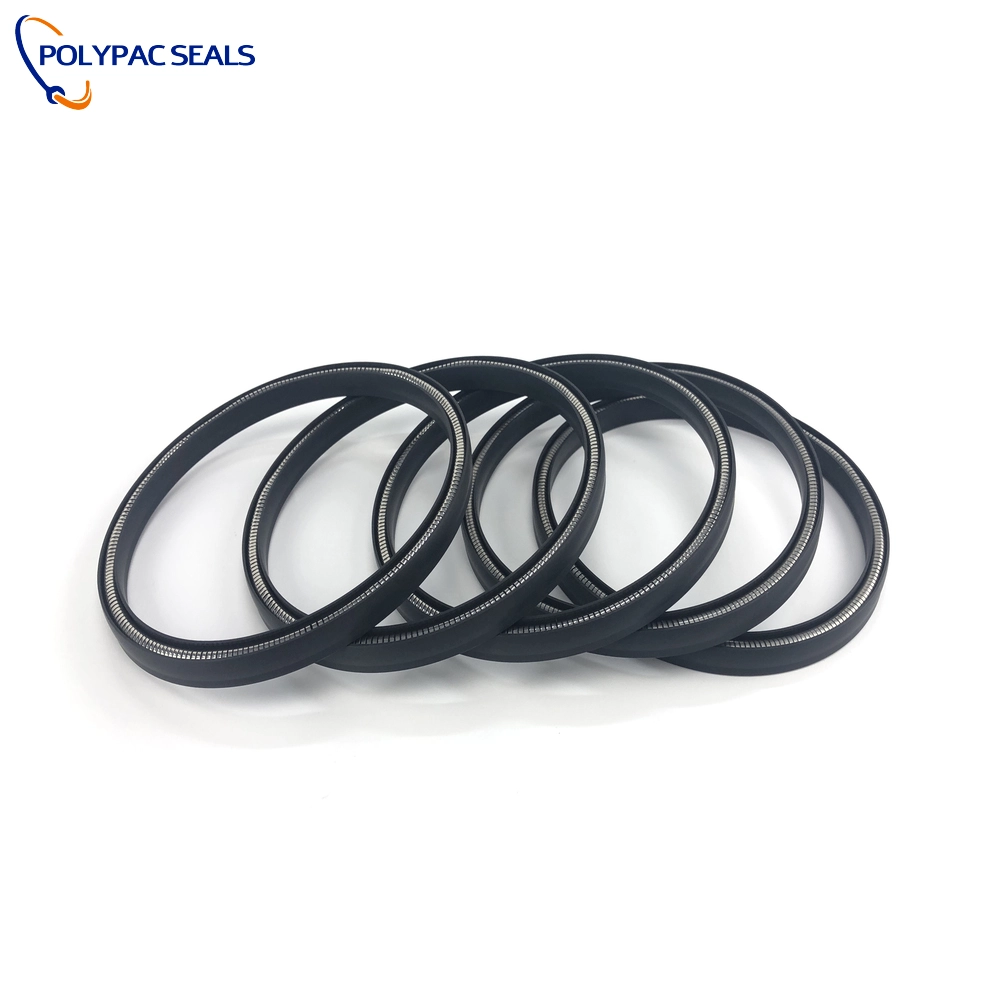
A reliable FKS seal for hydraulic and pneumatic pistons.
Stay Updated with Industry Insights
Subscribe to our articles and receive the latest news, expert guidance, and technical updates directly in your E-mail.
Rest assured that your privacy is important to us, and all information provided will be handled with the utmost confidentiality.
Polypac is a trusted global supplier of high-performance sealing solutions, providing OEM & ODM services for industries worldwide.
E-mail:
Phone/WhatsApp:
© 2025 Polypac Seals. All Rights Reserved.
dms
DMS
DMS