










Rod Seals: A Complete Guide to Function, Types, and Performance | Polypac
In the powerful world of hydraulic systems, every component must perform flawlessly under immense pressure. While pistons and pumps often take the spotlight, there is a humble yet vital component working tirelessly to ensure efficiency and reliability: the rod seal. As a leading hydraulic seals manufacturer, Polypac understands that the performance of your entire cylinder hinges on the integrity of this single part.
This guide will explore the critical role of rod seals, their working principles, common types, and how selecting the right one can dramatically impact your machinery's uptime and productivity.
What is a Rod Seal?
A rod seal is the primary sealing element located at the cylinder head of a hydraulic cylinder. Its fundamental role is twofold:
- Preventing Fluid Leakage: It acts as a critical barrier, ensuring that the hydraulic fluid remains inside the cylinder as the piston rod retracts, maintaining system pressure and efficiency.
- Excluding Contaminants: It wipes away dust, moisture, and other abrasive contaminants from the rod surface as it retracts, protecting the entire hydraulic system from internal damage and wear.
In essence, a rod seal is the first and last line of defense for your hydraulic cylinder. A failure here doesn't just cause a messy leak; it can lead to system contamination, reduced performance, and costly component damage.
How Does a Rod Seal Work? The Science of Sealing
The operation of a rod seal is a dynamic interplay of precision engineering and material science.
- When the piston rod retracts, it draws a microscopic film of hydraulic fluid back into the cylinder. The rod seal's primary lip is designed to allow this controlled film to pass, which provides essential lubrication.
- However, the seal's geometry and the pressure of the system act upon the lip, creating a tight contact with the rod surface. This contact is what prevents a continuous, wasteful leak of hydraulic fluid.
- Modern rod seals often feature a combination of a primary sealing lip and a secondary wiping lip. The primary lip retains pressure, while the secondary lip aggressively scrapes off external contaminants before the rod enters the cylinder.
Common Types of Hydraulic Rod Seals
At Polypac, we engineer a variety of rod seals to meet specific application demands, from standard industrial machinery to extreme-condition applications.
- Single-Acting Rod Seals: Designed to seal pressure from one direction only (typically from inside the cylinder). They are the most common type and are often used in conjunction with a separate wiper seal.
- Double-Acting Rod Seils: These seals have symmetrical lips and can contain pressure from both directions, offering a compact and robust sealing solution.
- U-Cups: A versatile and widely used elastomeric seal with a U-shaped profile, providing excellent sealing performance and low friction.
- Buffer Seals & Step-Seals: These are advanced designs used in tandem with the primary rod seal. They protect it from pressure spikes and extreme conditions, significantly extending its service life.
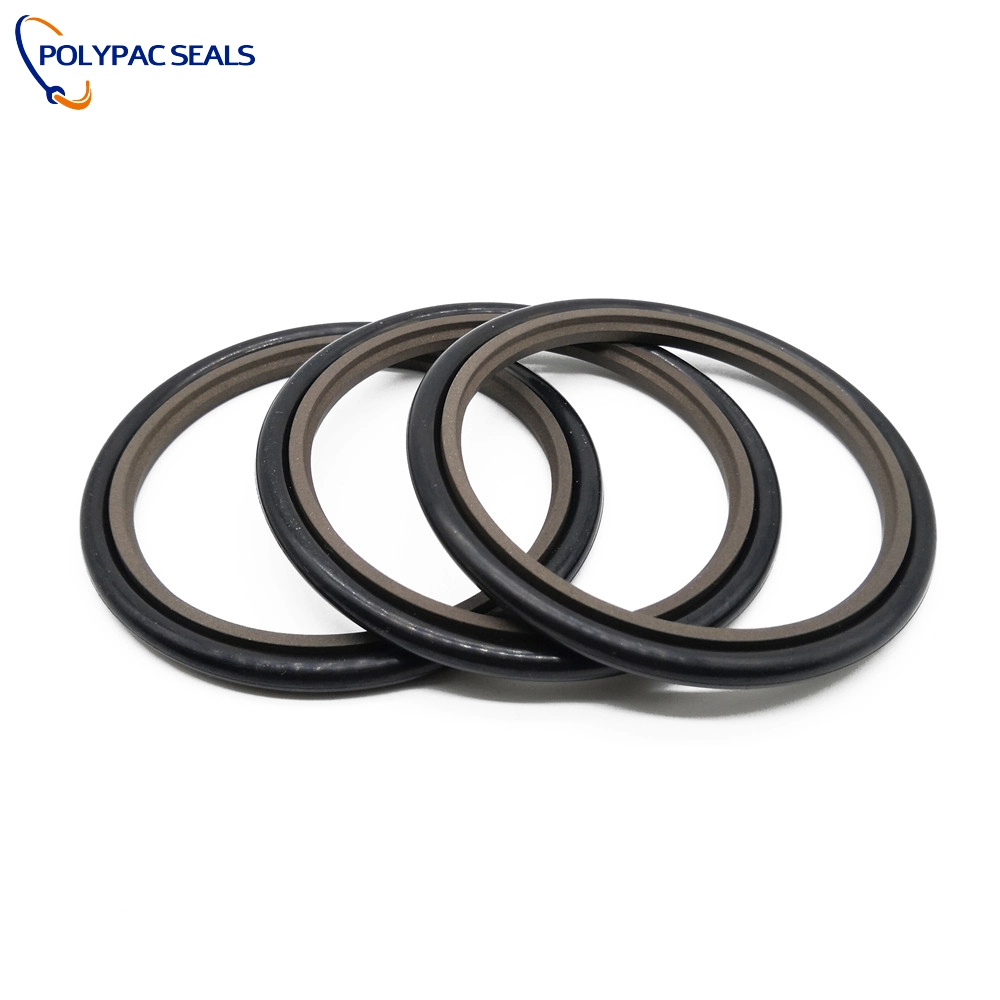
- Composite Seals (e.g., PolyPak® Style): These consist of an elastomeric sealing element energized by a metal or plastic ring. They are renowned for their high-pressure capability, zero leakage, and durability in heavy-duty applications.
Tell-Tale Signs of Rod Seal Failure
Recognizing early symptoms of rod seal failure can save you from catastrophic downtime.
- External Hydraulic Fluid Leakage: The most obvious sign. A dripping cylinder is a clear indicator that the rod seal is compromised.
- Contaminated Hydraulic Fluid: A failing seal allows external contaminants to enter, which can be seen in fluid analysis.
- Reduced System Performance: A leaky seal causes a drop in system pressure, leading to slow or weak cylinder operation.
- Dirt Build-up on the Rod: An inability to effectively wipe the rod will lead to a grimy, contaminated rod surface.
Why Your Application Demands Polypac Rod Seals
Choosing a standard, off-the-shelf rod seal is a risk. For guaranteed performance and longevity, you need a solution engineered for your specific conditions. This is where Polypac excels.
- Material Science Expertise: We develop advanced sealing materials that offer superior abrasion resistance, excellent compatibility with various hydraulic fluids, and stability across a wide temperature range.
- Solutions for Special Working Conditions: Whether your cylinders face high-pressure shocks, extreme temperatures, or corrosive environments, we conceive custom rod seal solutions that stand up to the challenge.
- ISO 9001 & IATF 16949 Certified Quality: Our state-of-the-art manufacturing facilities ensure every rod seal we produce delivers consistent, reliable, and traceable quality, trusted by industries worldwide.


Products
Why did my O-ring fail prematurely?
How can I prevent seal damage during installation?
What is the difference between NBR and FKM materials?
What is the difference between a static seal and a dynamic seal?
How do I choose the right material for my sealing application?
Stay Updated with Industry Insights
Subscribe to our articles and receive the latest news, expert guidance, and technical updates directly in your E-mail.
Rest assured that your privacy is important to us, and all information provided will be handled with the utmost confidentiality.
Polypac is a trusted global supplier of high-performance sealing solutions, providing OEM & ODM services for industries worldwide.
E-mail:
Phone/WhatsApp:
© 2025 Polypac Seals. All Rights Reserved.
dms
DMS
DMS