












Scraper seal buying guide: choose the right seal for equipment
This guide helps engineers, maintenance teams, procurement specialists and designers choose the right scraper seal (also called wiper seal or dust ring) for equipment such as hydraulic cylinders, telescopic booms, excavators and other reciprocating shafts. It explains function, common materials, selection criteria, sizing and installation best practices with verifiable references so you can reduce contamination-related failures, extend rod/shaft life and lower lifecycle cost.
Why scraper seals matter for hydraulic systems and rotating/reciprocating equipment
Primary functions and real-world impact
Scraper seals (wiper seals) remove contaminants—dirt, moisture, abrasive particles—that collect on shafts or rods before they re-enter the hydraulic system. When the wiper fails, contaminants abrade rod seals and dynamic seals, causing leaks, shortened seal life and accelerated cylinder wear. For hydraulic cylinders, reliable wipers are a low-cost defensive layer for system uptime. See general sealing principles on Mechanical seal and hydraulic cylinder mechanics on Hydraulic cylinder.
Common failure modes and what they cost
Typical scraper seal failure modes include hardening/embrittlement (temperature or ozone), extrusion under pressure, lip damage from debris, and chemical attack. Consequences range from minor oil contamination to catastrophic leakage and machine downtime. In field audits, contamination-driven seal failures frequently precede rod scoring that requires full cylinder rebuilds—cost multipliers that justify proper scraper selection and inspection routines.
When a wiper is not enough
In extremely contaminated environments (coal, sand, mining tailings) a single scraper seal may be insufficient. Complementary measures include telescopic covers, bellows, rod boots, or multi-stage sealing (dust ring + rod seal + backup ring) and surface hardening/coatings for rods.
Types of scraper seals and material choices
Common scraper/wiper designs
Designs vary by environment and shaft movement: single-lip elastomer wipers, double-lip wipers (improved retention of lubricant and exclusion of contaminants), PTFE or fabric-reinforced scrapers for very abrasive environments, and composite seals that combine a rigid support ring with an elastomeric lip. Selecting geometry is as important as material.
Material options and their properties
Material selection must balance temperature, abrasion, chemical compatibility and shaft surface speed. Common materials include NBR (nitrile), FKM (fluoroelastomer), EPDM, silicone, FFKM and PTFE compounds. See basic material descriptions: Nitrile rubber (NBR), FKM / Viton, EPDM, PTFE, and O-ring basics for companion static seals.
Material comparison (temperature, chemical resistance, abrasion)
| Material | Typical temperature range (°C) | Chemical resistance | Best for |
|---|---|---|---|
| Nitrile (NBR) | -40 to +120 | Good for petroleum oils; poor for ketones/strong acids | General hydraulic systems, low cost |
| Fluoroelastomer (FKM) | -20 to +200 | Excellent for oils, fuels, oxidation resistance | High-temp, aggressive fluids |
| EPDM | -50 to +150 | Good for brake fluids, water/glycol; poor for hydrocarbons | Water-based hydraulic systems |
| Silicone | -60 to +200 | Good for extreme temps; poor abrasion and oils | Low friction, vacuum seals, high/low temp |
| PTFE (filled) | -200 to +260 | Outstanding chemical resistance, low friction | Abrasive environments, high temp, low friction needs |
Sources: material pages on NBR, FKM, EPDM, Silicone and PTFE.
How to choose the right scraper seal for your equipment
Define operating parameters first
Collect these baseline data for selection: shaft diameter and surface finish, stroke speed and frequency, ambient and fluid temperature ranges, exposure to dust/abrasives, expected contaminants (sand, mud, salt), fluid type, system pressure near the rod gland, and maintenance intervals. Without this data, choices are guesses.
Material + geometry decision matrix
Match material chemistry to fluid and contaminate type, and choose geometry for movement and misalignment tolerance. For example, choose PTFE-filled scrapers for highly abrasive environments and FKM wipers for hot, oil-based systems. If the application has limited maintenance access, pick materials with proven long-term aging resistance (FFKM for extreme chemical resilience, PTFE for abrasive wear resistance).
Selection checklist and quick guidance
| Condition | Recommended scraper/wiper |
|---|---|
| Dusty construction/earthmoving (sand) | PTFE-filled scraper or composite wiper + hardened rod surface |
| Hot, oil-based hydraulics (up to 150–200°C) | FKM wiper or PTFE high-temp variant |
| Wet, brake-fluid or glycol-based fluids | EPDM-compatible designs |
| High-speed reciprocation | Low-friction PTFE or silicone-lipped wiper with proper lubrication |
| Corrosive chemical exposure | Perfluoroelastomer (FFKM) or PTFE composite |
Installation, testing, maintenance and troubleshooting
Best practices for installation
Use dedicated installation tools to avoid nicking seal lips. Verify shaft/rod surface finish (Ra typically 0.2–0.8 µm for many dynamic seals—consult supplier specs) and check for burrs, corrosion or plating damage. Lubricate seal lips lightly with compatible fluid during assembly. Follow manufacturer-recommended interference and gland tolerances—incorrect chamfers or sharp edges can cut the wiper during installation.
Testing and acceptance criteria
After installation, perform a dry-run and a pressurized leak test. Inspect rod under slow reciprocation to confirm no leakage or lip flutter. Monitor for immediate changes in friction or noise. Field acceptance should include a run-in observation period and post-mortem if premature failure occurs.
Common troubleshooting steps
If leakage or rapid wear occurs: inspect the rod surface for scratches or plating wear; confirm material compatibility with hydraulic fluid; verify that temperature or ozone exposure hasn’t embrittled elastomer; check misalignment and gland dimensions. Use endoscopy to inspect inside the gland in-situ if disassembly is costly.
Polypac: capabilities, product lines and why it matters for scraper seal buyers
Who Polypac is
Polypac is a scientific and technical hydraulic seal manufacturer and oil seal supplier specializing in seal production, sealing material development, and customized sealing solutions for special working conditions. Founded in 2008, Polypac began with filled PTFE seals—bronze-filled PTFE, carbon-filled PTFE, graphite PTFE, MoS₂-filled PTFE and glass-filled PTFE—and has expanded to a wide elastomer portfolio.
Manufacturing scale, R&D and test capabilities
Polypac's custom rubber ring and O-ring factory covers more than 10,000 square meters, with 8,000 square meters of factory space. Production and testing equipment are among the most advanced in the industry. The company maintains long-term collaborations with universities and research institutions domestically and internationally, enabling material development and performance testing for demanding scraper seal applications.
Product mix and competitive advantages
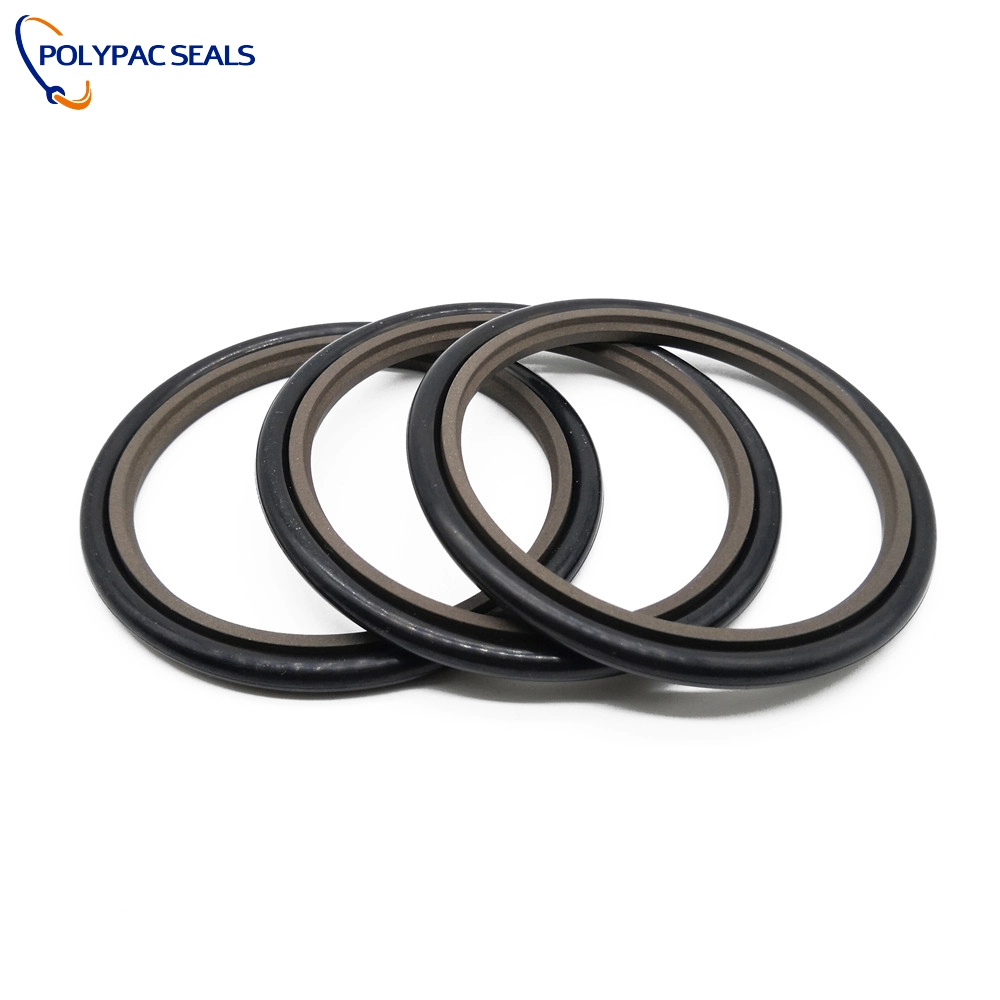
Polypac supplies O-Rings, Rod Seals, Piston Seals, End Face Spring Seals, Scraper Seals, Rotary Seals, Back-up Rings and Dust Rings. Key differentiators include: deep expertise in filled PTFE compounds for abrasive service; wide elastomer availability (NBR, FKM, silicone, EPDM, FFKM); vertical integration for material compounding and molding; and custom designs for special working conditions. These strengths reduce lead times for custom parts and improve fit-for-purpose performance.
Practical procurement and specification tips
How to write a clear specification
Include: operating temperature/min-max, fluid type and concentrations, expected contaminants, shaft diameter & surface finish, maximum pressure at gland, stroke speed and frequency, misalignment tolerance, required life (hours/cycles), and acceptance tests. If possible, specify material family with allowable alternatives (e.g., PTFE filled: carbon-filled, bronze-filled) and any required certifications or test reports.
When to request samples and testing
Request prototype or first-article samples when changing material families, geometry or supplier. Insist on compatibility tests (chemical swelling tests, accelerated aging, abrasion under controlled conditions) and verify supplier test protocols. For high-risk applications, contract finite test runs under real load to validate life predictions.
Cost vs lifecycle value
Low-cost wipers may appear attractive but incur higher lifecycle costs through more frequent replacements, lost production and rod repair. Evaluate seals by lifecycle cost per operating hour rather than per-part price. Manufacturers like Polypac who can provide material test data and collaborate on optimized solutions reduce total cost of ownership.
FAQ — common questions about scraper seals
1. What is the difference between a scraper seal and a rod seal?
A scraper (wiper) removes external contaminants from the rod before they enter the gland; a rod seal (dynamic seal) retains hydraulic fluid inside the cylinder. Both are complementary: the wiper protects the rod seal, and the rod seal prevents internal leaks.
2. How do I choose between elastomer and PTFE wipers?
Choose elastomer wipers (NBR, FKM, EPDM) for general-service where flexibility and cost matter. Pick PTFE-filled or composite wipers for abrasive environments, high temperature, or when ultra-low friction is required. Consider a composite design to get lip flexibility (elastomer) plus abrasion resistance (PTFE).
3. What surface finish is required for scraper seals?
Recommended rod surface finish depends on seal type, but many dynamic seals prefer Ra 0.2–0.8 µm. PTFE components can tolerate slightly rougher finishes but excessive roughness (>1.6 µm) accelerates wear. Always consult the seal supplier for exact tolerances.
4. Can I replace a failed wiper with a different material without other changes?
Not always. Material changes may require different gland tolerances, interference fits and may respond differently to shaft finish and lubrication. Verify compatibility, and where possible run a short field test after replacement.
5. How often should scraper seals be inspected or replaced?
Inspections should align with equipment usage and environment. Harsh, abrasive operations demand more frequent checks (weekly to monthly), while protected, light-duty equipment can use longer intervals. Replace proactively if lip damage, hardening, or excessive leakage is observed.
Contact, samples and next steps
If you need custom scraper seals, material test reports, or assistance writing specifications for severe working conditions, consider contacting Polypac. As a full-service seal manufacturer with advanced PTFE capabilities and a broad elastomer portfolio, Polypac can provide engineering support, samples and validated production runs to meet equipment requirements. To discuss your application, request samples or view product datasheets, contact Polypac's sales or technical team.
Useful references: ISO and material basics at ISO, hydraulic cylinder fundamentals at Wikipedia, and O-ring/PTFE material pages on Wikipedia and PTFE.
For tailored sealing solutions, product catalogues or custom quotes for Scraper Seals, Dust Rings, Rod Seals and O-Rings, contact Polypac today to request samples and technical support.

High-Performance Pneumatic Piston Seals: How to Achieve Zero-Leakage Efficiency

PTFE vs. Composite: Choosing the Best Piston Guide Ring Material for High-Pressure Systems

Mastering O-Ring Gland Design: The Complete Guide for Perfect Sealing Performance

Advanced Back-Up Ring Materials: Beyond PTFE for Extreme Temperature Environments

PTFE vs. Urethane Scrapers: Which Material Truly Prevents Contamination?
Products
How do I choose the right material for my sealing application?
How can I prevent seal damage during installation?
When should I use a spring-energized seal instead of a standard elastomeric seal?
Why did my O-ring fail prematurely?
How important is surface finish on the metal parts that contact the seal?
Stay Updated with Industry Insights
Subscribe to our articles and receive the latest news, expert guidance, and technical updates directly in your E-mail.
Rest assured that your privacy is important to us, and all information provided will be handled with the utmost confidentiality.

Polypac is a trusted global supplier of high-performance sealing solutions, providing OEM & ODM services for industries worldwide.
E-mail:
Phone/WhatsApp:
© 2025 Polypac Seals. All Rights Reserved.
dms
DMS
DMS