












Scraper seal material guide: PTFE vs polyurethane vs rubber
Choosing the right scraper seal material is critical for machine reliability, contamination control and lifecycle cost. This guide compares PTFE, polyurethane (PU) and rubber (elastomers) for scraper seals used on rods, pistons and housings. It explains material behaviors under abrasion, chemical exposure, temperature, and dynamic conditions, provides a practical selection matrix and test/installation tips, and includes real-world recommendations and supplier capabilities for customized sealing solutions.
Why material selection matters for scraper seals
Primary functions and failure modes of scraper seals
Scraper seals (dust rings, wipers) are designed to remove contaminants—dirt, water, abrasive particles—from a rod or shaft before the media-side seals are exposed. They reduce ingress-related wear, prevent fluid contamination and improve system uptime. Common failure modes are abrasion wear, hard-particle cutting, chemical attack, compression set, and loss of elasticity leading to leakage or increased friction.
Key performance parameters to consider
When selecting a scraper seal material consider: abrasion resistance, elasticity/recovery, friction coefficient (affecting actuation force), compressive set and long-term creep, chemical compatibility with process fluids and contaminants, and operating temperature range. For field-ready decisions you should weigh initial cost vs expected service life and maintenance frequency.
Material-by-material analysis: PTFE, polyurethane, rubber
PTFE (polytetrafluoroethylene): low friction, high chemical resistance
PTFE is prized for its chemical inertness and extremely low coefficient of friction. For scraper seals, PTFE and filled PTFE variants (carbon-, bronze-, glass-filled) are used when chemical attack or very wide temperature ranges are present. PTFE performs well with aggressive chemicals and in cryogenic to high-temperature environments (service up to ~260°C; see PTFE — Wikipedia).
Limitations: pure PTFE has low elastic recovery and a tendency to cold flow under static loads, so for dynamic scraper applications it is often used in engineered geometries or as a filled material. Fillers increase wear resistance and reduce creep but can raise friction and cost.
Polyurethane (PU): best-in-class abrasion resistance
Thermoplastic or thermoset polyurethanes are widely used for scraper seals where mechanical abrasion from grit and particles is the main threat. PU offers excellent tear and cut resistance, high load-bearing capability and good elasticity, which helps maintain contact with the rod under varied conditions. Typical service temperature ranges vary by formulation (commonly about -40°C to +80°C, with specialty grades extending higher); see Polyurethane — Wikipedia.
Limitations include vulnerability to certain chemicals (strong oxidizers, some hydrocarbons or ketones) and hydrolysis for non-hydrolysis-stable grades. Proper grade selection is essential in wet or chemical environments.
Rubber (elastomers): versatile and cost-effective
Elastomers such as nitrile rubber (NBR), EPDM, FKM (Viton) and silicone are common for scraper seals. They combine good elasticity, moderate abrasion resistance and low cost. Nitrile (NBR) is common for oil-bearing systems and offers reasonable temperature range and oil resistance (Nitrile rubber — Wikipedia).
Limitations: each elastomer has specific chemical and temperature windows. For example, EPDM is excellent for water/steam but poor for petroleum oils; FKM resists heat and many oils but is expensive. For heavy abrasive conditions rubber may wear faster than PU.
Performance comparison: side-by-side data and selection table
The table below summarizes practical differences for scraper seal use. Values and qualitative assessments are typical for common commercial grades; exact properties depend on formulation and fillers. For standards on O-ring and seal dimensions and tests, consult ISO guidance (e.g., ISO 3601 series for O-rings and elastomeric seals).
| Property | PTFE (incl. filled) | Polyurethane (PU) | Rubber (NBR / EPDM / FKM) |
|---|---|---|---|
| Typical temp. range (°C) | -200 to +260 (service), depends on filler (source) | ~-40 to +80 (general); specialty grades to ~120 | NBR: ~-40 to +120; EPDM: -50 to +150; FKM: -20 to +200 (varies) (source) |
| Abrasion resistance | Moderate (improved with fillers) | Excellent — industry benchmark for wear | Good to moderate (varies by compound) |
| Elastic recovery / sealing contact | Poor (low elasticity); design must compensate | Excellent; maintains contact under dynamic loads | Good; high rebound possible depending on durometer |
| Chemical resistance | Outstanding across most chemicals | Variable; good for oils and greases but sensitive to some solvents/hydrolysis | Compound-specific; FKM excellent for oils/temperature; EPDM good for water/steam |
| Compression set / creep | High creep for pure PTFE; fillers reduce it | Low to moderate (good recovery) | Moderate; depends on durometer and aging |
| Typical cost | High (especially filled PTFE) | Medium | Low to medium |
Sources: material summaries and properties from established references such as PTFE — Wikipedia, Polyurethane — Wikipedia, and Nitrile rubber — Wikipedia. For dimensional and testing standards, consult ISO documentation such as the ISO 3601 series (ISO).
How to read the table for real-world decisions
- If chemical exposure and wide temperature extremes dominate, choose PTFE (filled PTFE for wear-critical scraper seals).
- If abrasive contamination from dirt, sand or metal particles is the main issue, PU is often the best balance of abrasion resistance and elasticity.
- If cost and general-purpose performance are priorities and contaminants are moderate, an elastomer (NBR or EPDM) can be appropriate.
Application-specific recommendations, testing and installation tips
Scraper seals for hydraulic cylinders (rod scrapers/wipers)
Common best practice: use a high-abrasion PU scraper or a combined wiper arrangement—primary PU scraper followed by a secondary elastomer lip to guarantee sealing contact. For harsh chemical- or temperature-exposed cylinders (e.g., offshore, chemical dosing), consider filled PTFE wipers to avoid degradation.
Testing and qualification you should run
Before full deployment, specify or perform: dynamic wear testing with representative grit (ASTM D4040-style abrasion tests help for elastomers), chemical soak tests in representative fluids (evaluate swelling and hardness change), and temperature cycling. Where possible, request supplier data sheets for filled PTFE grades and third-party test reports. For dimensional and performance benchmarks consult standards such as ISO series for elastomeric seals and relevant ASTM test methods (ISO).
Installation and design tips to extend scraper life
- Ensure correct groove geometry and axial preload so the scraper lip maintains contact without excessive drag.
- Avoid sharp edges on rods—polish to recommended surface finish (typically Ra 0.2–0.8 µm for many seals) to reduce cut/wear.
- Consider composite designs: PTFE backing with a soft sealing lip, or PU body with replaceable wear inserts.
- When selecting durometer for elastomers/PU, balance abrasion resistance (harder) vs. sealing contact (softer). Typical PU durometers for scrapers are 70–95 Shore A depending on application.
Lifecycle cost analysis and procurement guidance
Comparing initial cost vs long-term service cost
Initial material cost: PTFE (highest) > PU (medium) > rubber (lowest). But for abrasive, high-downtime conditions, a higher-cost PU or filled PTFE scraper often reduces total lifecycle cost due to far longer service intervals and reduced secondary seal damage. Request supplier lifecycle data or field case studies when specifying materials.
Quality signs to check from a supplier
Ask prospective suppliers for: material certificates (raw material grade and fillers), dimensional tolerances, hardness/durometer measurement reports, and lab or field wear-test data. Compliance with industry standards and R&D partnerships with universities or testing bodies is a strong indicator of technical capability.
Sample specification language for procurement
Example: Supply scraper seals for 50 mm rod hydraulic cylinders; material: polyurethane (85 Shore A) with hydrolysis-stable formulation; expected service temp -20°C to +80°C; abrasion resistance ≥ X cycles per ASTM D5963 or equivalent; dimensional tolerance ±0.1 mm. Adjust the test method to match your industry standard; suppliers should confirm equivalence.
Polypac: technical capabilities and product offering
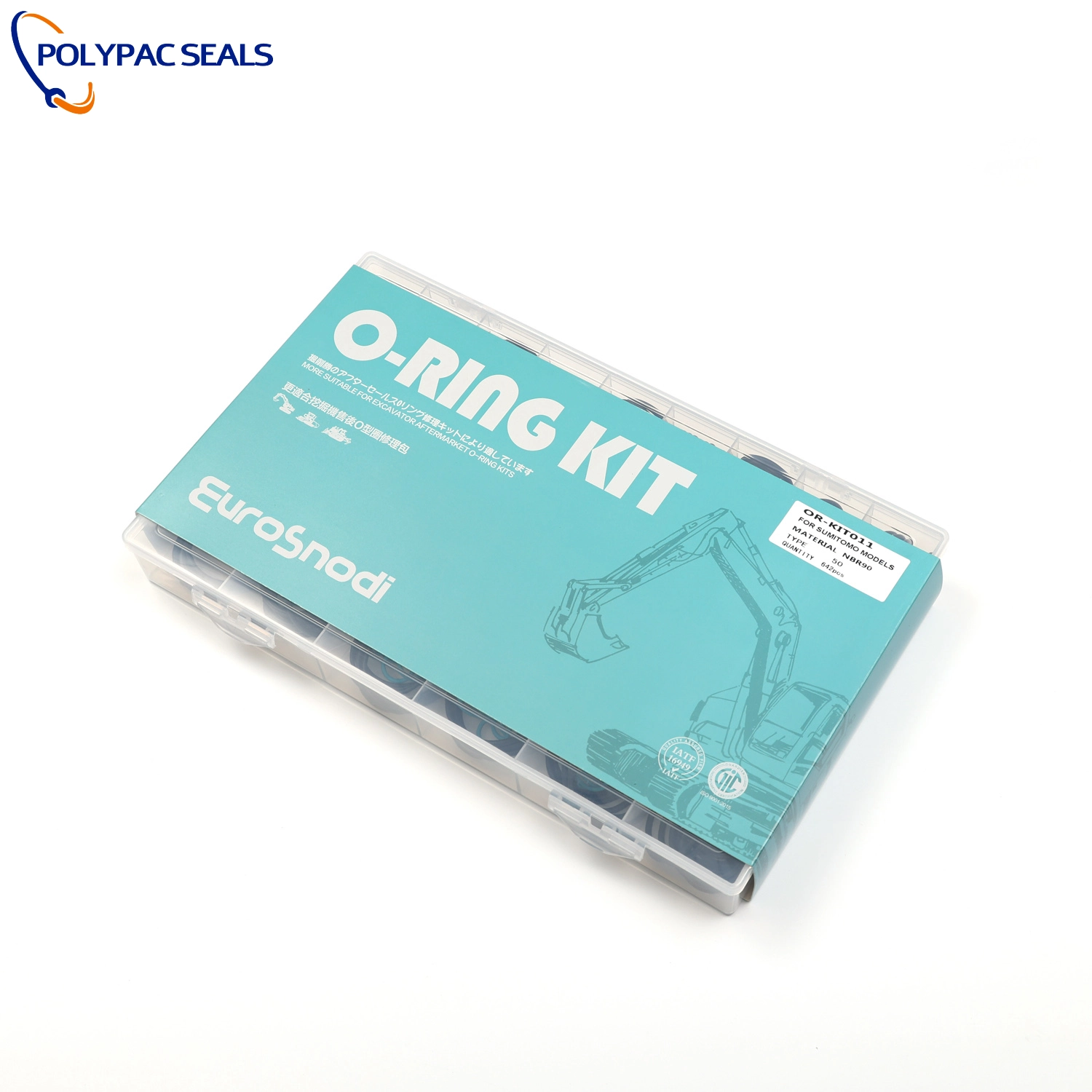
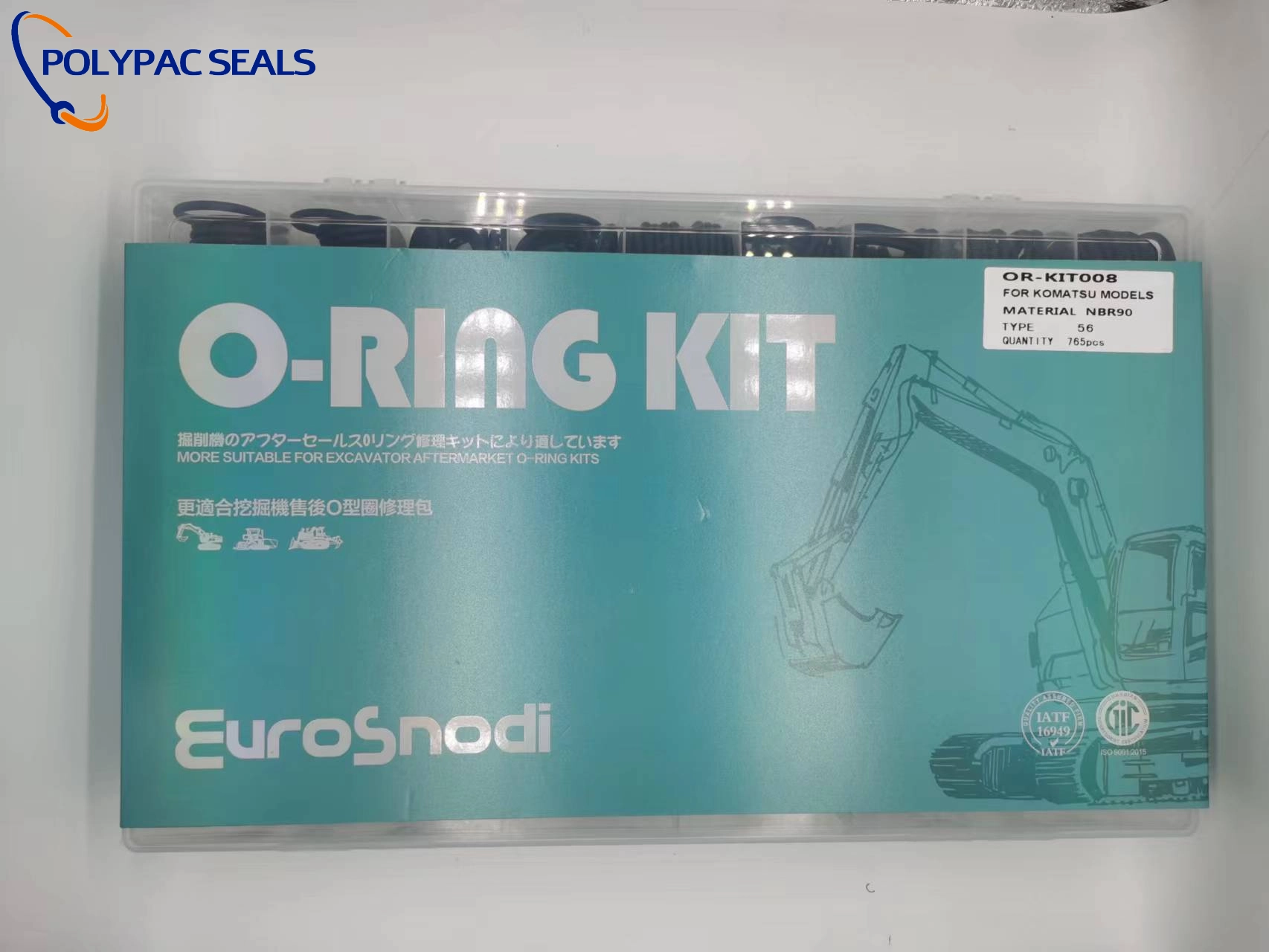
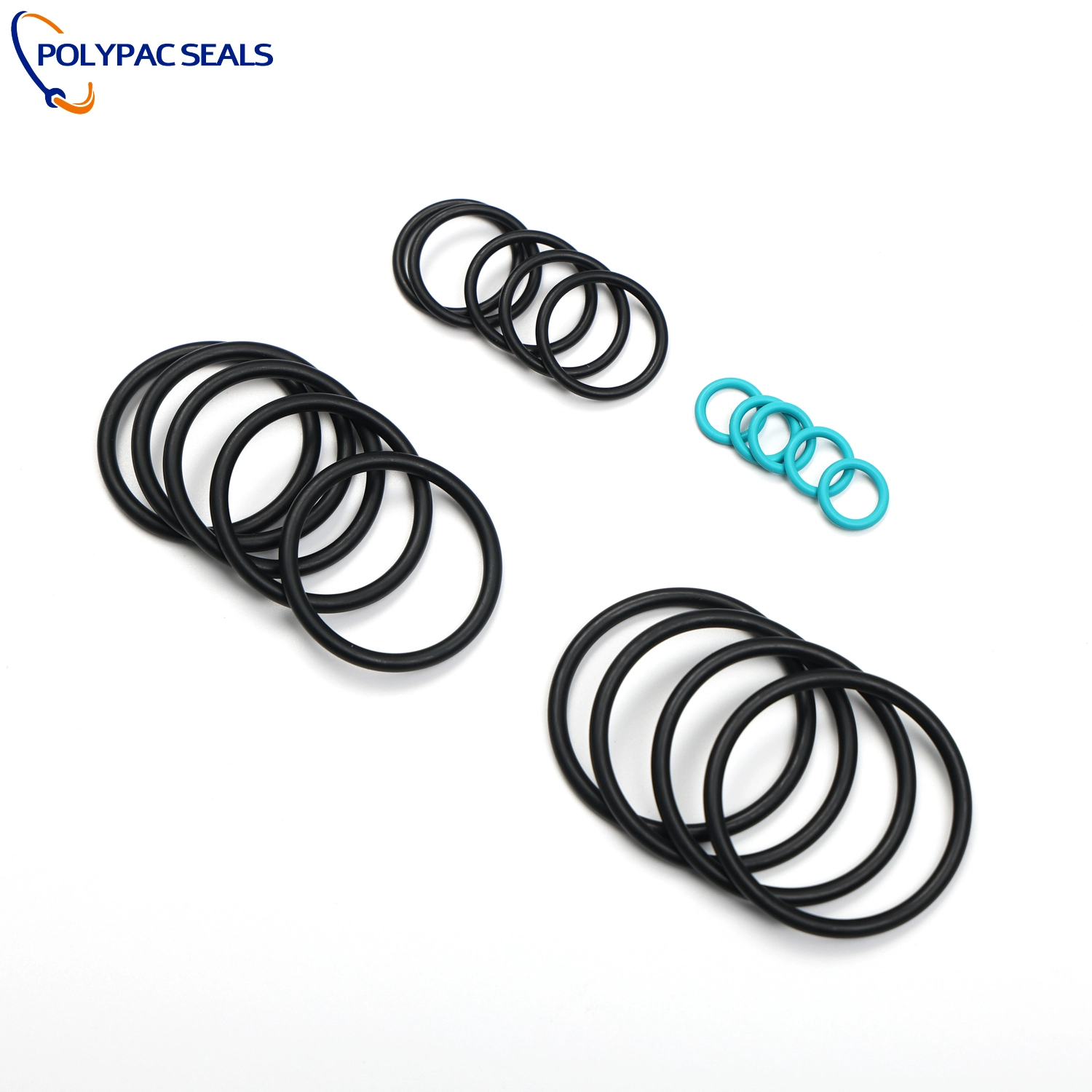
Polypac is a scientific and technical hydraulic seal manufacturer and oil seal supplier specializing in seal production, sealing material development, and customized sealing solutions for special working conditions. Founded in 2008, Polypac began by manufacturing filled PTFE seals, including bronze-filled PTFE, carbon-filled PTFE, graphite PTFE, MoS₂-filled PTFE, and glass-filled PTFE. Today, the company has expanded its product line to include O-rings made from NBR, FKM, silicone, EPDM, and FFKM.
Factory and capabilities: Polypac's custom rubber ring and O-ring factory covers an area of more than 10,000 square meters, with a factory space of 8,000 square meters. Production and testing equipment are among the most advanced in the industry. As one of the largest companies in China dedicated to seal production and development, Polypac maintains long-term cooperation with universities and research institutions domestically and internationally.
Competitive strengths and differentiators:
- Material R&D: experience with filled PTFE formulations that balance wear resistance and creep performance.
- Large-scale production with modern testing: repeatable tolerance control and material traceability.
- Custom solutions: geometry and compound optimization for scraper seals in heavy abrasion, chemical exposure, or extreme-temperature applications.
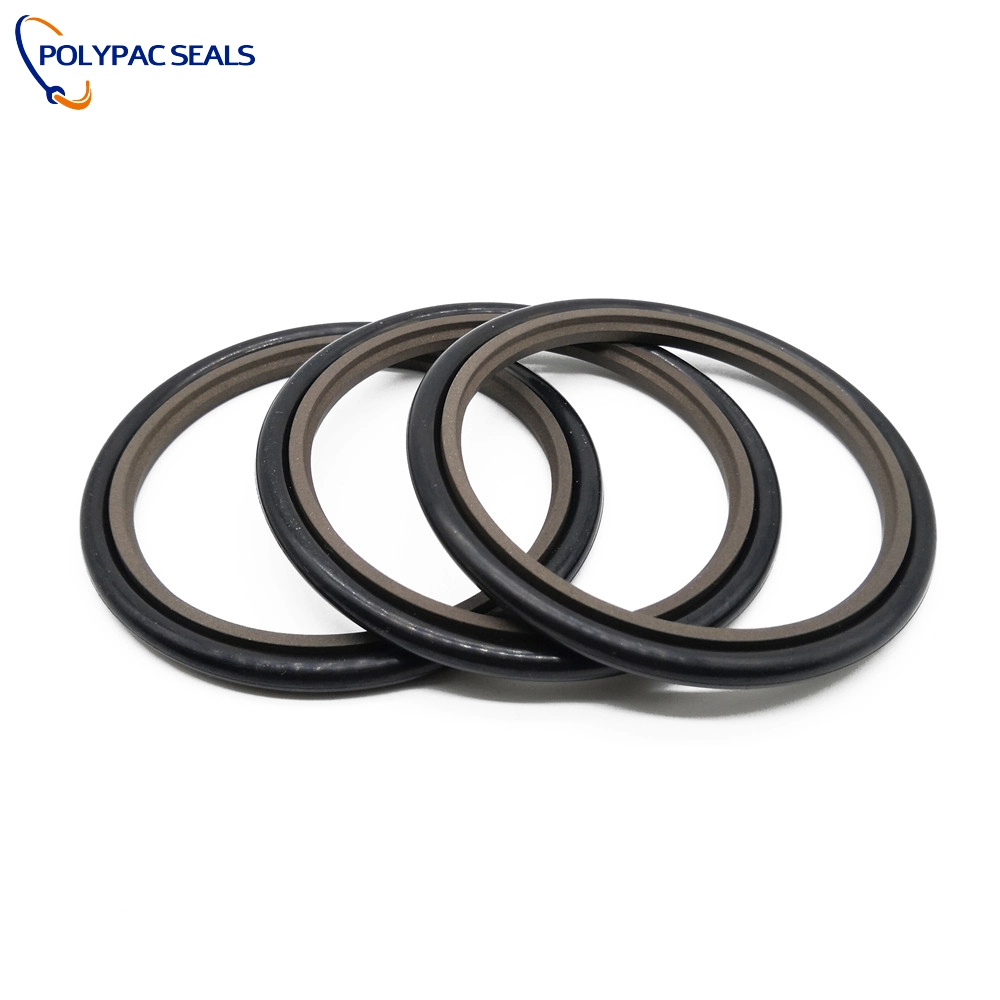
Main products relevant to scraper seal selection: O-Rings, Rod Seals, Piston Seals, End Face Spring Seals, Scraper Seals, Rotary Seals, Back-up Rings, Dust Rings. For projects requiring specific wear data or custom materials, Polypac can provide test reports, samples and collaborative development.
FAQ — Frequently Asked Questions
1. Which material is best for scraper seals in dusty, outdoor hydraulic equipment?
Polyurethane is frequently the best choice because of superior abrasion and tear resistance combined with good elasticity. For chemical exposure or very wide temperature swings, consider a filled PTFE solution or a composite design (PU + elastomer) depending on priorities.
2. Can PTFE scraper seals replace elastomer wipers in hydraulic cylinders?
Yes, in applications dominated by chemical exposure or high temperature where elastomers would degrade. However, pure PTFE has low elasticity; filled PTFE or engineered profiles are recommended to maintain wiping/contact performance.
3. How do I test scraper seal candidates before installation?
Run abrasion tests using representative contaminants, chemical soak tests in media the seal will encounter, and temperature cycling. Request material data sheets, laboratory wear graphs, and, if possible, field trial samples for validation.
4. What machining/rod surface finish is recommended for scraper seals?
A smooth, damage-free surface finish reduces wear. For many scraper seals a rod Ra between 0.2–0.8 µm is acceptable; eliminate sharp edges and burrs. Hard chrome plating or nitriding improves wear resistance for rods in abrasive environments.
5. How often should scraper seals be inspected or replaced?
Inspection frequency depends on duty and contamination levels. For heavy-duty, abrasive service inspect at each major maintenance interval (e.g., monthly to quarterly). Replace when visible lip wear, cracking, or loss of wiping function is noticed. A predictive maintenance schedule based on field life data is ideal.
6. Are there composite scraper designs that combine benefits of materials?
Yes. Typical composite designs use a rigid or low-creep backing (filled PTFE) with a softer elastomer or PU lip to combine chemical resistance with good sealing contact and abrasion resistance. These designs are common in specialty hydraulic applications.
Contact/Request: For tailored material selection, testing data, samples or custom scraper seals, contact Polypac's technical sales team to review your application conditions (temperature range, contaminants, media, rod geometry and expected life). View product details and request a quote for O-Rings, Rod Seals, Piston Seals, End Face Spring Seals, Scraper Seals, Rotary Seals, Back-up Rings and Dust Rings.
Further reading and standards: PTFE properties (Wikipedia), Polyurethane overview (Wikipedia), Nitrile rubber (Wikipedia), and ISO seal standards (e.g., ISO 3601).

High-Performance Pneumatic Piston Seals: How to Achieve Zero-Leakage Efficiency

PTFE vs. Composite: Choosing the Best Piston Guide Ring Material for High-Pressure Systems

Mastering O-Ring Gland Design: The Complete Guide for Perfect Sealing Performance

Advanced Back-Up Ring Materials: Beyond PTFE for Extreme Temperature Environments

PTFE vs. Urethane Scrapers: Which Material Truly Prevents Contamination?
Products
What is the purpose of the metal spring in a rotary shaft seal?
What is the difference between NBR and FKM materials?
When should I use a spring-energized seal instead of a standard elastomeric seal?
What is the difference between a static seal and a dynamic seal?
What does "AS568" mean?
Stay Updated with Industry Insights
Subscribe to our articles and receive the latest news, expert guidance, and technical updates directly in your E-mail.
Rest assured that your privacy is important to us, and all information provided will be handled with the utmost confidentiality.

Polypac is a trusted global supplier of high-performance sealing solutions, providing OEM & ODM services for industries worldwide.
E-mail:
Phone/WhatsApp:
© 2025 Polypac Seals. All Rights Reserved.
dms
DMS
DMS