












Selecting Rotary Seals for High-Speed Rotating Shafts
Rotary seals for high-speed rotating shafts require careful selection of material, geometry, and installation practices to control leakage, heat generation, and wear. This article provides engineers and maintenance professionals with a practical, standards-aware approach to choosing rotary seals (rotary shaft seals, oil seals, lip seals, O-rings, and PTFE seals) for high-speed applications. It explains common failure modes, compares sealing materials and design options, gives PV and speed guidance, summarizes testing and standards, and explains how to evaluate suppliers and custom solutions.
Key challenges for high-speed shaft sealing
Primary failure mechanisms
High-speed rotating shafts amplify several failure modes for rotary seals: frictional heating (leading to thermal degradation), elastomer extrusion and lip roll, dynamic leakage due to inadequate sealing contact, abrasive wear from particulates, and hydrodynamic effects that change film thickness. Recognizing these mechanisms helps prioritize materials (low friction, high thermal stability) and designs (back-up rings, spring-loaded lips) suitable for high RPMs.
Performance trade-offs: leakage vs. friction vs. life
Designing for minimal leakage at high speed often increases frictional torque and heat. Conversely, low-friction lip profiles or PTFE-based seals reduce heat and power loss but may need secondary sealing elements (O-rings, spring energizers) to maintain a long-term static seal. A systems perspective — considering shaft surface finish, lubrication regime, pressure differential, and expected contaminants — is key to balancing these trade-offs.
Relevant operating metrics
Useful metrics when selecting rotary seals include shaft surface speed (m/s), shaft diameter and RPM, PV (pressure × velocity) limit for the material, dynamic shaft eccentricity, and differential pressure across the seal. Common practical thresholds: for many elastomers, PV limits and continuous surface speeds above ~6–12 m/s require special materials or designs; PTFE-based solutions can tolerate higher speeds but need attention to extrusion and thermal transfer.
Material selection and performance criteria
Elastomers (NBR, FKM, EPDM, silicone, FFKM)
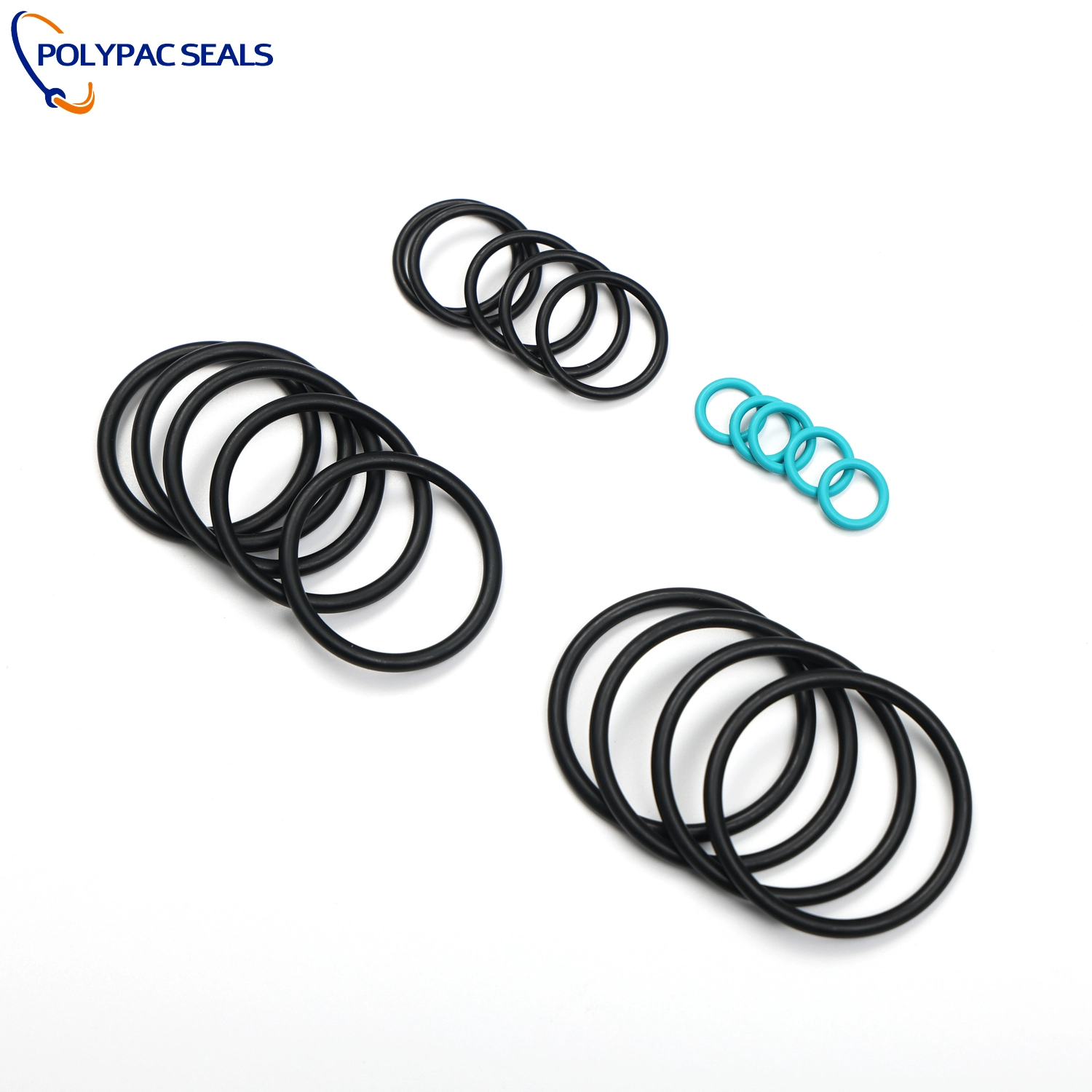
Elastomers offer excellent resilience and static sealing but vary widely in chemical and thermal resistance. NBR (nitrile) is a common economical choice for moderate temperatures and oil resistance. FKM (Viton) provides better high-temperature and chemical resistance. EPDM is good for water/glycol but poor with hydrocarbons. Fluoroelastomers and perfluoroelastomers (FFKM) extend temperature and chemical ranges at higher cost. Elastomers are often used as seal bodies or energizers around PTFE lips or for O-rings that support rotary lip seals.
PTFE and filled PTFE compounds
PTFE (polytetrafluoroethylene) has very low friction and excellent chemical and thermal resistance, making it attractive for high-speed rotary seals. Filled PTFE (bronze, carbon, graphite, glass, MoS₂) improves wear resistance and dimensional stability. PTFE seals often require an elastomeric energizer or metal spring for axial load and a closely controlled groove to prevent extrusion. For background on PTFE and its uses in sealing, see PTFE (Wikipedia).
Composite and hybrid solutions (lip seals with O-rings, back-up rings)
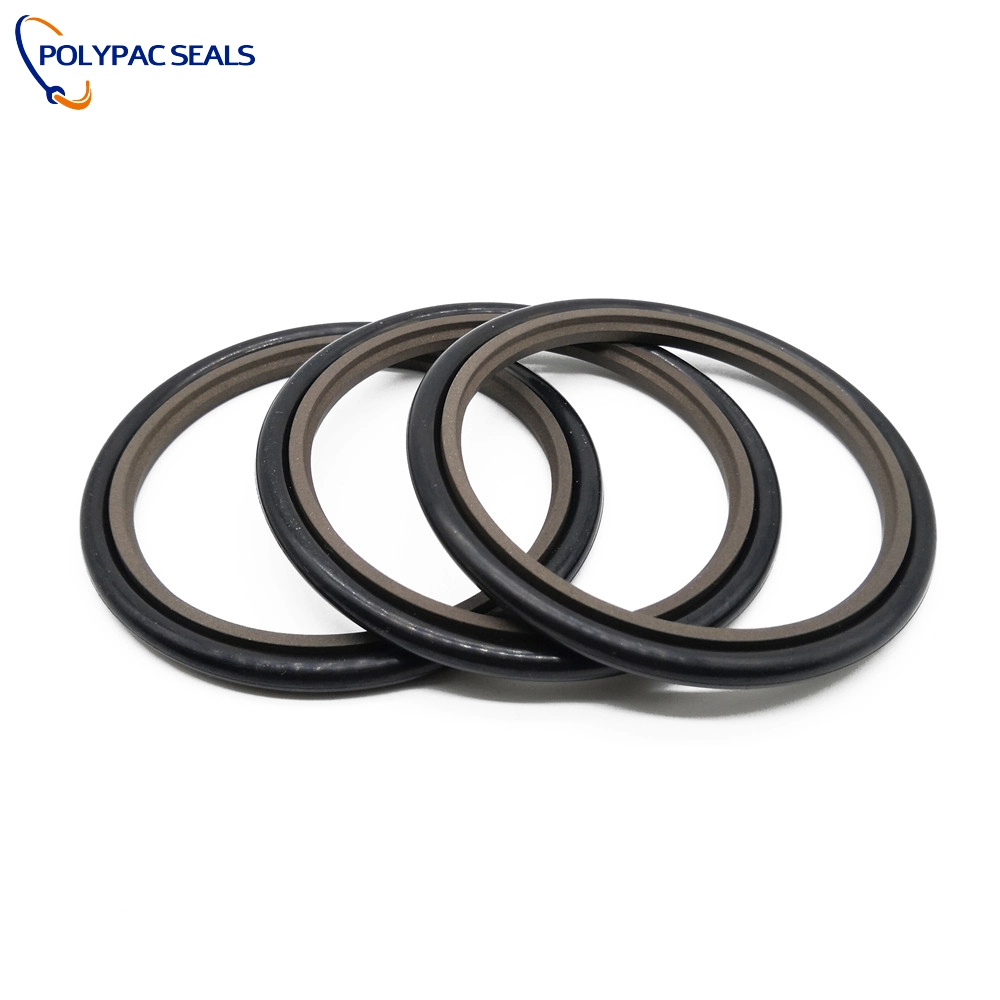
High-speed applications frequently use hybrid constructions: a low-friction PTFE lip for dynamic sealing combined with an elastomer O-ring or spring for static backup and assembly compliance. Back-up rings (rigid or semi-rigid) prevent extrusion at high pressure. These combinations mitigate shortcomings of single-material seals and are widely used in hydraulic motors and high-speed spindles.
Design considerations and installation best practices
Shaft surface finish, roundness, and runout
Shaft finish is critical: typical recommendations for lip seals are Ra between 0.2–0.8 µm (8–32 µin) depending on material. Too smooth can cause film formation and slip; too rough accelerates wear. Runout and eccentricity increase dynamic loads on the seal lip; maintain shaft runout within the seal manufacturer's tolerances to avoid premature failure.
Surface speed (m/s), PV limits, and temperature management
Every sealing material has a PV (pressure × velocity) limit. When selecting seals, use manufacturer PV data as a primary filter. For example, common elastomers have lower PV endurance than filled PTFE. In high-energy systems, consider supplemental cooling, optimized lubrication, or externally driven seals to reduce heat. For general background on mechanical seals and dynamic sealing, see Mechanical seal (Wikipedia) and industry technical literature such as the SKF sealing guidance at SKF shaft seals.
Groove geometry, housing tolerances, and installation
Seal performance is sensitive to housing groove dimensions and tolerance stack-ups. Incorrect groove depth or width can change lip compression and lead to leakage or excessive friction. Follow manufacturer installation drawings, use proper tools to avoid lip damage, and check axial alignment after assembly. Where appropriate, use dust lips or secondary seals to protect the primary sealing lip from contamination.
Testing, standards, and supplier selection
Relevant standards and test methods
Standards that inform rotary seal selection include ISO standards for O-rings and sealing systems (for O-rings, see ISO 3601), and industry-specific standards—automotive, hydraulic equipment, and aerospace—each offering performance and testing protocols. Independent test rigs for PV endurance, leak rate under dynamic conditions, and cyclic pressure tests are essential for high-speed validation.
Comparative data: material limits and typical application ranges
Below is a practical comparison table summarizing common sealing materials, typical continuous surface speed capability, typical temperature ranges, and key advantages/limitations. Values are indicative; always confirm with supplier datasheets and testing under your load case.
| Material | Typical continuous surface speed (m/s) | Temperature range (°C) | Advantages | Limitations |
|---|---|---|---|---|
| NBR (nitrile) | Up to ~6–10 | -30 to +120 | Good oil resistance, economical | Limited high-temp/chemical resistance |
| FKM (Viton) | Up to ~8–12 | -20 to +200 | High temp and chemical resistance | Higher cost, lower elasticity |
| PTFE (filled) | High — often >20 | -200 to +260 (varies) | Low friction, wide chemical resistance | Needs energizer/back-up, extrusion risk |
| FFKM (perfluoro) | Moderate–High | -20 to +300 | Extreme chemical and temp resistance | Very high cost |
Choosing a supplier and custom solutions
Pick suppliers who provide complete test data (PV limits, dynamic leakage, wear rates), engineering support for groove design, and the ability to manufacture custom compounds or filled PTFE profiles. Verify supplier quality systems (e.g., ISO certification), materials traceability, and R&D links to universities or labs for advanced materials testing. Independent references and long-term field data in similar applications are a strong indicator of reliability.
Practical selection workflow and use cases
Step-by-step selection checklist
- Document operating conditions: shaft diameter, RPM, surface speed (m/s), temperature, pressure differential, fluid/contaminant chemistry.
- Set performance priorities: minimal leakage, minimal friction, long service life, or low cost.
- Screen materials by PV capability and chemical compatibility; confirm with supplier datasheets.
- Select geometry: lip profile, spring-energized vs. O-ring energized, back-up ring if pressure present.
- Design groove with supplier guidance; specify shaft finish and runout tolerances.
- Prototype and run dynamic tests (PV, leak rate, endurance). Adjust design based on results.
Use-case examples
Example A: High-speed spindle (bearing-lubricated, light contamination) — choose filled PTFE lip with elastomeric energizer, fine shaft finish, and dedicated dust lip. Example B: Hydraulic motor running at moderate speed and high pressure — use elastomer lip with back-up ring and high-performance FKM compound, validated by PV tests.
Cost vs. reliability modeling
Upfront material and testing costs are often offset by lower downtime and longer mean time between failures (MTBF). For mission-critical systems, invest in prototype testing under representative conditions and require supplier warranties tied to validated test results.
Polypac: supplier profile and capabilities
Polypac is a scientific and technical hydraulic seal manufacturer and oil seal supplier specializing in seal production, sealing material development, and customized sealing solutions for special working conditions. Founded in 2008, Polypac began by manufacturing filled PTFE seals (bronze-filled, carbon-filled, graphite PTFE, MoS2-filled PTFE, and glass-filled PTFE). Today, Polypac's portfolio has expanded to include O-rings and a wide range of elastomeric materials including NBR, FKM, silicone, EPDM, and FFKM.
Polypac's custom rubber ring and O-ring factory covers an area of more than 10,000 square meters, with a factory space of 8,000 square meters. Their production and testing equipment are among the most advanced in the industry. As one of the largest companies in China dedicated to the production and development of seals, Polypac maintains long-term communication and cooperation with numerous universities and research institutions domestically and internationally. This R&D integration supports tailored solutions for high-speed rotary seals, including custom-filled PTFE profiles, spring-energized rotary seals, and hybrid lip/O-ring assemblies.
Main products: O-Rings, Rod Seals, Piston Seals, End Face Spring Seals, Scraper Seals, Rotary Seals, Back-up Rings, Dust Ring. Competitive differentiators include advanced filled PTFE capabilities, a wide elastomer portfolio (NBR, FKM, FFKM), in-house testing, and academic research partnerships that deliver validated performance data for demanding, high-speed sealing applications.
When evaluating Polypac or similar suppliers for high-speed rotary seals, request: dynamic leakage test reports, PV test data for the chosen compound/profile, recommended groove drawings, and references for similar use cases. Polypac's capacity to produce custom compounds and filled PTFE profiles makes them a strong candidate where off-the-shelf seals fail to meet PV or chemical-resistance requirements.
Frequently Asked Questions (FAQ)
1. What maximum shaft speed can a rotary seal tolerate?
It depends on the sealing material and design. Elastomeric lip seals often operate reliably at moderate speeds (up to ~6–12 m/s surface speed), while filled PTFE seals can tolerate much higher surface speeds (>20 m/s) if properly energized and cooled. Always confirm PV ratings with the manufacturer and test under representative conditions.
2. Should I choose an elastomer or PTFE lip for a high-speed shaft?
Choose PTFE for low friction and high-speed performance, especially when chemical/thermal resistance is required. Use elastomers when compliance and static sealing are critical. Hybrid designs (PTFE lip with elastomer or spring energizer) often provide the best balance for high-speed rotary shafts.
3. How important is shaft finish and runout?
Extremely important. Incorrect shaft finish or excessive runout increases wear and leakage. Follow the seal manufacturer's recommended Ra and runout tolerances; typical Ra values for lip seals fall in the 0.2–0.8 µm range depending on material.
4. What is PV and why does it matter for rotary seals?
PV is the product of pressure and sliding velocity (P × V) and is used as a guideline for material endurance under frictional heat and loading. Exceeding a material's PV limit increases wear and risk of thermal failure. Always use validated PV values from suppliers and corroborate with testing.
5. How do I prevent extrusion at high pressure and speed?
Use back-up rings, tighter groove clearances, and materials with higher stiffness. For PTFE-based seals, ensure proper energizing and consider filled PTFE for greater dimensional stability. Design the housing to minimize extrusion gaps under operating pressures.
6. What tests should I request from a supplier for high-speed applications?
Request dynamic leakage tests at operating speed, PV endurance testing, wear-rate measurements, and temperature-rise data. If possible, obtain test reports from rigs that replicate your shaft diameter, speed, pressure, and fluid conditions.
For technical consultations, custom samples, or to view Polypac's product range for high-speed rotary shafts (O-Rings, Rod Seals, Piston Seals, End Face Spring Seals, Scraper Seals, Rotary Seals, Back-up Rings, Dust Ring), contact Polypac's sales and engineering team to discuss custom materials, filled PTFE profiles, and validated testing programs. Visit the Polypac product pages or request a technical datasheet and prototype testing plan.

Metal vs. Composite: Which Hydraulic Guide Ring Increases Cylinder Life by 40%?

Piston Lip Seals vs. U-Cups: Choosing the Right Hydraulic Solution for High-Pressure Systems

How to Choose the Best Hydraulic Piston Seal Kit for High-Pressure Applications

Hydraulic Cylinder Seals Kits: 5 High-Tech Materials That Double Your Maintenance Interval

How to Choose the Perfect Hydraulic Jack Seals: A Comprehensive Material & Performance Comparison
Products
What is the purpose of the metal spring in a rotary shaft seal?
When should I use a spring-energized seal instead of a standard elastomeric seal?
What does "AS568" mean?
How important is surface finish on the metal parts that contact the seal?
How can I prevent seal damage during installation?
Stay Updated with Industry Insights
Subscribe to our articles and receive the latest news, expert guidance, and technical updates directly in your E-mail.
Rest assured that your privacy is important to us, and all information provided will be handled with the utmost confidentiality.

Polypac is a trusted global supplier of high-performance sealing solutions, providing OEM & ODM services for industries worldwide.
E-mail:
Phone/WhatsApp:
© 2025 Polypac Seals. All Rights Reserved.
dms
DMS
DMS