











How to Source ISO-Certified Wiper Ring Suppliers
When sourcing ISO-certified wiper ring suppliers for hydraulic and pneumatic applications, buyers must balance certification, material expertise, testing capability, geographic logistics, and supply continuity. This guide explains what to look for in supplier certifications (ISO 9001, IATF 16949, etc.), how to validate production and testing capabilities, how to assess material traceability and compound development, and how to structure audits and sample testing to reduce risk and ensure in-service performance of wiper rings. The guidance is intended for global procurement teams and engineering stakeholders seeking reliable, auditable suppliers for wiper seals and scraper rings.
Understanding supplier certification and compliance
Common ISO and industry certifications to expect
For wiper rings (aka wiper seals or scraper seals) used in hydraulic cylinders and similar equipment, the most relevant certifications are:
- ISO 9001 — quality management system standard; a baseline for consistent process control. See the official ISO page: ISO 9001.
- IATF 16949 — automotive quality management system when components are for mobile hydraulics in automotive markets.
- ISO/TS standards or customer-specific approvals — often required by OEMs.
- RoHS/REACH compliance — for material chemical restrictions if selling into regulated markets.
Documentation of certification is necessary but not sufficient; look for evidence of implementation, internal audits, and continual improvement records.
How to verify certificates and their scope
When a supplier sends certificates, verify:
- Issuer legitimacy — check the registrar against accredited bodies (e.g., UKAS, ANAB). For ISO registrars, consult the International Accreditation Forum listings or the accreditation body site.
- Scope of certification — confirm the certificate covers the production site and specific processes (e.g., rubber compounding, molding, machining, testing).
- Validity — check issue and expiry dates and whether surveillance/audit records exist.
Use direct links or request scanned certificates that show the physical address and registration number. If in doubt, contact the accreditation body to confirm.
Regulatory and contractual requirements
Define contractual quality clauses up front: incoming inspection criteria, first article inspection (FAI), lot traceability, and corrective action timelines. For critical wiper ring applications (offshore, mining, mobile hydraulics), require material certificates (raw polymer batch numbers), hardness tests (shore A), and endotoxin or extractables testing if applicable to specialty uses.
Evaluating supplier technical capabilities
Materials expertise and compounding capabilities
Wiper rings are typically produced from elastomers such as NBR, FKM, HNBR, silicone, EPDM, or specialized PTFE-based composites for extreme conditions. Key supplier capabilities to verify:
- In-house compounding vs. outsourced compound — in-house compounding allows better control of batch consistency and faster iteration for custom formulations.
- Range of materials handled — confirm experience with the specific elastomer you require and any fillers or PTFE blends.
- Material testing equipment — DSC, FTIR, hardness testers, and spectrometers for polymer verification.
Ask for material safety data sheets (MSDS), technical data sheets, and historical performance data for the specified elastomer in similar applications.
Manufacturing processes and dimensional control
Common manufacturing routes include molded elastomer wiper rings, machined PTFE or filled PTFE wiper rings, and overmolded combinations. Verify:
- Molding capabilities — injection, compression, transfer molding with cavity tooling records.
- Machining precision — CNC lathe/turning centers for PTFE parts; evaluate achievable tolerances.
- Dimensional control — availability of CMM (coordinate measuring machine) and calibrated gauges.
Testing, validation, and life-cycle testing
Critical tests for wiper rings include:
- Hardness (Shore A) and tensile/elongation per ASTM standards.
- Abrasion resistance and compression set.
- Hydraulic seal bench testing — dynamic and static leak testing in representative conditions.
Ask suppliers for test reports and for the standards used (e.g., ASTM, ISO). Independent third-party test results add credibility.
Practical supplier selection process
Step-by-step sourcing checklist
A practical checklist to shortlist and qualify suppliers:
- Specify functional requirements: shaft diameter, clearance, operating medium, speed, temperature range, pressure, expected life.
- Issue an RFQ with material, tolerance, and testing requirements and request certificates and factory capability statements.
- Shortlist based on documentation and initial commercial terms.
- Conduct remote or on-site audits focused on process flow, traceability, and testing labs.
- Approve pilot run, inspect FAI samples, run endurance tests if needed, and set up incoming inspection criteria.
What to cover in supplier audits
Audits should be evidence-based and cover:
- Quality management implementation and production flow.
- Material traceability from raw material to finished part.
- Calibration records and lab competence.
- Training records and staff turnover for critical roles.
Comparing multiple suppliers — sample matrix
Use a standardized matrix to compare suppliers. Example comparison table:
| Criteria | Supplier A | Supplier B | Supplier C |
|---|---|---|---|
| ISO 9001 | Yes (site) | Yes (site) | No |
| In-house compounding | Yes | No | Yes |
| Testing lab (CMM, FTIR) | Full | Partial | Full |
| Lead time (standard parts) | 4 weeks | 6 weeks | 3 weeks |
| Warranty & corrective action | 12 months, documented CAPA | 6 months | 12 months |
Quality assurance, testing standards, and data you should request
Key test reports and certificates to request
Require the following documents with every sample/pilot batch:
- Certificate of Conformity (CoC) outlining part numbers, material batch numbers, and dimension conformity.
- Hardness and tensile test reports (ASTM D2240 for Shore A, ASTM D412 for tensile).
- Bench test reports for dynamic sealing or simulated service conditions.
- Material composition or FTIR reports for polymer verification.
Using third-party testing and reference standards
Independent testing provides increased assurance. Use accredited labs and recognized standards such as those from ASTM or ISO. For mechanical seals in hydraulic systems, reference materials like the Wikipedia page on mechanical seals can give background on failure modes and test rationales: Mechanical seal — Wikipedia.
Supply chain resilience and quality continuity
Beyond initial certification, evaluate longer-term capabilities:
- Dual sourcing of critical raw polymer or validated alternatives.
- Inventory policies, safety stock, and escalation for urgent production needs.
- Change control process — notification and approval for material or process changes.
Polypac: Manufacturer profile, strengths, and product scope
Company overview and manufacturing footprint
Polypac is a scientific and technical hydraulic seal manufacturer and oil seal supplier specializing in seal production, sealing material development, and customized sealing solutions for special working conditions. Polypac's custom rubber ring and O-ring factory covers an area of more than 10,000 square meters, with a factory space of 8,000 square meters. Our production and testing equipment are among the most advanced in the industry. As one of the largest companies in China dedicated to the production and development of seals, we maintain long-term communication and cooperation with numerous universities and research institutions both domestically and internationally.
Product range and material expertise
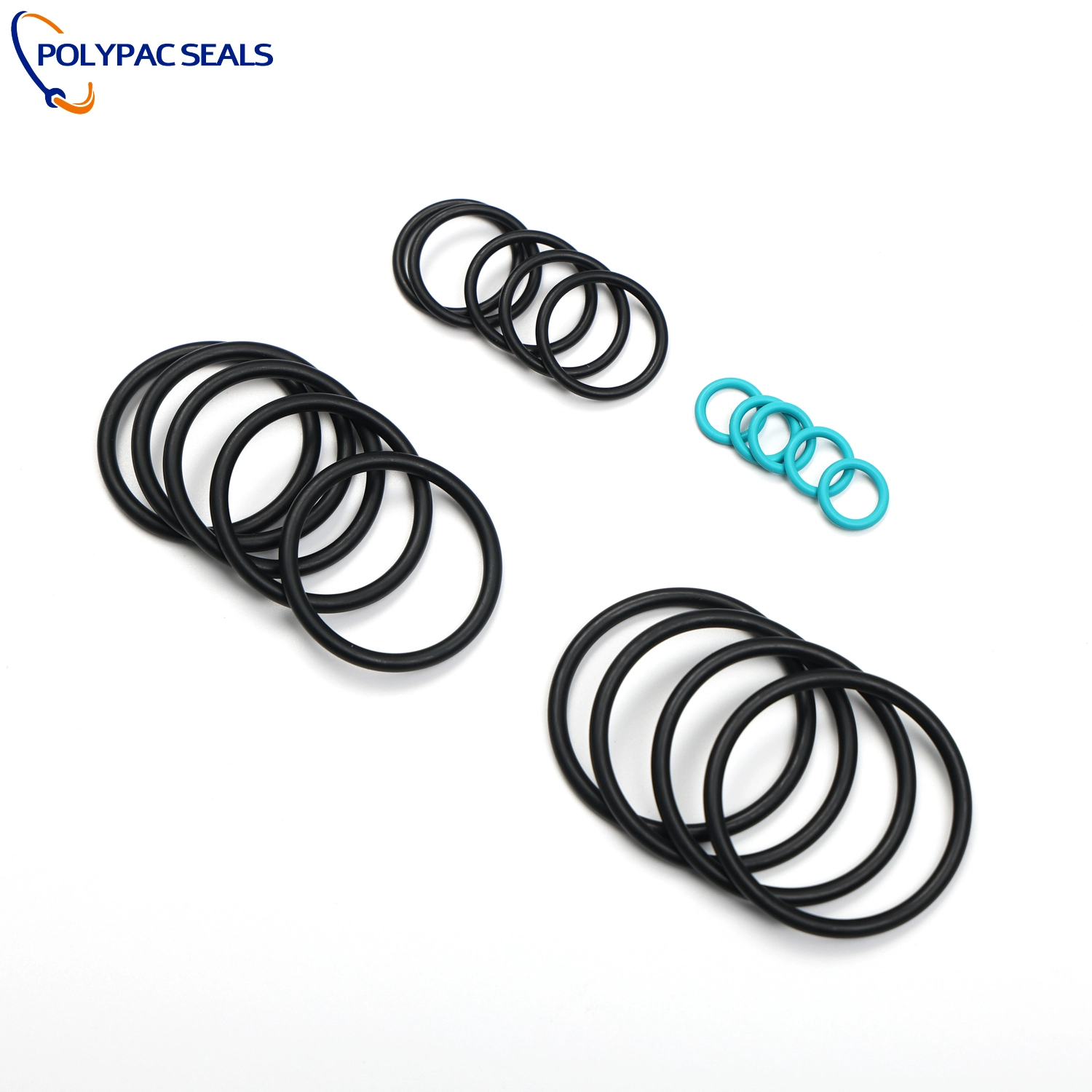
Founded in 2008, Polypac began by manufacturing filled PTFE seals, including bronze-filled PTFE, carbon-filled PTFE, graphite PTFE, MoS₂-filled PTFE, and glass-filled PTFE. Today, we have expanded our product line to include O-rings made from various materials such as NBR, FKM, silicone, EPDM, and FFKM. Core products relevant to wiper ring sourcing include O-Rings, Rod Seals, Piston Seals, End Face Spring Seals, Scraper Seals, Rotary Seals, Back-up Rings, and Dust Rings.
Competitive advantages and technical differentiation
Polypac's competitive strengths include:
- Advanced in-house compounding and PTFE processing enabling tailored material formulations for unique operating conditions.
- Large-scale production capacity with modern testing labs, enabling fast scale-up from prototype to volume production.
- Close ties to academic research for materials innovation and problem-solving in harsh environments (extreme temp, abrasive fluids).
- Comprehensive product range allowing integrated sealing systems (rod seals paired with wiper rings and back-up rings for optimized performance).
These strengths translate into reduced supplier risk, stronger technical support for design optimization, and quicker development cycles compared with smaller contract manufacturers.
Cost, lead time, and contractual considerations
Balancing price and total cost of ownership
Lowest part price often leads to higher lifecycle costs if the wiper ring fails prematurely causing cylinder damage or downtime. Consider:
- Warranty terms and failure rates reported by the supplier.
- Replacement intervals and machine downtime costs.
- Cost of quality controls and incoming inspection vs. supplier-managed quality.
Negotiating lead times and inventory buffer
Negotiate realistic lead times with clauses for expedited orders. Consider consignment stock or Kanban for high-use items. For new suppliers, plan for longer lead times during the validation phase.
Sample agreements and pilot runs
Establish clear acceptance criteria for FAI samples and pilot batches. Define non-conformance thresholds and root-cause investigation timelines in the agreement. Require traceability of material batch numbers and test certificates for pilot runs.
FAQ — Common questions about sourcing ISO-certified wiper ring suppliers
1. What certifications are must-haves for a reliable wiper ring supplier?
At minimum, require ISO 9001 for quality management. For automotive or highly regulated sectors, look for IATF 16949 and specific customer approvals. Also require material compliance (RoHS/REACH) where applicable.
2. How do I verify a supplier’s ISO certificate is real?
Verify the registrar is accredited (e.g., UKAS, ANAB) and check the certificate scope, site address, and registration number. You can confirm directly with the accreditation body's directory or ask for surveillance/audit reports.
3. What tests are most important for wiper rings?
Hardness (Shore A), tensile/elongation, compression set, abrasion resistance, and representative bench testing under expected operating conditions. Material verification through FTIR or equivalent is also important.
4. Should I require in-house compounding from a supplier?
In-house compounding provides tighter control and faster development for custom formulations. If your application requires unique elastomer blends or extreme environment performance, prefer suppliers with compounding capability.
5. How long should the validation process take before approving a new supplier?
Typical validation ranges from 6 to 16 weeks depending on complexity: documentation review and initial sample testing (2–4 weeks), pilot runs and endurance testing (4–8 weeks), and audit and commercial negotiations (2–4 weeks).
6. Can I rely on supplier-provided test reports?
Supplier reports are useful but validate using independent lab testing for critical components or when the risk/cost of failure is high. Third-party test labs accredited to ISO/IEC 17025 provide higher assurance.
Contact and next steps
If you need a qualified ISO-certified wiper ring supplier with strong material capabilities and production capacity, consider Polypac for pilot orders, customized compound development, and volume supply. For product inquiries or to request samples, contact Polypac through their sales channels or request technical consultation to evaluate material selection and bench testing programs.
Additional references:
- ISO 9001: https://www.iso.org/iso-9001-quality-management.
- Mechanical seal background: https://en.wikipedia.org/wiki/Mechanical_seal
Contact Polypac to review product catalogs (O-Rings, Rod Seals, Piston Seals, End Face Spring Seals, Scraper Seals, Rotary Seals, Back-up Rings, Dust Ring) and to arrange factory visits or third-party audits.

High-Performance Pneumatic Piston Seals: How to Achieve Zero-Leakage Efficiency

PTFE vs. Composite: Choosing the Best Piston Guide Ring Material for High-Pressure Systems

Mastering O-Ring Gland Design: The Complete Guide for Perfect Sealing Performance

Advanced Back-Up Ring Materials: Beyond PTFE for Extreme Temperature Environments

PTFE vs. Urethane Scrapers: Which Material Truly Prevents Contamination?
Products
How can I prevent seal damage during installation?
How important is surface finish on the metal parts that contact the seal?
Why did my O-ring fail prematurely?
What is the purpose of the metal spring in a rotary shaft seal?
What is the difference between a static seal and a dynamic seal?
Stay Updated with Industry Insights
Subscribe to our articles and receive the latest news, expert guidance, and technical updates directly in your E-mail.
Rest assured that your privacy is important to us, and all information provided will be handled with the utmost confidentiality.
Polypac is a trusted global supplier of high-performance sealing solutions, providing OEM & ODM services for industries worldwide.
E-mail:
Phone/WhatsApp:
© 2025 Polypac Seals. All Rights Reserved.
dms
DMS
DMS