












How to Specify PTFE Oil Seal Dimensions and Tolerances
Practical Guide to PTFE Oil Seal Specification
Why choose ptfe oil seal: material advantages and common applications
Polytetrafluoroethylene (PTFE) is widely used for oil seals when chemical resistance, wide temperature range, low friction and long life are priorities. PTFE and its filled variants (bronze, carbon, glass, MoS2, graphite-filled PTFE) resist aggressive media, operate from cryogenic to high temperatures, and offer excellent wear characteristics in many dynamic and static sealing applications. Typical applications include hydraulic cylinders, rotary shafts in chemically aggressive environments, high-temperature pumps and precision instrumentation where conventional elastomers (NBR, FKM) would degrade.
Key dimensions and definitions for ptfe oil seal specification
Before specifying tolerances you must agree on the dimensional vocabulary. Use these standard terms on drawings and RFQs when ordering a ptfe oil seal:
| Term | Short name | What to measure |
|---|---|---|
| Inner Diameter | ID | Inside bore of the seal at the sealing land (free-state, unless specified as mounted) |
| Outer Diameter | OD | Outside diameter of the seal body or the diameter that engages the housing |
| Width / Axial Height | W / H | Axial thickness of the seal including any backup or spring parts |
| Sealing Lip Geometry | Profile | Lip angle, number of lips, spring type and location |
| Groove Dimensions | Groove | Housing bore diameter, groove width and depth, shaft diameter and surface finish |
Embedding these definitions on the drawing avoids ambiguity when you specify tolerances and clearance conditions for ptfe oil seal components.
Tolerance standards and practical recommendations for ptfe oil seal drawing
There is no single global tolerance table for all ptfe oil seals — tolerances depend on material processing (sintered, machined, molded), seal geometry and application (static vs dynamic). Use industry standards where applicable (for O-rings ISO 3601, for shafts ISO 286), but expect custom tolerances for PTFE seals. The table below gives practical engineering recommendations used by seal manufacturers for finished seal dimensions (typical, not normative):
| Nominal dimension (ID or OD) | Typical finished tolerance (recommended) | Notes |
|---|---|---|
| <= 10 mm | ±0.03 – ±0.08 mm | Smaller parts, tighter control possible with precision machining |
| 10 – 50 mm | ±0.05 – ±0.12 mm | Common range for gland and shaft sealing components |
| 50 – 150 mm | ±0.08 – ±0.20 mm | Allow for machining and sintering variability |
| >150 mm | ±0.15 – ±0.30 mm | Large diameters accumulate more variation; consider segmented designs or post-machining |
When defining tolerances in a purchase order state whether dimensions are: (a) free-state (unmounted), (b) mounted (press-in), or (c) assembled under specified interference. Also declare whether tolerances are symmetric (±) or unilateral (e.g., −0 / +0.10 mm).
How material type and processing affect ptfe oil seal tolerances
Filled PTFE grades have different sintering shrinkage, compressibility and machining characteristics compared with pure PTFE. Common facts to consider when specifying tolerances for ptfe oil seal parts:
- Filled PTFE (bronze, carbon, glass, MoS2) often machines with better dimensional stability and lower creep than pure PTFE, allowing tighter finished tolerances.
- PTFE has a relatively high coefficient of thermal expansion (CTE). Design tolerances must account for operating temperature ranges — define whether the dimension is specified at room temperature or operating temperature.
- Sintered PTFE parts may require post-machining to achieve tight tolerances; machining strategy and fixturing affect achievable precision.
Reference material properties (thermal expansion, hardness) should be supplied with the spec sheet and matched to tolerance expectations.
Designing grooves and shaft/housing fits for ptfe oil seal performance
Correct groove geometry and shaft/housing fits are critical to seal performance. The two most frequent interfaces to specify are the shaft surface and the housing bore. Practical guidance for ptfe oil seal specifications:
- Shaft tolerances: use precision shafts (e.g., ground to tolerance classes such as h6 or better where dynamic sealing is required) and specify surface finish targets (typical Ra 0.2–0.8 μm for dynamic seals; static PTFE seals may accept rougher finishes). A smoother shaft reduces wear and improves leakage performance.
- Housing bore tolerances: specify bore roundness and true position; interference or press-fit for OD depends on seal design. PTFE seals that rely on housing support generally require a controlled interference fit to prevent extrusion and to maintain concentricity.
- Axial clearance and spring preloads: if the ptfe oil seal includes a garter spring or preloaded lip, specify installed axial free height and spring force to ensure proper sealing without excessive friction.
Whenever possible include a simple assembly drawing showing shaft, groove and seal in mounted condition and indicate which dimensions are measured in that state.
Surface finish, hardness and runout specifications for ptfe oil seal contact areas
Sealing performance is sensitive to shaft runout and surface finish. Typical recommendations when specifying ptfe oil seal mating surfaces:
| Parameter | Recommended range | Why it matters |
|---|---|---|
| Surface finish (Ra) | 0.2–0.8 μm (dynamic); 0.8–3.2 μm (static) | Limits wear and micro-leakage; excessively smooth surfaces may cause stick-slip |
| Radial runout (TIR) | < 0.02–0.05 mm (critical shafts) | High runout increases dynamic loading and wear |
| Housing bore tolerance | Depends on OD tolerance of seal; specify concentricity <0.05 mm where possible | Prevents lip distortion and ensures uniform contact |
These values are typical engineering targets. For mission-critical seals ask the supplier for validated acceptance criteria and test data.
Inspection, measurement and quality control of ptfe oil seal dimensions
Specify inspection methods and sampling plans on the drawing. Standard practices include:
- Use of calibrated micrometers, inside gauges and optical comparators or CMM for complex profiles.
- Dimensional inspection of ID/OD/Width on 100% of production for critical runs; statistical sampling (e.g., ANSI/ASQ Z1.4) for high-volume parts with established stability.
- Hardness/density checks for filled grades, and post-production leak/pressure testing where applicable.
Include acceptance criteria and nonconformance actions in the purchase order to prevent ambiguity during delivery.
Comparison: PTFE oil seal vs common elastomer seals — choose by application
To help select appropriate tolerances and materials, below is a comparison of typical sealing materials used for oil seals.
| Property | PTFE (filled) | NBR | FKM (Viton) |
|---|---|---|---|
| Temperature range | -200 to +260 °C (grade dependent) | -40 to +120 °C | -20 to +200 °C |
| Chemical resistance | Excellent (wide range) | Good (hydrocarbons) | Very good (fuels, oils) |
| Friction/wear | Very low friction; good wear life | Higher friction; wear faster | Moderate |
| Manufacturing tolerances | Tighter achievable for machined filled PTFE | Depends on molding shrinkage | Molding tolerances; limited by elastomer compressibility |
Choose PTFE when chemical and temperature limits of elastomers are exceeded or when you need lower friction and longer life. For dynamic rotary sealing, consider the tradeoffs in installation complexity and groove design.
How to write a complete specification sheet when ordering ptfe oil seal
A complete RFQ/spec should include the following fields. Supplying this information reduces iterations and ensures accurate tolerance proposals from manufacturers.
- Part name and drawing number
- Material grade (e.g., MoS2-filled PTFE, bronze-filled PTFE) and any required certifications
- Nominal dimensions (ID, OD, Width) and whether dimensions are free-state or mounted
- Required tolerances for each critical dimension (state units and measurement temperature)
- Surface finish and runout limits for shafts/housing
- Operating conditions: temperature range, pressure, media, speed, expected life
- Assembly conditions: interference fit or press-fit requirements, axial clearance
- Inspection and testing requirements: dimensional inspection method, sample size, leakage or pressure tests
- Packaging, traceability and labeling requirements
Providing a detailed spec accelerates quotation accuracy and reduces lead time.
Polypac: Manufacturer capabilities and how we help you specify ptfe oil seal solutions
Polypac's expertise for custom ptfe oil seal production
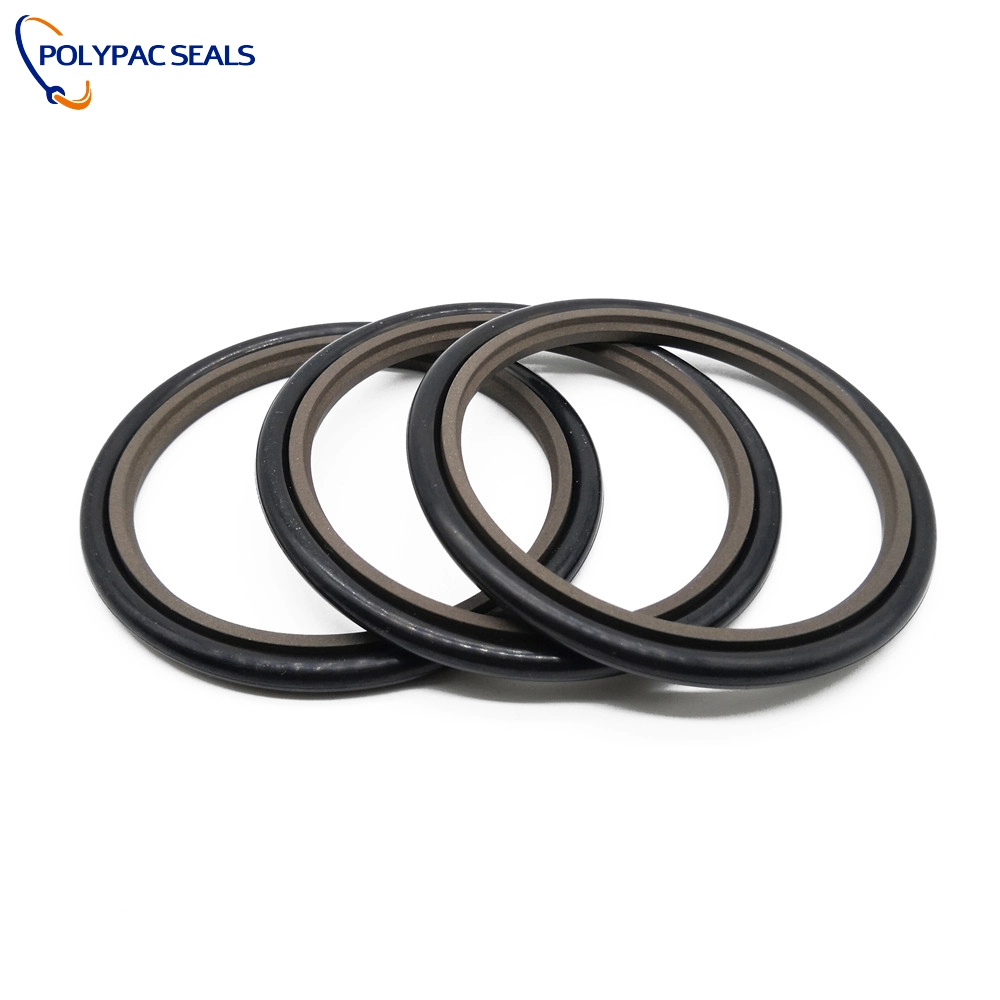
Polypac is a scientific and technical hydraulic seal manufacturer and oil seal supplier specializing in seal production, sealing material development, and customized sealing solutions for special working conditions. Founded in 2008, Polypac began with filled PTFE seals — including bronze-filled PTFE, carbon-filled PTFE, graphite PTFE, MoS2-filled PTFE and glass-filled PTFE — and has since expanded the product line to include O-rings and a wide range of elastomeric seals.
Production scale, R&D and product range from Polypac
Polypac's custom rubber ring and O-ring factory covers an area of more than 10,000 square meters, with 8,000 square meters of factory floor. Production and testing equipment are among the most advanced in the industry. As one of the largest companies in China dedicated to seal production and development, Polypac maintains long-term cooperation with universities and research institutions domestically and internationally.
Why work with Polypac on ptfe oil seal tolerances and custom designs
Polypac offers advantages that help customers specify and achieve reliable dimensions and tolerances:
- Experience with filled PTFE grades and machining strategies to meet tight tolerances
- Advanced testing and measurement capabilities for dimensional control and material validation
- Ability to supply complementary seal families: O-Rings, Rod Seals, Piston Seals, End Face Spring Seals, Scraper Seals, Rotary Seals, Back-up Rings, Dust Rings
- Custom engineering support for groove design, assembly conditions and performance testing
For complex or safety-critical sealing tasks, Polypac can recommend achievable tolerances and provide test reports to validate performance under your operating conditions.
Practical example: how Polypac would approach a custom ptfe oil seal order
Typical workflow when ordering: design review – material selection – prototype machining – dimensional verification – performance testing – production with batch inspection. This process minimizes tolerance risks and ensures that the delivered ptfe oil seal meets both geometric and functional requirements.
Cost, lead time and negotiation tips when specifying tight tolerances
Tighter tolerances and complex profiles increase manufacturing time and inspection burden. When you need very tight tolerances for ptfe oil seal parts, expect higher unit costs and possibly longer lead times. To balance cost and performance consider:
- Specifying critical tolerances only on features that affect sealing performance
- Allowing wider tolerances on non-functional dimensions
- Using filled PTFE grades to reduce dimensional variability where feasible
Ordering checklist for final approval
Before issuing a purchase order for ptfe oil seals, confirm the following:
- All dimensional references (ID/OD/W) and tolerances are present and unambiguous
- Material grade and certification requirements are stated
- Inspection and acceptance criteria are agreed
- Packaging, labeling and traceability requirements are included
Frequently asked questions (FAQ) about ptfe oil seal dimensions and tolerances
1. What tolerance should I specify for a small PTFE oil seal (ID ≤ 10 mm)?
For small machined PTFE seals, a typical finished tolerance range is ±0.03 to ±0.08 mm. The exact value depends on the manufacturing method and whether the part is sintered or post-machined. Ask the supplier for capability studies (Cp/Cpk) if tight tolerances are critical.
2. How does temperature affect PTFE oil seal dimensions?
PTFE has a relatively high coefficient of thermal expansion, so dimensions can change noticeably with temperature. Always state the reference temperature for dimensions (usually 20–23 °C) and consider the operating temperature range to determine installed clearances.
3. Can PTFE oil seals be molded to tight tolerances? Or is machining required?
Filled PTFE can be molded/sintered but often requires post-machining to achieve tight dimensional control. For very tight tolerances and precision sealing faces, machining after sintering is a common practice.
4. What shaft surface finish should I specify for a PTFE rotary oil seal?
For dynamic sealing a shaft Ra of 0.2–0.8 μm is commonly recommended. Also control shaft runout and hardness to reduce wear and improve seal life.
5. How do I specify tolerances for mounted vs unmounted dimensions?
Clearly label whether dimensions are free-state or mounted. If mounted dimensions are required, provide the housing and shaft tolerances and indicate the method for measuring the dimension in the assembled condition. Mounted dimensions often require different tolerance bands due to interference and deformation.
6. Do you need different tolerances for static vs dynamic PTFE seals?
Yes. Dynamic seals usually require tighter control of shaft finish, concentricity and lip geometry. Static seals can tolerate larger surface irregularities but may need stricter OD fit in the housing to prevent extrusion.
7. What documentation should arrive with a PTFE oil seal delivery?
Preferable documents include: inspection report (dimensional data), material certificates (composition, filler content), test reports (where applicable), and traceability labels. For critical applications request a first article inspection (FAI).
Contact Polypac for specification support or to view products
If you need help finalizing dimensional tolerances or want samples/prototypes, contact Polypac. We provide engineering support to convert operating conditions into robust dimensional specifications and can supply O-Rings, Rod Seals, Piston Seals, End Face Spring Seals, Scraper Seals, Rotary Seals, Back-up Rings and Dust Rings. Request a quote, send drawings or ask for a capability study to confirm achievable tolerances.
References and authoritative resources
- Polytetrafluoroethylene (PTFE) — Britannica. https://www.britannica.com/science/polytetrafluoroethylene. Accessed 2025-12-23.
- Polytetrafluoroethylene (PTFE) — Wikipedia. https://en.wikipedia.org/wiki/Polytetrafluoroethylene. Accessed 2025-12-23.
- ISO 3601 — Fluid power systems — O-rings (for reference on O-ring tolerances): https://www.iso.org/standard/38170.. Accessed 2025-12-23.
- SKF Seals — Technical information on shaft seals and surface finish considerations: https://www.skf.com/group/products/seals. Accessed 2025-12-23.
- Parker O-Ring Handbook — design and tolerance best practices (manufacturer handbook): https://www.parker.com/literature/Seals%20Division%20Europe/Oring%20handbook.pdf. Accessed 2025-12-23.

High-Performance Pneumatic Piston Seals: How to Achieve Zero-Leakage Efficiency

PTFE vs. Composite: Choosing the Best Piston Guide Ring Material for High-Pressure Systems

Mastering O-Ring Gland Design: The Complete Guide for Perfect Sealing Performance

Advanced Back-Up Ring Materials: Beyond PTFE for Extreme Temperature Environments

PTFE vs. Urethane Scrapers: Which Material Truly Prevents Contamination?
Products
What does "AS568" mean?
What is the difference between NBR and FKM materials?
How can I prevent seal damage during installation?
How important is surface finish on the metal parts that contact the seal?
How do I choose the right material for my sealing application?
Stay Updated with Industry Insights
Subscribe to our articles and receive the latest news, expert guidance, and technical updates directly in your E-mail.
Rest assured that your privacy is important to us, and all information provided will be handled with the utmost confidentiality.

Polypac is a trusted global supplier of high-performance sealing solutions, providing OEM & ODM services for industries worldwide.
E-mail:
Phone/WhatsApp:
© 2025 Polypac Seals. All Rights Reserved.
dms
DMS
DMS