












Top Materials for Rotary Seals: PTFE, NBR, FKM Compared
Selecting the Right Material for Rotary Seals
Why material choice matters for rotary seals
Rotary seals must control fluid leakage, exclude contaminants, and survive dynamic motion between rotating and stationary components. Material properties directly affect friction, wear, chemical compatibility, temperature resistance, compression set, and service life. Choosing the wrong material causes frequent failures, unplanned downtime, and higher lifecycle costs.
Primary selection drivers
Key factors are operating temperature, media compatibility (hydraulic oil, fuel, water-glycol, solvents), pressure, surface speed, shaft finish, dynamic or static sealing, and environmental exposures (ozone, UV, dust). Cost and manufacturability are also important when scaling production.
and how this guide helps
This article helps engineers, maintenance managers, and procurement professionals quickly compare PTFE, NBR, and FKM for rotary seals, understand typical failure modes, and form selection rules. It also points to a supplier with advanced material development and custom production capabilities for specialized requirements.
Material Deep-Dive: PTFE, NBR, FKM
Overview of each polymer
PTFE (polytetrafluoroethylene) is a semi-crystalline fluoropolymer known for extremely low friction, outstanding chemical resistance, and wide temperature range. NBR (nitrile butadiene rubber) is a versatile petroleum-derived elastomer widely used for oil resistance and general hydraulic sealing. FKM (fluoroelastomer, trade name e.g., Viton) is a high-performance elastomer offering superior heat and chemical resistance compared with NBR.
Side-by-side comparison
The table below summarizes typical engineering properties relevant to rotary seal selection. Values are representative ranges; specific grades and fillers significantly affect performance.
| Property | PTFE | NBR | FKM |
|---|---|---|---|
| Temperature range | -200 to +260 °C (static/short-term), depends on grade | -40 to +120 °C typical | -20 to +200 °C typical; some grades to +250 °C |
| Chemical resistance | Excellent to most chemicals and fuels | Good to petroleum oils and hydraulic fluids; poor to ketones and some solvents | Excellent to oils, fuels, many aggressive fluids; better than NBR |
| Dynamic friction / wear | Very low friction; good wear life when used with proper surface finish or fillers | Moderate friction; wear increases at high speed/temperature | Lower friction than NBR but higher than PTFE; good wear resistance |
| Compression set | Not elastomeric; needs spring energizer or elastomer backing for static sealing | Moderate; can suffer compression set at high temp | Low compression set; better long-term sealability than NBR |
| Typical applications | High-temp rotary, low friction, aggressive chemicals, PTFE filled lip seals | General-purpose hydraulic rotary seals, low-cost applications | High-temp hydraulics, automotive, aerospace, fuels, aggressive fluids |
| Cost | High (especially filled PTFE compounds) | Low to moderate | High |
Sources for typical property ranges include material datasheets and industry catalogs. Specific grades like filled-PTFE (bronze, carbon, glass, MoS2) alter wear and friction performance substantially.
How fillers and compound selection change behavior
Filled PTFE (bronze, carbon, glass, MoS2) improves wear and reduces cold flow. NBR hardness and acrylonitrile content change fuel and low-temperature performance. FKM has multiple chemistries (copolymer, terpolymer) and perfluoroelastomer (FFKM) variants for extreme chemical resistance. Always select grade based on test data for the expected service conditions.
How to Choose Based on Application and Failure Modes
Match material to the dominant stress
Define the most severe factor first. If maximum temperature or aggressive chemicals dominate, FKM or PTFE variants are likely candidates. If cost and oil resistance at moderate temperatures drive decisions, NBR is often the most economical choice.
Common rotary seal failure modes and mitigations
Examples of failure modes and practical mitigations:
- Abrasion/wear: use PTFE filled materials or FKM with low friction profile; optimize shaft finish and hardness.
- Thermal degradation: switch to FKM or high-temp PTFE; reduce dead-heating sources.
- Chemical swelling/attack: choose chemically compatible polymer (PTFE/FFKM) or barrier configuration.
- Compression set / extrusion: select elastomer with lower compression set or add back-up rings for pressure/extrusion resistance.
- Leakage at low speed: employ elastomeric lip designs with spring energizers or low-swell PTFE composites for better pinch at low sliding speeds.
Design tips to extend seal life
Optimize shaft surface finish (typically Ra 0.2–0.8 μm for many rotary lip seals), control run-out and misalignment, specify correct lip geometry and energizing force, select compatible lubricants, and plan for maintenance inspection intervals. For critical applications, perform bench tests and run pilot parts before mass deployment.
Performance Comparison and Selection Rules
Quick selection matrix
Use this practical matrix to shortlist materials based on typical requirements:
| Requirement | Best Choice | Alternate |
|---|---|---|
| High temp >150 °C | FKM or PTFE | FFKM for extreme chemistry |
| Aggressive chemicals / solvents | PTFE or FFKM | FKM for many oils |
| Low cost, general hydraulic oil | NBR | FKM if temp/fuel exposure |
| Low friction / long wear life | Filled PTFE | FKM |
| Low speed sealing | Elastomeric lip seal (NBR or FKM) | PTFE with spring energizer |
When to prefer composite solutions
Composite seals combine PTFE sliding faces with elastomeric energizers (rubber bonded to PTFE or PTFE with a spring). These hybrids capture the low friction and chemical resistance of PTFE while maintaining adequate sealing force and adaptability to shaft misalignment. For many rotary applications where friction, wear, and oil resistance must be balanced, a PTFE/elastomer composite is often optimal.
Testing and validation best practices
Validate candidate materials with bench tests emulating temperature, pressure, shaft speed, and fluid chemistry. Accelerated life tests, Shore hardness checks, compression set tests (per ISO 815), and friction/wear tests on tribometers will provide data to justify selection. Keep traceable test reports and maintain a feedback loop with suppliers for continuous improvement.
Polypac: Capabilities, Products and Why It Matters
Polypac at a glance
Polypac is a scientific and technical hydraulic seal manufacturer and oil seal supplier specializing in seal production, sealing material development, and customized sealing solutions for special working conditions.
Production scale, R&D, and product range
Polypac's custom rubber ring and O-ring factory covers an area of more than 10,000 square meters, with a factory space of 8,000 square meters. Our production and testing equipment are among the most advanced in the industry. As one of the largest companies in China dedicated to the production and development of seals, we maintain long-term communication and cooperation with numerous universities and research institutions both domestically and internationally.
Materials and historical strengths
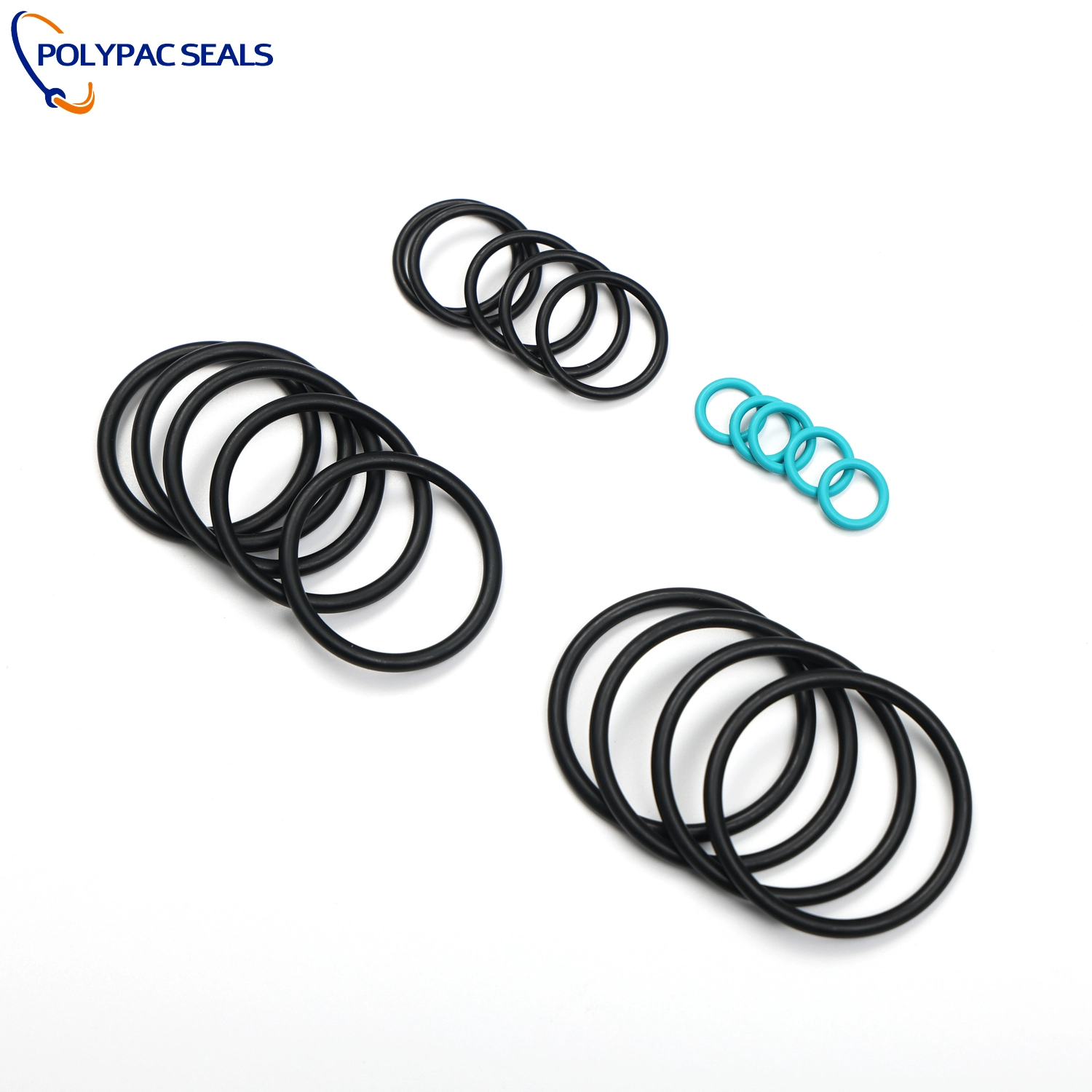
Founded in 2008, Polypac began by manufacturing filled PTFE seals, including bronze-filled PTFE, carbon-filled PTFE, graphite PTFE, MoS2-filled PTFE, and glass-filled PTFE. Today, we have expanded our product line to include O-rings made from various materials such as NBR, FKM, silicone, EPDM, and FFKM.
Main products and competitive advantages
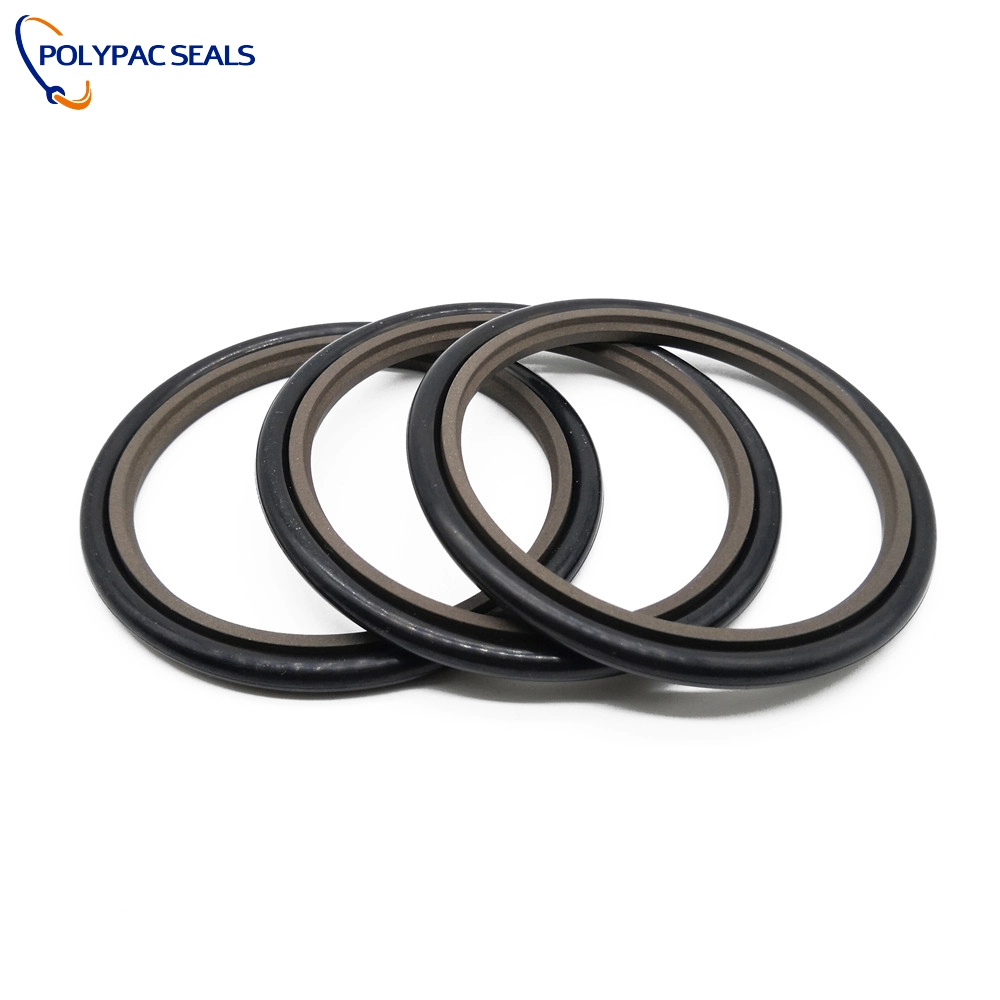
Polypac manufactures a broad portfolio including O-rings, rod seals, piston seals, end face spring seals, scraper seals, rotary seals, back-up rings, and dust rings. Key competitive differentiators include:
- Deep PTFE compound expertise and a history of developing filled PTFE for demanding rotating applications.
- Comprehensive in-house production and testing, enabling tight quality control and rapid iteration.
- Long-term R&D partnerships with universities, supporting material innovation and tailored formulations.
- Large-scale manufacturing capability enabling competitive pricing while maintaining quality.
When to contact Polypac
Contact Polypac for custom rotary seal designs, specialty PTFE-filled lip seals for high-wear or chemical service, material qualification testing, or when you need to scale production with consistent quality. Their combined expertise in PTFE, elastomers, and hybrid seals makes them a practical partner for applications that require balancing friction, wear life, and chemical resistance.
FAQ
1. Which material is best for high-speed rotary shafts?
For high surface speeds, low friction and excellent wear resistance are priorities. Filled PTFE or PTFE-based composites are often best, provided shaft finish and thermal dissipation are controlled. FKM can be used for moderately high speeds when combined with good lubrication.
2. Can NBR be used with modern bio-hydraulic fluids?
Standard NBR may swell or degrade in some bio-based hydraulic fluids. Use specially formulated NBR grades or consider FKM/FFKM for better compatibility. Always verify with supplier compatibility charts and lab testing.
3. How does shaft finish affect seal life?
Shaft finish strongly affects friction and wear. Typical recommendations for many rotary seals are Ra 0.2–0.8 μm. Too rough a finish increases abrasion; too smooth can prevent lubricant retention. Surface hardness and runout control are also crucial.
4. When should I choose an elastomeric seal vs a PTFE seal?
Choose elastomers (NBR/FTM) for low-cost solutions, low-speed sealing, and where elasticity helps maintain contact. Choose PTFE when chemical resistance, temperature capability, or ultra-low friction/wear life is the priority. Composite designs often offer the best compromise.
5. How do I mitigate extrusion at high pressure?
Use back-up rings, increase lip cross-section or hardness, or select materials with better compression set resistance like certain FKM compounds. For very high pressures, consider metal-reinforced or molded seal designs with anti-extrusion features.
6. What tests should I request from a seal supplier?
Request material datasheets, compression set tests (ISO 815), tensile and elongation values, hardness (Shore), dynamic friction/wear test reports if available, and compatibility test results with your fluids. For critical applications ask for sample run data under simulated service conditions.
For personalized guidance, product samples, or to discuss custom formulations and production volumes, contact Polypac's engineering team to evaluate your rotary sealing requirements and obtain a quote.
Contact / Request a Quote: Reach out to Polypac for technical consultation, material data, and product samples. Visit the Polypac website or contact sales to discuss O-rings, rod seals, piston seals, end face spring seals, scraper seals, rotary seals, back-up rings, and dust rings.
References
- PTFE properties and applications - MatWeb material database. https://www.matweb.com/ (accessed 2025-01-04)
- Fluoroelastomers (FKM) overview - ASTM / industry literature. https://www.astm.org/ (accessed 2025-01-04)
- Nitrile rubber (NBR) properties - Polymer Science sources and datasheets. https://www.chemours.com/ (accessed 2025-01-04)
- Seal design best practices - Parker Hannifin technical resources. https://www.parker.com/ (accessed 2025-01-04)
- Rotary seal tribology and surface finish guidance - SKF technical publications. https://www.skf.com/ (accessed 2025-01-04)
- ISO 815-1:2014 Rubber, vulcanized or thermoplastic - Determination of compression set. https://www.iso.org/standard/ (accessed 2025-01-04)
Note: Specific material performance varies by supplier grade and filler package. Always request grade-specific datasheets and run application-level validation testing.

High-Performance Pneumatic Piston Seals: How to Achieve Zero-Leakage Efficiency

PTFE vs. Composite: Choosing the Best Piston Guide Ring Material for High-Pressure Systems

Mastering O-Ring Gland Design: The Complete Guide for Perfect Sealing Performance

Advanced Back-Up Ring Materials: Beyond PTFE for Extreme Temperature Environments

PTFE vs. Urethane Scrapers: Which Material Truly Prevents Contamination?
Products
How can I prevent seal damage during installation?
What does "AS568" mean?
What is the purpose of the metal spring in a rotary shaft seal?
What is the difference between a static seal and a dynamic seal?
Can I reuse a seal?
Stay Updated with Industry Insights
Subscribe to our articles and receive the latest news, expert guidance, and technical updates directly in your E-mail.
Rest assured that your privacy is important to us, and all information provided will be handled with the utmost confidentiality.

Polypac is a trusted global supplier of high-performance sealing solutions, providing OEM & ODM services for industries worldwide.
E-mail:
Phone/WhatsApp:
© 2025 Polypac Seals. All Rights Reserved.
dms
DMS
DMS