












Troubleshooting PTFE Seal Leakage: Common Causes
Understanding PTFE Seal Failure Mechanisms
PTFE is widely used in sealing because of its chemical resistance and low friction, but PTFE seals still leak when material selection, design, installation, or operating conditions are not aligned with the application. This article focuses on troubleshooting leakage in ptfe sealing solutions: how to identify root causes, verify them with tests, and apply durable fixes that reduce downtime and recurring failures.
Why troubleshooting ptfe sealing solutions matters
Leakage has direct costs (lost fluid, contamination, environmental fines) and indirect costs (unplanned downtime, accelerated wear). PTFE's unique properties — very low surface energy, cold flow (creep), and limited elasticity — mean that standard elastomer troubleshooting rules don't always apply. Effective troubleshooting requires a methodical approach combining inspection, measurement, and targeted corrective actions.
Common mechanical causes of leakage in ptfe sealing solutions
Mechanical problems account for a large share of PTFE seal failures. Key items to check:
- Installation damage: nicks, folds, or cuts during assembly reduce contact area and create leak paths. PTFE is especially susceptible because its low elasticity does not allow it to seat over damage like elastomers can.
- Extrusion and extrusion gaps: under high pressure, PTFE can extrude into clearances. Back-up rings or anti-extrusion devices are often required for pressures above the material's extrusion limit.
- Misalignment and eccentricity: axial or radial misalignment prevents uniform sealing contact, increasing local stress and wear.
- Surface finish and hardness of mating parts: rough or scored shafts and housings abrade PTFE and impair sealing. Recommended surface finish and hardness vary with seal type but are a primary mechanical check.
Troubleshooting steps: visually inspect for assembly damage, measure housing and shaft tolerances and runout, and check for extrusion evidence. If extrusion is visible, consider adding back-up rings or switching to a filled PTFE compound with higher dimensional stability.
Material and formulation issues when using ptfe sealing solutions
Not all PTFE is the same. Filled PTFE (bronze-filled, carbon-filled, graphite, MoS2, glass-filled) modifies properties like wear resistance, creep, thermal conductivity, and friction. Selection mistakes that cause leakage include:
- Using unfilled PTFE in high-wear or high-pressure dynamic applications — it can cold-flow and wear faster.
- Choosing a fill that reacts with the fluid or causes abrasiveness against mating parts.
- Ignoring temperature limitations: PTFE softens at elevated temperatures and the effective sealing pressure capability drops.
Table: Common PTFE formulations, advantages, and typical failure modes
| PTFE Type | Key Advantages | Typical Application | Common Failure Mode |
|---|---|---|---|
| Unfilled PTFE | Excellent chemical resistance, lowest friction | Static seals, chemical glands | Cold flow/creep under sustained load; wear in dynamic use |
| Bronze-filled PTFE | Improved thermal conductivity and wear resistance | Hydraulic pistons, high-load rotary seals | Particle contamination abrasion if medias contain solids |
| Carbon-filled PTFE | Better wear resistance, reduced cold flow | Dynamic rod seals, some reciprocating | Loss of lubrication leads to wear |
| MoS2-filled PTFE | Lower friction under boundary conditions | Dry or poor-lubrication environments | High-temp degradation of fillers in oxidizing atmospheres |
| Glass-filled PTFE | Higher stiffness and dimensional stability | High-precision static seals | Brittleness and micro-cracking under shock |
Sources for material behavior include manufacturer datasheets and PTFE technical summaries (see references).
Thermal and chemical causes relevant to ptfe sealing solutions
Although PTFE is chemically inert to many fluids, elevated or cycling temperatures and particular chemical environments can cause leakage:
- High temperatures reduce compressive strength and increase creep, leading to loss of contact pressure and leakage.
- Thermal cycling can lead to differential expansion between the PTFE and metal parts; repeated opening of micro-gaps leads to wear or extrusion.
- Some aggressive fluorinating agents or molten alkali metals can attack PTFE applications (rare in general hydraulics but relevant in specialty chemical plants).
Troubleshooting: compare operating temperature to the PTFE grade's recommended service temperature. If temperature excursions are frequent, consider a filled PTFE or hybrid solution (PTFE energised by an elastic element or spring-energized seals designed for high temperatures).
Design and application factors for reliable ptfe sealing solutions
Design mistakes are common contributors to leakage and are often the most cost-effective to correct for long-term reliability. Critical design checks:
- Seal cross-section and preload: PTFE needs sufficient static preload or an energizing element to maintain sealing. Static PTFE seals often require tighter tolerances than elastomeric seals.
- Clearances and extrusion gaps: specify anti-extrusion grooves and back-up rings when pressure and gap geometry risk extrusion.
- Surface finish: typical recommendations for dynamic PTFE seals are Ra 0.2–0.8 μm on shafts; for static seals, finish tolerances can be looser but should be free of grooves and machining marks.
- Lubrication: while PTFE is self-lubricating, many dynamic systems benefit from compatible fluid or grease to reduce wear and frictional heating.
Design validation: perform a tolerance stack-up review, run finite-element analysis (FEA) on the seal cross-section under pressure and temperature cycles, and prototype test under worst-case conditions. Where possible, use seal test rigs to reproduce pressure, speed, temperature, and contamination conditions before full deployment.
Diagnostic procedure: a step-by-step approach to pinpointing leakage in ptfe sealing solutions
Follow a structured diagnostic pathway to identify the root cause rather than applying band-aid fixes:
- Define the symptoms precisely: continuous leak vs intermittent, location and rate of leakage, operating conditions when leak occurs.
- Visual inspection: remove the seal and inspect for scoring, extrusion evidence, thermal discoloration, cracking, or compression set.
- Measure mating surface finish, shaft/housing diameters, roundness/runout, and extrusion gaps relative to design tolerances.
- Check material traceability: verify PTFE formulation and whether it matches the original specification.
- Recreate the failure on a test bench if safety and logistics allow; monitor pressure, temperature, and leakage evolution over time.
Useful measurement tools: profilometer for surface finish, micrometers and bore gauges for dimensional checks, and borescope for in-situ inspection. Document every measurement to correlate with failure modes and to support continuous improvement.
Repair, retrofits and long-term fixes for ptfe sealing solutions
Short-term fixes (replace damaged seal with identical part) are sometimes necessary, but long-term fixes often require changes:
- Switch to a filled PTFE compound if cold flow or wear is primary cause.
- Add back-up rings or change groove geometry to prevent extrusion at pressure peaks.
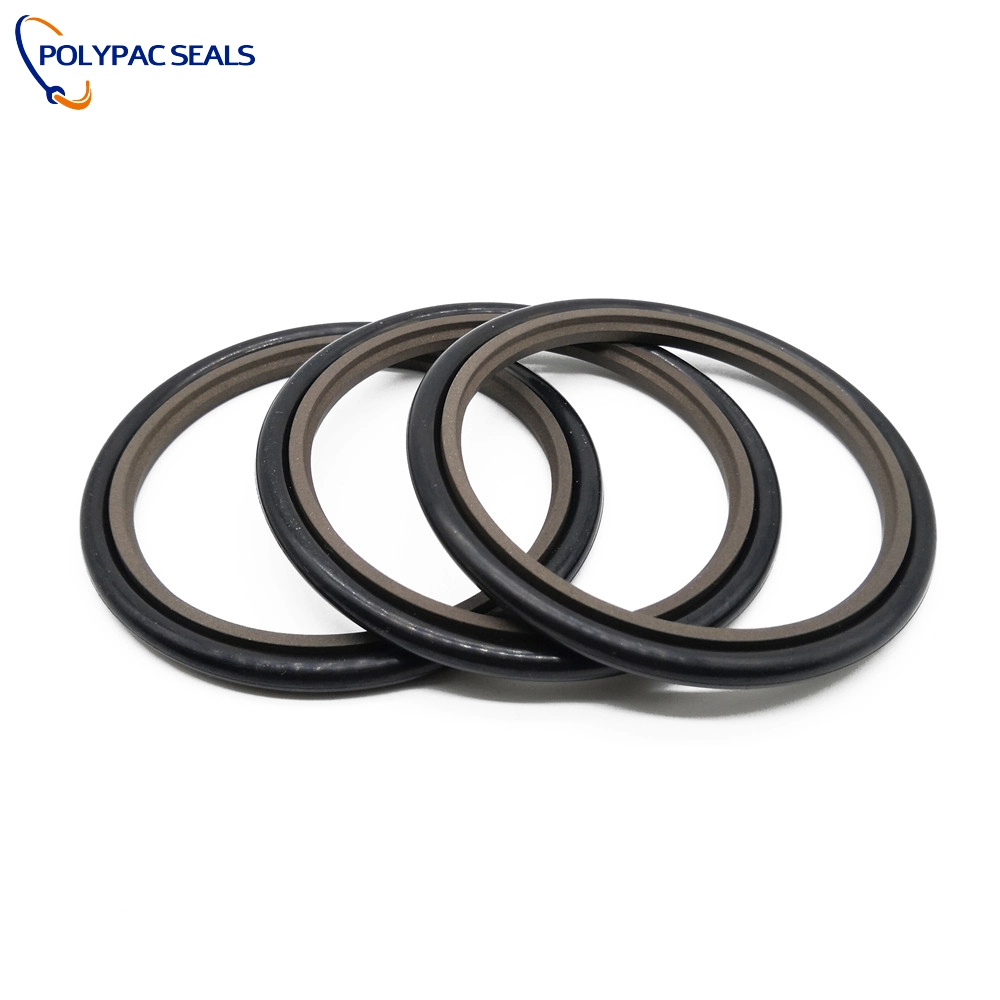
- Use spring-energized PTFE or PTFE combined with an elastomer energizer for dynamic applications that require conformity and higher contact force.
- Improve mating surface finish and shaft hardness; hardened shafts reduce abrasion and extend seal life.
When retrofitting, consider lifecycle cost: a slightly more expensive filled PTFE seal plus a back-up ring often reduces downtime and total cost of ownership.
Comparing ptfe sealing solutions: material and design trade-offs
The table below summarizes trade-offs among typical seal choices used when addressing leakage problems. Use this for quick selection during troubleshooting or redesign.
| Seal Type | Best for | Limitations | Typical Fix for Leakage |
|---|---|---|---|
| Unfilled PTFE | Chemical resistance, static seals | Creep under load, poor dynamic wear | Use for low-pressure static; otherwise change to filled PTFE or add energizer |
| Carbon/bronze-filled PTFE | Dynamic seals, high wear | Higher cost; particulate sensitivity | Appropriate filler selection; maintain filtration |
| Spring-energized PTFE | High temperature, low contact force applications | Complex, higher price | Use when thermal cycling or low contact force cause leaks |
| Elastomer seals (NBR, FKM) | Elastic contact, good for many hydraulic apps | Limited chemical/temperature range | Use with PTFE in hybrid designs to combine benefits |
Polypac: applied ptfe sealing solutions and manufacturing strengths
Polypac is a scientific and technical hydraulic seal manufacturer and oil seal supplier specializing in seal production, sealing material development, and customized sealing solutions for special working conditions. For troubleshooting leakage problems where off-the-shelf parts fail, Polypac offers tailored ptfe sealing solutions including filled PTFE grades, spring-energized designs, and hybrid O-ring/PTFE assemblies.
Key facts about Polypac's capabilities:
- Factory footprint and equipment: Polypac's custom rubber ring and O-ring factory covers over 10,000 m² with 8,000 m² of production space and advanced production and testing equipment.
- R&D and partnerships: long-term cooperation with universities and research institutions supports material development and custom compound design.
- History and product evolution: Founded in 2008, Polypac began by manufacturing filled PTFE seals (bronze-filled, carbon-filled, graphite PTFE, MoS₂-filled PTFE, glass-filled PTFE) and has expanded to produce O-rings from NBR, FKM, silicone, EPDM, and FFKM.
Main product range relevant to leakage troubleshooting and prevention: O-Rings, Rod Seals, Piston Seals, End Face Spring Seals, Scraper Seals, Rotary Seals, Back-up Rings, Dust Rings. Polypac emphasizes technical support, custom compound formulation, and production quality control to reduce root-cause recurrence.
Why choose Polypac for ptfe sealing solutions? The combination of in-house material development, high-capacity manufacturing, and testing resources allows Polypac to provide application-specific recommendations (e.g., selecting a bronze-filled PTFE vs MoS₂-filled PTFE) and to produce prototypes quickly for field trials.
Practical checklist to stop PTFE seal leakage (field-ready)
Use this checklist during maintenance or root-cause analysis to ensure systematic troubleshooting:
- Document operating conditions: pressure, temperature range, media composition, cycle frequency.
- Confirm seal material and part number against design specification.
- Visually inspect and measure mating surfaces and groove geometry.
- Look for extrusion, creep, scoring, or thermal discoloration on the removed seal.
- Measure gross leakage rate and correlate with pressure/temperature logs.
- Apply corrective actions: replace with appropriate filled PTFE, add back-up ring, improve surface finish or lubrication, or redesign groove as needed.
FAQ — Troubleshooting PTFE Seal Leakage
Q1: Why does my PTFE seal leak only after hours of operation?
A1: Delayed leakage commonly indicates cold flow (creep) or extrusion under sustained load/temperature. Check for insufficient preload, incorrect material grade (use filled PTFE for dynamic/high-load) and absence of back-up rings if pressure is high.
Q2: Can PTFE seals be used in dynamic hydraulic rod applications?
A2: Yes — but select the correct formulation (carbon- or bronze-filled PTFE or spring-energized PTFE) and ensure surface finish, hardness, and groove design meet dynamic requirements. Unfilled PTFE is usually unsuitable for high-cycle dynamic applications.
Q3: How do I tell if leakage is due to installation damage?
A3: Remove the seal and inspect for nicks, cuts, folds, or asymmetric wear. Installation damage often shows localized tears or folded edges. Use installation tools and protection sleeves to prevent recurrence.
Q4: What measurements are most important when diagnosing PTFE seal leakage?
A4: Key measurements: groove dimensions and tolerances, shaft/housing diameters and runout, surface roughness (Ra), and extrusion gap. Compare measurements to design specifications and supplier recommendations.
Q5: When should I use a back-up ring with PTFE seals?
A5: Use back-up rings whenever there is risk of extrusion due to high pressure combined with clearance gaps in the groove or when the PTFE will be facing intermittent high-pressure spikes. Back-up rings are also recommended for softer or unfilled PTFE in dynamic use.
Q6: How can contamination (particles) cause PTFE seal leakage?
A6: Abrasive particles embedded between the seal and mating surface accelerate wear and can score the seal or the shaft surface, producing leakage paths. Improve filtration, add scrapers/dust seals, and use filled PTFE compounds if particulate exposure is unavoidable.
Need help diagnosing a persistent leak? Contact Polypac for application analysis, material selection guidance, and custom prototype seals. For product inquiries or technical consultation, visit https://www.polypac.com or email sales@polypac.com to request a custom solution or sample.
References and further reading
- Polytetrafluoroethylene — Wikipedia. https://en.wikipedia.org/wiki/Polytetrafluoroethylene (accessed 2025-12-18)
- Chemours PTFE product information. https://www.chemours.com/en/brands/ptfe (accessed 2025-12-18)
- SKF — Seals Knowledge Centre (seal failure causes and troubleshooting). https://www.skf.com/group/products/seals/knowledge-centre (accessed 2025-12-18)
- Parker Hannifin — O-Ring Handbook and sealing guidelines (selection, surface finish, groove design). https://www.parker.com (accessed 2025-12-18)
- Industry guidelines and material datasheets — manufacturer technical bulletins for filled PTFE grades (various suppliers) (accessed 2025-12-18)

High-Performance Pneumatic Piston Seals: How to Achieve Zero-Leakage Efficiency

PTFE vs. Composite: Choosing the Best Piston Guide Ring Material for High-Pressure Systems

Mastering O-Ring Gland Design: The Complete Guide for Perfect Sealing Performance

Advanced Back-Up Ring Materials: Beyond PTFE for Extreme Temperature Environments

PTFE vs. Urethane Scrapers: Which Material Truly Prevents Contamination?
Products
How do I choose the right material for my sealing application?
How important is surface finish on the metal parts that contact the seal?
Can I reuse a seal?
Why did my O-ring fail prematurely?
What does "AS568" mean?
Stay Updated with Industry Insights
Subscribe to our articles and receive the latest news, expert guidance, and technical updates directly in your E-mail.
Rest assured that your privacy is important to us, and all information provided will be handled with the utmost confidentiality.

Polypac is a trusted global supplier of high-performance sealing solutions, providing OEM & ODM services for industries worldwide.
E-mail:
Phone/WhatsApp:
© 2025 Polypac Seals. All Rights Reserved.
dms
DMS
DMS