












Advanced Back-Up Ring Materials: Beyond PTFE for Extreme Temperature Environments
Standard PTFE backup rings often fail due to creep in extreme heat. This 2026 guide explores high-modulus alternatives like PEEK and polyimide, detailing material properties, extrusion gap calculations, and geometry selection for HPHT environments.
In the world of high-pressure, high-temperature (HPHT) sealing, the backup ring is the unsung hero that prevents catastrophic failure. While virgin PTFE has long been the industry standard, modern industrial applications in oil & gas and aerospace are pushing pressures and temperatures beyond the physical limits of fluoropolymers. At Polypac Industrial Technology Co., Ltd., we have observed a significant shift toward high-modulus thermoplastics designed to resist creep where standard materials fail.
This guide compares PEEK vs. PTFE backup rings and outlines the engineering data required to select the correct HPHT sealing solutions for 2026 and beyond.
What is a backup O-ring, and why is it critical?
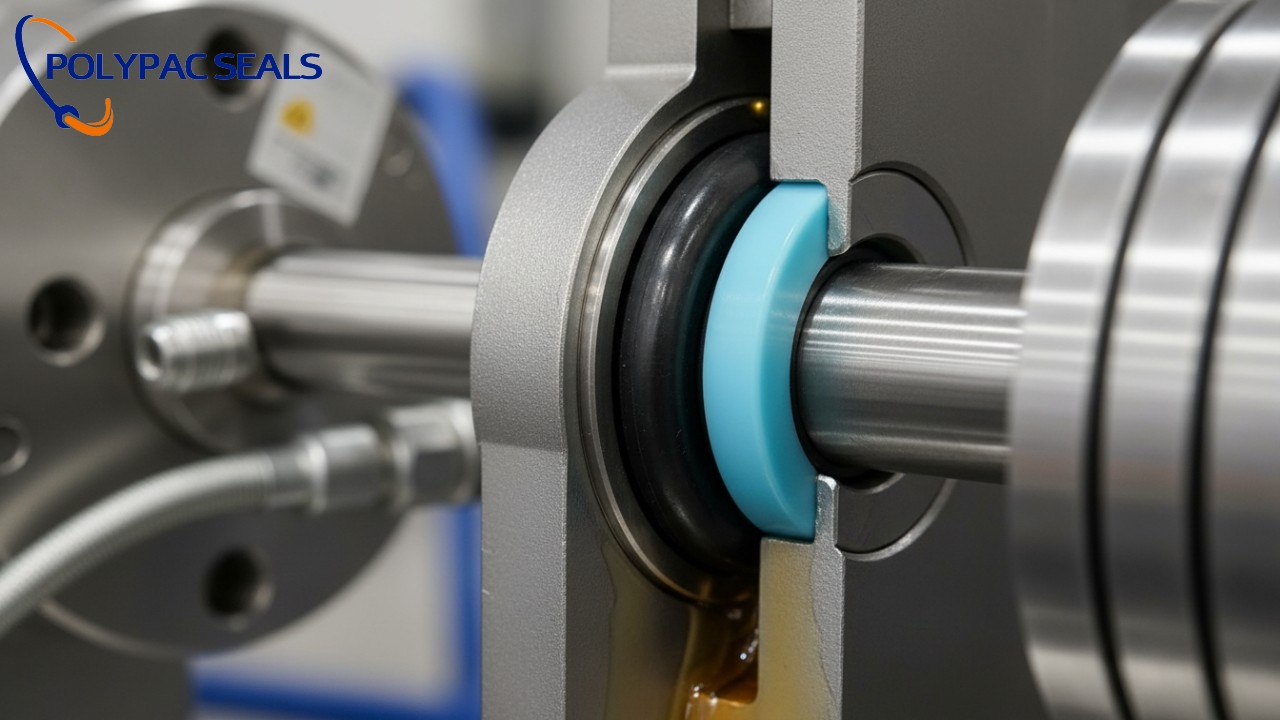
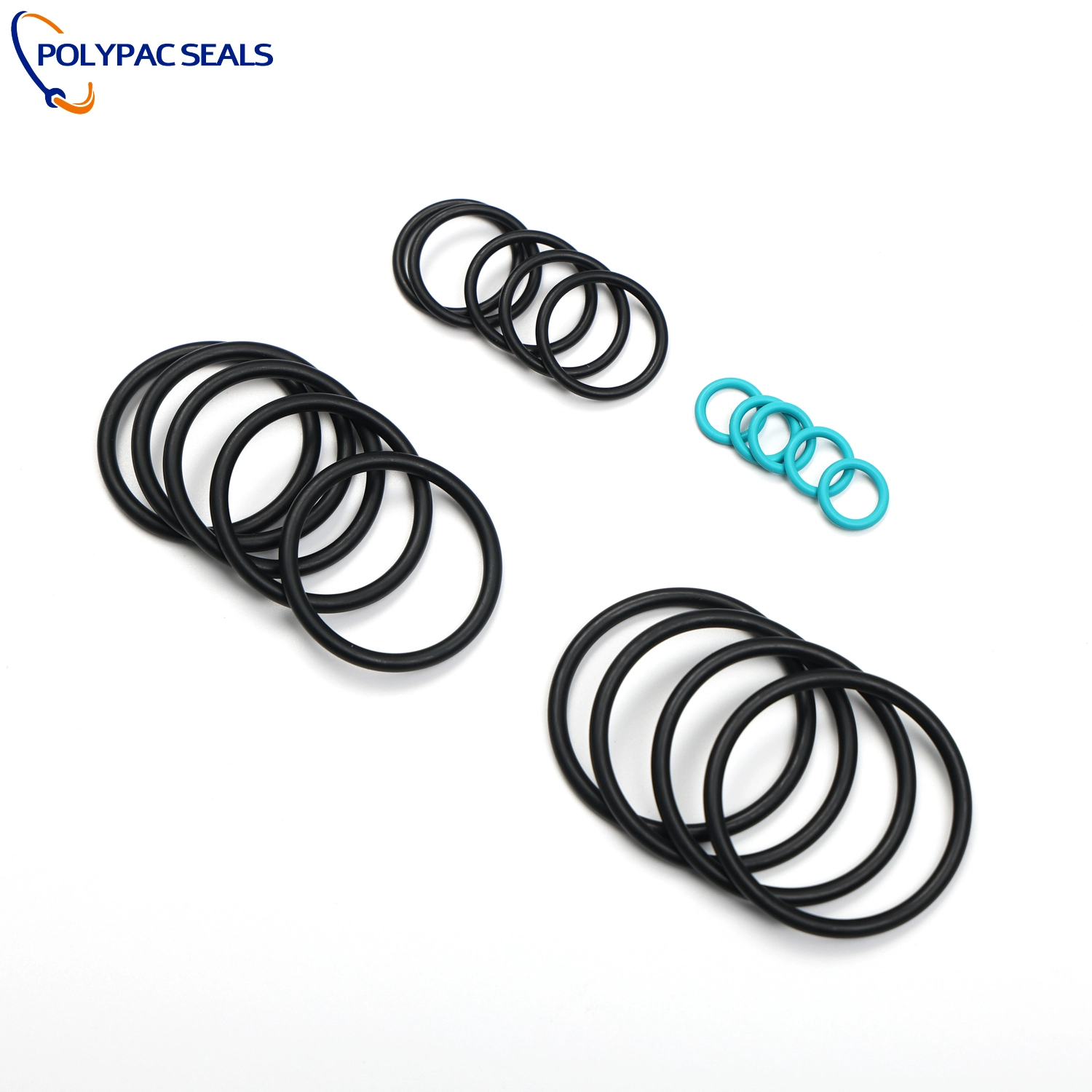
A backup ring is a rigid, non-sealing ring installed between the O-ring and the extrusion gap to prevent the softer seal from flowing into the clearance space under high pressure.
It acts as a mechanical barrier. Unlike the elastomeric O-ring, which provides the fluid seal, the backup ring’s sole purpose is to reduce the effective extrusion gap. Without this support, an O-ring subjected to pressures above 1,500 PSI (depending on hardness) will plastically deform into the hardware clearance, leading to "nibbling" or complete blowout.
Core Functions:
- Anti-Extrusion: physically blocks the O-ring from entering the clearance gap.
- Pressure Rating Extension: allows standard O-rings to function at pressures >5,000 PSI.
- Shape Retention: maintains the seal geometry during pressure spikes.
The PTFE Limit: Why Standard Materials Fail in Extreme Heat
Standard virgin PTFE fails in extreme environments due to "cold flow," a phenomenon where the material permanently deforms under load, combined with a high coefficient of thermal expansion.
While PTFE is chemically inert and has low friction, its mechanical properties degrade rapidly with heat. Engineers must look closely at filled PTFE material properties when designing for environments above 250°F (121°C). According to material data from Ossila, PTFE has a tensile strength of roughly 25-35 MPa, whereas stronger alternatives like PEEK can withstand 90-100 MPa. Furthermore, PTFE’s thermal expansion is non-linear and drastic, often causing the ring to expand beyond the groove capacity, leading to binding or shearing.
Failure Modes of PTFE:
- Creep (Cold Flow): Under constant pressure, PTFE slowly "oozes" into the extrusion gap even below its melting point.
- Thermal Expansion: PTFE expands approximately 10 times more than steel, altering groove fill percentages.
- Shear Failure: In dynamic applications, the soft PTFE can shear off, contaminating the hydraulic fluid.
Beyond PTFE: Top Advanced Materials for 2026+ Applications
For HPHT applications, engineers are transitioning to PEEK and polyimide, which offer superior compressive modulus and thermal stability up to 500°F+ (260°C+).
To withstand the crushing forces of deep-well drilling or aerospace hydraulics, high-temperature anti-extrusion rings must maintain their rigidity. At Polypac, we utilize a range of filled materials—including bronze-filled PTFE and carbon-filled PTFE—bridging the gap between standard PTFE and high-performance thermoplastics.
1. PEEK (Polyetheretherketone)
PEEK is the gold standard for high-pressure anti-extrusion. It offers excellent chemical resistance and a melting point around 343°C. It is rigid (Shore D 85) and resists creep significantly better than PTFE.
- Best For: Pressures >5,000 PSI and Temps >300°F.
- Trade-off: Rigidity makes installation in closed grooves difficult.
2. Polyimide (e.g., Vespel®)
Polyimide is reserved for the most extreme conditions. According to American Flexible, polyimide can withstand continuous temperatures of up to 500°F (260°C) and excursions up to 900°F, offering the highest creep resistance of any polymer.
- Best For: Extreme heat and cryogenic applications.
- Trade-off: High cost and brittle nature.
3. Filled PTFE (Glass/Carbon/Bronze)
Polypac specializes in these blends. By adding fillers like glass fiber or bronze to PTFE, we increase the compressive strength and reduce creep while maintaining some of the low-friction benefits of the base polymer.
- Best For: Intermediate pressures where PEEK is too expensive or too rigid.
Engineering the Geometry: Scarf, Spiral, or Solid?
The geometry of the backup ring—solid, scarf cut, or spiral—must be selected based on the material's rigidity and the installation method.
As you move from flexible PTFE to rigid PEEK, the ability to stretch the ring over a piston or into a bore disappears. A solid PEEK ring cannot be installed in a standard closed groove without damaging the ring.
Geometry Selection Guide:
- Solid (Uncut): Provides the ultimate extrusion resistance. Must be used with split hardware (two-piece glands) or open grooves.
- Scarf Cut (Bias Cut): The industry standard for PEEK. A single angled cut (usually 30° or 45°) allows the ring to open slightly for installation. The angle ensures that the gap is bridged effectively once installed.
- Spiral (Contoured): Typically used with PTFE. It resembles a flattened coil (2 turns). It is excellent for compensating for large temperature swings but is difficult to machine from hard plastics.
Expert Tips: Preventing Failure in HPHT Systems
To prevent seal failure, you must calculate the "E-gap" (extrusion gap) precisely, ensuring it stays within the material's limits at maximum system pressure.
O-ring extrusion gap calculation is vital. The E-gap is not just the static clearance; it includes the stretching of the cylinder wall under pressure and the tolerance stack-up of the hardware. According to SKF, the maximum allowable extrusion gap decreases as system pressure increases. For example, at 5,000 PSI, a PEEK ring might tolerate a 0.005" gap, while PTFE would fail at 0.002".
Installation Best Practices:
- Surface Finish: Harder materials like PEEK are less forgiving. Ensure metal surfaces are smooth (8-16 RMS) to prevent wear.
- Positioning: Always install the backup ring on the low-pressure side of the O-ring. For bidirectional pressure, use two backup rings (one on each side).
- Thermal Growth: Calculate the expansion. If a polyimide ring expands faster than the steel gland, it can lock up the system.
Conclusion & Call to Action
As industrial sectors push the boundaries of depth, pressure, and heat, relying on standard PTFE backup rings is a liability. Transitioning to advanced materials like PEEK and filled thermoplastics ensures your seals survive the harshest conditions, preventing costly downtime. With over 10,000 square meters of production space and specialized testing equipment, Polypac Industrial Technology Co., Ltd., is your partner for engineering custom HPHT sealing solutions.
Contact us today to discuss your specific needs and request a material consultation.


Products
Why did my O-ring fail prematurely?
What does "AS568" mean?
How can I prevent seal damage during installation?
How important is surface finish on the metal parts that contact the seal?
When should I use a spring-energized seal instead of a standard elastomeric seal?
Stay Updated with Industry Insights
Subscribe to our articles and receive the latest news, expert guidance, and technical updates directly in your E-mail.
Rest assured that your privacy is important to us, and all information provided will be handled with the utmost confidentiality.

Polypac is a trusted global supplier of high-performance sealing solutions, providing OEM & ODM services for industries worldwide.
E-mail:
Phone/WhatsApp:
© 2025 Polypac Seals. All Rights Reserved.
dms
DMS
DMS