












Top 5 Piston Seal Ring Materials Compared: Which One Actually Stops Leaks?
A comprehensive 2026 guide comparing the top 5 piston seal materials (PU, PTFE, NBR, FKM, and bronze). Learn which material actually stops leaks based on pressure, temperature, and friction.
Are you battling constant hydraulic fluid bypass or pressure drops in your machinery? Choosing the correct hydraulic cylinder seal materials is often the difference between a machine that runs for 5,000 hours and one that fails in a week.
At Polypac Industrial Technology, we have analyzed over a decade of sealing data since our founding in 2008. The reality is simple: there is no "perfect" universal seal, but there is a perfect material for your specific application. This guide ranks the top 5 materials to help you master dynamic sealing leak prevention.
Key Takeaways: The Sealing Material Cheat Sheet
- Polyurethane (PU): The best overall choice for high-pressure abrasion resistance.
- PTFE (Teflon): The winner for low friction and chemical resistance.
- FKM (Viton): Essential for extreme heat applications (>200°C).
- Leak Reality: 41% of failures are due to contamination, not material defects.
- Future Tech: 2026 composite blends are now extending service intervals by 40%.
What Are Piston Seal Rings, and Why Do They Leak?
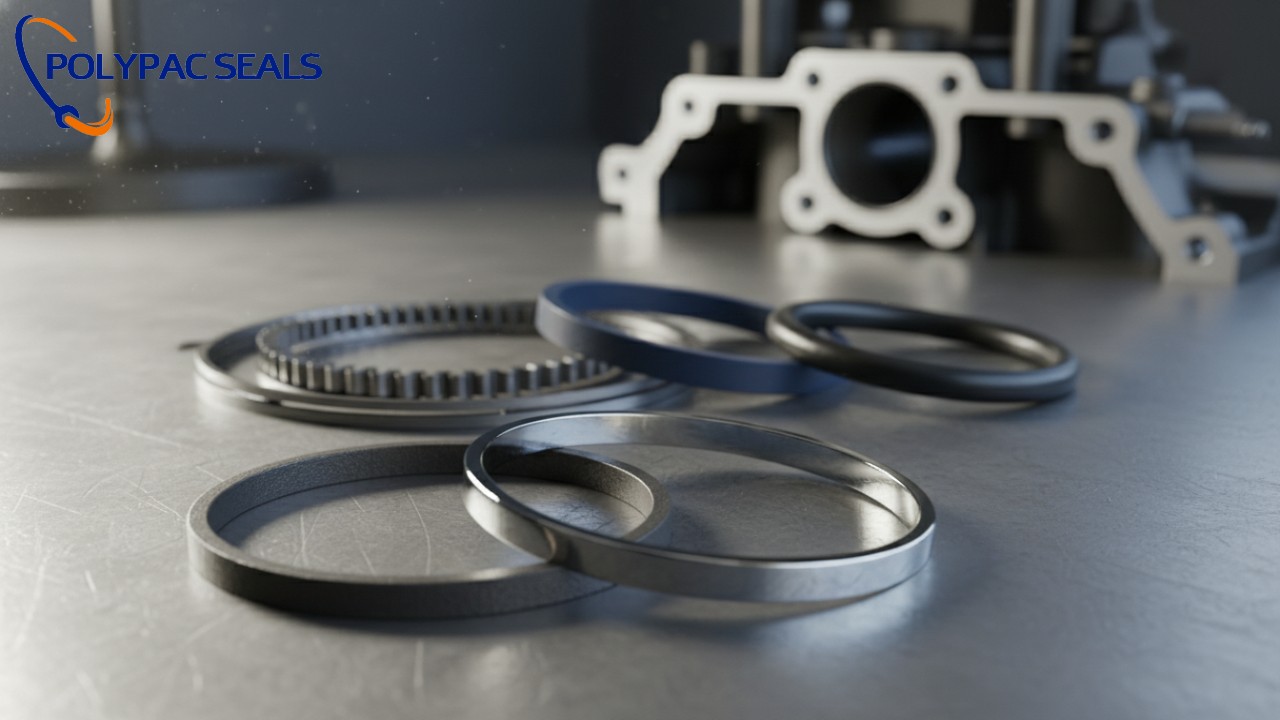
Piston seal rings are dynamic sealing components installed on a piston head to seal against the cylinder bore, preventing fluid bypass and maintaining system pressure.
Unlike rod seals, which keep fluid inside the cylinder, piston seals facilitate the movement itself. If they leak, your cylinder loses power and drifts. Leaks primarily occur due to three factors:
- Compression Set: The material loses its ability to bounce back against the cylinder wall.
- Extrusion: High pressure forces the seal into the gap between the piston and bore.
- Abrasion: Contaminants score the seal surface.
According to statistical research published by MDPI, fluid contamination and oil pollution contribute to about 41.1% of hydraulic cylinder failures, making material hardness and resilience critical factors.
Material #1: Polyurethane (PU)—The High-Pressure Workhorse
Polyurethane (PU) is the industry standard for high-pressure hydraulics because it offers superior abrasion resistance and tensile strength compared to rubber elastomers.
If you are operating heavy earthmoving equipment, excavators, or mining machinery, PU is your best defense. It excels at seal extrusion resistance, meaning it won't shred when pressure spikes hit 5,000+ PSI.
Why Choose Polyurethane?
- Extrusion Resistance: It is tough enough to bridge larger clearance gaps without failing.
- Abrasion Handling: It resists damage from minor particulate contamination better than NBR.
- Application: Ideal for mobile hydraulics and heavy-duty industrial presses.
Expert Insight: At Polypac's 10,000 square meter facility, we utilize advanced injection molding to create custom PU profiles that maximize burst pressure resistance.
Material #2: PTFE (Teflon)—The Low-Friction Glider
PTFE (polytetrafluoroethylene) is the premier choice for high-speed applications and chemically aggressive environments due to its exceptionally low coefficient of friction.
When comparing PTFE vs. polyurethane piston seals, the distinction is clear: PU stops leaks through toughness, while PTFE stops leaks by eliminating the friction that causes wear. However, pure PTFE is inelastic, so it almost always requires an elastomer energizer (like an O-ring) underneath it to maintain contact with the bore.
The Polypac Advantage: Filled PTFE
Pure Teflon can be soft. To combat this, we manufacture filled PTFE compounds:
- Bronze-Filled: Increases compressive strength for high-pressure sliding.
- Carbon-Filled: Improves thermal conductivity and wear life.
- Glass-Filled: Provides chemical resistance in harsh acid/alkali environments.
Material #3: NBR (Nitrile)—The Cost-Effective Standard
Nitrile (NBR) is the most common and cost-effective elastomer for general-purpose pneumatic and low-pressure hydraulic sealing.
NBR is the "vanilla" of the sealing world. It works perfectly fine for standard industrial air cylinders or low-duty hydraulics using mineral oils. However, it lacks the sheer toughness of polyurethane or the temperature range of FKM.
Pros and Cons
- Pros: Very low cost, excellent resistance to petroleum-based oils.
- Cons: Poor ozone/UV resistance (don't use it outdoors) and limited seal extrusion resistance at high pressures.
Material #4: FKM (Viton)—The Heat Shield
FKM (fluoroelastomer) is a specialized high-performance rubber designed to maintain sealing integrity in temperatures exceeding 200°C (400°F).
Standard rubber melts or hardens into brittle plastic when exposed to extreme heat. High-temperature piston rings made of FKM remain elastic, ensuring the seal doesn't crack under thermal stress.
When to Use FKM
- Aerospace: Jet engine actuators.
- Automotive: Fuel systems and combustion environments.
- Steel Mills: Hydraulics near furnaces.
According to The Chemours Company, Viton (FKM) maintains its mechanical properties indefinitely in continuous operating temperatures up to 204°C, where NBR would fail within hours.
Material #5: Bronze & Cast Iron – The Heavy Metal
Metal piston rings are used in extreme shock-load applications or internal combustion engines where no polymer seal could survive the heat and velocity.
These are not "zero leak" seals. They rely on the gas or fluid pressure to expand the ring against the cylinder wall. While they allow a tiny amount of bypass (blow-by), their lifespan is virtually infinite compared to soft seals.
Best Applications
- Shock-absorbing hydraulic struts.
- Diesel engine pistons.
- Extreme velocity rams.
Beyond the Material: Why Seals Fail (Gap Analysis)
Even the best material will leak if the cylinder hardware is out of tolerance or the surface finish is too rough.
1. Extrusion Gaps
The gap between the piston diameter and the cylinder bore diameter is the "extrusion gap." If this gap is too large, pressure will force the seal material into it, slicing the seal.
- Solution: Use backup rings or switch to a higher durometer (harder) Polyurethane.
2. Surface Finish (Ra)
If the cylinder bore is too smooth, the seal wipes away all lubrication, causing friction heat. If it's too rough, it acts like sandpaper.
- Ideal Ra: 0.1 – 0.4 µm for PTFE and PU seals.
3. Fluid Contamination
The ISO 4406 standard for fluid cleanliness highlights that invisible particles (4-14 microns) are the primary cause of seal wear. A single teaspoon of dirt in a 55-gallon drum is enough to degrade your system.
Expert Tips for Installation to Guarantee Zero Leaks
Improper installation is the #1 cause of immediate seal failure, often resulting in cuts or spiral twisting.
- Use Installation Tools: Never use screwdrivers. Use proper cone-and-sleeve tools to stretch PU seals without damaging them.
- Lubricate Heavily: Install seals wet. Dry installation causes micro-tears immediately.
- Check Chamfers: Ensure the cylinder lead-in chamfer is angled (usually 20-30 degrees) and burr-free to guide the seal in gently.
Since 2008, Polypac has collaborated with universities and research institutions to refine these installation protocols, ensuring our custom solutions perform from the very first cycle.
Conclusion
Selecting the right piston seal ring requires balancing three variables: pressure, temperature, and friction. While polyurethane reigns supreme for heavy-duty hydraulics and PTFE dominates high-speed applications, the "best" seal is one engineered for your specific operating environment.
Don't let leaks drain your efficiency or your budget. Whether you need standard O-rings or custom bronze-filled PTFE profiles, Polypac Industrial Technology has the manufacturing capacity and technical expertise to solve your sealing challenges.
Contact us today to discuss your specific needs and request a free material consultation.


Products
Why did my O-ring fail prematurely?
What does "AS568" mean?
How do I choose the right material for my sealing application?
What is the difference between NBR and FKM materials?
How can I prevent seal damage during installation?
Stay Updated with Industry Insights
Subscribe to our articles and receive the latest news, expert guidance, and technical updates directly in your E-mail.
Rest assured that your privacy is important to us, and all information provided will be handled with the utmost confidentiality.
Polypac is a trusted global supplier of high-performance sealing solutions, providing OEM & ODM services for industries worldwide.
E-mail:
Phone/WhatsApp:
© 2025 Polypac Seals. All Rights Reserved.
dms
DMS
DMS