












Custom NBR vs. Standard Seals: Why Tailored Solutions Outperform Off-the-Shelf Options
Quick Summary: The Business Case for Custom NBR
- Material Precision: Standard seals rely on generic formulations; custom NBR optimizes acrylonitrile (ACN) content optimization for specific fluid resistance.
- Geometric Fit: Custom geometry solves leakage issues caused by shaft misalignment or dynamic runout.
- Cost Efficiency: While upfront tooling costs are higher, custom seals reduce long-term maintenance and warranty claims.
- Hydrodynamic Aids: Tailored solutions allow for integration of hydrodynamic aids suited to your specific shaft rotation speed.
What Distinguishes a Custom NBR Oil Seal from a Standard Option?
A custom NBR oil seal is a precision-engineered elastomeric component where the chemical formulation and physical dimensions are modified to match specific application demands, rather than fitting a generic catalog size. Unlike standard seals that offer "middle-ground" performance, custom solutions address unique variables like shaft runout and chemical aggression.
The Anatomy of Customization
Off-the-shelf seals are designed to work "adequately" in as many applications as possible. This often means they utilize a medium-ACN content (around 33%) to balance oil resistance and cold flexibility. However, critical applications rarely require a balance; they require dominance in one specific area.
Bespoke radial shaft seals offer:
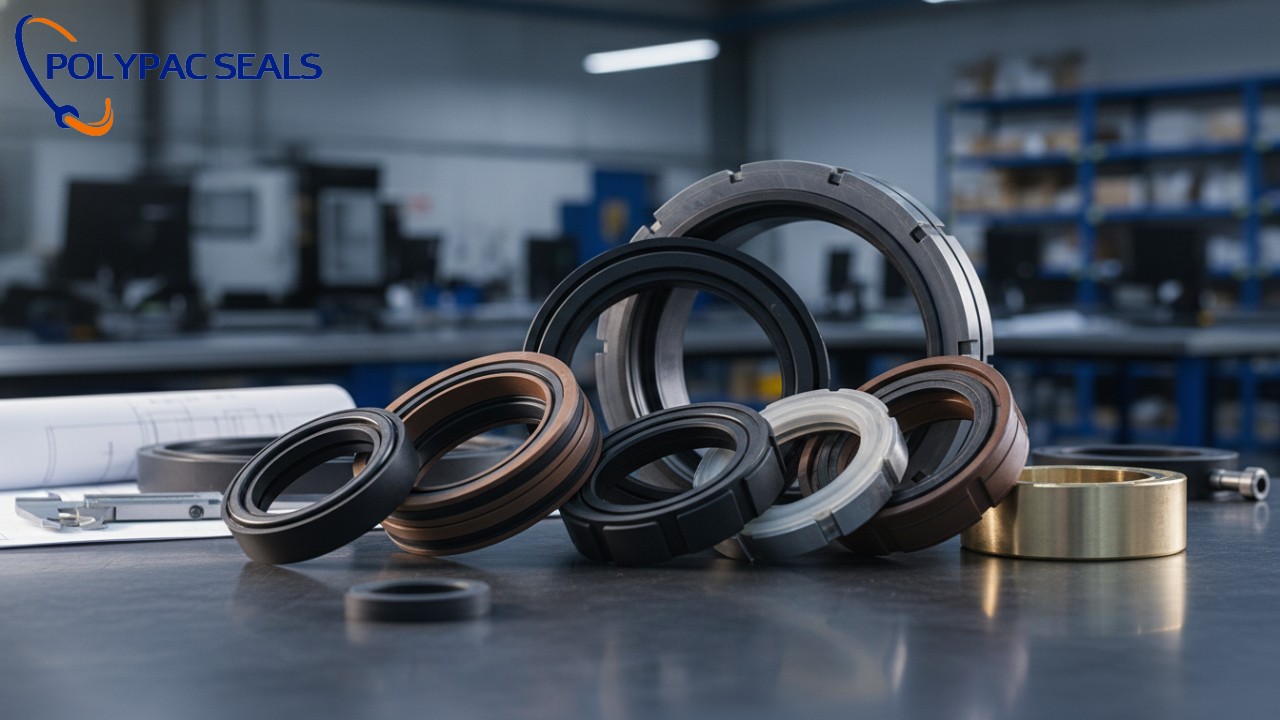
- Exact Interference Fits: The inner diameter is molded to account for the exact tolerance of your shaft, preventing the "lip burn" caused by tight standard seals or the leakage caused by loose ones.
- Case Modifications: Metal cases can be coated with rubber or sealant to handle rough housing bores, a feature often missing in budget standard seals.
- Formulation Specificity: Engineers can adjust the curing system (sulfur vs. peroxide) to enhance heat resistance beyond the standard 100°C limit.
The Hidden Risks of 'Standard' NBR Compounds
Standard NBR compounds are frequently engineered for cost reduction rather than performance maximization, leading to premature failure when operating parameters deviate even slightly from the norm.
The Cost of Thermal Degradation
One of the most overlooked risks is the thermal limit of generic NBR. Standard catalog seals often fail to account for the frictional heat generated at the sealing lip. According to research cited by SKF Evolution, a mere 15°C increase in temperature above the material's limit can reduce the life of a nitrile seal by half. Custom compounding mitigates this by adding heat stabilizers or altering the cure system to handle higher thermal loads.
Common Failure Points of Standard Seals
- Chemical Swell: Generic NBR often lacks resistance to modern bio-oils, leading to volume swell that locks the shaft.
- Compression Set: Mass-produced seals often lose elasticity (memory) quickly, failing to rebound after compression cycles.
- Tolerance Mismatches: ISO standard sizes may not account for the wear groove on an older shaft, resulting in immediate leakage.
Engineering the Perfect Fit: Customization Levers
To achieve superior performance, elastomer formulation engineering allows manufacturers to pull specific "levers" that standard catalogs cannot touch.
1. Acrylonitrile (ACN) Content Optimization
The performance of NBR is dictated by its ACN content, which can range from 18% to 50%. Standard seals typically lock you into a 30-35% range.
- High ACN (45%+): Required for applications exposed to high-aromatic fuels and oils. Standard seals would swell and disintegrate here.
- Low ACN (<20%): Essential for sub-zero environments (down to -40°C). High-ACN standard seals would become brittle and crack.
By utilizing custom-molded rubber components, engineers can dial in this percentage to the exact requirement of the operating environment.
2. Geometric & Hydrodynamic Customization
Standard lips are smooth. Custom lips are smart. By molding specific helix patterns (pumping leads) onto the air-side of the lip, the seal actively pumps leaking oil back into the sump. Furthermore, a dynamic sealing interference fit can be calculated to ensure the lip applies the perfect amount of radial load—enough to seal, but not enough to groove the shaft.
Expert Tips: When to Switch from Standard to Custom NBR
Identifying the right time to transition from catalog parts to bespoke radial shaft seals is critical for maintaining operational efficiency.
Indicators for Customization
- Biofuel Exposure: If your application involves bio-oils or aggressive additives, standard NBR will degrade; custom formulation is mandatory to resist ester attack.
- High Surface Speeds: Consider custom solutions if your shaft surface speed exceeds 12 m/s, as standard NBR lips will burn due to friction.
- Eccentricity Issues: Ignoring "Shaft Runout" is a common mistake. Standard lips cannot follow a shaft that is wobbling significantly; custom lips can be designed with longer beams to compensate.
Future-Proofing: Custom NBR Trends for 2026 and Beyond
As regulatory landscapes shift, relying on static standard inventories becomes risky. Custom manufacturing allows for rapid adaptation to new environmental standards.
Sustainability and REACH Compliance
The sealing industry is facing significant regulatory pressure. With the EU moving toward stricter chemical controls under REACH 2.0, manufacturers must prepare for potential restrictions on certain additives. As noted by Applerubber, upcoming regulations in 2026 and beyond are targeting PFAS and other persistent chemicals, necessitating a shift toward compliant, custom-developed rubber compounds that do not rely on restricted plasticizers.
Key Future Trends:
- Smart Sealing: Integrating sensor-ready geometry for predictive maintenance.
- Nano-Fillers: Enhancing NBR tensile strength with nanotechnology for next-gen durability.
- EV Adaptation: Low-friction designs specifically for the high-RPM requirements of electric vehicle motors.
FAQ: Custom vs. Standard NBR
1. What is the primary difference between standard and custom NBR? Standard NBR uses a fixed formulation (usually medium ACN), while custom NBR modifies the chemical composition and physical dimensions to suit exact operating conditions.
2. How does acrylonitrile (ACN) content affect NBR performance? High ACN improves oil/fuel resistance but reduces low-temp flexibility; Low ACN improves cold flexibility but reduces oil resistance. Customization balances this.
3. Is custom tooling for NBR seals expensive? Tooling costs exist but are often recovered quickly through reduced downtime, fewer warranty claims, and extended machine lifespan compared to using standard seals.
4. Can custom NBR seals handle higher temperatures than standard ones? Yes, through special curing systems (like sulfur vs. peroxide curing), custom NBR can be engineered to withstand higher thermal loads than generic commercial grades.
5. Why do standard NBR seals fail in biofuels? Standard NBR often lacks the specific chemical stabilizers needed to resist the aggressive ester content in modern biofuels, leading to swelling and degradation.
Conclusion & Call to Action
While off-the-shelf NBR seals offer convenience, they often compromise on longevity and chemical compatibility in demanding environments. Investing in custom-engineered NBR seals ensures optimized ACN content, precise geometric fit, and superior resistance to dynamic failure.
At Polypac Industrial Technology Co., Ltd., we leverage over 15 years of experience and a 10,000-square-meter facility to develop high-performance sealing solutions. From our origins in PTFE to our advanced custom molded rubber components, we collaborate with top research institutions to ensure your seals meet the highest standards.
Contact Polypac today to discuss how our tailored sealing solutions can improve your equipment's reliability and performance.


Products
What does "AS568" mean?
When should I use a spring-energized seal instead of a standard elastomeric seal?
How can I prevent seal damage during installation?
How important is surface finish on the metal parts that contact the seal?
What is the difference between NBR and FKM materials?
Stay Updated with Industry Insights
Subscribe to our articles and receive the latest news, expert guidance, and technical updates directly in your E-mail.
Rest assured that your privacy is important to us, and all information provided will be handled with the utmost confidentiality.

Polypac is a trusted global supplier of high-performance sealing solutions, providing OEM & ODM services for industries worldwide.
E-mail:
Phone/WhatsApp:
© 2025 Polypac Seals. All Rights Reserved.
dms
DMS
DMS