











Custom O-Ring Selection: Why Shore Hardness and Material Compatibility Are Your Most Critical Decisions
What Are Custom O-Rings and Why Do Shore Hardness and Material Matter?
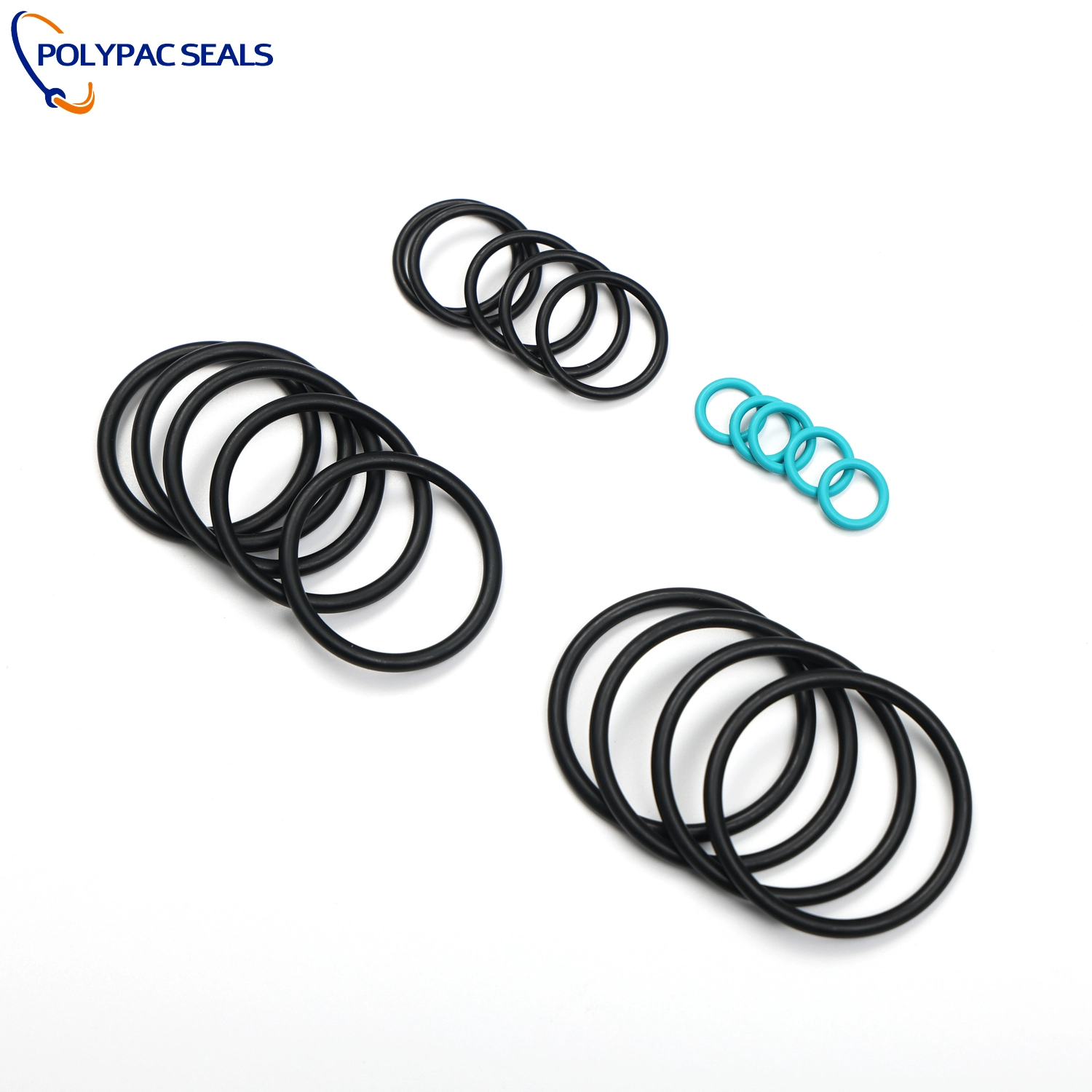
Custom o-rings are precision-engineered mechanical seals designed specifically for non-standard gland dimensions or extreme operational environments. Choosing the correct Shore hardness and ensuring precise elastomer chemical compatibility are the most crucial steps to prevent seal extrusion and chemical degradation.
While standard seals might work for basic applications, industrial systems pushing the limits of pressure, temperature, and fluid exposure require a more tailored approach. Engineering the perfect custom seal is a multi-layered process. By mastering custom o-ring materials and their physical properties, engineers can prevent systemic failures that lead to costly downtime.
- Superior Pressure Resistance: Customizing the hardness ensures the seal will not extrude into hardware gaps when subjected to high pressure.
- Maximum Longevity: Tailoring the material to your specific chemical environment prevents the elastomer from swelling, shrinking, or dissolving over time.
- Optimal Seal Performance: Precision engineering guarantees that the seal conforms perfectly to mating surfaces, even in dynamic applications with high friction.

Quick Summary: The Blueprint for Custom O-Ring Success
The blueprint for successful custom sealing relies on matching your operational pressure to the correct durometer and aligning your fluid exposure with the right elastomer. Custom dimensions provide reliable solutions when standard AS568 sizes fail or cause excessive system friction.
Understanding the interplay between physical dimensions, material properties, and hardware design is the foundation of mechanical engineering. When standard seals fall short, a custom-engineered approach becomes necessary.
- Extrusion Resistance: Shore hardness directly dictates a seal's resistance to extrusion and its ability to conform to microscopic surface irregularities.
- Environmental Survival: Material compatibility guarantees the elastomer survives prolonged exposure to harsh chemicals, extreme temperatures, and volatile pressures.
- Beyond Standard Sizes: Custom dimensions offer essential solutions when strict AS568 standard sizes fail to provide the correct squeeze, leading to leaks or excessive friction.
- Risk Mitigation: Rapid prototyping and collaborating with experienced sealing engineers drastically reduce the risk of systemic seal failure during production.
Decoding Shore Hardness: Finding the Sweet Spot for Your Custom O-Ring
Shore hardness measures an elastomer's resistance to indentation and extrusion under pressure. Finding the sweet spot involves balancing the need for a seal to deform into hardware imperfections while remaining tough enough to withstand high operating pressures without getting damaged.
According to ASTM International, the globally recognized standards organization, the shore hardness durometer scale (specifically ASTM D2240) provides the definitive framework for testing and classifying rubber compounds. Understanding this scale is critical for matching your seal to its operating environment.
- High Durometer (Harder, 90+ Shore A): Harder elastomers are best suited for high-pressure applications. Their tough molecular structure prevents gap extrusion, which occurs when high pressure forces the rubber into the clearance gap between metal hardware. However, harder materials require significantly greater compressive force to create an effective seal and may not perform well on irregular surfaces.
- Low Durometer (Softer, 50-60 Shore A): Softer compounds are ideal for sealing rough, scratched, or uneven surfaces. They are heavily utilized in low-pressure environments or when dealing with fragile hardware (such as plastics or thin metals) that cannot withstand high compressive forces.
- The Pressure Relationship: There is a direct mathematical relationship between operating pressure, extrusion gaps, and the required Shore hardness. As system pressure increases, the extrusion gap must be minimized, and the durometer must be increased to prevent catastrophic blowouts.
Material Compatibility: Protecting Your Custom Seals from Chemical Degradation
Material compatibility ensures your elastomer survives exposure to specific chemicals, extreme temperatures, and pressures without swelling or dissolving. Selecting the correct compound protects your custom seals from rapid chemical degradation, ensuring long-term elasticity and a highly reliable mechanical seal.
When evaluating elastomer chemical compatibility, engineers must recognize that standard Nitrile (Buna-N) is not a universal solution. Assessing application-specific chemical exposure is the only way to guarantee longevity. For extreme environments, advanced polymers are required. For example, Viton™ (FKM), a high-performance fluoroelastomer trademarked by The Chemours Company, retains its mechanical elasticity at continuous temperatures up to 200°C (400°F) and resists aggressive hydrocarbons.
- Viton (FKM) and PTFE: These are the gold standards for extreme chemical resistance and high-temperature environments. While FKM offers excellent rebound and elasticity, PTFE (Teflon) provides near-universal chemical inertness, though it lacks the memory of true rubber.
- Silicone and EPDM: These materials are selected for specialized weathering, UV ozone exposure, or FDA-compliant applications. EPDM is particularly exceptional for steam and hot water environments but fails rapidly when exposed to petroleum-based oils.
- Thermal and Dynamic Interactions: Temperature fluctuations and dynamic friction interact uniquely with specific elastomer compounds. High heat can accelerate chemical attacks, causing materials to harden and crack, while cold temperatures can cause elastomers to lose their flexibility and shatter under impact.
Expert Tips & Common Mistakes in Custom O-Ring Selection
The most common mistake in custom sealing is relying on a softer durometer to compensate for poorly machined hardware. Expert selection requires calculating precise squeeze and stretch limits before finalizing the physical dimensions of your custom gland design.
Many engineers attempt to solve complex leakage problems with simple material swaps. However, without analyzing the mechanical housing and the gland dimensions, even the most expensive custom elastomers will fail.
- Mistake - Compensating for Hardware: Relying on a softer durometer to fix a leaking, heavily scored, or damaged gland design is a temporary bandage. In high-pressure systems, this soft material will quickly extrude, leading to a sudden and messy failure.
- Mistake - Ignoring Thermal Expansion: Overlooking the volumetric thermal expansion rates of different elastomers when designing the custom groove is a critical error. Rubber expands significantly more than steel when heated; if the gland is too small, the expanding o-ring will overfill the groove and self-destruct.
- Expert Tip - Calculate Squeeze: Always calculate the maximum "squeeze" (compression) and "stretch" limits of your chosen material before finalizing dimensions. Excessive stretch reduces the cross-section of the o-ring, compromising the seal.
- Expert Tip - Verify Storage Conditions: Verify the shelf life and proper storage conditions of your specialized custom elastomer compounds. Exposure to UV light, ozone from electrical motors, or extreme warehouse temperatures can prematurely age the rubber before it is ever installed.
Bridging the Gap: Custom O-Ring Pricing Strategies and 2026+ Innovations
Modern pricing strategies depend on manufacturing methods, such as choosing cost-effective spliced cords for large diameters versus custom molding for high volumes. Meanwhile, advanced 2026 material science innovations are introducing rapid prototyping and specialized extreme-temperature hybrid elastomers.
Navigating the financial and technological landscape of custom sealing requires a strategic partnership with your manufacturer. Understanding how your seals are made directly impacts your bottom line.
- Cost Analysis and Manufacturing: Determining when to use specific manufacturing processes is key to budget management. For exceptionally large diameter static seals, o-ring vulcanization (splicing extruded cord stock) is highly cost-effective because it eliminates expensive custom tooling. Conversely, custom compression molding requires an upfront investment but yields superior structural integrity and drastically lowers the per-unit cost for high-volume production runs.
- 2026 Material Innovations: The sealing industry is rapidly evolving. Innovations in 2026 are introducing self-lubricating elastomers infused with advanced friction-reducing agents, as well as extreme-temperature hybrid polymers that blend the low-temperature flexibility of silicone with the chemical resistance of FKM.
- Rapid Prototyping: The impact of rapid 3D prototyping is actively reducing custom tooling costs and lead times. Engineers can now test physical fitment and gland compression with exact-dimension prototypes before committing to expensive, multi-cavity steel production molds.
Industry Leading Solution: How We Engineer Your Perfect Seal
We engineer the perfect seal by leveraging advanced CAD modeling, precise hardware analysis, and proprietary compound development. Our tailored approach matches your chemical and thermal requirements to completely eliminate catastrophic pressure failures in the most complex industrial machinery.
At Polypac Industrial Technology Co.,Ltd, our expertise goes far beyond standard catalog orders. Founded in 2008, we began our journey by manufacturing specialized filled PTFE seals. Today, our custom rubber ring and o-ring factory covers an expansive 10,000 square meters, allowing us to utilize the most advanced production and testing equipment in the industry. As a leading scientific and technical manufacturer, we partner with top research institutions to develop cutting-edge sealing solutions using NBR, FKM, silicone, EPDM, and FFKM.
- Proprietary Compound Development: We leverage a specialized compounding process to match your exact chemical resistance and extreme thermal requirements, ensuring longevity in harsh environments.
- Advanced CAD Analysis: By utilizing sophisticated CAD modeling and custom gland design analysis, we engineer the precise Shore hardness and geometric cross-section needed to prevent extrusion.
- Proven Case Studies: Our custom sealing solutions have a track record of successfully eliminating catastrophic pressure failures for heavy industrial machinery, significantly reducing client downtime.
- Streamlined Manufacturing: We control the entire process from rapid 3D prototyping to high-volume injection molding, ensuring strict quality control and fast delivery times.
Frequently Asked Questions About Custom O-Rings
Understanding the intricacies of custom sealing can be challenging when dealing with extreme industrial environments. Below, we address the most frequently asked questions regarding elastomer selection, hardware dimensions, chemical resistance, and the manufacturing processes behind high-performance custom o-rings.
How do I determine the right Shore hardness for a custom o-ring?
- Evaluate the maximum operating pressure of your entire hydraulic or pneumatic system.
- Measure the extrusion gap clearance between your mating hardware components.
- Select higher durometers (e.g., 90 Shore A) for high-pressure systems and larger gaps, and lower durometers (e.g., 60 Shore A) for low-pressure environments or rough surface finishes.
What is the difference between standard AS568 and custom o-rings?
- AS568 o-rings follow strict, standardized aerospace dimensions for inner diameters and cross-sections, making them readily available but limited in scope.
- Custom o-rings are uniquely engineered, molded, or spliced to fit non-standard hardware grooves, unique shaft sizes, or proprietary machinery that standard sizes simply cannot accommodate.
Which custom o-ring material is best for high-temperature applications?
- Viton (FKM) is an excellent, cost-effective choice for continuous operating temperatures up to 400°F (204°C).
- Silicone and specialized Kalrez (FFKM) are highly recommended for the most extreme environments, with FFKM surviving continuous temperatures well above 600°F (315°C).
- The final choice ultimately depends on balancing the simultaneous demands of chemical exposure and physical pressure requirements.
Can I use a softer durometer to fix a leaking gland design?
- While a softer material can sometimes seal rough, scratched, or damaged metal surfaces more easily at very low pressures, it is absolutely not a permanent fix for poor or damaged gland design.
- Using too soft a durometer in a high-pressure dynamic system will quickly lead to gap extrusion, nibbling, and catastrophic mechanical seal failure.
How does chemical compatibility affect custom o-ring lifespan?
- Mismatched or chemically incompatible materials will physically swell, shrink, harden, or dissolve when exposed to specific industrial fluids or corrosive gases.
- Proper chemical compatibility ensures the elastomer maintains its mechanical properties, memory, elasticity, and radial sealing force over its entire intended lifespan.
What are the cost differences between molded and spliced custom o-rings?
- Spliced and vulcanized o-rings utilize extruded rubber cord stock, entirely eliminating custom tooling costs. This makes them ideal for extremely large diameters and small-batch prototyping runs.
- Custom compression molding requires an upfront tooling and engineering investment but offers superior structural integrity without a splice joint, resulting in significantly lower per-unit costs at high manufacturing volumes.
How do I measure my equipment for a custom o-ring fit?
- Use calibrated digital calipers to accurately measure the gland's inner diameter, outer diameter, and groove width.
- Factor in the required percentage of mechanical "squeeze" based on whether the specific application is a static face seal or a dynamic reciprocating piston seal.
- Always consult with a dedicated sealing engineer to properly account for anticipated thermal volumetric expansion and chemical swell.
How long does it take to prototype and manufacture custom o-rings?
- Vulcanized spliced o-rings bypass the mold-making process and can often be produced and shipped within a few business days.
- Custom molded o-rings typically take 2 to 4 weeks for initial steel tooling and prototyping, followed by full-scale production runs.
- Advanced 3D prototyping technologies and modern CNC machining are continually reducing these traditional lead times.
Conclusion & Call to Action
Selecting the ideal custom o-ring requires balancing precise dimensions, Shore hardness, and advanced material compatibility. Taking a strategic engineering approach ensures optimal seal performance, minimizes costly mechanical downtime, and significantly extends the operational life of your critical equipment.
By understanding the limits of your operating environment and partnering with experts who understand the nuances of polymer science, you can transform a simple rubber ring into a highly engineered barrier against system failure. Whether you need extreme temperature resistance or specific pressure ratings, the right custom seal makes all the difference.
Contact Polypac today to discuss your specific needs and engineered sealing requirements.


Products
How important is surface finish on the metal parts that contact the seal?
What is the difference between a static seal and a dynamic seal?
How do I choose the right material for my sealing application?
What is the difference between NBR and FKM materials?
How can I prevent seal damage during installation?
Stay Updated with Industry Insights
Subscribe to our articles and receive the latest news, expert guidance, and technical updates directly in your E-mail.
Rest assured that your privacy is important to us, and all information provided will be handled with the utmost confidentiality.

Polypac is a trusted global supplier of high-performance sealing solutions, providing OEM & ODM services for industries worldwide.
E-mail:
sales2@dmsseals.com
Phone/WhatsApp:
© 2025 Polypac Seals. All Rights Reserved.
dms
DMS
DMS