












FKM O-Rings: The Ultimate Industrial Engineering Selection Guide for 2026
A comprehensive engineering guide to FKM (Viton) O-rings for 2026. Covers ASTM D2000 classification, chemical compatibility, cost analysis vs. NBR, and upcoming PFAS regulatory impacts.
What is an FKM O-Ring and why is it essential?
FKM (Fluorocarbon) is a high-performance synthetic rubber known for its exceptional resistance to heat, chemicals, and aging, primarily used in mission-critical sealing applications.
Engineers specify FKM when failure is not an option. Typically containing 65% to 71% fluorine, these seals bridge the gap between standard elastomers and high-cost perfluoroelastomers (FFKM). Their robust carbon-fluorine bonds allow them to operate effectively in temperatures ranging from -20°C to +200°C (-4°F to +392°F), making them the industry standard for aerospace, automotive, and oil and gas sectors.
Why FKM dominates critical infrastructure
· Thermal Stability: Retains mechanical properties at elevated temperatures where Nitrile (NBR) would harden and crack.
· Chemical Inertness: detailed in any standard FKM chemical compatibility chart, this material resists aggressive fuels, acids, and petroleum-based oils.
· Longevity: Offers excellent resistance to atmospheric oxidation, sun, and weather, resulting in a shelf life that is effectively unlimited under proper storage.

Quick Summary: Key Takeaways for Procurement and Engineering
FKM is the ASTM International designation for this material class, whereas Viton™ is the registered trademark branding of Chemours; technically, they refer to the same base polymer family.
For procurement teams navigating the 2026 supply chain, understanding the distinction between brand names and generic classifications is vital for cost control without compromising quality.
Core Selection Criteria
· Material Distinction: Viton™ is to FKM what Kleenex is to facial tissue. Specify ASTM grades to broaden your supplier base.
· Performance Edge: While Viton vs NBR o-rings is a common comparison, FKM vastly outperforms Nitrile in UV, ozone, and chemical exposure, justifying its higher price point (often 5x the cost of NBR).
· Application Range: Unmatched for aggressive media like biodiesel, hydraulic fluids, and concentrated mineral acids.
Decoding the 5 Classes of Fluoroelastomers
Fluoroelastomers are categorized into five primary classes based on their chemical composition and fluorine content, which directly dictates their fluid resistance and low-temperature flexibility.
According to ASTM D2000 FKM classification standards (typically designated as "HK" materials), selecting the correct class is the difference between a seal that lasts five years and one that leaks in five days.
The Classification Hierarchy
1. Class A (Dipolymers): The standard general-purpose grade containing roughly 66% fluorine. It is ideal for sealing against general fuels, lubricants, and aliphatic hydrocarbons.
2. Class B (Terpolymers): Contains approximately 68% fluorine. These offer improved fluid resistance compared to Class A, particularly in industrial chemical processing.
3. Class F (Terpolymers): High-fluorine grade (70%). Specifically designed for oxygenated automotive fuels and aggressive aqueous inorganic acids.
4. Specialty Types (GLT/GFLT): Engineered for low-temperature flexibility. These maintain sealing capability in static applications down to -40°C without sacrificing the chemical resistance found in standard grades.
5. Extreme Resistance (Base Resistant/ETP): These specialized grades protect against high-pH environments (caustics) and steam, areas where standard FKM typically fails.
Curing Mechanisms: Bisphenol vs. Peroxide Cured FKM
The curing system—the process used to cross-link the polymer chains—determines the final mechanical properties and chemical resistance profile of the FKM O-ring.
While the base polymer matters, the cross-linking architecture is equally critical for specific environments, particularly involving steam or acids.
Bisphenol Curing (Standard)
· Mechanism: Uses a condensation reaction.
· Benefits: Provides superior compression set resistance (the ability to bounce back after being squeezed) and high-temperature stability.
· Best For: General industrial applications, automotive fuel systems, and aerospace engines.
Peroxide Curing (High-Performance)
· Mechanism: Uses free-radical curing.
· Benefits: Peroxide cured FKM benefits include significantly better resistance to water, steam, and acid solutions compared to bisphenol grades.
· Best For: Pharmaceutical manufacturing, food processing, and biotech applications where steam-in-place (SIP) sterilization is used.
Beyond 2026: Future Trends and Sustainability in Sealing
The sealing industry is shifting toward sustainable manufacturing and regulatory compliance, specifically targeting the reduction of hazardous substances in fluoropolymer production.
As of 2025, the regulatory landscape regarding PFAS (per- and polyfluoroalkyl substances) is evolving rapidly. The EU's REACH restriction proposal and US EPA reporting requirements are forcing manufacturers to innovate.
Emerging Industry Standards
· PFAS Regulatory Outlook: While FKM is a fluoropolymer, it is considered a "polymer of low concern" in many jurisdictions. However, 2026 will see tighter controls on the processing aids used to manufacture these materials, potentially impacting supply chain availability and cost.
· Bio-based Fluoroelastomers: Research is accelerating into feedstocks that reduce the carbon footprint of high-performance seals without compromising the Fluorocarbon rubber properties engineers rely on.
· Digital Twin Integration: Advanced manufacturing now utilizes simulation data to predict FKM lifecycle in dynamic hydraulic systems, allowing for predictive maintenance rather than reactive replacement.
Expert Tips: Common FKM Selection Mistakes
A successful seal design requires more than just picking a material; it demands a holistic view of the operating environment, hardware mating, and thermal cycling.
Data from 2024 industrial failure analysis reports suggests that over 30% of seal failures are due to improper material specification rather than material defects.
Critical Errors to Avoid
· Ignoring "Cold Flick": Standard FKM types have a glass transition temperature (Tg) around -17°C. Below this, they become brittle and can shatter on impact. Always verify the Tg for cold-weather applications.
· Overlooking Fluid Swell: While FKM is robust, it is not universal. Certain ketones (like Acetone) and low molecular weight esters can cause massive swelling. Always consult a specific FKM chemical compatibility chart before use.
· Incorrect Durometer Selection: Specifying a standard 70 Shore A hardness when the system pressure exceeds 1500 psi can lead to extrusion failure. High-pressure applications often require 90 Shore A compounds.
Frequently Asked Questions (FAQ)
What is the difference between FKM, FPM, and Viton?
FKM, FPM, and Viton all refer to fluoroelastomer rubber but stem from different naming conventions.
· FKM: The ASTM International designation (American standard).
· FPM: The ISO/DIN abbreviation (International/European standard).
· Viton: The registered brand name of Chemours (formerly DuPont Performance Elastomers).
What is the temperature range for FKM O-rings?
Standard FKM O-rings operate effectively between -20°C (-4°F) and +204°C (+400°F).
· Standard grades: Continuous service up to +204°C.
· Specialty low-temp grades (GLT): Sealing capability down to -40°C (-40°F).
· Short-term exposure: Can withstand spikes up to +230°C (+446°F), though seal life will be reduced.
Are FKM o-rings compatible with brake fluid?
No, standard FKM O-rings are generally not compatible with glycol-based DOT 3, 4, or 5.1 brake fluids.
· Reaction: Glycols cause severe swelling and degradation in FKM.
· Recommendation: EPDM is the correct material choice for glycol-based brake fluid applications.
Can FKM seals be used in steam applications?
Standard bisphenol-cured FKM has poor steam resistance and will hydrolyze (break down) in hot water or steam.
· Solution: You must specify Peroxide cured FKM or specialized ETP grades for steam resistance. These are formulated to withstand steam-in-place (SIP) cycles found in pharmaceutical and food industries.
How do I identify a genuine Viton o-ring?
Genuine Viton O-rings can only be verified through supply chain traceability, as they look identical to generic FKM.
· Verification: Request a Certificate of Conformance (CoC) stating the material is Chemours Viton™.
· Performance: While generic FKM is effective, genuine Viton often guarantees tighter quality controls and more consistent formulation.
Is FKM better than NBR (Nitrile)?
FKM is "better" for high-temperature and chemical environments, while NBR is superior for low-temperature and cost-sensitive applications.
· FKM: Superior heat (+200°C) and broad chemical resistance.
· NBR: Limited heat (+120°C) but excellent low-temperature flexibility (-40°C standard) and significantly lower cost (approx. 1/5th the price of FKM).
What colors do FKM o-rings come in?
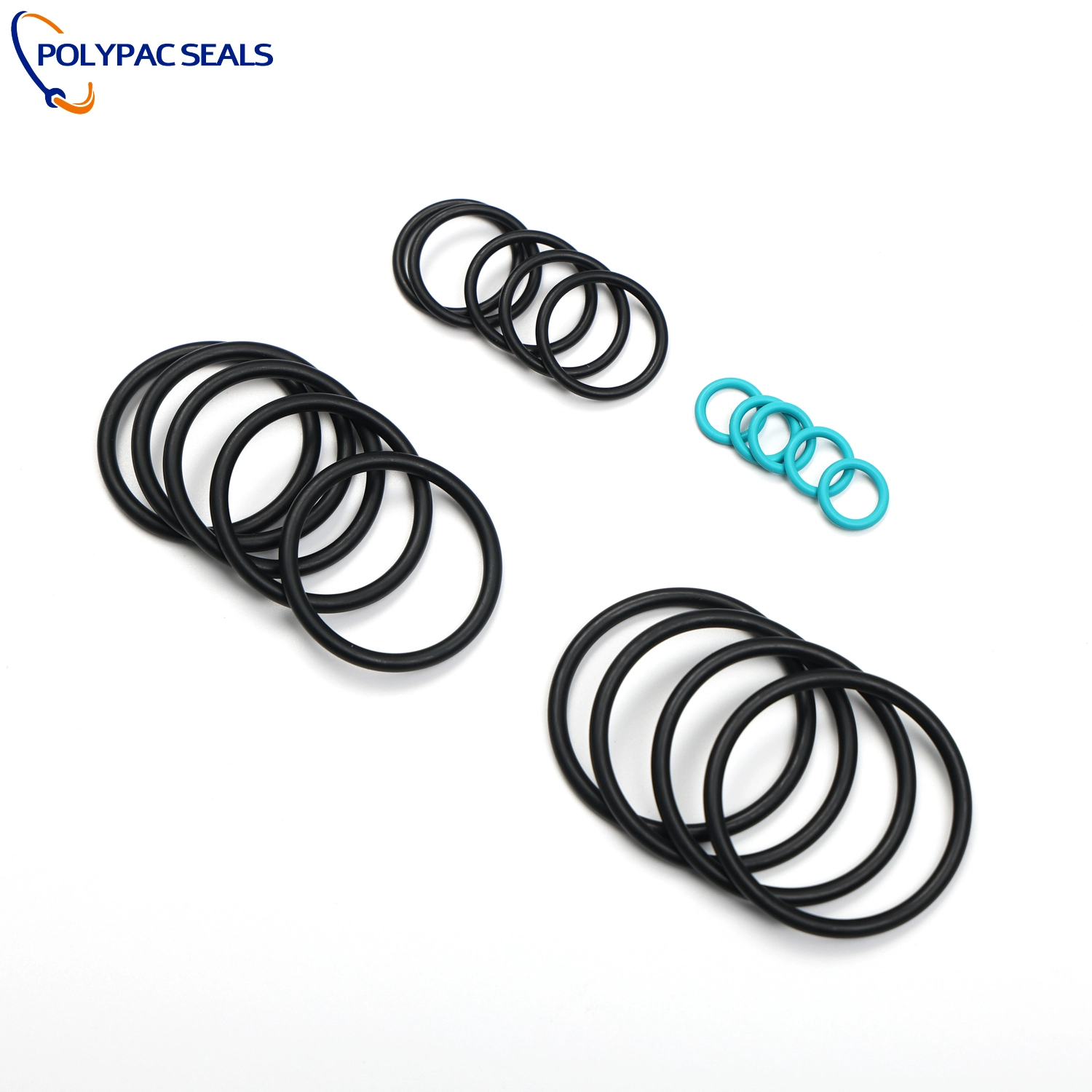
While Black is the standard industrial color, FKM can be compounded in various colors for identification purposes.
· Common Colors: Black, Brown, and Green are standard to help technicians distinguish FKM from NBR (Black) or EPDM (often Purple or Black).
· Function: Color does not indicate performance; it is purely for coding.
What is the shelf life of an FKM o-ring?
FKM O-rings have an unlimited shelf life according to SAE ARP5316 standards, provided they are stored correctly.
· Storage: Keep in cool, dark, dry conditions away from direct sunlight, ozone generators (like electric motors), and tension.


Products
Can I reuse a seal?
How do I choose the right material for my sealing application?
What is the purpose of the metal spring in a rotary shaft seal?
How important is surface finish on the metal parts that contact the seal?
When should I use a spring-energized seal instead of a standard elastomeric seal?
Stay Updated with Industry Insights
Subscribe to our articles and receive the latest news, expert guidance, and technical updates directly in your E-mail.
Rest assured that your privacy is important to us, and all information provided will be handled with the utmost confidentiality.

Polypac is a trusted global supplier of high-performance sealing solutions, providing OEM & ODM services for industries worldwide.
E-mail:
Phone/WhatsApp:
© 2025 Polypac Seals. All Rights Reserved.
dms
DMS
DMS